LIFE WITH NO WAY OUT: Sarah Boone’s New Reality Behind Bars
For years, Sarah Boone insisted that the death of her boyfriend, Jorge Torres Jr., was a tragic accident. She maintained that she never intended for him to die and argued that the events leading to his death had been misunderstood. Yet after one of Florida’s most closely watched criminal trials, a jury reached a very different conclusion.
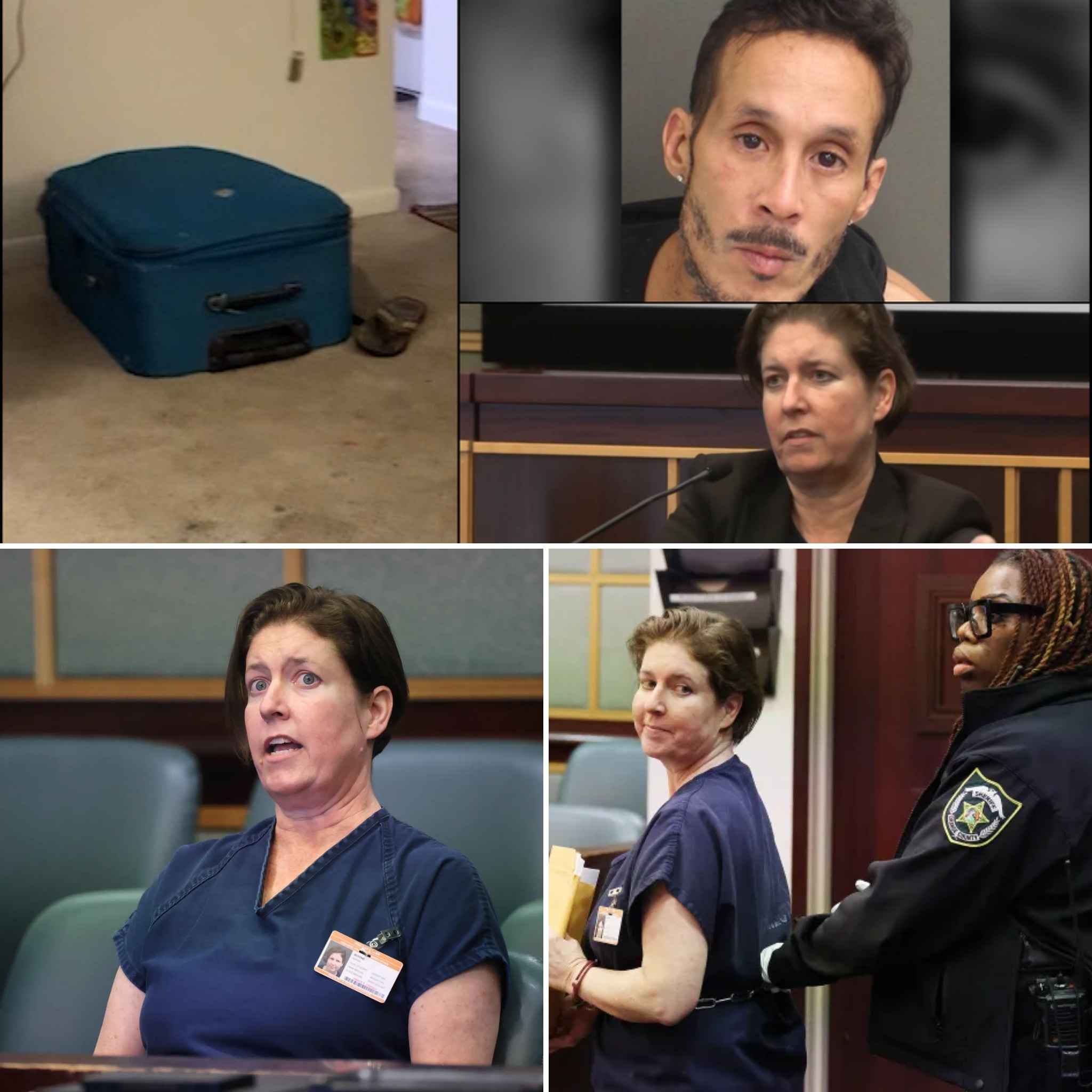
Now, Sarah Boone faces a reality that few people can fully comprehend: the possibility of spending the rest of her life behind bars.
The case captured national attention because of its unusual and disturbing circumstances. Prosecutors alleged that Boone knowingly left Torres trapped inside a suitcase, unable to escape, while she ignored his desperate pleas for help. Evidence presented during the trial, including videos and witness testimony, became the focus of intense public scrutiny and debate.
With the courtroom proceedings now largely behind her, attention has shifted to what comes next.
For Boone, the future is no longer defined by court appearances, legal arguments, or media interviews. Instead, it is defined by prison walls, strict routines, and the possibility that she may never again experience life outside a correctional facility.
The case has also sparked broader conversations about justice, accountability, and whether life without parole remains an appropriate punishment in modern society.
A Relationship Marked by Turmoil
Long before the criminal case made headlines across the country, Sarah Boone and Jorge Torres Jr. shared a relationship that friends and family members described as complicated and often turbulent.
Court records and testimony revealed a history of arguments, conflicts, and allegations of domestic disputes involving both parties.
Like many troubled relationships, their story was marked by periods of reconciliation followed by renewed tension.
To outsiders, the relationship appeared unstable.
Yet despite the difficulties, the couple remained connected for years.
No one could have predicted that their relationship would eventually end in a death that would attract national media coverage and leave jurors tasked with determining whether a tragic accident or a criminal act had occurred.
As investigators would later discover, the final hours of Torres’ life would become the central focus of a case that shocked even experienced law enforcement officials.
The Night Everything Changed
According to prosecutors, the events that led to Torres’ death occurred during what initially appeared to be a night of drinking and interaction between the couple.
Authorities alleged that Torres eventually ended up inside a suitcase.
The critical question that would later dominate the trial was simple yet profound: how did he get there, and why was he unable to get out?
Prosecutors argued that Boone intentionally left him trapped.
According to the state’s case, Torres repeatedly pleaded for help while confined inside the suitcase.
Evidence introduced during the trial included recordings that prosecutors claimed demonstrated his desperate attempts to escape.
The prosecution argued that Boone not only failed to help but knowingly left him in a life-threatening situation.
Boone’s defense team offered a different interpretation.
They argued that the circumstances were more complex than prosecutors suggested and challenged aspects of the state’s narrative.
However, the jury ultimately found the prosecution’s evidence persuasive.
The verdict would change Boone’s life forever.
A Trial That Captivated the Nation
The Sarah Boone case became one of the most discussed criminal trials in recent Florida history.
True crime followers, legal analysts, and ordinary citizens closely followed developments as the case moved through the judicial system.
Part of the public fascination stemmed from the unusual nature of the allegations.
Unlike many homicide cases, the prosecution’s theory involved circumstances that many people found difficult to comprehend.
Questions emerged immediately.
How could someone remain trapped inside a suitcase?
Why wasn’t help provided?
What exactly happened during the final moments before Torres died?
As evidence was presented, public interest intensified.
News organizations across the country reported on testimony, courtroom exchanges, and legal arguments.
The trial became a topic of discussion on television programs, podcasts, social media platforms, and online forums.
Observers debated whether the evidence clearly established criminal intent or whether the circumstances left room for reasonable doubt.
Ultimately, jurors were responsible for answering those questions.
After hearing the evidence, they concluded that Boone was criminally responsible for Torres’ death.
The Evidence That Shaped the Verdict
Every criminal trial revolves around evidence, and the Boone case was no exception.
Prosecutors presented materials they argued demonstrated not only what happened but also Boone’s state of mind during the incident.
Particular attention focused on recordings and statements introduced during the proceedings.
The prosecution maintained that these materials provided powerful insight into the events surrounding Torres’ death.
Jurors were asked to consider whether Boone’s actions reflected negligence, recklessness, or deliberate disregard for human life.
Defense attorneys challenged aspects of the state’s interpretation and attempted to raise questions about intent and context.
However, criminal trials often come down to credibility.
Jurors must determine which explanation best fits the available evidence.
In Boone’s case, they ultimately sided with prosecutors.
The verdict represented the culmination of years of investigation, legal preparation, and courtroom litigation.
For Torres’ family, it marked a significant moment in their pursuit of justice.
For Boone, it marked the beginning of an entirely different chapter.
Life Behind Bars
Following conviction, the focus shifted from guilt or innocence to punishment.
For many people, prison is difficult to imagine.
Movies and television often portray incarceration dramatically, but the reality is frequently defined by routine, restrictions, and the loss of personal freedom.
If Boone spends the remainder of her life incarcerated, every aspect of her future will be shaped by prison regulations.
Simple decisions most people take for granted—where to go, what to eat, when to leave home—will no longer belong to her.
Instead, daily life will be governed by schedules, security procedures, and institutional rules.
Years will pass inside a structured environment largely disconnected from the outside world.
Birthdays, holidays, and major life events will occur without her presence.
Family members will grow older.
Friends may drift away.
Entire chapters of life will unfold beyond prison walls.
For many inmates serving life sentences, this reality becomes one of the most difficult aspects of incarceration.
The punishment extends beyond confinement itself.
It involves the gradual recognition that opportunities once taken for granted may never return.

The Debate Over Life Without Parole
Cases like Boone’s often reignite debates about life without parole.
Supporters argue that certain crimes justify permanent incarceration.
In their view, individuals convicted of particularly serious offenses have demonstrated behavior so dangerous or harmful that society must ensure they never have another opportunity to cause similar harm.
For supporters of Boone’s sentence, accountability remains the central issue.
A life was lost.
A family suffered devastating consequences.
They argue that severe crimes require severe punishments.
Others view the issue differently.
Critics of life-without-parole sentences argue that every person possesses the capacity for growth, change, and rehabilitation.
They question whether any inmate should be denied all possibility of future release.
Some legal scholars describe life without parole as a punishment that effectively removes hope.
Others counter that the severity of certain crimes outweighs those concerns.
The debate has continued for decades and remains unresolved.
Boone’s case has become another example cited by people on both sides of the discussion.
The Impact on Jorge Torres Jr.’s Family
Lost amid legal arguments and public debate is the fact that a family lost a loved one.
For the relatives of Jorge Torres Jr., the case has never been merely a legal proceeding.
It has been a deeply personal tragedy.
Every court hearing served as a reminder of the loss they experienced.
Every media report revisited painful memories.
For families of homicide victims, trials often bring a mix of emotions.
There may be relief when a verdict is reached.
There may also be sadness, grief, and recognition that no court decision can truly reverse what happened.
Even after sentencing, the consequences remain.
The absence of a loved one continues long after headlines fade.
That reality is why many victim advocates emphasize remembering the human cost behind every criminal case.
While public attention often focuses on defendants, victims and their families carry the impact of the crime for the rest of their lives.
Public Reactions Remain Divided
One reason the Boone case continues attracting attention is that public opinion remains divided.
Many observers believe the sentence reflects justice.
They argue that the evidence presented at trial supported the verdict and that accountability requires meaningful consequences.
Others remain uncomfortable with the idea of anyone spending an entire lifetime behind bars.
Some believe lengthy prison terms can satisfy the goals of punishment while still preserving the possibility of future release.
These differing viewpoints reflect broader societal disagreements about criminal justice.
Questions about punishment rarely produce universal agreement.
Reasonable people often reach different conclusions when balancing accountability, public safety, rehabilitation, and mercy.
The Boone case sits at the intersection of all these issues.
A Future Unlike Any She Imagined
Regardless of where individuals stand on the verdict or sentence, one reality is impossible to ignore.
Sarah Boone’s future looks dramatically different from the life she once knew.
The routines of everyday freedom have been replaced by the structure of incarceration.
The uncertainty of trial proceedings has been replaced by the certainty of a prison sentence.
The possibilities that once existed outside prison walls have narrowed significantly.
If she remains incarcerated for life, the years ahead will be measured not by personal milestones but by the passage of time within a correctional institution.
For many inmates serving lengthy sentences, this transition becomes a psychological challenge as much as a physical one.
Adjusting to permanent confinement requires confronting the reality that freedom may never return.
Conclusion
The case of Sarah Boone remains one of the most unusual and widely discussed criminal cases in recent memory. Her conviction in the death of Jorge Torres Jr. brought an end to a lengthy legal battle, but it also opened a new chapter defined by incarceration and the consequences of the jury’s verdict.
For supporters of the sentence, the outcome represents accountability for a life that was lost.
For critics, it raises difficult questions about punishment, redemption, and whether anyone should be imprisoned forever without the possibility of release.
Those questions extend far beyond a single courtroom.
They touch on fundamental beliefs about justice, mercy, responsibility, and the purpose of the criminal justice system itself.
As Boone begins life behind bars, the debate continues.
And while opinions remain divided, one fact is beyond dispute: the consequences of this case will affect everyone connected to it for years to come.

👉 Do you believe life without parole is the right sentence in cases like this, or should every inmate have a chance at release one day?