The large earthen mound near Xi’an covering the tomb of Qin Shi Huang — who unified China in 221 BC and died in 210 BC — has been recognized as one of the most significant archaeological sites in the world. While the surrounding necropolis, including the famous Terracotta Army, has been excavated since its discovery in 1974, the emperor’s central burial chamber has never been opened.
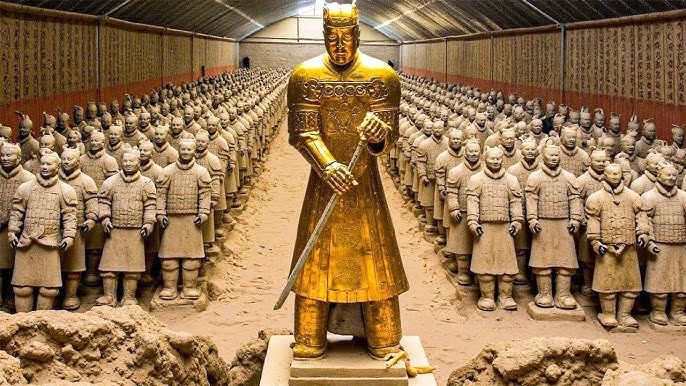
There are several reasons why archaeologists and Chinese authorities have chosen to keep the tomb sealed. First, preservation science plays a major role: previous excavations of terracotta figures showed how quickly ancient materials can deteriorate once exposed to air, light, and humidity, and the scale of items inside the emperor’s burial complex would present even greater conservation challenges.
Secondly, ancient historical accounts — particularly those by the historian Sima Qian — describe the tomb as an elaborate underground palace with symbolic features such as rivers of mercury and mechanical defenses intended to protect the interior. Modern soil analyses around the mound have detected elevated mercury levels, suggesting that toxic substances might indeed be present inside, raising concerns about health and safety for excavators.
Current archaeological strategy emphasizes non‑invasive research methods like ground‑penetrating radar, geological surveys, and environmental monitoring to learn about the interior structure without breaching it, because excavation could irreparably damage artifacts that have remained intact for over two millennia.
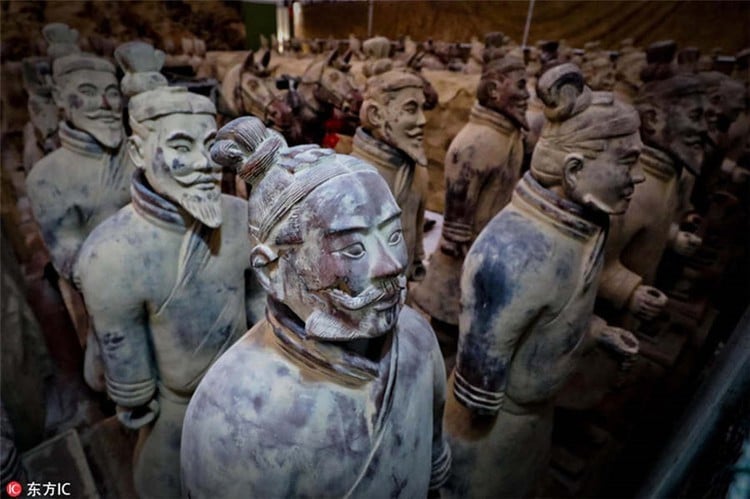
Culturally, the tomb is also considered a sacred heritage site, and disturbing the final resting place of such a foundational figure carries ethical weight in Chinese historical tradition. Authorities have consistently opted for caution, prioritizing long‑term preservation over immediate exploration.
Although scholars have proposed advanced technologies — such as using cosmic‑ray muons to scan interior chambers without opening the tomb — these approaches are still under development and have not yet been widely implemented.
For now, the unopened tomb of Qin Shi Huang remains a well‑protected archaeological mystery: its central chamber is intact beneath the mound, and researchers continue to study the surrounding site and its historical context while waiting for future advancements that might allow safe and responsible excavation.