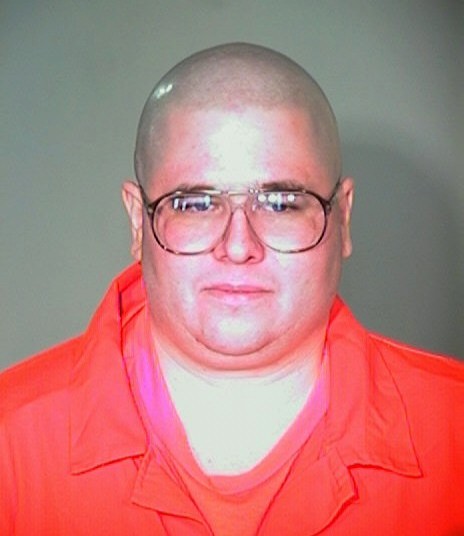
DEATH ROW CASE: Former Officer Antoinette Frank Still Awaits Execution
Few criminal cases have shocked the American public quite like that of Antoinette Frank. More than three decades after a triple murder that stunned Louisiana and attracted national attention, the former New Orleans police officer remains on death row, occupying a unique and controversial place in the state’s criminal justice history.
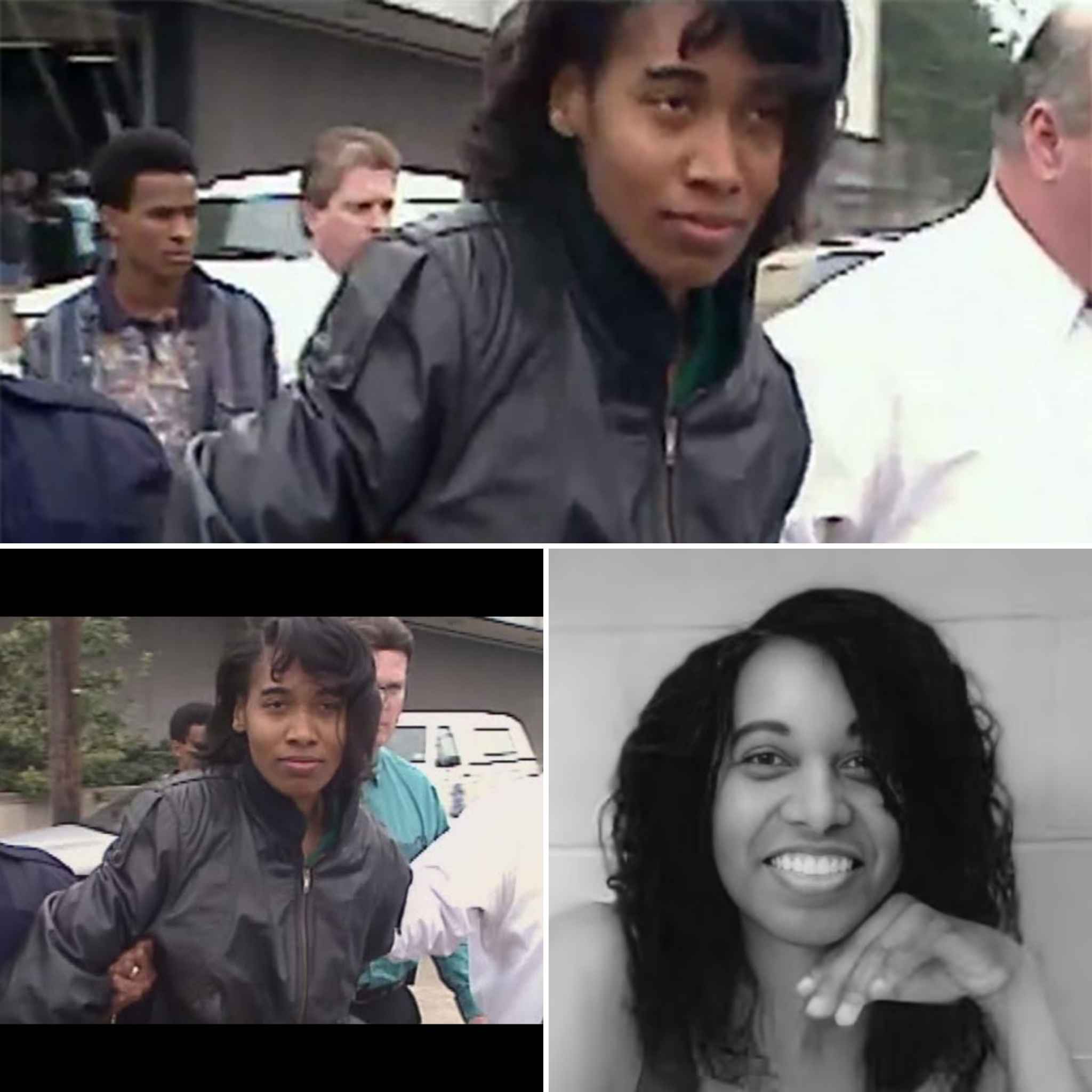
Unlike most murder cases involving law enforcement, Frank was not the officer investigating a crime or pursuing a suspect. Instead, prosecutors argued that she used the trust, authority, and access granted by her badge to help carry out one of Louisiana’s most notorious murders.
The case generated outrage not only because three people lost their lives, but because one of the perpetrators was sworn to uphold the law.
Today, Antoinette Frank remains the only woman on Louisiana’s death row, and her case continues to provoke debate about public trust, corruption, capital punishment, and whether crimes committed by police officers deserve harsher punishment than similar crimes committed by civilians.
For many observers, the case represents one of the most disturbing betrayals of public trust in modern law enforcement history.
A Police Officer With a Troubled Reputation
Before the murders that would eventually send her to death row, Antoinette Frank was a member of the New Orleans Police Department.
Like every police officer, she took an oath to protect the public, enforce the law, and serve her community.
Yet long before the murders occurred, questions had reportedly been raised about her conduct and suitability for police work.
Various accounts later suggested that concerns existed regarding her behavior and performance as an officer. Some critics argued that warning signs had been overlooked, while others questioned whether stronger oversight might have prevented future tragedy.
These concerns would receive renewed attention after the murders, as investigators and journalists examined Frank’s background in an effort to understand how a sworn police officer became involved in one of the state’s most notorious crimes.
At the time, however, few could have imagined the events that were about to unfold.
The Triple Murder That Shocked Louisiana
The crimes occurred in March 1995 at a Vietnamese-owned restaurant in New Orleans.
According to prosecutors, Frank became involved in a robbery scheme that ultimately turned into a brutal triple murder.
Authorities alleged that Frank used her position as a police officer to gain access and information that helped facilitate the crime.
The victims included New Orleans Police Officer Ronald Williams, who was working a security detail at the restaurant, as well as Ha Vu and Cuong Vu.
Officer Williams knew Frank personally.
That fact made the crime even more shocking.
Prosecutors argued that rather than protecting a fellow officer, Frank participated in a plan that ended with his death.
The allegations stunned the law enforcement community.
Police officers routinely face danger from criminals, but cases involving the murder of an officer by another officer are extraordinarily rare.
For many people, the betrayal was almost impossible to comprehend.
The murders immediately became one of the most closely followed criminal investigations in Louisiana.
As details emerged, public outrage intensified.
Residents struggled to understand how someone entrusted with enforcing the law could become involved in such a horrific crime.

The Investigation
Following the murders, investigators launched an extensive inquiry.
The case quickly attracted significant resources because it involved the killing of a police officer and two civilians.
Detectives worked to reconstruct the events surrounding the robbery and determine who was responsible.
As evidence accumulated, suspicion increasingly focused on Frank and her alleged accomplice.
Investigators examined witness statements, forensic evidence, financial information, and other records connected to the crime.
The evidence eventually led prosecutors to conclude that Frank had played a central role in the murders.
Her arrest shocked colleagues, community members, and law enforcement officials across the state.
The image of a police officer being led into custody on murder charges generated national headlines.
For many Americans, it represented a stunning reversal of expectations.
The person sworn to enforce the law had become accused of violating it in the most serious way imaginable.
The Trial
When the case reached court, prosecutors presented evidence they argued proved Frank’s involvement in the robbery and murders.
The state emphasized the devastating consequences of the crime and the extraordinary breach of public trust involved.
According to prosecutors, Frank’s position as a police officer enabled her to commit acts that would otherwise have been difficult or impossible.
The prosecution argued that her badge did not merely fail to prevent the crime—it helped make the crime possible.
Witness testimony, investigative findings, and physical evidence became central components of the state’s case.
Defense attorneys challenged aspects of the prosecution’s narrative and sought to raise questions regarding the evidence presented.
As with every criminal trial, jurors were tasked with evaluating competing arguments and determining whether guilt had been established beyond a reasonable doubt.
After reviewing the evidence, jurors convicted Frank.
The verdict represented a significant moment not only for the victims’ families but also for a law enforcement community grappling with the reality that one of its own had been found guilty of murder.
Why the Case Was Different
Many murder cases attract attention.
The Antoinette Frank case stood apart because of the unique role occupied by the defendant.
Police officers possess powers that ordinary citizens do not.
They carry weapons, exercise legal authority, and are entrusted with protecting the public.
That trust forms the foundation of effective policing.
When an officer commits a serious crime, the damage extends beyond the immediate victims.
Public confidence in law enforcement can also suffer.
This reality became a major theme throughout the case.
Prosecutors argued that Frank’s actions represented not only a violent crime but also a profound betrayal of her oath.
Many observers agreed.
The idea that a sworn officer could participate in a robbery and murder challenged public assumptions about those entrusted with enforcing the law.
As a result, the case became a symbol of corruption, accountability, and institutional trust.
The Death Sentence
Following her conviction, Frank faced sentencing.
Given the severity of the crimes, prosecutors sought the death penalty.
The murders involved multiple victims, including a police officer.
Those factors significantly increased the seriousness of the case under Louisiana law.
Jurors ultimately imposed a death sentence.
For supporters of the verdict, the punishment reflected the gravity of the crime and the extraordinary breach of trust involved.
Others opposed the death penalty on principle but acknowledged the unique circumstances surrounding the case.
The sentence ensured that Frank would join a very small group of women sentenced to death in the United States.
Over time, her status became even more unusual.
As other cases moved through the system, she eventually became the only woman remaining on Louisiana’s death row.
Decades on Death Row
Although Frank received a death sentence in the 1990s, she has remained on death row for decades.
This lengthy delay reflects broader realities within the American death penalty system.
Capital punishment cases often involve extensive appeals and legal reviews.
Courts carefully examine death sentences because of their irreversible nature.
Defense attorneys have pursued numerous legal challenges over the years, while prosecutors have defended the conviction and sentence.
As a result, the case has remained active long after the original trial ended.
For victims’ families, these prolonged proceedings can be emotionally exhausting.
Each legal development may reopen old wounds and revive painful memories.
At the same time, supporters of extensive appellate review argue that the justice system must exercise extraordinary caution whenever a person’s life is at stake.
The result is a process that frequently spans decades.
Frank’s case exemplifies that reality.
The Victims Remembered
While much public attention focuses on Frank herself, the heart of the story remains the three people who lost their lives.
Officer Ronald Williams was serving his community when he was killed.
Ha Vu and Cuong Vu were also victims of the violence that unfolded during the robbery.
Their families have spent decades living with the consequences of that night.
Birthdays, anniversaries, holidays, and family gatherings continue to serve as reminders of what was lost.
Victims’ advocates frequently emphasize that criminal cases should never become solely about defendants.
The lives of victims matter.
Their stories matter.
Their families continue carrying grief long after media coverage fades.
Remembering the victims helps ensure that the human impact of the crime remains at the center of discussions about justice and punishment.
The Debate Over Public Trust
One reason the Frank case remains relevant today is that it raises difficult questions about public trust.
Should police officers who commit violent crimes receive harsher punishment than ordinary citizens?
Supporters of harsher penalties argue that officers willingly accept special responsibilities and privileges.
When they abuse those responsibilities, the betrayal is greater because the public places extraordinary trust in them.
According to this view, crimes committed by law enforcement officers deserve especially severe consequences.
Others argue that justice should remain consistent regardless of occupation.
They contend that punishment should be based primarily on the crime itself rather than the defendant’s profession.
Reasonable people continue to disagree.
Yet few dispute that Frank’s position as a police officer made the case significantly more shocking.
The Death Penalty Debate
The case also remains part of broader discussions surrounding capital punishment.
Supporters of the death sentence argue that certain crimes are so severe that execution is justified.
Multiple murders and the killing of a police officer often rank among the offenses most frequently cited by advocates of capital punishment.
Opponents disagree.
They argue that life imprisonment without parole can provide accountability without requiring execution.
Others point to lengthy appeals, costs, and ethical concerns associated with the death penalty.
These debates continue nationwide.
Because of its unusual facts, the Frank case is often referenced by both supporters and critics of capital punishment.

Conclusion
The case of Antoinette Frank remains one of the most shocking examples of police corruption and violent crime in modern American history. Convicted of participating in the 1995 murders of Officer Ronald Williams, Ha Vu, and Cuong Vu during a restaurant robbery, Frank became one of the few female death row inmates in the United States and remains the only woman currently on Louisiana’s death row.
For many observers, the case stands as a powerful reminder that public trust is one of the most important responsibilities carried by law enforcement officers.
When that trust is violated, the consequences can extend far beyond a single criminal act.
Decades after the murders, the victims remain remembered, the legal debates continue, and the questions raised by the case remain unresolved.
Should police officers who commit violent crimes face harsher punishment because of the authority and trust they abuse?
Or should the same standards apply to everyone, regardless of profession?
The answers continue to divide public opinion.
⚖️ When a police officer commits a violent crime, should the punishment be harsher because of the public trust they violated?