Traces of Henry VIII’s Lost Tudor Palace Unearthed Beneath Chelmsford School
In an extraordinary archaeological twist that seems plucked from the pages of a historical novel, a network of tunnels believed to date back to the Tudor era has been discovered beneath New Hall School in Chelmsford, Essex. The school, a prestigious institution with a history of its own, sits atop the grounds of Beaulieu, the former Tudor palace acquired and extensively remodeled by King Henry VIII in 1517. This accidental discovery has captivated not only students and staff but also historians and archaeologists across the United Kingdom, offering a rare glimpse into one of England’s most important but largely vanished royal residences.
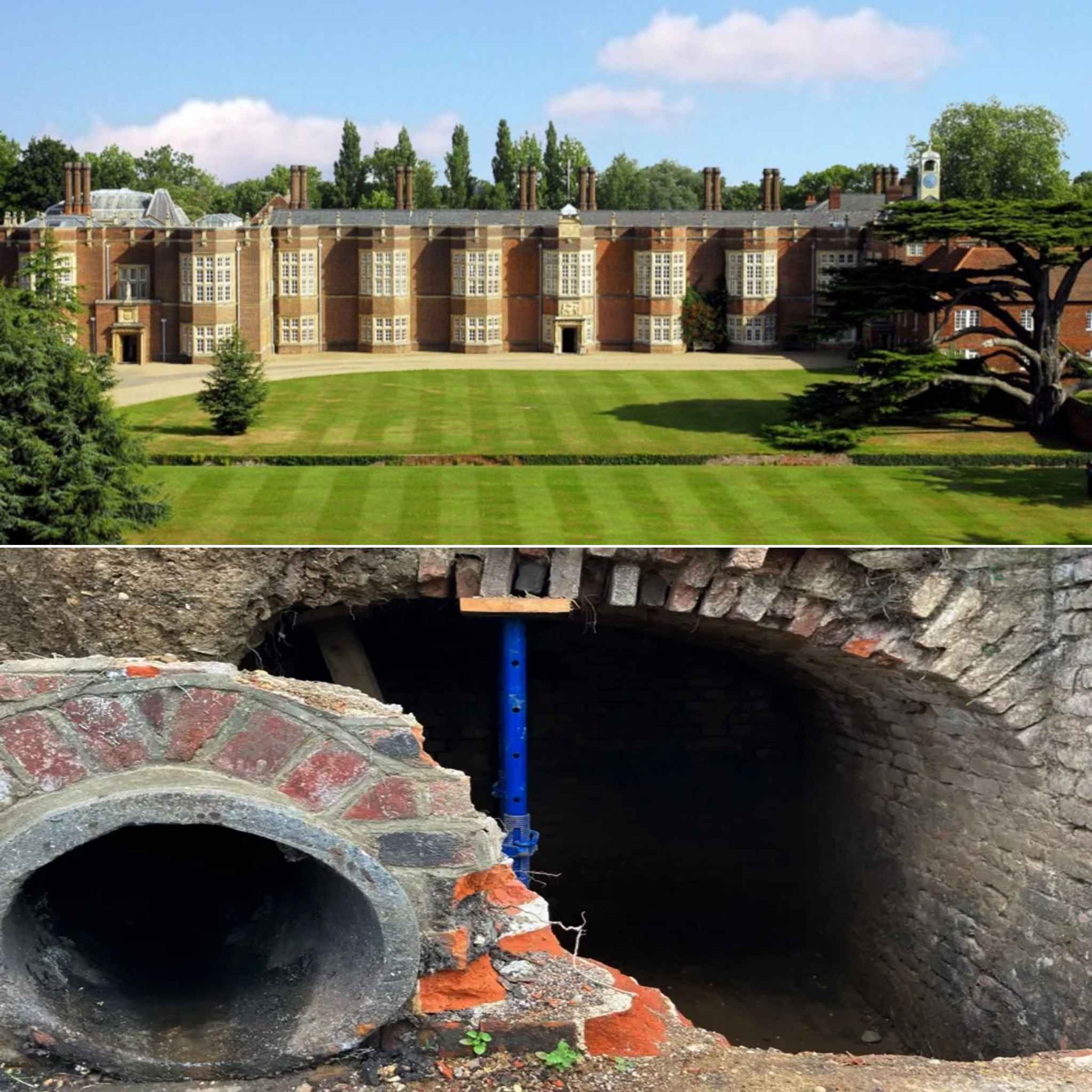
The discovery underscores how hidden traces of the past can survive even amidst modern landscapes. Beneath the manicured lawns, tennis courts, and educational buildings of New Hall School, remnants of a lavish Tudor estate lay dormant for centuries, waiting for chance to bring them back to light.
The Accidental Discovery
The find began in the most mundane of ways: maintenance work. While carrying out repairs on a ha-ha, a sunken landscape ditch traditionally used on large estates to contain livestock without spoiling the visual continuity of gardens, workers stumbled upon the entrance to a brick-lined underground passage. At first glance, it seemed like little more than an old storage or drainage channel. However, as excavation continued, the tunnel revealed its true historical significance.
Alongside the passages, excavators uncovered a trove of artifacts including pottery shards, fragments of glass bottles, animal bones, and pieces of crockery—all clearly dating to the Tudor period. The condition of some of these objects suggested careful storage rather than casual disposal, prompting historians to speculate that the tunnels were an integral part of the palace infrastructure.
Sarah Garside, head of history at New Hall School, explained the initial surprise:
“We weren’t sure if it had simply been used as a dumping place for waste. But some of the pottery and crockery appear remarkably intact, which raises questions about whether the tunnels may have been used for storage or preservation.”
The significance of this find lies not only in its accidental nature but also in the rich historical context it illuminates. Beaulieu Palace, once the crown jewel of Essex, was more than a royal residence—it was a symbol of Henry VIII’s expanding influence and an architectural template that informed subsequent Tudor palaces.
A Royal Connection
The palace at Beaulieu, originally known as New Hall, was owned by Sir Thomas Boleyn, father of Anne Boleyn, before King Henry VIII purchased the estate in 1517. Following its acquisition, Henry spared no expense in remodeling the property into a lavish royal residence, renaming it Beaulieu, the French term for “beautiful place.”
Beaulieu became a stage for Tudor grandeur. The palace hosted royal banquets, diplomatic receptions, and hunting parties attended by courtiers and foreign dignitaries. It was also a residence where Henry VIII could entertain lavishly away from the pressures of London, shaping its reputation as a critical site in the network of Tudor estates.
Historical accounts suggest that Beaulieu played a pivotal role in the king’s courtly life. The palace featured elaborate gardens, expansive halls, and architectural innovations that reflected Henry’s ambition to create residences worthy of his status. Although subsequent monarchs used Beaulieu less frequently, the estate remained an enduring testament to Tudor architectural and cultural influence.
Interestingly, Beaulieu’s design is believed to have informed the layout and grandeur of Hampton Court Palace, another of Henry VIII’s residences. This underscores the broader significance of the discovery beneath New Hall School: the tunnels may well provide unique insight into how Tudor architects and planners managed complex royal estates.
The Tunnels: Hidden Infrastructure
Only a portion of the tunnel system has been exposed so far, and its original purpose remains a subject of scholarly debate. Historians posit several possible functions:
- Storage corridors for wine, food, and royal supplies
- Service passages allowing discreet movement of staff
- Infrastructure access for maintenance of water, drainage, or heating systems
The tunnel’s construction—brick-lined and remarkably well preserved—suggests that it was intended for regular use rather than emergency concealment. Artifacts found within reinforce this theory, with pottery, glass, and crockery that appear deliberately stored rather than discarded.
Dr. Sarah Garside notes that the find challenges previous assumptions about Tudor estate management:
“The discovery of these tunnels highlights just how sophisticated Tudor infrastructure could be. It’s a glimpse into the daily operations of a royal household that has long been lost to history.”
Indeed, the preservation of these underground passages offers scholars a rare opportunity to study the logistics and daily workings of a Tudor palace. While above-ground structures often receive attention for their grandeur, hidden spaces like these tunnels were the lifeblood of royal estates, enabling seamless management of servants, kitchens, and supplies.
Image 1: Brick-Lined Tudor Tunnel
Artifacts of Daily Life
The items discovered alongside the tunnels provide a fascinating window into life at Beaulieu. Excavators uncovered fragments of:
- Ceramic jugs and bowls used for dining and food storage
- Glass bottles, potentially for wine, medicine, or perfumes
- Animal bones, suggesting kitchen waste or ritualistic feasting
- Crockery fragments, remarkably preserved despite centuries underground
Together, these finds allow historians to reconstruct aspects of the daily routines, diets, and material culture of Henry VIII’s courtly environment. The artifacts may also reveal socio-economic structures within the palace, highlighting the presence of domestic staff, specialized tradespeople, and the management of luxury items.
The discovery of relatively intact objects hints at deliberate organization. Some historians suggest that the tunnels could have functioned as a secure storage space for items intended to last through the long, sometimes unpredictable, periods when Henry VIII or visiting royals occupied the estate.
Rediscovering Beaulieu Through Archaeology
The discovery of the tunnels has invigorated historical interest in Beaulieu, whose above-ground remains have long been fragmented or obscured by later construction. Archaeologists hope that systematic excavation of these underground corridors will reveal more about:
- The layout and scale of the original palace
- The relationship between above-ground and subterranean structures
- The logistics of Tudor estate life, including storage, cooking, and service areas
The potential is enormous: by understanding the hidden networks beneath New Hall School, researchers can reconstruct aspects of royal life that textual sources alone cannot provide.
Image 2: Tudor Pottery Shards
Engaging Students with History
For the students and staff at New Hall School, the discovery has been nothing short of extraordinary. Already steeped in Tudor history, the school displays the royal coat of arms of Henry VIII in its chapel. Now, the unearthing of the tunnels brings history into the students’ daily lives in an immediate, tactile way.
Principal Katherine Jeffrey expressed excitement at the educational opportunities:
“This is a remarkable discovery and an extraordinary opportunity for students to engage directly with the Tudor past. They can now explore history not only through books but through the physical remnants of a royal palace beneath their feet.”
Head of Sixth Form, Paul Goulding, added:
“It’s a privilege for our students and teachers alike to witness history firsthand. The tunnels offer a unique lens into a period of English history that shaped the nation.”
The presence of intact Tudor artifacts means that students can observe real historical objects in situ, connecting curricula in history, archaeology, and material culture with direct experience. Such immersive engagement is rare in secondary education, and it transforms the school itself into a living classroom.
Preserving a Hidden Legacy
The discovery has also raised questions about heritage preservation. Archaeologists and conservation specialists are working alongside the school to ensure that the tunnels and artifacts are carefully documented, stabilized, and, where possible, protected.
Challenges include:
- Maintaining structural integrity of the tunnels
- Preventing further degradation of delicate artifacts
- Balancing access for research and student engagement with preservation
In the coming months, more extensive investigations are planned, which may reveal additional tunnels, hidden chambers, or intact rooms. Researchers hope to map the full extent of the underground network and correlate it with known historical plans of Beaulieu.
Image 3: Excavation Team at Work
/https://tf-cmsv2-smithsonianmag-media.s3.amazonaws.com/filer_public/53/cc/53cc8003-4c4a-4ca2-80f0-47092cf08fa1/screenshot_2026-06-16_at_90218am.jpeg)
A Portal to the Tudor World
The tunnels beneath New Hall School are more than a curiosity—they are a direct portal to the world of Henry VIII, offering rare insights into the infrastructure, lifestyle, and culture of one of England’s most dramatic periods.
From royal banquets and diplomatic gatherings to everyday chores of palace staff, these subterranean corridors reveal how luxury, power, and functionality coexisted in Tudor England. The artifacts and architecture uncovered are silent witnesses to a period of political intrigue, cultural splendor, and technological sophistication.
For historians, the discovery reinforces the value of accidental finds in rewriting historical narratives. For students, it is a chance to connect with history in a profoundly tangible way, exploring the past beneath their very feet.
As archaeologists continue their work, who knows what further secrets the tunnels of Beaulieu may reveal? Hidden rooms, forgotten objects, or perhaps even original palace furnishings may yet emerge from the shadows, offering new dimensions to our understanding of Tudor England.
Indeed, the accidental unearthing beneath a modern school has not only restored a lost chapter of England’s past—it has created a living bridge between centuries, allowing the present to engage directly with the grandeur, mystery, and complexity of the Tudor court.

