3 August 2026
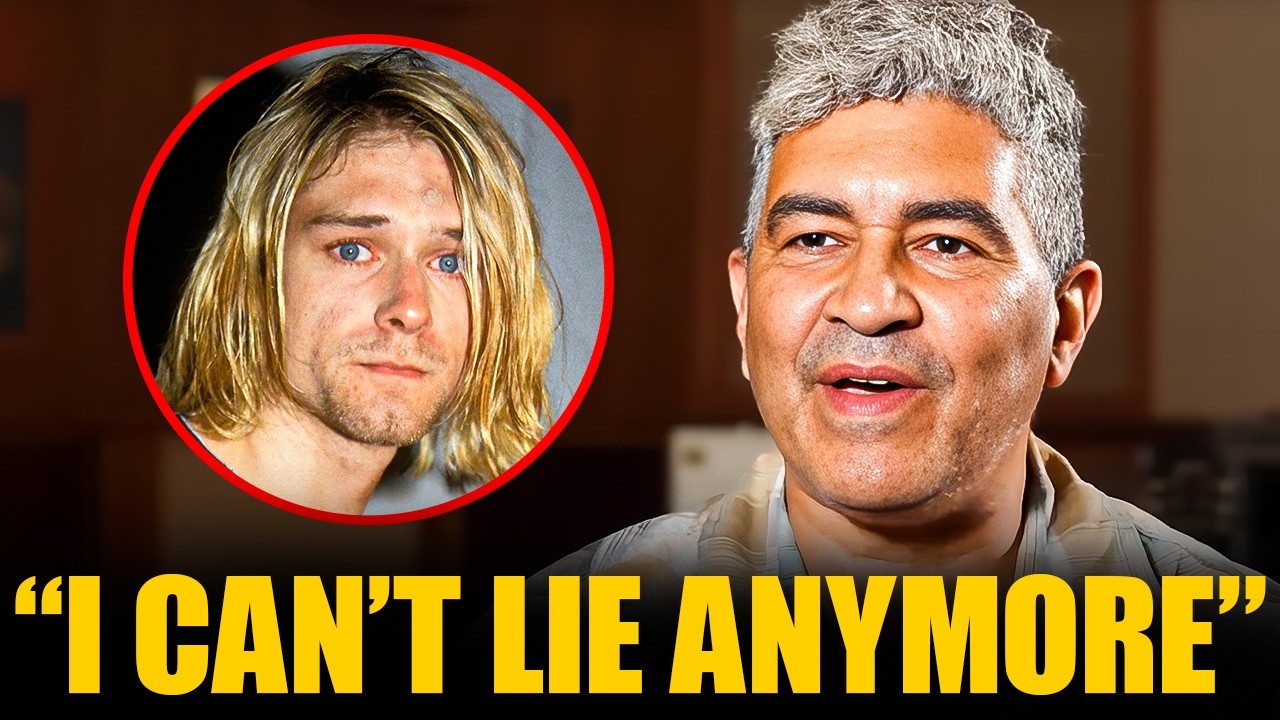
Thirty years after Kurt Cobain's death, Pat Smear has finally broken his silence, revealing a haunting detail that has shadowed him for three decades: a missed phone call from the tormented Nirvana frontman in the days before his death. In emotional new interviews, the guitarist has opened up about the guilt, grief, and surreal fog that followed the loss of his friend and bandmate. Smear, who joined Nirvana in September 1993 as a second guitarist for the In Utero tour, has long remained quiet about the tragedy. Now, marking the 30th anniversary of Cobain's death on April 5th, 1994, he is offering a rare and deeply personal perspective on the man behind the myth, describing a final, unanswered attempt at connection that still haunts him. The missed call came during the chaotic final days of Cobain's life. After escaping from the Exodus Recovery Center in Marina del Rey, California, on April 1st, 1994, Cobain flew back to Seattle and largely disappeared. It was during this period of isolation that he tried to reach Smear. But Smear was not home when the call came through, and the message went unheard until it was too late. "Whatever help he needed from me, I couldn't give it," Smear has said, reflecting on the finality of that unreturned message. "It wasn't just the loss of a bandmate, it was the loss of a friend who may have been reaching out one last time in a moment of despair." Cobain's body was discovered on April 8th, 1994, though the medical examiner placed the actual date of death three days earlier. Smear's account, shared with Rolling Stone and later detailed in Far Out magazine, adds a deeply human dimension to the well-documented tragedy. He has described the profound guilt that followed, emphasizing that he would have done anything to be there for Cobain in that moment. The memory has remained etched in his mind as a poignant reminder of how quickly things can slip away. The guitarist's journey to that fateful moment began long before Nirvana. Born Georg Albert Ruthenberg in West Los Angeles on August 5th, 1959, Smear was already a punk rock veteran when he joined the band. He was a founding member of the Germs, the seminal late-1970s punk group whose only studio album, GI, produced by Joan Jett, is considered one of the first hardcore punk records. After the Germs disbanded following the death of frontman Darby Crash in 1980, Smear remained active in the underground music circuit, performing with bands such as 45 Grave and Twisted Roots, and briefly touring with death rock pioneers Christian Death. His recruitment into Nirvana marked the first time the band added a fourth member for live performances, a decision driven by Cobain's desire to strengthen the band's sound. Smear's punk background and minimalist playing style complemented Nirvana's aesthetic, and he quickly proved to be a reliable and unpretentious addition. His first show was on September 25th, 1993 at the Aragon Ballroom in Chicago, kicking off a series of live dates across the United States and Europe that would place him at the center of historic and deeply emotional moments. One of his most notable appearances was during Nirvana's MTV Unplugged in New York session, recorded on November 18th, 1993 at Sony Music Studios in Manhattan. The stripped-down acoustic performance, featuring covers by Lead Belly, David Bowie, and The Meat Puppets, was broadcast on December 14th, 1993 and later released as a live album seven months after Cobain's death, debuting at number one on the Billboard 200. To understand the weight of Smear's revelation, one must understand the arc of Nirvana's rise and Cobain's unraveling. The band formed in the gray-skied logging town of Aberdeen, Washington, where in 1987 Cobain and bassist Krist Novoselic officially came together, bonded by their shared love of punk music and the burgeoning underground scene in the Pacific Northwest. After releasing their debut album Bleach in January 1989 through Sub Pop, recorded for just over $600, the band struggled to find stability behind the drum kit. That changed in 1990 when Dave Grohl, a 21-year-old drummer from Washington D. C. , joined the lineup. His arrival marked a turning point, bringing both power and precision to Nirvana's sound and solidifying the trio's chemistry. The impact became apparent with the release of Nevermind on September 24th, 1991. With a cleaner, more polished production than Bleach, the album blended explosive guitar riffs with catchy hooks and introspective lyrics. Its breakout single, "Smells Like Teen Spirit," catapulted Nirvana into the mainstream almost overnight, and by January 1992, Nevermind had dethroned Michael Jackson's Dangerous to reach number one on the Billboard 200. The album went on to sell over 30 million copies worldwide, becoming one of the best-selling albums of all time. Critics and fans alike began to view Cobain as the unlikely spokesperson for Generation X. Ironically, he loathed the label, frequently expressing discomfort with fame and resisting the idea of being seen as a generational icon. As Nirvana's fame skyrocketed, Cobain's personal struggles intensified. He suffered from chronic stomach pain, which he claimed led him to self-medicate with controlled substances, a habit that would later spiral out of control. In September 1993, the band released what would become their final studio album, In Utero, a deliberate departure from the polished sound of Nevermind, reflecting a harsher, more abrasive tone true to his punk roots. Smear was present during Nirvana's last concert on March 1st, 1994 at Terminal 1 in Munich, Germany. The show turned out to be anticlimactic due to technical difficulties and Cobain's worsening health, including bronchitis and laryngitis, which led to the cancellation of the remaining tour dates. Just days later, everything fell apart. One of the most alarming warning signs came on March 4th, 1994, when Cobain was hospitalized in Rome, Italy. At the Excelsior Hotel, he ingested a large quantity of Rohypnol mixed with champagne and remained in a coma for roughly 20 hours. Initially reported as an accident, his wife Courtney Love later revealed that this had been an attempt to take his own life. Smear was among the close friends who flew to Rome after the incident, reportedly helping facilitate Cobain's care and staying by his side during recovery. At the time, Smear believed Cobain would pull through. Despite his well-known struggles, he was still actively working and had even discussed future plans. But the relief was short-lived. On March 18th, 1994, a domestic disturbance at Cobain's Seattle home led to police being called after Love told authorities that he had locked himself in a room with a gun. Police confiscated several firearms, and although Cobain denied intending to harm himself, the incident heightened concerns. Just weeks later, Love staged an intervention attended by close friends, Novoselic, and manager Danny Goldberg. Cobain eventually agreed to enter rehab and checked into the Exodus Recovery Center in Marina del Rey, California on March 30th. However, he left the facility the next day without informing staff and flew back to Seattle. Over the next several days, his whereabouts were largely unknown, even to those closest to him.…
 On March 11, 2026, Cedrick Allen Ricks was executed by lethal injection at the Huntsville Unit in Texas after spending 12 years on d*ath row. He was 51 years old when pronounced dead at 6:55 PM. His case has remained one of Texas’ most discussed capital punishment cases due to the severity of the crime, the extensive appeals, and the decades-long legal process.
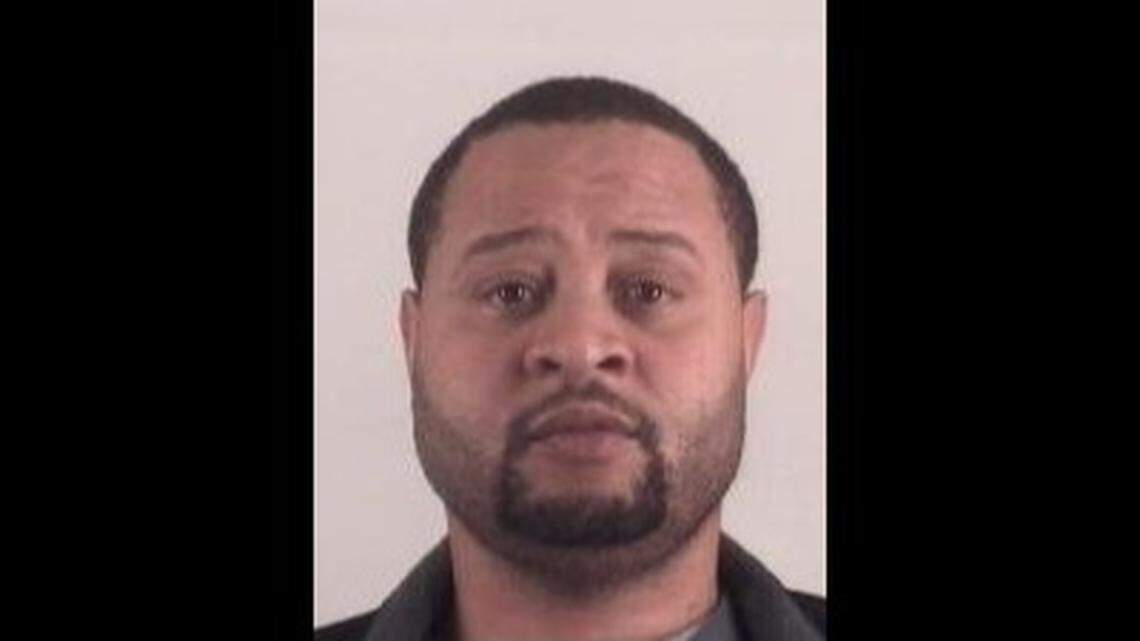 Following the conviction, Ricks pursued numerous appeals at both state and federal levels, including motions that reached the United States Supreme Court. These appeals examined trial procedures, evidence handling, and aspects of Texas’ dath penalty protocols. Despite these challenges, the courts upheld both the conviction and the dath sentence.
 Today, the Cedrick Allen Ricks case serves as an example of the long-term legal processes and scrutiny involved in Texas d*ath penalty cases, illustrating the balance between accountability, procedural fairness, and the management of serious criminal convictions.