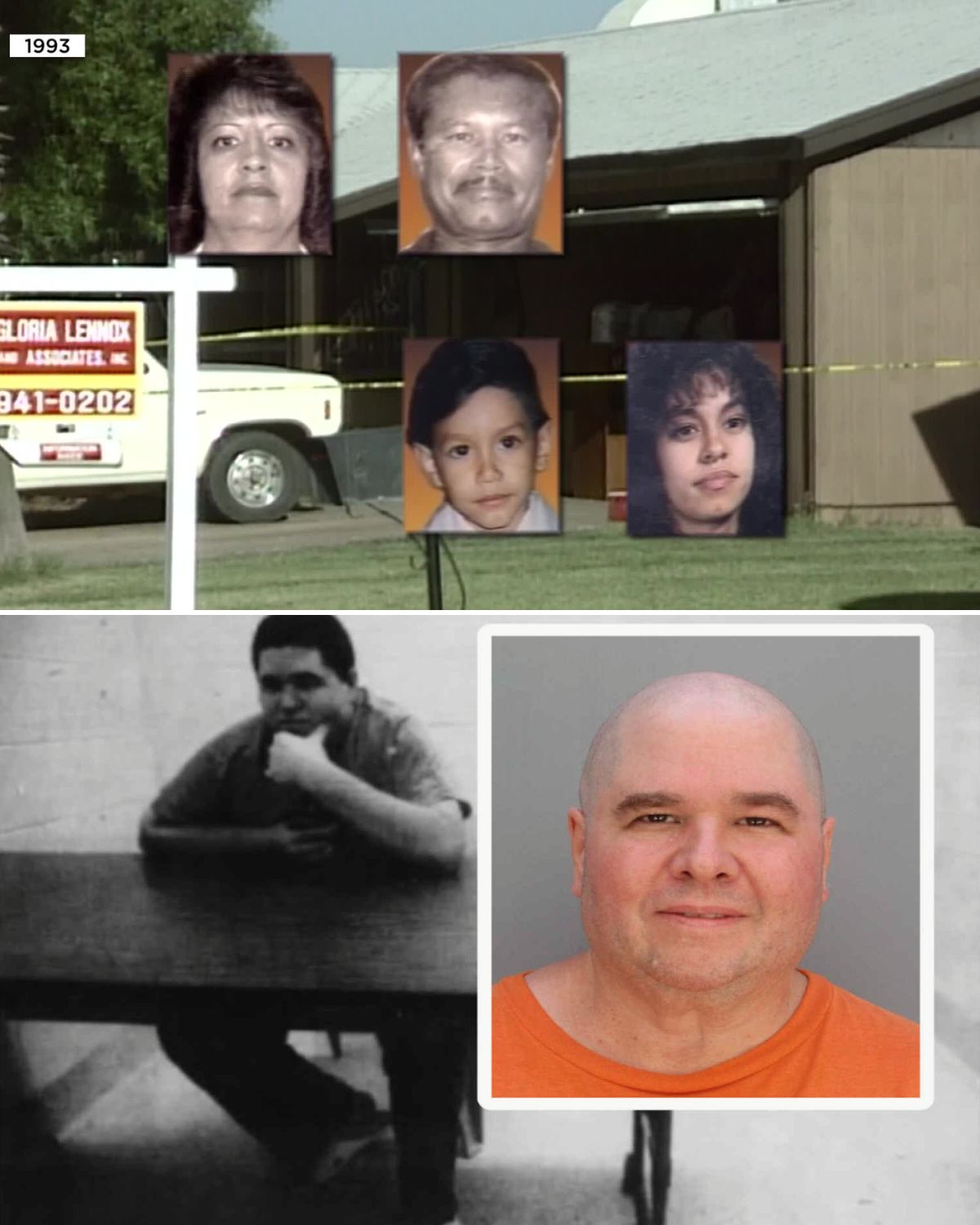
More than thirty years after one of the most horrifying mass murders in Arizona history, Richard Kenneth Djerf was executed by lethal injection at the Arizona State Prison Complex in Florence on October 17, 2025.

Djerf, 55, was pronounced dead at 10:40 a.m. after receiving a lethal dose of pentobarbital. His execution brought a legal and emotional conclusion to a case that had haunted Arizona since 1993, when an act of revenge spiraled into the slaughter of an entire family.
In the days leading up to his execution, Djerf declined to seek clemency and accepted responsibility for his crimes. In a handwritten letter, he described his actions as “cruel, disgusting and depraved.” When prison officials asked whether he wished to make a final statement inside the execution chamber, his response was brief.
“I have none.”
For surviving relatives of the Luna family, the execution marked the end of a decades-long wait for justice.
A Revenge Plot That Became a Family Massacre
The murders occurred on September 14, 1993, in Phoenix, Arizona.
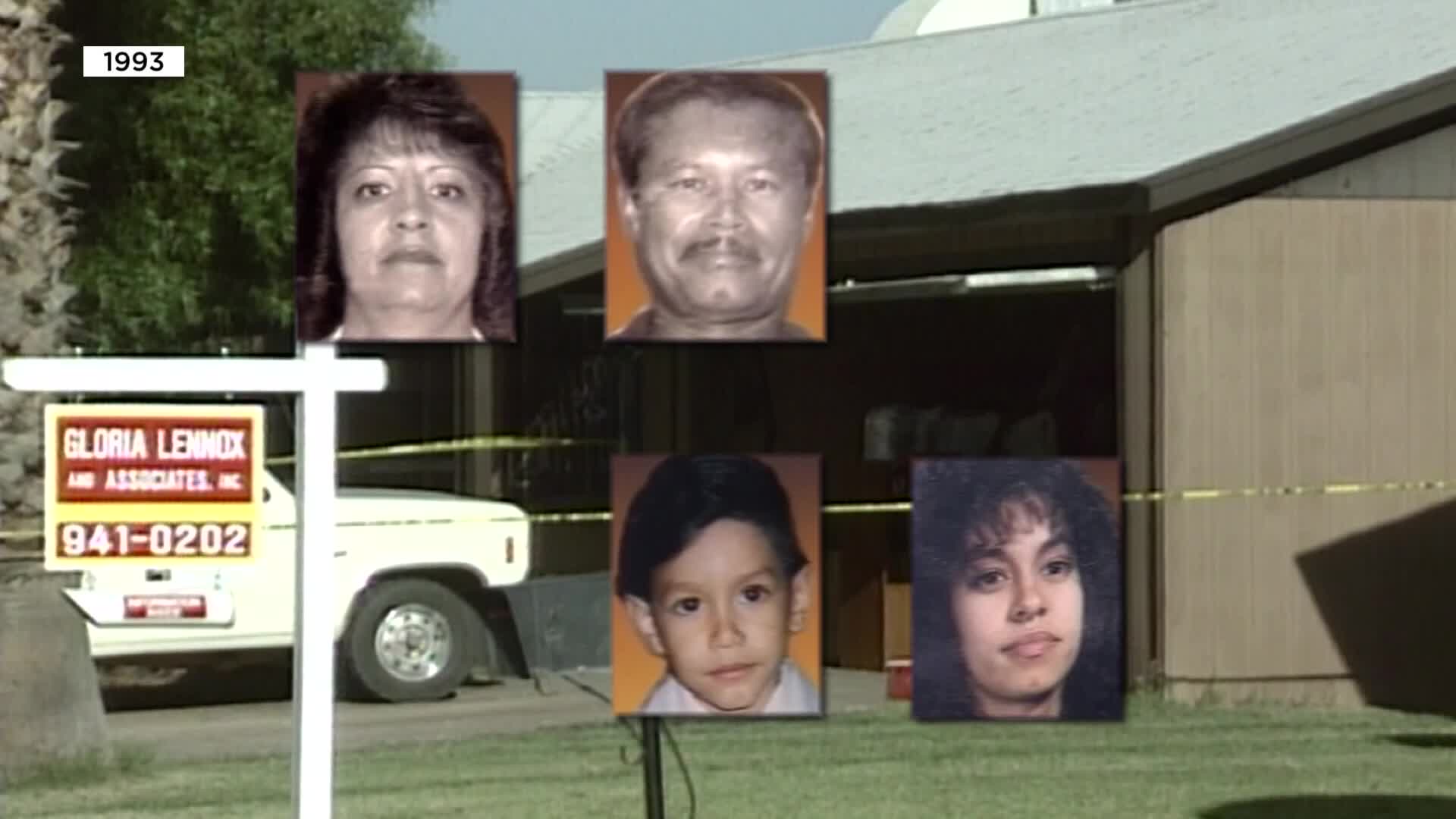
According to prosecutors, the violence began with a personal grudge.
At the time, 23-year-old Richard Djerf had become consumed with anger toward his former roommate, Albert Luna Jr. Djerf believed Luna had stolen electronics and a firearm from his apartment. Investigators later said the resentment evolved into an obsession that ultimately targeted an entire family.
Instead of confronting Albert Luna Jr. directly, Djerf went to the home of Luna’s parents.
What happened next would become one of the most disturbing crime scenes Arizona authorities had ever encountered.
Gaining Entry Through Deception
Prosecutors said Djerf arrived at the residence posing as a flower delivery worker.
The ruse worked.
After being allowed inside, he immediately took control of the home.
Patricia Luna, 42, and her five-year-old son, Damien, were restrained, gagged, and tied to chairs in the kitchen. Over the next several hours, Djerf waited as other members of the family returned home.
When 18-year-old Rochelle Luna arrived, she too was captured.
Later, Albert Luna Sr., 47, walked into the nightmare unfolding inside his own home.
One by one, every family member who entered the house became a prisoner.
Hours of Terror
Evidence presented by prosecutors revealed a prolonged and calculated attack.
Rochelle Luna was sexually assaulted before her throat was cut.
Albert Luna Sr. endured a brutal beating with a baseball bat before being stabbed and shot.
The violence then turned to Patricia Luna and young Damien.
Still bound to their chairs, both were shot in the head.

Investigators described the murders as deliberate executions carried out against defenseless victims.
Before leaving, Djerf set fire to the residence in an attempt to destroy evidence and conceal what had happened.
The fire failed to erase the truth.
The family’s oldest son, Albert Luna Jr., later returned home and discovered the devastation.
The sight that greeted him would remain etched into the memories of investigators, prosecutors, and family members for decades.
A Chilling Confession
Authorities quickly identified Djerf as the primary suspect.
Following his arrest, he eventually confessed to the killings.
In 1995, he formally pleaded guilty to four counts of first-degree murder.
What disturbed many investigators was not merely the confession itself, but Djerf’s attitude when discussing the crimes.
According to court records and later interviews, he recounted the murders with a detached demeanor. At one point, he reportedly compared the experience to watching a movie, a statement prosecutors later cited as evidence of his emotional indifference to the suffering he had inflicted.
The guilty plea spared the victims’ relatives from enduring a lengthy trial, but it did not lessen the horror of the crimes.

A judge sentenced Djerf to death.
Decades of Appeals
Like many capital cases, Djerf’s execution was delayed by years of legal challenges.
Defense attorneys argued that neurological issues, including alleged brain damage and possible undiagnosed autism spectrum disorder, should have been considered as mitigating factors.
They also challenged aspects of his guilty plea and sought additional reviews of his sentence.
Arizona courts repeatedly rejected those arguments.
Ultimately, the Arizona Supreme Court concluded that Djerf had knowingly and voluntarily entered his guilty plea and that the death sentence remained legally justified.
After decades of litigation, all remaining appeals were exhausted.
The Final Hours
On the morning of October 17, 2025, Djerf was escorted into the execution chamber at the Arizona State Prison Complex.
Witnesses described the process as orderly and uneventful.
Unlike some condemned inmates who use their final moments to apologize, explain their actions, or address victims’ families, Djerf chose silence.
When asked if he wished to make a final statement, he simply declined.
The lethal injection procedure began shortly afterward.
According to prison officials, the process lasted approximately nine minutes from the administration of pentobarbital until death was pronounced.
At 10:40 a.m., Richard Kenneth Djerf was declared dead.
It was Arizona’s second execution of 2025.
Justice After Thirty-Two Years
For many observers, Djerf’s execution represented the closing chapter of one of Arizona’s darkest criminal cases.
The murders of Patricia Luna, Albert Luna Sr., Rochelle Luna, and five-year-old Damien Luna left a permanent scar on their community and devastated the surviving members of the family.
No execution could restore the lives that were lost.
No legal ruling could erase the terror those victims endured during their final hours.
But after more than three decades of court proceedings, appeals, and delays, the state carried out the sentence imposed for one of the most brutal family massacres in Arizona history.
For the surviving relatives of the Luna family, the long journey through the justice system had finally reached its end.