Long-Lost Nomad City of the Xiongnu Empire Unearthed in Mongolia
In the windswept steppes and rugged mountains of central Mongolia, a discovery has emerged that promises to reshape our understanding of one of Eurasia’s most enigmatic ancient empires. Archaeologists have uncovered what they believe to be the long-lost capital city of the Xiongnu—the nomadic confederation that dominated the Mongolian Plateau and repeatedly challenged Imperial China. Known in legend as “Dragon City” or Luncheng, the city’s location had remained a mystery for nearly two millennia. Now, thanks to meticulous excavation and decades of research, it appears that the secrets of the Xiongnu Empire’s heartland have finally been revealed.
The Discovery
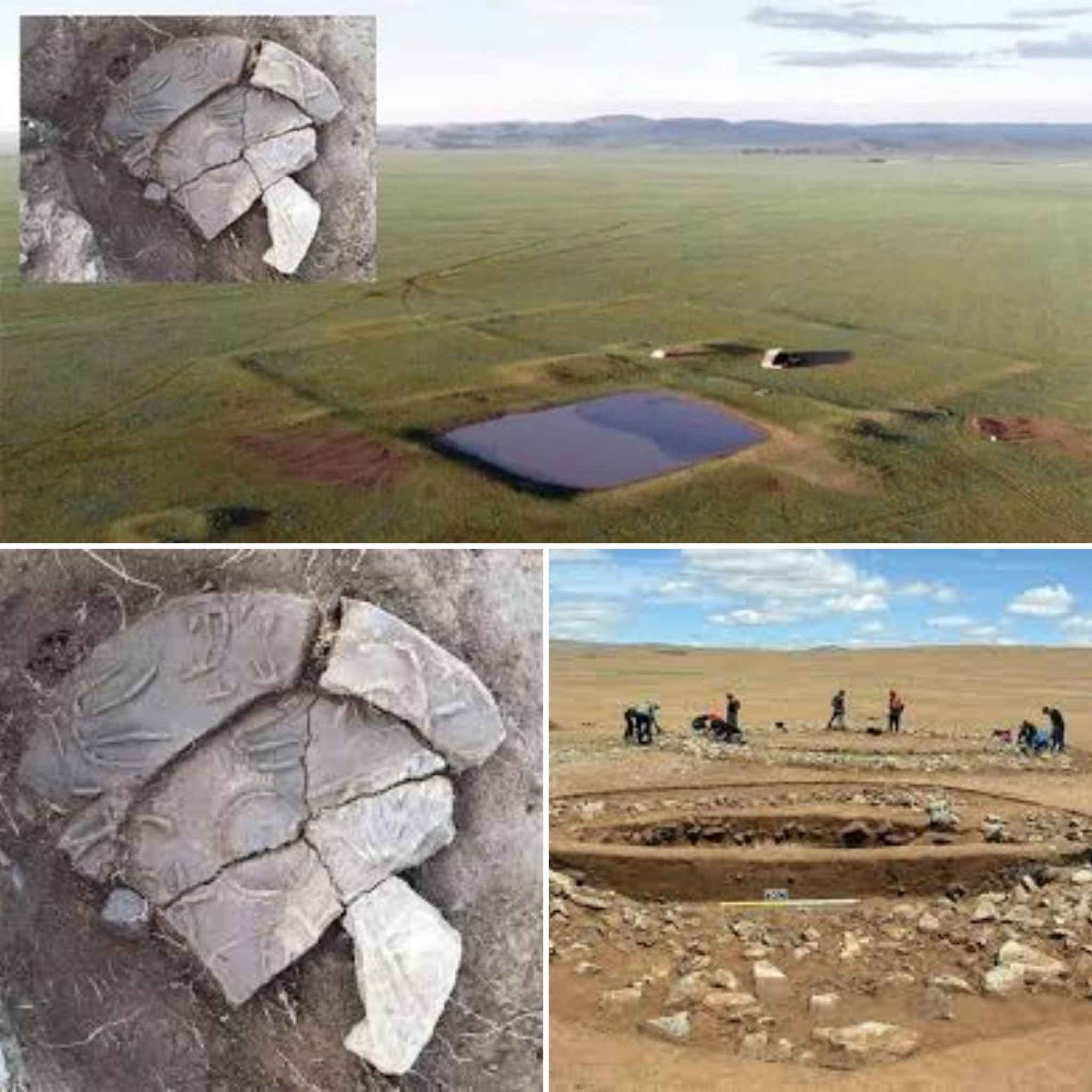
The story begins in 2017, when a team of archaeologists from Ulaanbaatar State University began surveying the Ulziit district of Arkhangai province, along the banks of the Orkhon River. The site, located in the heart of Mongolia, had long been suspected of containing remnants of ancient settlements, but no excavation had confirmed its significance. Early fieldwork revealed promising artifacts: fragments of pottery, iron tools, and, most intriguingly, a small section of roof decoration bearing an inscription in ancient Chinese characters reading:
“Son of Heaven Chanyu”
The Chanyu was the title used by the rulers of the Xiongnu Empire, while “Son of Heaven” was a distinctly Imperial Chinese term, signifying legitimacy and the divine right to rule. This inscription was extraordinary: it linked the archaeological site directly to the highest echelon of Xiongnu leadership. Archaeologist Tumur-Ochir Iderkhangai, who led the excavation, described it as “the first time such a direct artifact has been discovered,” cementing the identification of the site as the legendary Dragon City.
The Xiongnu Empire: Nomads Who Shaped History
To understand the importance of this find, it is essential to explore the Xiongnu themselves. Flourishing between 300 BCE and 100 CE, the Xiongnu were a nomadic tribal confederation that dominated the Mongolian steppes and maintained a complex relationship with successive Chinese dynasties. Their skill in mounted warfare, combined with sophisticated political organization, allowed them to challenge even the most powerful empires of their time.
The Xiongnu’s interactions with the Han Dynasty were particularly notable. They alternated between periods of warfare and diplomacy, often compelling the Chinese to pay tribute, negotiate marriage alliances, or provide gifts to avoid invasion. Archaeological evidence, combined with Chinese historical records, indicates that the Xiongnu confederation was a politically unified but ethnically diverse entity, comprised of multiple clans bound together under the Chanyu, the supreme ruler.
After their defeat by the Han Dynasty at the Battle of Mobei in 119 BCE, the Xiongnu fractured into northern and southern branches. However, they remained influential, migrating southward and eventually establishing political entities in China, such as the Han Zhao state during the turbulent Sixteen Kingdoms period of the 4th century CE.
Some historians and linguists speculate that the Xiongnu may have been the ancestors of the Huns who later appeared in Europe, although their precise ethnic and linguistic origins remain debated, with theories suggesting Iranian, Mongolic, Turkic, Uralic, or Yeniseian connections.
Dragon City: The Nomad Capital
The site near the Orkhon River, where the roof fragment was found, appears to confirm ancient textual references to Luut or Luncheng, the mythical “Dragon City” described in Chinese chronicles as the Xiongnu capital. Early reports suggest that the city was massive, fortified with double walls and equipped with a large reservoir. While the city was nomadic in origin, it featured permanent structures and ceremonial architecture, demonstrating a degree of urban planning previously unassociated with nomadic societies.
The discovery of the inscribed roof fragment offers a direct link to the Chanyu, proving that the site was the political center of the Xiongnu Empire. “This fragment is more than a piece of roof—it is a declaration of power, identity, and imperial legitimacy,” Tumur-Ochir explained. “It confirms that the Dragon City existed and was located in the Orkhon River valley, in the region of the Khangai Mountains.”
Architectural and Archaeological Insights
Excavations have revealed several structural components, including foundations of large buildings, defensive walls, and traces of ceremonial spaces. Archaeologists have documented artifacts that include pottery, iron tools, and ceremonial objects, which suggest a combination of domestic and political activities within the city. The presence of high-status items, such as decorative roof tiles and inscribed objects, reinforces the interpretation of Dragon City as the epicenter of power for the Xiongnu Chanyu.
The city’s layout, combined with historical descriptions, indicates a dual purpose:
- Administrative and political hub – hosting councils, diplomatic gatherings, and ritual activities
- Ceremonial and symbolic center – reinforcing the Chanyu’s legitimacy and consolidating alliances among clans
The use of permanent architecture within a nomadic culture illustrates the Xiongnu’s adaptability and hybridization of nomadic and sedentary practices, a feature that likely contributed to their political cohesion and military effectiveness.
The Orkhon River Valley: Geography of Empire
The Orkhon River valley, where the site was discovered, has long been recognized as a critical corridor in Central Asia. Its fertile plains, access to water, and proximity to mountain passes made it an ideal location for a capital city. The valley also provided strategic advantages:
- Defensible terrain – cliffs, hills, and rivers offered natural barriers against invasions
- Resource accessibility – pasture for horses, proximity to minerals, and trade routes for goods
- Cultural crossroads – interaction with neighboring tribes and Chinese emissaries
Ancient records describe the Dragon City as a hub for diplomatic negotiations with the Han Dynasty, where envoys would meet the Chanyu to discuss tribute, trade, or peace agreements.
Cultural and Historical Significance
The Dragon City discovery is significant on multiple levels:
- Historical confirmation – It validates centuries of textual references to the Xiongnu capital.
- Nomadic urbanization – Demonstrates that nomadic societies could establish permanent political centers.
- Chinese-Xiongnu relations – Provides context for the complex interactions between nomadic empires and Chinese dynasties.
- Archaeological precedent – Challenges assumptions that steppe cultures left minimal permanent infrastructure.
The site also offers an opportunity to study the material culture of the Xiongnu, shedding light on trade networks, technological innovation, and ceremonial practices. For instance, roof decorations with inscriptions and artistic motifs suggest a sophisticated level of artistry and political messaging.
The Road Ahead
Researchers plan to continue excavations, focusing on:
- Mapping the full extent of the city – including walls, ceremonial buildings, and possible residential zones
- Analyzing artifacts – to understand craft specialization, trade, and cultural influences
- Studying the reservoir and water management – offering insights into urban planning in nomadic societies
- Comparative analysis – linking Dragon City findings with other Xiongnu settlements and Chinese historical records
The ultimate goal is to reconstruct the political, social, and cultural life of the Xiongnu at their peak, providing a more nuanced understanding of their empire.
Bridging History and Legend
For centuries, Dragon City existed in the realm of myth. The Xiongnu themselves left few written records, and most knowledge of their empire comes from Chinese chroniclers, who often depicted them as both formidable enemies and mysterious outsiders. The discovery of Dragon City allows historians to reconcile legend with material evidence, confirming that the empire had a tangible capital, administrative infrastructure, and ceremonial architecture.
“Finding the city is like opening a door into a world we only knew through fragmented stories,” Tumur-Ochir reflected. “Now, we can study the daily life, the politics, and the culture of the Xiongnu with unprecedented clarity.”
The discovery also opens the door to re-evaluating the Xiongnu’s influence on later nomadic empires, including the Huns, the Turks, and Mongolic steppe societies. Understanding how the Xiongnu organized their capital and exercised political control offers insights into state formation in nomadic contexts, a topic of ongoing scholarly debate.
International Significance
The find has attracted attention not only in Mongolia but also internationally. Scholars from multiple countries have expressed interest in participating in further research, particularly in Central Asian studies, nomadic archaeology, and ancient Chinese relations. The site offers a rare opportunity to study the intersection of nomadic mobility, urbanization, and imperial politics in a region that served as a crossroads for Eurasian history.
Conclusion
After nearly two thousand years, the Dragon City of the Xiongnu Empire has been found. A fragment of roof decoration, inscribed with the imperial title of the Chanyu, confirms the city’s identity and underscores the Xiongnu’s political sophistication. The discovery provides unprecedented insight into the empire that once dominated the steppes, challenging traditional assumptions about nomadic societies.
As excavations continue, researchers hope to uncover more of the city’s layout, artifacts, and ceremonial spaces, allowing the Xiongnu to speak across the centuries. For the first time, a city long lost to history is emerging from the Mongolian steppes, revealing the grandeur, complexity, and enduring legacy of the Xiongnu Empire.