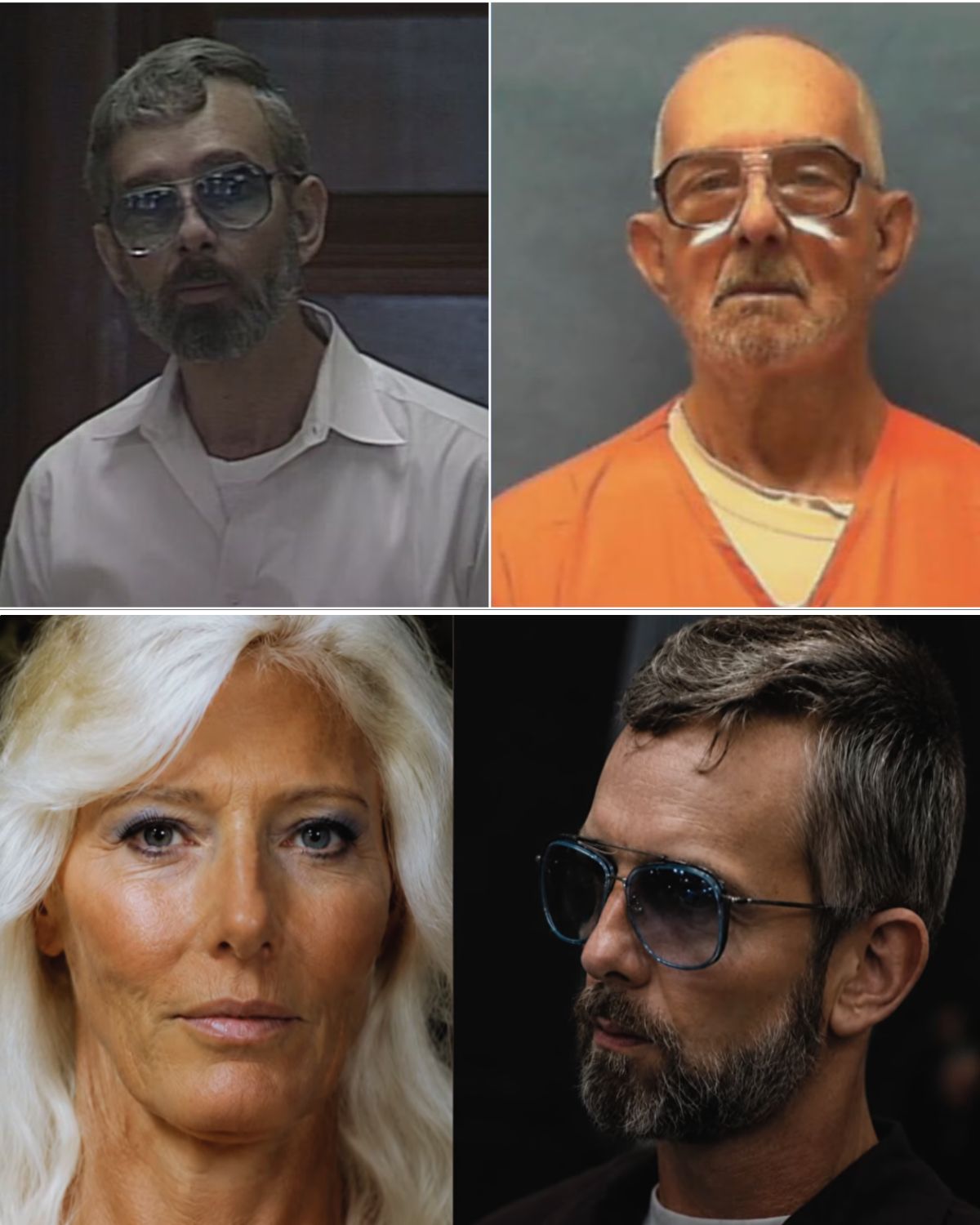
On June 25, 2026, Dusty Ray Spencer is scheduled to face execution by lethal injection at Florida State Prison in Starke, Florida, closing one of the longest-running death penalty cases in the state. At 74 years old, Spencer would become the oldest person executed in Florida’s modern era if the sentence is carried out.

Spencer has spent more than three decades under a death sentence for the brutal 1992 murder of his wife, Karen Spencer, in Orange County, Florida. The case was not simply the story of one sudden act of violence. Court records describe a troubled marriage marked by escalating domestic abuse, threats, and violence in the weeks before Karen was killed.
In the early 1990s, Dusty and Karen Spencer were involved in a painting business. Karen’s teenage son, Timothy Johnson, also lived in the household and would later become a key witness in the case. Behind the appearance of an ordinary family and business life, the relationship between Dusty and Karen had become increasingly volatile.

According to court records, the situation worsened in December 1991. During an argument over money, Spencer attacked Karen, choking her, hitting her, and threatening to kill her. Karen contacted law enforcement, and Spencer was arrested. Despite that incident, Karen later allowed him to return home during the Christmas holiday period. But the reconciliation did not last. After the holidays, she again wanted him out of the house.
The violence reached its final and fatal point on January 18, 1992.

That day, Timothy Johnson witnessed Spencer attacking his mother in the backyard. According to the evidence presented in court, Spencer struck Karen with a brick and continued the assault as Timothy tried desperately to intervene. Timothy attempted to use a rifle, but it misfired. He then used the rifle as a club in an effort to stop Spencer.
Even that did not end the attack.
Court records describe Spencer continuing the assault against Karen, including stabbing her and inflicting blunt-force injuries. Karen Spencer died from the violence. Timothy, who had tried to save his mother, became one of the central witnesses against Spencer.
Spencer was arrested, and prosecutors argued that Karen’s death was not an isolated outburst, but the final result of a pattern of domestic violence and threats. The evidence included Timothy’s eyewitness testimony, the prior December attack, and the circumstances of the killing itself.
At trial in November 1992, Spencer was convicted of first-degree murder, aggravated assault, aggravated battery, and attempted second-degree murder. The jury recommended a death sentence by a 7–5 vote. On December 21, 1992, the trial court sentenced him to death.
But the case did not end there.
The Florida Supreme Court later upheld Spencer’s convictions but found errors in the original sentencing process. As a result, the death sentence was vacated and the case was sent back for a new sentencing proceeding. In 1995, Spencer was again sentenced to death, and that sentence was later affirmed.
For decades, Spencer’s attorneys continued to challenge the sentence through appeals and post-conviction motions. In 2026, after Governor Ron DeSantis signed his death warrant, Spencer’s legal team again sought to stop the execution. Among the arguments raised were his age, his long time on death row, and medical concerns, including claims related to liver disease and the potential effects of lethal injection.
Opponents of the execution have also argued that Spencer is now an elderly and seriously ill man who has spent most of the past three decades in prison. Some have described him as a changed and religious person, arguing that executing him now would serve little purpose beyond retribution.

Supporters of the sentence see the case very differently. For them, the passage of time does not erase the brutality of Karen Spencer’s murder or the terror witnessed by her son. They argue that Spencer received years of legal review and that the courts repeatedly allowed the death sentence to stand.
One point remains especially controversial: the original jury recommendation for death was only 7–5. Florida’s death penalty law has changed repeatedly over the years, and the state’s sentencing rules have been the subject of major legal battles. Spencer’s case has therefore become part of a larger debate about whether older death sentences, especially those based on non-unanimous jury recommendations, should still be carried out decades later.
As June 25 approaches, Dusty Ray Spencer’s case raises difficult questions about punishment, time, and justice. Karen Spencer’s murder was brutal and undeniable. But after more than thirty years, the debate is no longer only about what happened in 1992. It is also about what society believes justice should look like when the condemned man is elderly, ill, and has lived under a death sentence for most of his later life.
For Karen Spencer’s family and those who support the execution, the sentence represents long-delayed justice. For opponents of capital punishment, it represents a system still willing to execute a man decades after the crime.
The central question remains unresolved: does the passage of time change the meaning of justice, or does it simply delay accountability for a life violently taken?