Xiongnu Princesses Shaped Mongolian Traditions, New Study Shows
Throughout history, empires have often been remembered for their kings, generals, and conquerors. Yet, behind the scenes, women—particularly princesses and elite women—frequently played pivotal roles in shaping political, social, and cultural landscapes. From the dynastic marriages of ancient Greece to the architectural patronage of Mughal queens and the statecraft of Mongol princesses, women wielded influence in ways that rivaled the power of their male counterparts. Now, a groundbreaking study of the Xiongnu Empire, the first great nomadic confederation of the Mongolian steppes, reveals that elite women were not only present but central to the empire’s political and cultural cohesion.
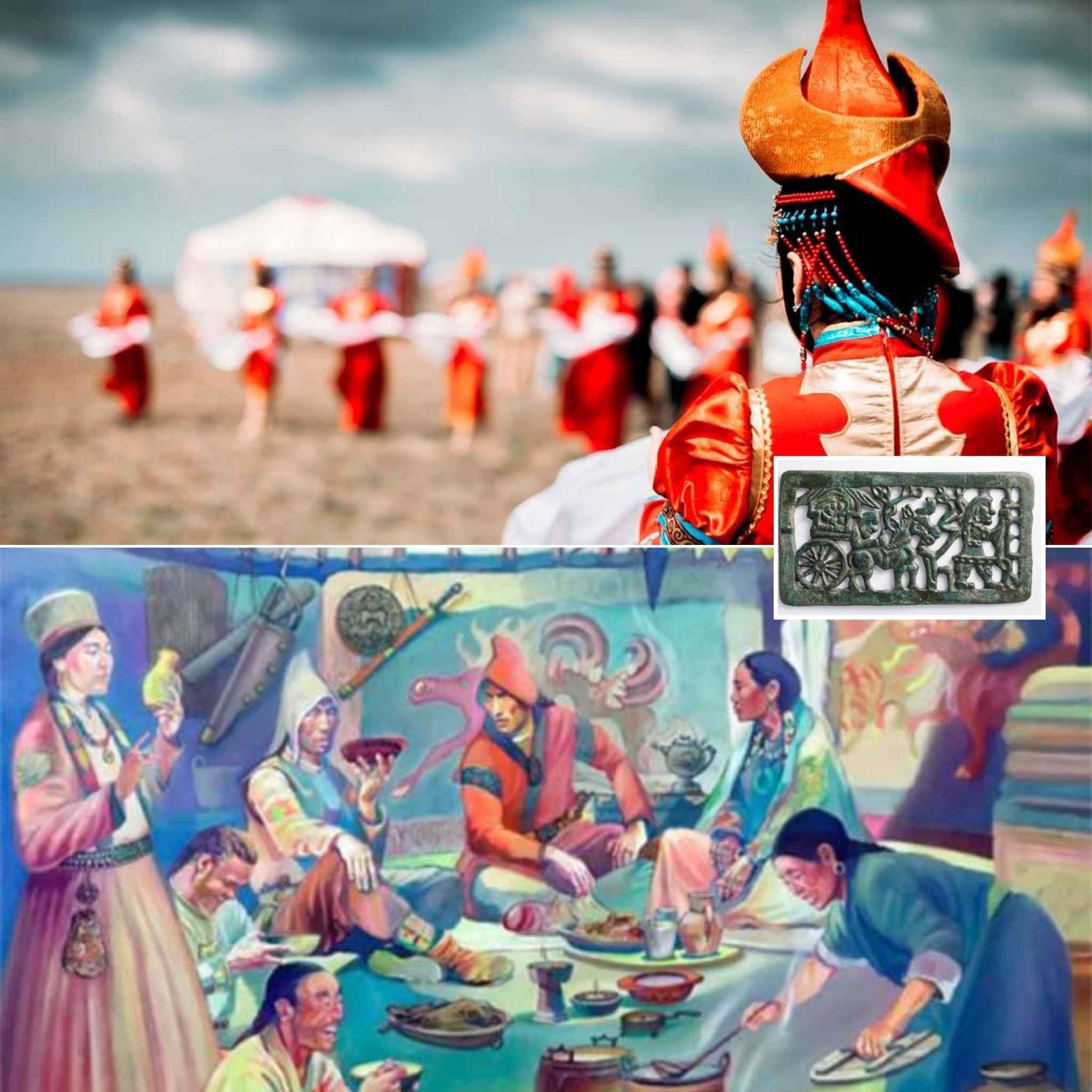
A Window Into the Xiongnu Empire
The Xiongnu Empire, which flourished roughly between 200 BCE and 100 CE, dominated the Mongolian Plateau and often challenged the Han Dynasty of China. For centuries, their history was written almost exclusively by their enemies: Chinese chroniclers who depicted them as fierce, nomadic adversaries. The Xiongnu themselves left behind no indigenous written records, making it challenging for modern scholars to understand their internal social and political structures.
Archaeology has long hinted at complexity within the Xiongnu society: monumental tombs, horse burials, and exotic imported goods suggested a hierarchical society with distinct social stratification. Yet, until recently, the role of women—particularly in the political and administrative life of the empire—remained speculative.
Excavations That Rewrite History
In 2007, archaeological teams uncovered two cemeteries on the western frontier of the Xiongnu Empire. These sites, previously unknown, would become the focus of a multi-institutional genetic and archaeological study, published in Science Advances. Led by researchers from the Max Planck Institutes for Evolutionary Anthropology and Geoanthropology, Seoul National University, Harvard University, and the University of Michigan, the study combined genomic analysis with traditional archaeological methods to investigate the population structure, social hierarchy, and role of elite women in Xiongnu society.
Juhyeon Lee, the study’s first author and a Ph.D. student at Seoul National University, explained the challenge:
“We knew that the Xiongnu had a high degree of genetic diversity, but without community-scale genomic data, it was unclear whether this diversity was due to a mosaic of locally homogeneous communities or whether individual communities were themselves heterogeneous.”
Genetic Diversity and Social Stratification
The study revealed extraordinary genetic diversity across the cemeteries. Individuals buried in these elite cemeteries represented a wide spectrum of ancestry, reflecting the multiethnic nature of the empire. Trade, marriage alliances, and possibly the incorporation of captives contributed to this diversity, connecting the steppes to regions as far afield as Rome, Egypt, and Imperial China.
Yet this diversity was stratified by social status:
- Low-status burials often contained individuals from distant parts of the empire. Many of these were buried as satellite graves around the elite tombs. These individuals displayed the highest heterogeneity, suggesting deliberate integration of non-local populations into the funerary space.
- High-status burials, by contrast, were generally less genetically diverse and exhibited a higher proportion of eastern Eurasian ancestry, indicating that power and wealth were concentrated among particular lineages. Even so, strategic intermarriage was practiced to incorporate new territories into the empire’s elite network.
This pattern suggests a deliberate strategy of social and genetic integration, allowing the Xiongnu to expand their empire while maintaining hierarchical control.
Princesses at the Center of Power
One of the most striking discoveries of the study was the prominent role of women in elite burials. Across both cemeteries, high-status tombs were disproportionately associated with women. At the aristocratic Takhiltiin Khotgor site, monumental tombs were reserved for elite women, with male attendants buried in smaller, simpler graves nearby.
These women were interred with luxurious grave goods, including:
- Coffins adorned with golden emblems of the sun and moon, symbols of imperial power
- Livestock, including horses, sometimes arranged alongside partial chariots
- Objects associated with male warriors, such as gilded iron belt clasps, horse tack, and lacquered cups
At the nearby Shombuuzyn Belchir cemetery, elite women similarly held the most elaborate tombs, surrounded by wealth and symbolic markers of power. Burials included:
- Wooden coffins with gilded ornaments
- Glass and faience beads, Chinese mirrors, and bronze cauldrons
- Silk textiles, wooden carts, and even livestock for ritual offerings
These finds provide concrete evidence that Xiongnu princesses were not passive figures but were central to political, economic, and ceremonial life, especially in frontier regions where integration of newly conquered or allied groups was essential.
Princesses as Political and Cultural Mediators
The placement of elite women in monumental tombs demonstrates a clear link between burial practices and political influence. Researchers argue that the Xiongnu relied on marriage alliances and the strategic positioning of women to consolidate authority, manage peripheral regions, and reinforce the cohesion of their multiethnic empire.

Dr. Jamsranjav Bayarsaikhan, coordinator of the Mongolian Archaeology Project: Surveying the Steppes (MAPSS), emphasized:
“Our results confirm the long-standing nomadic tradition of elite princesses playing critical roles in the political and economic life of empires—a tradition that began with the Xiongnu and continued more than a thousand years later under the Mongol Empire.”
Indeed, many of the political structures and ceremonial practices observed in the Xiongnu Empire appear to prefigure those used by the Mongols a millennium later, suggesting a remarkable continuity of elite female agency on the steppe.
Archaeological Evidence and Grave Goods
The Xiongnu cemeteries provide unprecedented insight into nomadic elite material culture. Artifacts reveal both the wealth and cultural connections of the empire:
- Imported luxury items, including Chinese mirrors and silk, hint at long-distance trade
- Ritualistic grave goods, such as livestock and chariot parts, signal beliefs in afterlife status and power projection
- Gilded objects and symbolic emblems highlight an ideological framework that reinforced female authority within a patriarchal-military society
The combination of wealth, symbolic artifacts, and strategic burial placement indicates that these women were political and cultural mediators, capable of influencing the integration of peripheral territories and reinforcing the Xiongnu hierarchy.
Broader Implications for Nomadic Empires
The study challenges traditional assumptions about nomadic societies as being male-dominated and loosely structured. The Xiongnu cemeteries reveal:
- Elite women held central roles in political and ceremonial life.
- Genetic diversity was deliberately managed to consolidate power across vast territories.
- Marriage and kinship networks were critical for integrating peripheral regions and establishing imperial control.
These findings illuminate the mechanisms of state-building among steppe nomads, demonstrating that nomadic empires relied as much on strategic social engineering as on cavalry and warfare.
Connecting Past and Present
The Xiongnu Empire’s reliance on elite women to maintain cohesion has echoes in later Eurasian empires. Mongol princesses, for instance, often governed territories, mediated alliances, and preserved dynastic continuity. The Xiongnu model provides a direct precedent for female political agency on the steppe, underscoring the sophistication of nomadic governance centuries before written records fully capture their achievements.
Methodology: Genetics Meets Archaeology
This study represents one of the most comprehensive integrated analyses of nomadic societies in Iron Age Asia. Researchers combined:
- Ancient DNA analysis, revealing ancestry, genetic diversity, and kinship relationships
- Archaeological excavation, documenting tomb architecture, burial goods, and ritual practices
- Statistical modeling and machine learning, to analyze patterns of social status, wealth distribution, and genetic stratification
Through this multi-disciplinary approach, researchers could not only map social hierarchies but also reconstruct marriage and alliance networks across the empire.
Redefining Xiongnu Society
The discovery reshapes our understanding of the Xiongnu Empire:
- Elite women were active participants in governance and imperial consolidation
- Burial practices were strategic, reflecting both status and political messaging
- The empire’s genetic and cultural diversity was not random but carefully orchestrated
- Frontier integration relied heavily on female agency and marriage alliances
These insights challenge earlier depictions of nomadic societies as chaotic or male-dominated, revealing a complex social system where women wielded considerable influence.
Conclusion
The study of Xiongnu princesses and elite cemeteries offers a transformative perspective on nomadic empires, social structure, and female power. It shows that, far from being peripheral actors, women were central to empire-building, diplomacy, and cultural integration. From monumental tombs adorned with gilded symbols to the management of genetic diversity, the evidence speaks to a sophisticated political strategy that leveraged elite female influence.
A millennium later, the Mongols would continue these traditions, cementing the notion that power, strategy, and female agency were inseparable in nomadic imperial systems. The Xiongnu princesses remind us that history is rarely written solely by kings and warriors—the women behind the throne often shaped the destiny of nations.


