The Shroud of Turin, long venerated as the burial cloth of Jesus, has been a subject of scientific and theological study for centuries. While scholars have examined its fabric, pollen traces, and faint images for decades, the advent of AI and digital reconstruction techniques has added a new layer to its study.
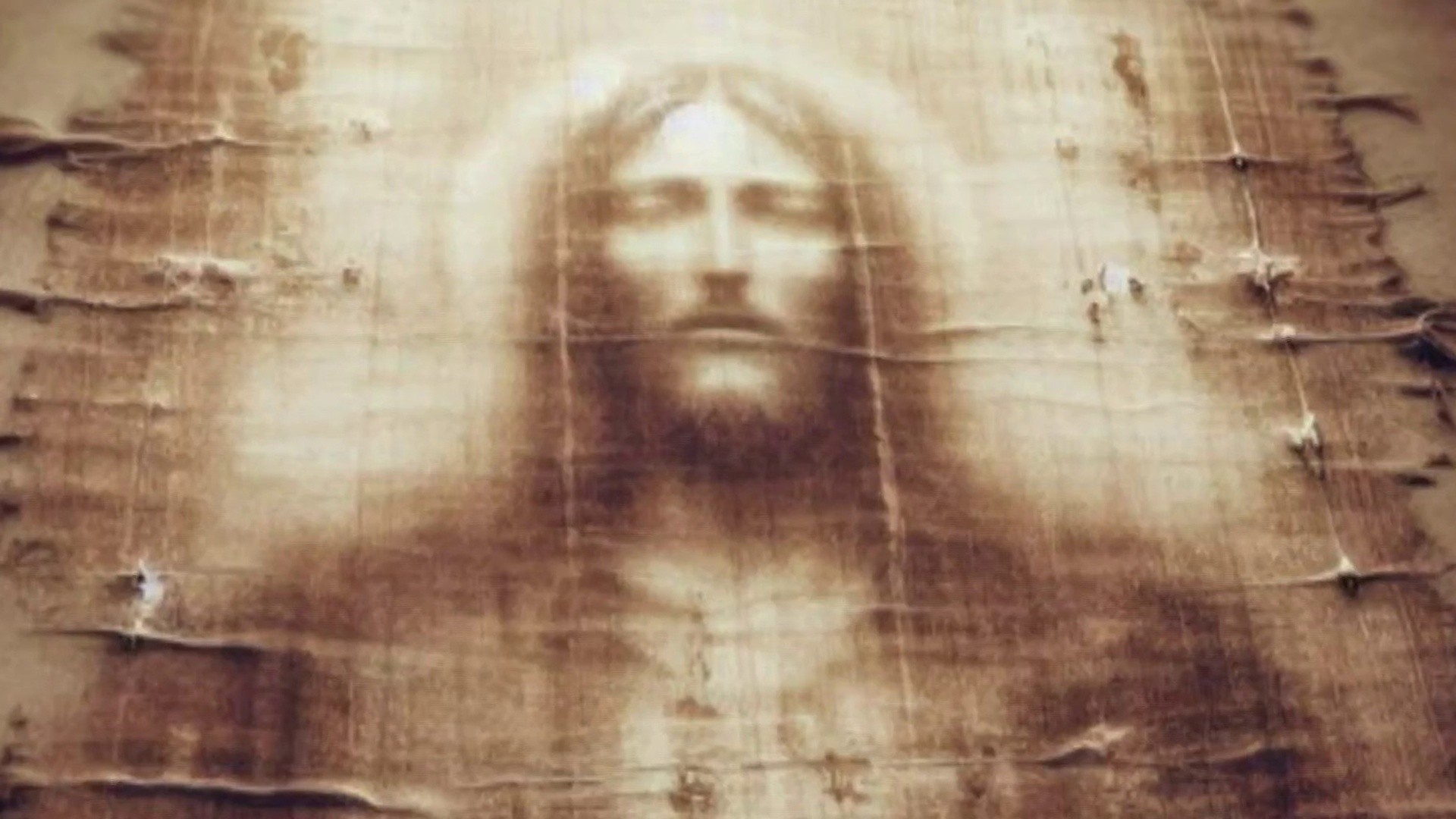
Using advanced imaging algorithms, researchers recently created a 3D reconstruction of the face imprinted on the Shroud. The AI-generated model highlights contours, depth, and facial symmetry that were difficult to discern from traditional photographic or radiographic analysis. Experts note that while these reconstructions are computational interpretations, they offer a fresh perspective on how the original image might have appeared.
The AI model identified subtle features in the eye and nose area, giving the face a more lifelike and three-dimensional appearance. These details were previously overlooked due to the faintness of the imprint and the degradation of the fabric over time. While some observers find the reconstruction remarkably realistic, others caution that AI interpretation should not be treated as conclusive evidence of the Shroud’s origins.
Historically, studies of the Shroud have included radiocarbon dating, microscopic fiber analysis, and chemical assessments of the stains and residues. These studies have provided insights into the age of the cloth, the types of materials used, and even traces of environmental contamination from Jerusalem in the first century. The AI reconstruction does not alter these findings but enhances the visual understanding of the image.
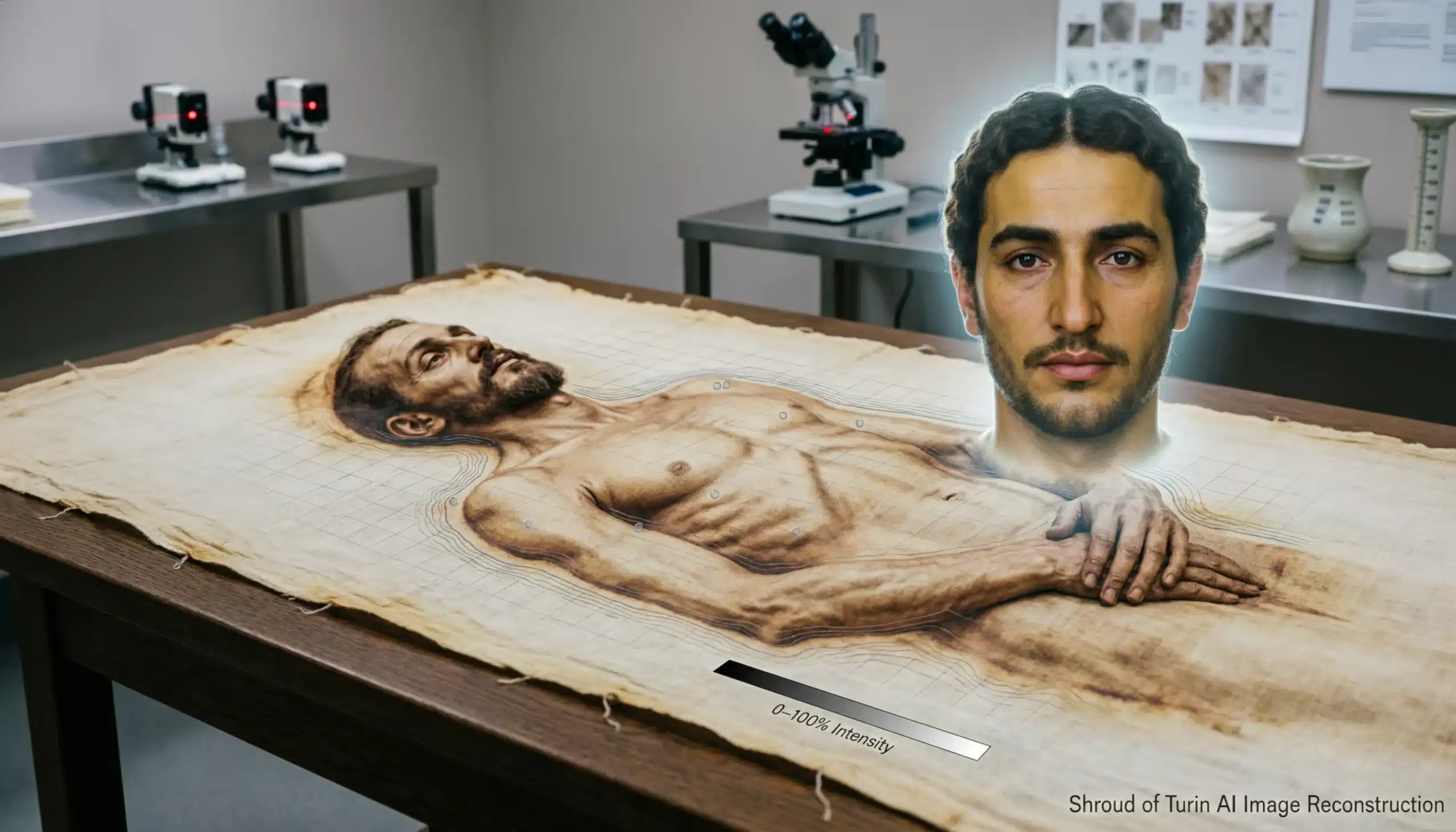
The reconstruction has also sparked renewed interest in interdisciplinary study, combining computer science, forensic anthropology, and historical research. Scholars hope that these techniques may eventually help answer long-standing questions about the Shroud’s creation, the methods behind the image, and the identity of the person it once covered.
Despite the excitement surrounding AI reconstructions, scientists emphasize the need for caution. The Shroud remains a highly studied and controversial artifact, and while AI can provide new insights, it cannot alone prove historical or theological claims. Its true significance continues to be explored through careful scientific, historical, and religious analysis.
Overall, the AI-assisted reconstruction offers a unique tool for scholars and the public alike, providing a more tangible visual representation of an image that has captivated believers and researchers for centuries.