In an extraordinary tale of survival and ecological revival, a group of Przewalski horses made headlines after being released into one of the harshest deserts on Earth. What happened next stunned scientists and changed the narrative of conservation efforts forever.
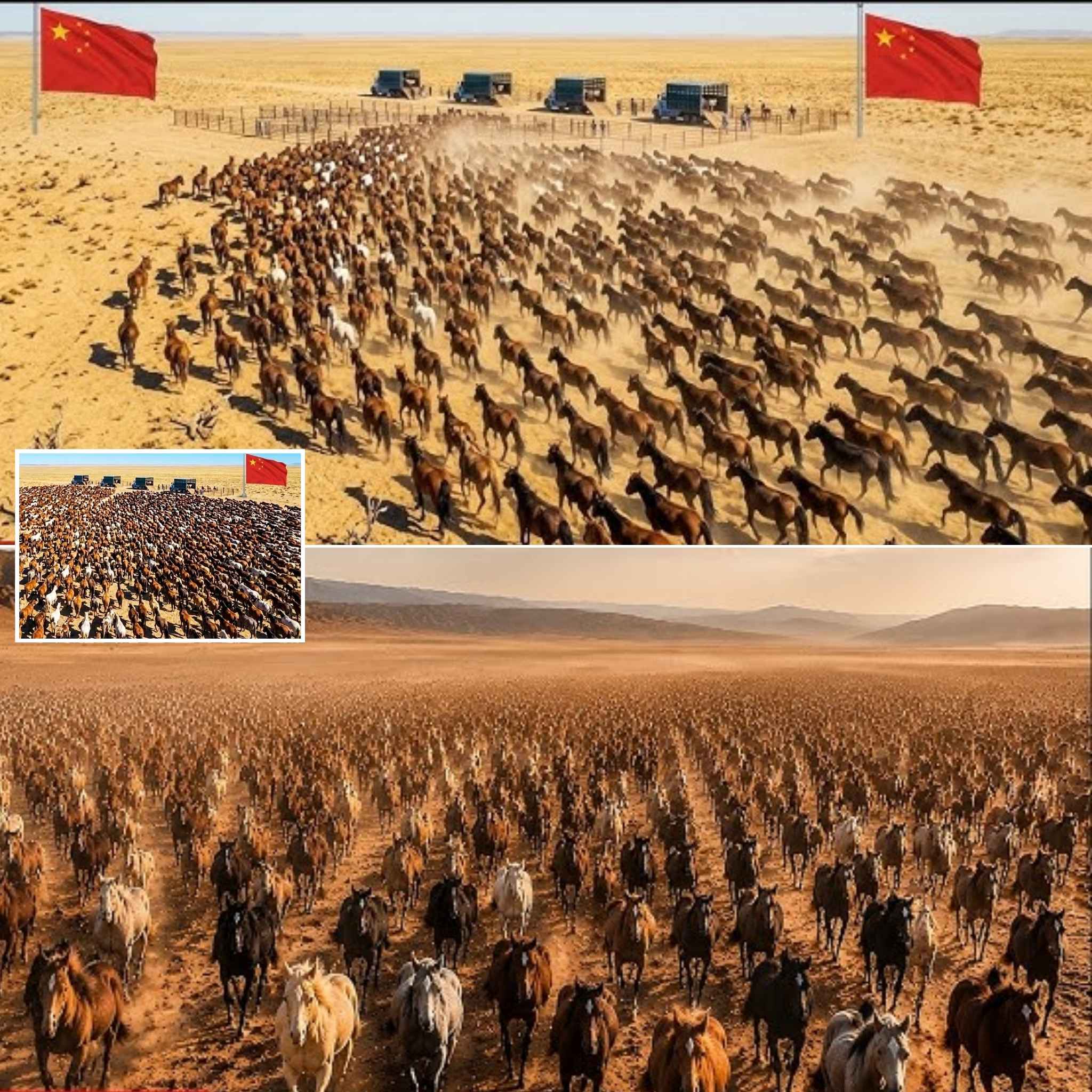
In December 1986, 11 of these unique horses stepped off a cargo plane into the desolate expanse of the Junggar Basin in China, a region so barren that local ranchers referred to it as “the place where nothing grows.” With temperatures plummeting to -40°F in winter and summer peaks soaring to 104°F, experts were skeptical about the horses’ chances of survival. Critics labeled the initiative a death sentence, believing that these zoo-born animals, accustomed to human care, would struggle to adapt to such a hostile environment.
These Przewalski horses, the last truly wild horse species on the planet, had not roamed the region for 17 years. China had invested millions to transport them from zoos in East Germany and the United States, hoping to restore a balance that had been lost. The project stemmed from a broader ecological crisis, as the absence of these horses had led to a catastrophic decline in the local ecosystem. Without their natural presence, the land had become biologically inert, resembling “biological concrete” that could not absorb rainwater, leading to a rapid desertification process.
 In a desperate bid to reverse this trend, a team of dedicated ecologists, led by researcher Yong Jianming, proposed a radical solution: reintroducing the wild horses to their native habitat. The plan involved acclimatizing the horses in semi-wild enclosures before releasing them into the expansive Kalamaili Nature Reserve. But the question loomed large: could these animals, raised in captivity, remember how to survive in the wild?
As the first winter approached, the challenges became apparent. The horses faced severe frostbite and food shortages, with the staff at Jim Sar monitoring their plight from a distance, fearing the worst. Yet, against all odds, the horses began to exhibit remarkable survival instincts. They dug through snow to find grass, formed protective groups around their young, and even broke ice to access hidden water sources. It became clear that their innate behaviors were still intact, waiting to be awakened by the harsh realities of their environment.

By spring 1987, the landscape began to change. Grass species that had been absent for nearly two decades started to reemerge in areas grazed by the horses. The horses were not just surviving; they were revitalizing the ecosystem. Their hooves created small depressions that captured rainwater, and their grazing patterns fostered biodiversity, allowing various plant species to flourish.
 As the years passed, the herd grew, and the ecological benefits multiplied. By 2023, the once-dwindling population of 11 horses had blossomed into 534, effectively managing over 26,700 hectares of land. This remarkable recovery not only reversed the desertification process but also provided an estimated $25 million in ecological benefits annually.
The success of this initiative has sparked interest beyond China, inspiring similar projects in Mongolia and Kazakhstan, where Przewalski horses are now being reintroduced to restore their ecosystems. The story of these horses challenges conventional conservation methods, suggesting that nature itself holds the key to ecological restoration.
As we reflect on this incredible journey, one question remains: how many more ecosystems could be revived if we learned to trust the natural engineers we once drove to extinction?