Missouri has carried out the execution of Lance Shockley, ending a capital murder case that began with the fatal shooting of Missouri State Highway Patrol Sgt. Carl Dewayne Graham Jr. in 2005. Shockley, 48, was executed by lethal injection on October 14, 2025, at the Eastern Reception, Diagnostic and Correctional Center in Bonne Terre after Governor Mike Kehoe denied clemency and the U.S. Supreme Court declined to halt the execution. Throughout two decades of litigation, Shockley maintained his innocence, but state and federal courts repeatedly upheld both his conviction and death sentence.
The investigation began after a fatal vehicle crash in November 2004 that killed Jeffrey Bayless. Sgt. Graham was assigned to investigate the collision and suspected that Shockley had been driving under the influence and had left the scene after the crash. As investigators continued gathering evidence for the manslaughter case, prosecutors later argued that Shockley viewed Graham as the key witness whose investigation threatened to expose him to serious criminal charges.
On March 20, 2005, after finishing his patrol shift, Sgt. Graham returned to his home in rural Carter County. According to prosecutors, Shockley had waited near the property before ambushing the trooper with a high-powered rifle. Graham was struck multiple times, suffering catastrophic injuries that proved fatal at the scene. Detectives immediately secured the area, recovered ballistic evidence, interviewed witnesses, and began reconstructing Graham’s final movements. Their investigation eventually focused on Shockley, whom they alleged had killed the trooper to stop the ongoing criminal investigation into the earlier fatal crash.
Shockley was arrested and charged with first-degree murder and armed criminal action. During the 2009 trial, prosecutors presented circumstantial evidence, forensic findings, and testimony supporting their theory that Shockley had planned the ambush. The defense argued that there was no eyewitness placing Shockley at the scene and maintained that the state’s case relied too heavily on circumstantial evidence. The jury unanimously found Shockley guilty of first-degree murder. During sentencing, however, jurors could not unanimously agree on punishment. Under Missouri law in effect at the time, the decision was transferred to the trial judge, who imposed the death sentence.
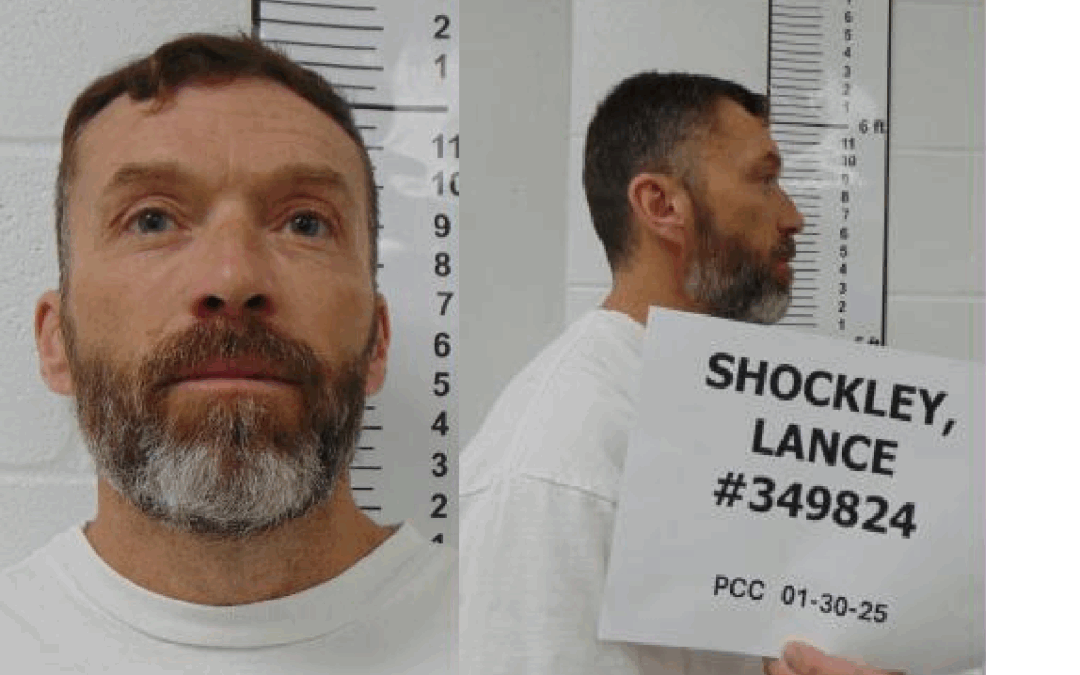
Over the next 16 years, Shockley’s attorneys pursued numerous appeals in state and federal courts. They challenged the fairness of the trial, sought additional DNA testing on evidence recovered from the crime scene, and argued that the sentence imposed by a judge after a deadlocked jury violated constitutional protections. Missouri appellate courts, the Eighth Circuit Court of Appeals, and the U.S. Supreme Court ultimately rejected those claims, allowing the execution to proceed. Governor Kehoe also denied Shockley’s clemency petition, stating that the conviction and sentence had been thoroughly reviewed through the judicial process.
On the day of the execution, prison officials reported that Shockley’s final meal consisted of peanut butter, oatmeal, water, and sports drinks purchased from the prison canteen. Before the lethal injection was administered, he delivered a brief final statement quoting a passage from the Gospel of John: “So also you have sorrow now, but I will see you again, and your hearts will rejoice, and no one will take your joy from you.” He was pronounced dead at 6:13 p.m. after receiving a lethal dose of pentobarbital. Members of Sgt. Graham’s family later said the execution brought a measure of finality, while Missouri State Highway Patrol officials honored Graham’s service and sacrifice.
The Shockley case remains one of Missouri’s most closely followed law enforcement homicide prosecutions. For investigators, it demonstrated the challenges of building a capital murder case based largely on circumstantial and forensic evidence while sustaining the conviction through decades of appellate review. For Sgt. Carl Dewayne Graham Jr.’s family and fellow troopers, the execution marked the conclusion of a legal process that began with the killing of a veteran highway patrol officer and ended 20 years later after every available appeal had been exhausted.