The wind outside the Halpin estate in Chicago moved like it had a purpose, slipping through the iron gates, brushing against the security lights that scanned an empty road again and again as if searching for something that refused to appear.
The cameras blinked without emotion. The guards stood still without question. Everything in place. Everything controlled.
Until she appeared.
Barefoot.
Small enough that the gate looked like it had been built to keep out storms, not children.
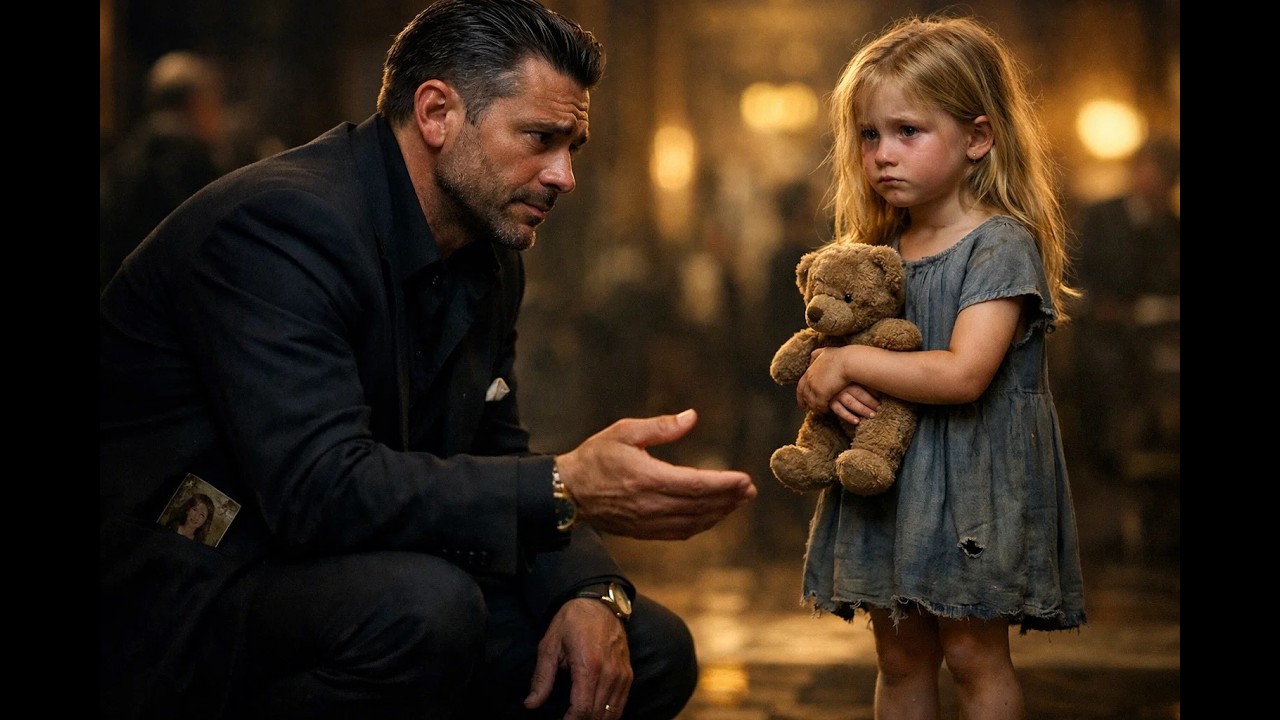
A broken teddy bear hung from her hand by a single thread, one eye missing, stuffing leaking through torn seams like it had already given up trying to stay inside itself.
She didn’t knock. She didn’t shout.
She just stood there in the rain and whispered into the space between the world and nothing.
“No one ever came back for me.”
The words were so soft they should have disappeared into the weather.
But inside the mansion, someone heard them anyway.
And everything changed.
Richard Halpin didn’t come downstairs like a man disturbed from sleep. He came down like a man answering something he had been expecting his entire life without knowing it.
In Chicago’s underground world, his name wasn’t spoken loudly. It didn’t need to be. Shipping networks, union gates, private security channels, financial shadows that kept entire industries breathing without ever being seen—his influence touched all of it.
People feared him. People obeyed him. People built strategies around avoiding his attention.
But none of that mattered in this moment.
Because ten years ago, Richard Halpin stopped living like a man building an empire.
He started living like a man who had already lost the only thing that mattered.
His daughter.
Not lost in the usual sense. Not missing in a way that leaves hope intact.
Lost in the way the world erases someone and calls it procedure.
After that, he became quieter. Colder. More precise. Not because he stopped caring about power, but because power stopped meaning anything that couldn’t protect a single life.
That night, he opened the front door himself.
Rain hit him immediately.
And there she was.
The girl didn’t move. Didn’t flinch. Didn’t run.
She just held the broken teddy bear tighter, like it was the only proof she still existed in a world that hadn’t bothered to confirm it.
Richard looked at her for a long moment before speaking.
“You lost?” he asked.
She shook her head once.
“No one ever came back for me.”
No explanation. No tears. Just a sentence she had repeated too many times for it to carry emotion anymore.
Behind him, security shifted slightly.
One guard murmured, “Boss, she might be from—”
Richard raised a hand.
Silence followed instantly.
Not because he asked for it.
Because it was expected.
He stepped forward into the rain and crouched down so he was level with her.
“What’s your name?” he asked.
“Vicky,” she said.
“Just Vicky.”
Something in his expression tightened, but he didn’t show it fully. Not yet.
Inside the estate, systems began reacting without instruction. That was how real power behaved. Quiet. Automatic. Absolute.
The girl was checked carefully. No records. No guardian files. No hospital history. No school registration worth trusting.
Just gaps.
Too many gaps.
As if someone had made an effort to make her untraceable.
A lieutenant approached Richard later that night.
“She doesn’t exist in any system we can access,” he said.
“That doesn’t mean she doesn’t exist,” Richard replied.
“It means someone removed her.”
That sentence lingered longer than it should have.
Because removal in Chicago was never accidental.
It was intentional.
And intention had names attached to it.
By morning, the first response arrived. Not from police or social services, but from a man in a tailored suit who entered the estate like he still believed authority followed him everywhere.
“You’re interfering with a protected relocation case,” he said.
Richard didn’t look impressed.
“Protected by who?”
“Federal oversight.”
A pause.
Then Richard nodded slowly.
“I don’t remember asking permission to care about a child standing in the rain outside my gate.”
The man’s tone sharpened. “That child is part of an ongoing classification program. She is not yours to—”
Richard stood up.
The room changed temperature immediately.
“Get out of my house,” he said quietly, “before I start classifying you the same way.”
The man left within minutes.
But the message had already spread.
Richard Halpin had taken interest.
And interest meant consequence.
That afternoon, Vicky sat at a dining table far too large for her, staring at a bowl of soup she hadn’t touched.
“You don’t like it?” Richard asked.
She shook her head slightly.
“I don’t know if I’m allowed.”
That sentence landed harder than anything else that day.
“Allowed by who?” he asked.
She didn’t answer.
Because she didn’t know.
That was when he noticed it. The constant scanning of exits. The way she kept the teddy bear close even while sitting safely indoors. The tension in her shoulders that never fully relaxed.
Not fear.
Conditioning.
Someone had taught her that safety never lasted.
And everything could be taken away again at any moment.
Richard made a decision without announcing it.
“You’re staying here,” he said.
She blinked.
“For how long?”
“Long enough that you stop asking that question.”
After that, things began to move quietly but relentlessly.
Files disappeared from systems. Shipments stalled. Accounts were frozen. Agencies began receiving inquiries they didn’t expect and couldn’t easily answer.
The system didn’t collapse.
It adjusted.
And when it couldn’t adjust, it resisted.
That resistance came in the form of buried files.
Records that weren’t supposed to exist in the first place.
Richard found the first one in a sealed archive tied to international custody transfers.
A name appeared that shouldn’t have been there.
Elena Halpin.
His daughter.
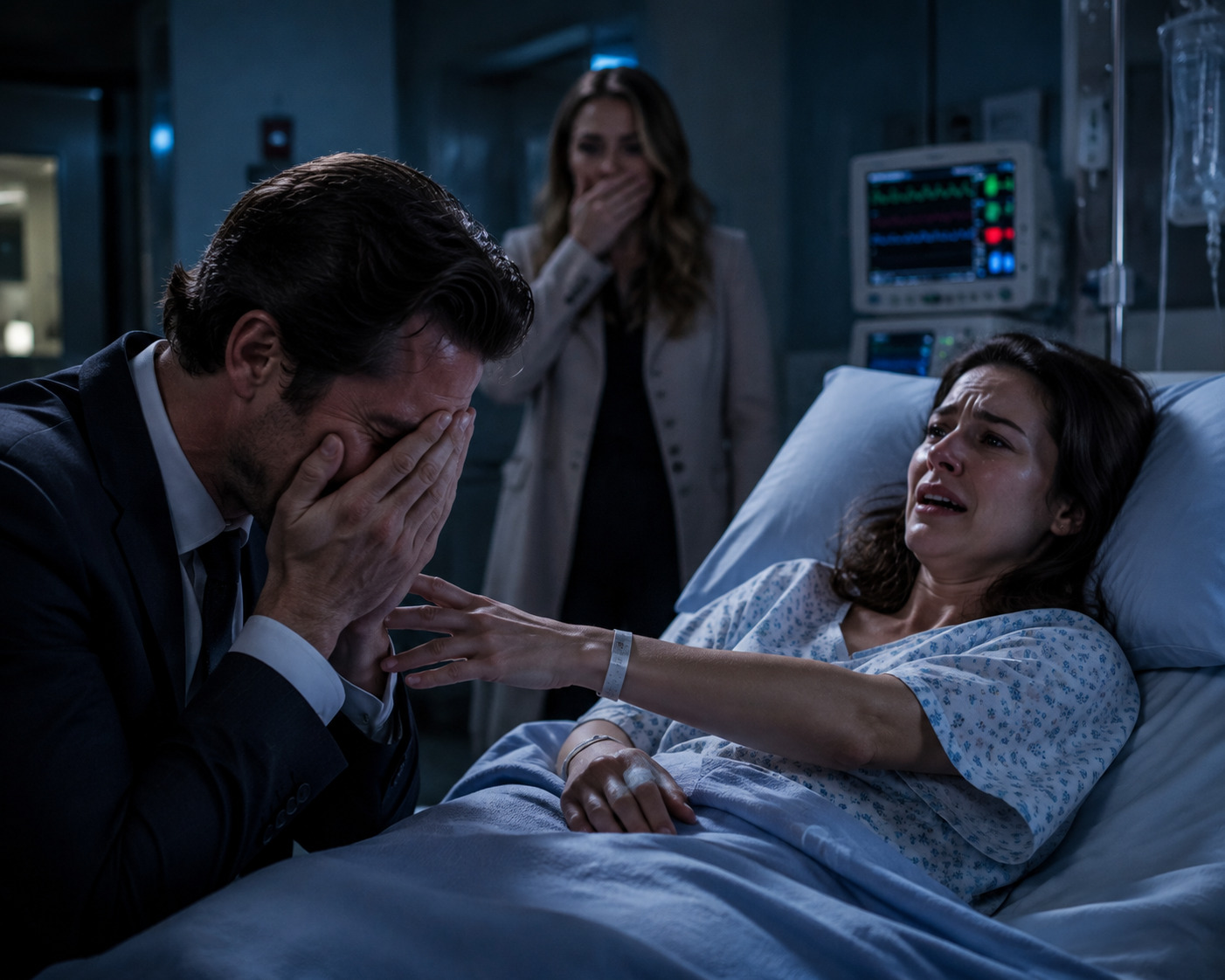
The one declared dead years ago after a collapsed operation overseas. The one whose body was never fully recovered. The one he had mourned in silence because there was no other way to survive it.
His hand paused on the page.
He continued reading.
And then the second truth surfaced.
Dependent: female child, age 6 at time of transfer, biological relation confirmed.
The room didn’t move.
But something inside him did.
Slowly. Carefully. Like understanding had finally caught up to reality.
Vicky wasn’t random.
She wasn’t abandoned.
She wasn’t lost.
She had been placed.
Hidden.
Moved through systems that treated people like assets and erased identities when they became inconvenient.
And then left at his gate.
Not by accident.
But by design.
His granddaughter.
The realization didn’t come with shock.
It came with clarity.
And clarity, in his world, was more dangerous than rage.
By sunrise, the Halpin network stopped defending itself and began correcting records instead. Not violently. Not loudly. Just precisely. Financial pathways collapsed. Oversight systems locked. Contractors vanished from compliance records. Entire structures quietly removed from relevance.
Inside the estate, Vicky noticed none of it.
She was learning how to exist without fear dictating every movement.
Watching her through the glass, Richard spoke to one of his council members.
“If this escalates,” the man warned, “it becomes a war.”
“It already was,” Richard replied. “She just didn’t know she was the target.”
Later that day, legal injunctions arrived demanding custody transfer.
Richard read them once.
Then returned them.
“Tell them,” he said, “they lost jurisdiction the moment they stopped treating people like people.”
The messenger left without argument.
Because arguments require equal ground.
And there was none left.
Weeks passed.
The house stopped feeling like a fortress and started feeling like something else entirely.
A place where footsteps didn’t echo like threats.
Where doors didn’t feel like barriers.
Where silence wasn’t danger waiting to happen.
One morning, Vicky ran down the driveway laughing.
Not cautiously.
Not hesitantly.
Completely.
Richard stood at the porch watching her, not like a man holding an empire together, but like someone holding a promise that had finally become real.
She turned back and waved.
“Grandpa!”
The word didn’t feel new.
It felt correct.
Richard lifted a hand in response.
Small. Simple. Real.
That night, he placed an old key into her palm.
“It opens every door you will ever need,” he said.
She studied it.
“Will it change?”
He shook his head.
“No.”
“Because some things shouldn’t.”
And in a city that measured power by fear and wealth and silence, something different settled into the walls of a house on the edge of Chicago.
Not control.
Not dominance.
But refusal.
Refusal to forget.
Refusal to abandon.
Refusal to let a child become invisible again.
Because in the end, empires built on fear collapse the moment fear changes direction.
But a promise kept?
That becomes a place even power cannot destroy.