A groundbreaking discovery in Southern Oregon is shaking the foundations of what we thought we knew about early human history in North America. A team of archaeologists from the University of Oregon has unearthed a settlement dating back an astonishing 16,000 years, challenging long-held beliefs about when humans first arrived on the continent.
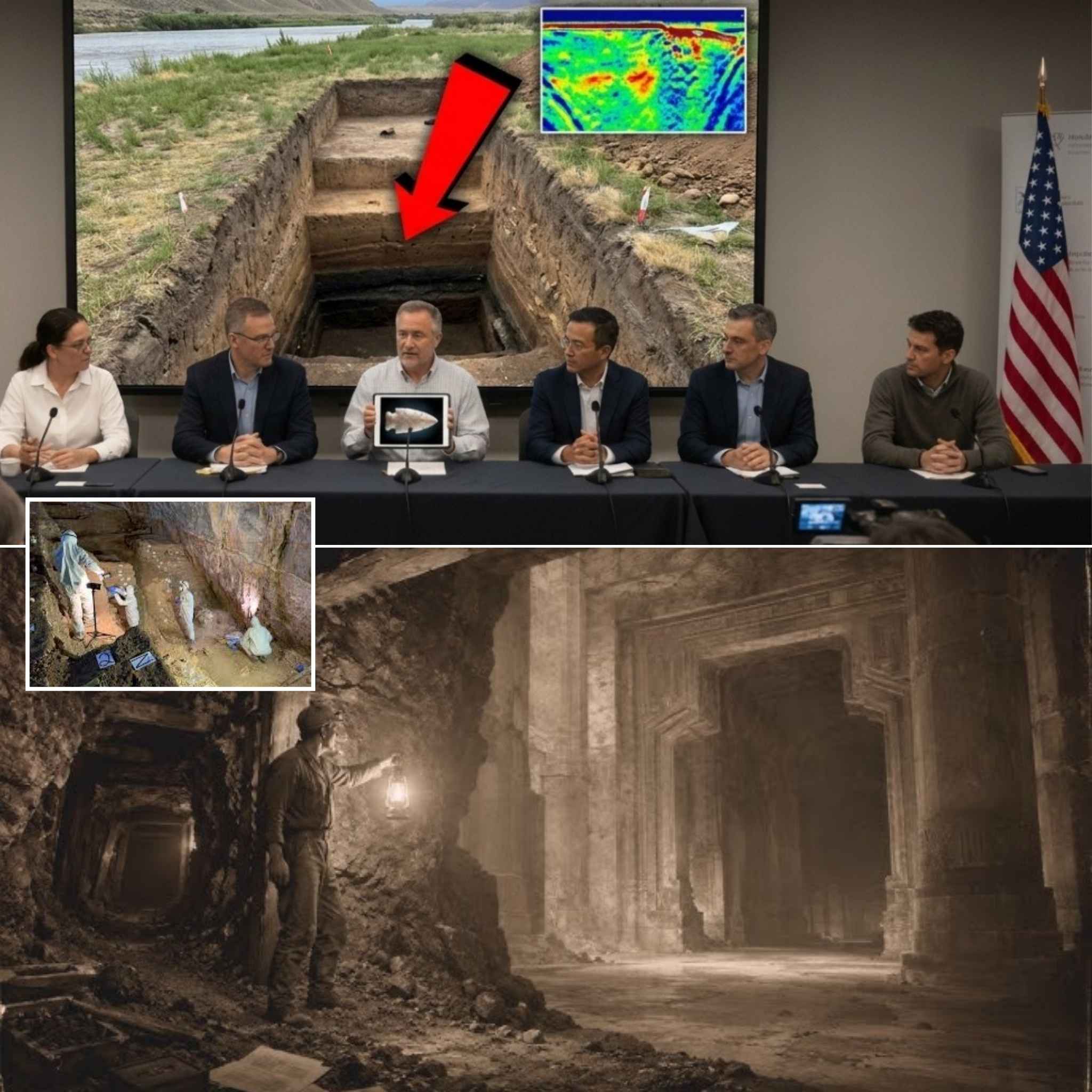
For decades, the prevailing narrative in archaeology stated that the first humans reached America around 13,000 years ago. Loren Davis, a paleoarchaeologist, was not expected to disrupt this established timeline. However, in 1997, he began excavating a site known as Cooper’s Ferry along Idaho’s lower Salmon River, and what he uncovered has changed everything.
After 22 years of meticulous work, Davis’s team revealed evidence of a settlement that predates the Clovis culture—previously thought to be the earliest human presence in North America. The artifacts they found, including tools that should not exist according to established timelines, suggest that humans were living in this region long before the ice-free corridor opened, which was believed to be the primary route for migration.
The implications of these findings are profound. The Clovis First theory, which dominated archaeological thought for 70 years, is now in question. This theory posited that humans crossed a land bridge from Siberia to Alaska and quickly spread across the continent. But the evidence from Cooper’s Ferry indicates that this model is far too simplistic.
 Davis’s research utilized modern radiocarbon dating and advanced stratigraphic methods to peel back layers of history, revealing human activity dating back to between 15,300 and 16,560 years ago. This discovery not only contradicts established timelines but also raises critical questions about the routes early humans took to settle in the Americas.
Before Davis’s findings, Tom Dillehay had already been advocating for a broader understanding of human migration to the Americas. His work at Monte Verde in Chile suggested that humans were present in South America 14,500 years ago, a date that predates Clovis sites in North America. Dillehay’s findings faced skepticism and resistance, but as more evidence emerged, the archaeological community began to reconsider.
The discoveries at Cooper’s Ferry and other sites, such as the Page-Ladson site in Florida and the Paisley Caves in Oregon, indicate that humans were living in North America much earlier than previously accepted. These findings suggest that multiple migration waves occurred, with different populations arriving at various times, each adapting to their environments.

Notably, the tools found at Cooper’s Ferry belong to a different technological tradition than the Clovis points, hinting at diverse cultural practices among early inhabitants. This suggests that early Americans may have followed coastal routes, utilizing marine resources long before the interior corridors were accessible.
Further complicating the narrative, evidence from White Sands National Park in New Mexico revealed human footprints dating back over 21,000 years, suggesting that people were present in North America during the Last Glacial Maximum. This challenges the idea that the continent was uninhabited until the arrival of Clovis hunters.
 The Nimiipuu people, known as the Nez Perce, have lived in the Salmon River region for over 16,000 years, with oral traditions that speak to their deep connection to the land. Their history, often dismissed by Western archaeology, aligns with the evidence now emerging from Cooper’s Ferry, suggesting that indigenous knowledge may hold truths that modern science is only beginning to acknowledge.
As the archaeological community grapples with these revelations, the Clovis First framework appears to be collapsing, prompting a reevaluation of everything built upon it. The extinction of North American megafauna, once attributed solely to human hunting, now requires a more nuanced explanation, considering the long-term presence of humans in these ecosystems.
With the coastlines of ancient migration routes submerged, the potential for future discoveries remains vast. Advances in underwater archaeology may one day reveal even more about the early inhabitants of the Americas, further reshaping our understanding of human history.
As we stand on the brink of a new era in archaeology, one question lingers: What other truths about our past are waiting to be uncovered?