
In a haunting reflection of America’s struggle with racism, the stories of Lawrence Russell Brewer and John William King reveal the chilling aftermath of a brutal hate crime. Both men faced the ultimate punishment for their roles in the 1998 dragging death of James Byrd Jr., a case that shocked the nation and ignited a conversation about justice and race.
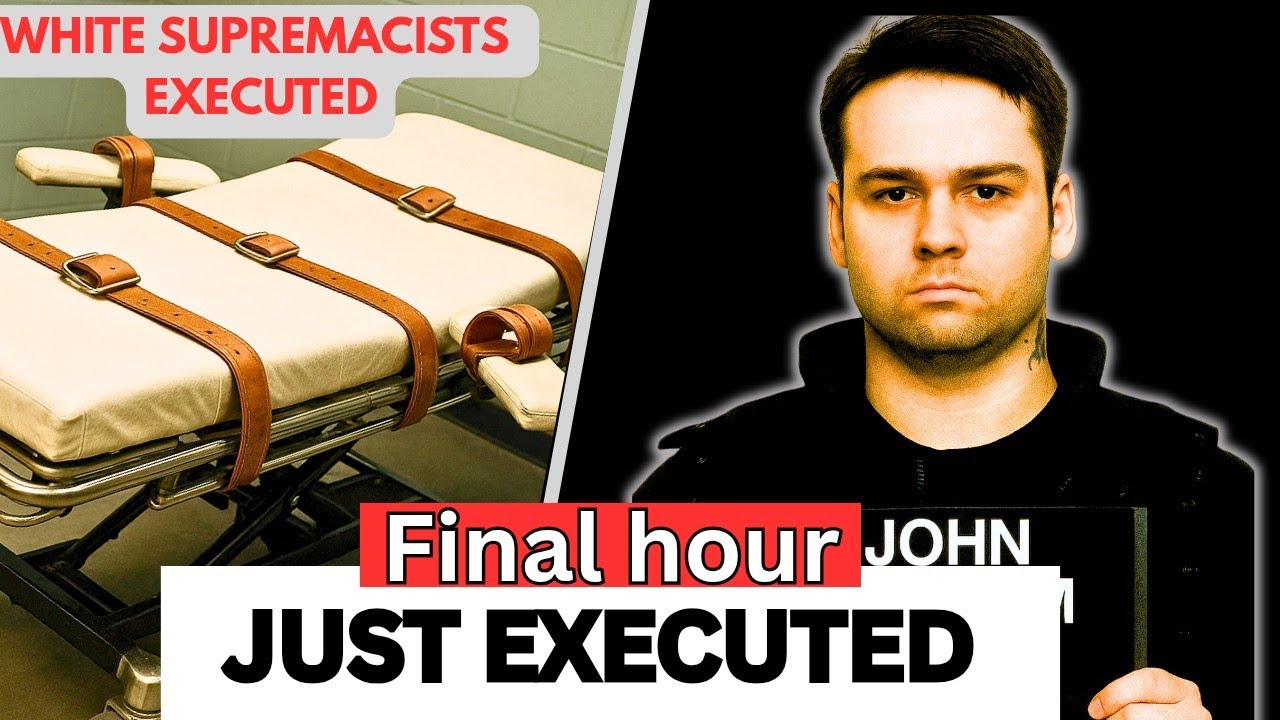 On September 21, 2011, the state of Texas executed Brewer, who had garnered infamy not just for his crime but also for his outrageous last meal request. His choice was a staggering feast, including chicken fried steak, a triple bacon cheeseburger, and even a pint of ice cream. However, when the meal arrived, Brewer shockingly refused to eat any of it. This act of defiance reportedly led Texas lawmakers to abolish the tradition of last meal requests for death row inmates. As he was strapped to the gurney, Brewer offered no remorse, stating chillingly, “As far as regrets, I have none.” He was pronounced dead shortly after the lethal injection began.
Fast forward to April 24, 2019, when King, a self-identified white supremacist adorned with racist tattoos, met the same fate. Unlike Brewer, King chose silence over a final statement, closing his eyes as the lethal drugs took effect. His execution marked a grim conclusion to a case that had been a national flashpoint for discussions on race and justice.
 To understand the gravity of these executions, we must revisit the horrific events of June 7, 1998, in Jasper, Texas. That night, James Byrd Jr., a 49-year-old Black man, was approached by Brewer, King, and Shaun Barry while walking home after a family gathering. What began as a seemingly innocent offer of a ride turned into a nightmare. The three men brutally assaulted Byrd, chaining him to their pickup truck and dragging him for nearly three miles along a rural road. The gruesome scene that unfolded was a stark reminder of the deep-seated racism that still plagued the nation.

The aftermath was swift. Law enforcement discovered Byrd’s dismembered remains, leading to a rapid investigation that unveiled the horrific motivations behind the crime. Evidence, including a broken chain and blood samples, pointed directly to Brewer, King, and Barry, who were arrested and charged with capital murder. The trials that followed captured national attention, revealing the chilling reality of hate-fueled violence.

As the trials unfolded, King and Brewer were found guilty and sentenced to death, while Barry received a life sentence. The Byrd family, who had endured unimaginable pain, sought justice rather than revenge. Their resilience shone through as they attended every hearing, hoping to honor James’s memory.
 In the years that followed, both King and Brewer remained on death row, with King filing numerous appeals in a bid to overturn his conviction. Yet, the evidence against him was overwhelming, including letters filled with hate and links to white supremacist groups. As the execution dates approached, the Byrd family continued to advocate for justice, their hearts heavy with the scars of loss.
With the executions of Brewer and King, the state of Texas sent a powerful message about the consequences of hate. Yet, for the Byrd family, the journey toward healing remains fraught with complexity. While they have seen justice served, the question lingers: can true healing ever be achieved in the face of such deep-rooted pain?


