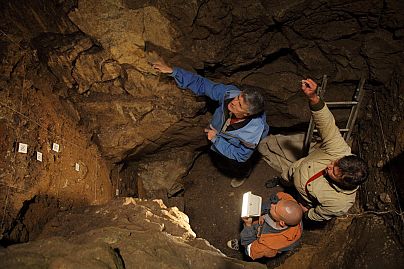
In 2025, a team of geneticists published a detailed analysis of DNA extracted from remains found in Denisova Cave, located in the Altai Mountains of Siberia. The cave, long known for its Denisovan hominin fossils, has provided some of the most significant insights into archaic human populations and their interactions with Neanderthals and modern humans. The latest study aimed to explore genetic traits that might shed light on evolutionary adaptation and interbreeding events.
The analysis confirmed the presence of previously documented Denisovan genetic sequences but also revealed an unusual trait not observed in modern humans or other known archaic hominins. While the precise biological implications are still under investigation, preliminary data suggest that this genetic variant may have influenced skeletal development, immunity, or neurological function. Scientists caution against over-interpretation, emphasizing that DNA alone cannot provide a full picture of the Denisovans’ physiology or behavior.
Further comparative studies showed that this trait was distinct from Neanderthal sequences, reinforcing the idea that Denisovans represent a genetically unique lineage with adaptations suited to their environment in high-altitude and cold climates. Some researchers speculate that this could have conferred survival advantages, particularly in oxygen regulation and metabolic efficiency.
The findings also offer new evidence of interbreeding events. Genetic segments resembling the Denisovan variant appear, in small amounts, in the genomes of some modern populations in Southeast Asia and Oceania, indicating that this archaic lineage contributed to the gene pool of early Homo sapiens as they migrated across Asia.
Despite the excitement, the scientific community remains cautious. The newly discovered trait does not imply “superhuman” abilities or anything outside the scope of natural human evolution. Rather, it highlights the genetic diversity of ancient human populations and the complexity of our evolutionary history.
The research team plans to combine DNA findings with archaeological evidence from Denisova Cave, including tools and artifacts, to better understand the lifestyle, health, and environmental challenges faced by Denisovans. Such interdisciplinary studies are critical for reconstructing the broader context of human evolution.
Overall, the 2025 Denisova Cave DNA study provides compelling insight into a unique human lineage and underscores the importance of ancient DNA in understanding our species’ past. It serves as a reminder that human evolution is not linear and that archaic hominins contributed traits that continue to influence populations today.