Texas has carried out its 600th execution since the state resumed capital punishment in 1982, putting Edward Busby Jr. to death for the 2004 killing of retired Texas Christian University professor Laura Lee Crane.
Busby was executed by lethal injection at the Huntsville Unit after the U.S. Supreme Court lifted a lower-court stay that had temporarily paused the sentence over claims that he was intellectually disabled. He was pronounced dead at 8:11 p.m., marking a historic and controversial moment in Texas’ death penalty system.
The crime that placed Busby on death row began in January 2004, when 77-year-old Laura Lee Crane was abducted from a grocery store parking lot. Prosecutors said she was forced into the trunk of her own car during a robbery and left there to suffocate, with duct tape wrapped around her face, covering her mouth and nose.
For investigators, the case quickly became more than a robbery. It was a kidnapping, a killing, and a race to reconstruct the final hours of a respected educator whose life ended in terror. Evidence tied to the abduction, the vehicle, and the events surrounding Crane’s disappearance eventually led authorities to Busby and his co-defendant, Kathleen Latimer, who later received a life sentence.
At trial, prosecutors painted Busby as a direct participant in a calculated crime that targeted an elderly woman in a public place and ended with her trapped and dying alone. The brutality of the case deeply affected Fort Worth and the TCU community, where Crane was remembered not only as a retired professor, but as a woman whose work and presence had shaped many lives.
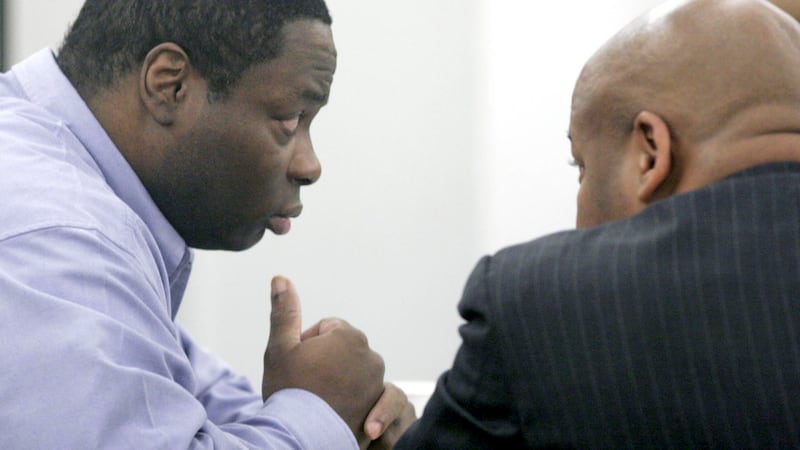
Busby was convicted and sentenced to death in 2005. For nearly two decades, his case moved through appeals, but the final legal fight centered on one question: whether he was constitutionally eligible to be executed.
His attorneys argued that Busby had intellectual disability, a condition that the U.S. Supreme Court has said can make a prisoner ineligible for execution. The issue became even more controversial because experts for both the defense and prosecution had reportedly found evidence supporting that claim, while Texas officials argued the claim had been reviewed before and should not block the sentence.
The 5th U.S. Circuit Court of Appeals issued a stay to allow further review, but Texas asked the U.S. Supreme Court to step in. Hours before the execution, the Supreme Court lifted the stay, allowing the sentence to proceed. That decision turned Busby’s final hours into a dramatic last-minute legal battle watched closely by death penalty opponents, prosecutors, and victims’ rights advocates across the country.
Before the lethal injection was administered, Busby apologized repeatedly to Crane’s family and asked for forgiveness. He also spoke about faith and accepting what he described as God’s will. Minutes later, the execution was carried out in Huntsville.
The death of Edward Busby Jr. closed one criminal case, but it did not end the debate surrounding it. For supporters of the execution, the punishment reflected the severity of Laura Lee Crane’s murder and the years her family waited for the sentence to be fulfilled. For opponents, the case raised urgent questions about intellectual disability, last-minute court rulings, and whether constitutional protections are being applied consistently in capital cases.
What remains is a case defined by two legacies: the violent death of a retired professor who was abducted from an ordinary parking lot, and a Texas execution that became a milestone in the history of American capital punishment.
For the courts, the case is over.
For Laura Lee Crane’s family, the wound began in 2004.
And for Texas, the number 600 now carries the weight of one more name added to the state’s long and deeply debated death penalty record.