
 They Called Her A Nobody — But She Was The Billionaire’s Missing Daughter
The first thing the hotel manager noticed about the young woman was not her face.
It was her shoes.
They were clean, but cheap. The kind of shoes someone bought because they needed to last, not because they matched an outfit. The soles were slightly worn at the edges. The left heel had a faint scratch. They made almost no sound as she stepped onto the polished marble floor of The Grand Aurelia Hotel.
That alone made her stand out.
Everyone else in the lobby moved with the soft confidence of people who knew they belonged there.
Women in silk dresses crossed beneath golden chandeliers. Men in tailored suits spoke quietly into phones. Receptionists smiled behind a curved marble desk. A pianist played near a fountain where coins shimmered beneath clear water.
The air smelled like lilies, leather, and money.
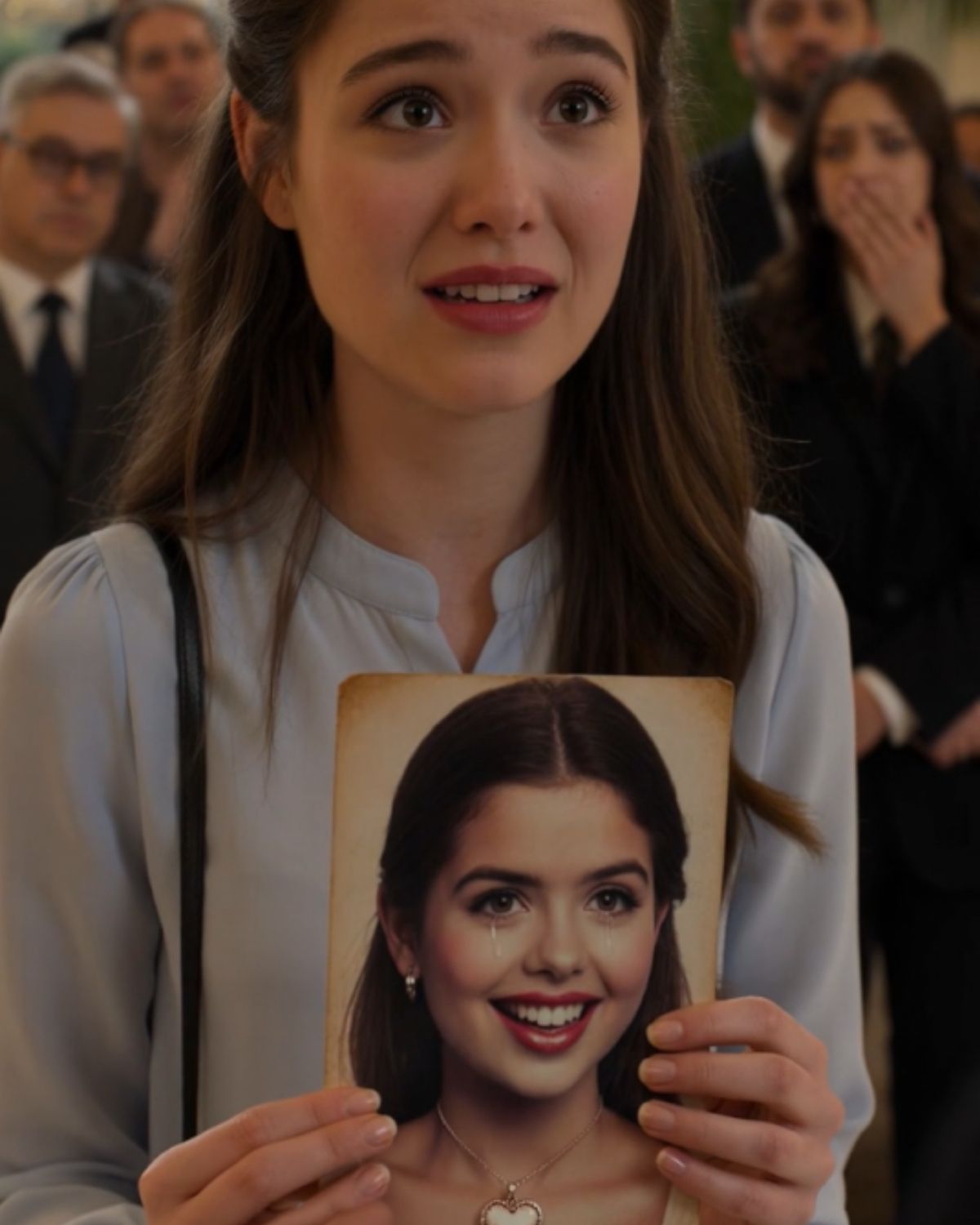
Then the young woman entered with an old photograph in one hand and a small handbag tucked under her arm.
Her name was Elena.
She was twenty-four, though grief had made her look older in quiet moments. Her brown hair was tied back simply. Her cream blouse had been ironed that morning with care. She had no jewelry except a small silver necklace with a blue stone pendant resting at her collarbone.
She stopped just inside the lobby and looked around.
Not like a tourist.
Like someone trying to recognize a place she had only seen in a dream.
At the reception desk, Marcus Vale lifted his eyes from the tablet in his hand.
Marcus was the hotel’s general manager, and he treated the lobby as if it were his personal kingdom. He had built his career on polished cruelty. He remembered the names of billionaires’ assistants, the wine preferences of actors, and which politicians needed side entrances.
But he had no patience for anyone who looked uncertain.
Especially not someone like Elena.
He watched her walk toward the front desk, clutching the photograph with both hands.
Before she could speak to the receptionist, Marcus stepped in front of her.
“Who let you in here?” he asked coldly.
The pianist’s fingers continued moving, but several people looked over.
Elena blinked.
“I’m sorry?”
Marcus looked her up and down slowly enough for everyone nearby to understand the insult.
“Nobody like you belongs in this hotel.”
A receptionist named Clara lowered her eyes.
A bellman froze beside a luggage cart.
Two women near the concierge desk whispered behind their hands.
Elena’s fingers tightened around the old photo.
“I’m looking for someone,” she said softly.
Marcus gave a small laugh.
It was not loud.
That made it worse.
“You’re looking for a fantasy,” he said. “Now leave before I call security.”
Elena swallowed.
Her first instinct was to apologize.
She had spent most of her life apologizing for taking up space.
Sorry for asking too many questions. Sorry for needing help. Sorry for being the girl with no father listed on school forms. Sorry for keeping an old photograph under her pillow and believing it meant something.
But her mother’s last words had not been soft.
Her mother had held her wrist with surprising strength from a hospital bed and whispered, “Find him, Elena. Take the picture. Take the necklace. He deserves to know you lived.”
So Elena stood still.
“I only need five minutes,” she said.
Marcus leaned closer.
“Five minutes here costs more than you have in that handbag.”
A man in a navy suit chuckled under his breath.
Elena’s cheeks warmed, but she did not move.
“I was told Mr. Alexander Kingsley sometimes stays here.”
This time, the lobby reacted.
A few heads turned sharply.
Alexander Kingsley was not just a guest of The Grand Aurelia.
He owned it.
He owned hotels in twelve countries, private residences in cities most people only visited in magazines, and a business empire built from shipping, real estate, and luxury hospitality. His face had appeared on financial magazine covers for decades. People spoke his name in lowered voices, the way some people speak about royalty.
Marcus’s expression changed from irritation to offense.
“You think you can walk in from the street and ask for Alexander Kingsley?”
“I don’t want to disturb him,” Elena said quickly. “I only need to leave something for him.”
She held up the photograph.
It was old and softened at the corners. A young woman with dark hair stood beside a man in a white linen shirt. They were laughing on a pier somewhere. The man’s face was partly turned away, but his profile was clear enough.
Strong jaw. Silver watch. One hand holding the woman’s waist.
Marcus snatched the photo from her hand.
Elena gasped.
“Please be careful.”
He glanced at it.
Then he smiled.
Not because he recognized it.
Because he had found something to mock.
“So this is your plan?” he said. “You carry around an old picture of a rich man and claim a connection?”
“I’m not claiming anything.”
“Of course you are.”
He raised the photograph slightly so the people around them could see.
“Do you know how many people try this? Long-lost relatives. Secret heirs. Forgotten girlfriends. Distant cousins with tragic stories. Every luxury hotel gets them.”
Elena reached for the photo.
“That belonged to my mother.”
Marcus pulled it away.
“And this belongs in the trash if you keep harassing our guests.”
Clara looked up.
“Mr. Vale…”
He turned his head just enough to silence her.
Elena’s voice shook, but she forced the words out.
“My mother died three weeks ago. Before she passed, she told me to bring this here.”
The lobby shifted.
A few guests stopped pretending not to listen.
The women at the concierge desk stopped whispering.
Even the man who had chuckled looked uncomfortable.
But Marcus did not soften.
Cruel people rarely stop when they have an audience. They usually perform harder.
“Your mother should have taught you better than to chase wealthy strangers through hotel lobbies.”
Elena went very still.
The words did not make her cry.
Not at first.
They struck too deep for tears.
Her mother, Isabel, had worked double shifts at a laundry service for twenty years. She had made soup stretch three days. She had patched Elena’s school uniforms by hand. She had never owned a diamond, never flown first class, never stepped into a place like The Grand Aurelia.
But she had taught Elena to stand straight.
She had taught her to read every book she could find.
She had taught her that hunger was not shameful, dishonesty was.
Elena looked Marcus in the eye.
“My mother taught me not to judge people by what they can afford.”
A quiet sound moved through the lobby.
Not applause.
Not yet.
Just the small inhale people make when someone powerless says something true in front of someone powerful.
Marcus’s jaw tightened.
“Security.”
A guard near the entrance stepped forward.
His name was Owen Briggs. He was tall, heavyset, and had worked enough difficult shifts to dislike unnecessary scenes. But he also knew Marcus Vale, and he knew that refusing him usually meant trouble.
“Yes, sir?”
“Escort her out.”
Elena turned toward the guard.
“Please,” she said, her voice lower now. “I’m not here to cause problems.”
Marcus snapped his fingers.
“Now.”
Owen hesitated.
That hesitation was small, but Marcus saw it.
“Unless you want to join her outside,” Marcus said.
Owen’s face tightened.
He took one step toward Elena.
She did not run. She did not shout. She simply reached for the old photograph still in Marcus’s hand.
“Please give it back,” she said. “It’s all I have left of her.”
Marcus looked at the photo again and then at her.
For one ugly second, Elena thought he might tear it.
Instead, he dropped it.
The photograph floated down and landed face-up on the marble floor near his polished shoe.
The lobby went silent.
Elena knelt to pick it up.
And that was when several people saw the necklace clearly for the first time.
The blue stone pendant slipped free from her blouse and caught the chandelier light.
It was shaped like a teardrop, framed in silver filigree.
Old-fashioned. Delicate. Unmistakably expensive, though Elena wore it as if she had no idea.
Marcus noticed it too.
His eyes narrowed.
“Where did you steal that?”
Elena’s head lifted.
The lobby seemed to tighten around her.
“I didn’t steal it.”
Marcus pointed at the pendant.
“That is not costume jewelry.”
“My mother gave it to me.”
“Convenient.”
“It was hers.”
“And before that?”
Elena held the photo against her chest.
“I don’t know.”
Marcus stepped closer, lowering his voice but not enough.
“Listen to me carefully. A girl like you does not walk into a hotel like this wearing a piece like that unless there is a story attached. And stories like yours usually end with police reports.”
Clara looked horrified.
Owen shifted his weight.
A guest near the fountain murmured, “That’s enough.”
Marcus ignored him.
He reached for Elena’s necklace.
That was when a quiet chime sounded from the far end of the lobby.
The private elevator doors opened.
Everyone knew that elevator.
It did not serve regular floors. It went directly to the penthouse residence, the boardroom, and the private garage. Even celebrities were not always allowed to use it.
An elderly man stepped out, followed by two assistants and a woman in a black suit.
He moved slowly, but the lobby changed the moment he appeared.
The staff straightened.
Guests turned.
Marcus stepped back as if a string had pulled him.
Alexander Kingsley had entered the room.
He was seventy-eight years old, tall despite his age, with silver hair, a dark tailored suit, and the tired eyes of a man who had won almost everything except peace. His name was engraved on plaques, towers, foundations, and hotel contracts. His signature could move markets.
But at that moment, he looked less like a billionaire and more like an old man who had not slept well in years.
Marcus immediately transformed.
His face rearranged itself into warmth.
“Mr. Kingsley,” he said smoothly. “Good afternoon, sir. I apologize for the disturbance. We were just handling—”
Alexander did not appear to hear him.
His eyes had stopped on the photograph in Elena’s hand.
The lobby faded from his face.
He took one slow step forward.
Then another.
The woman in the black suit, his chief of staff, noticed and whispered, “Mr. Kingsley?”
He raised one hand slightly, silencing her.
His gaze stayed fixed on the photo.
Elena stood frozen, clutching it.
Alexander’s voice came out rough.
“Where did you get that picture?”
Marcus’s smile faltered.
Elena looked at the elderly man.
For years, she had imagined this moment in a hundred different ways.
She had imagined anger. Denial. Confusion. Maybe kindness.
She had not imagined how small she would feel standing in front of him.
“My mother gave it to me before she died,” she said.
Alexander’s face changed.
The name had not been spoken yet, but something had already reached him.
He stepped closer.
“Your mother’s name?”
Elena’s eyes filled.
“Isabel Maren.”
The effect was immediate.
Alexander Kingsley stopped breathing.
At least, it looked that way.
His shoulders lifted slightly, then did not fall. His mouth parted. The color left his face in a slow wave.
The assistants behind him exchanged alarmed looks.
The woman in the black suit whispered again, “Sir?”
Alexander did not answer.
He was staring at Elena now.
Not at her clothes.
Not at her shoes.
At her face.
As if time had folded in half and placed someone from the past directly in front of him.
“Elena,” he whispered.
She flinched.
“You know my name?”
Alexander’s eyes moved to the necklace.
The blue stone.
The silver filigree.
His hand trembled.
“That necklace…”
Elena looked down at it.
“My mother said it was important. She said I should wear it when I came.”
Alexander took another step, and his voice broke in a way no one expected from a man like him.
“I gave that to Isabel.”
The lobby did not move.
Even Marcus looked confused now.
Alexander reached into his jacket with shaking fingers and removed a small leather case. He opened it.
Inside was an old photograph.
The same pier.
The same day.
But in this picture, Isabel faced the camera fully, laughing, one hand resting on her stomach. Around her neck was the same blue pendant.
Alexander held the two photographs near each other.
They fit together like two halves of a memory.
Elena stared.
Her tears finally spilled over.
“My mother said you never knew.”
Alexander closed his eyes.
A sound left him.
Not quite a sob.
Not quite a breath.
Something older.
“She left before I could find her,” he said. “I searched for months. Her apartment was empty. Her number was disconnected. Her friends said she didn’t want to be found.”
Elena shook her head.
“She said your family threatened her.”
Alexander opened his eyes.
“What?”
“She was pregnant,” Elena said. “She tried to tell you. A woman came to see her. She said if my mother loved you, she would disappear. She said people like her ruined men like you.”
Alexander’s face hardened with pain.
“My mother.”
The words were barely audible.
But the woman in the black suit heard them.
So did Marcus.
So did everyone close enough to understand that something buried for twenty-four years had just risen in the middle of the most luxurious lobby in the city.
Alexander looked at Elena’s face again.
Her eyes.
Her chin.
The small birthmark near her left eyebrow.
His own eyes filled.
“I had a daughter,” he whispered, as if saying it too loudly might shatter him. “All this time, I had a daughter.”
Elena pressed her lips together, trying not to fall apart.
“My mother said she wanted to tell me sooner. But she was afraid I would come here and be humiliated.”
The words hung in the air.
Slowly, almost painfully, Alexander turned his head toward Marcus.
The manager’s face had gone pale.
For the first time since Elena walked through the doors, Marcus looked at her properly.
Not as a problem.
Not as a poor girl.
As a person whose life he had almost crushed for entertainment.
His eyes dropped to the photograph in her hand.
Then to the necklace.
Then to Alexander Kingsley’s expression.
The recognition moved across his face like a shadow.
His mouth opened slightly. His shoulders lowered. The polished confidence drained out of him until only fear remained.
“Mr. Kingsley,” Marcus said, voice thin. “I had no idea—”
Alexander’s voice cut through the lobby.
“That she was my daughter?”
Marcus swallowed.
“I mean, sir, she came in without an appointment, and there are procedures—”
“You called her a nobody.”
Marcus froze.
The lobby froze with him.
Alexander stepped closer, his cane tapping once against the marble.
“You called my child a nobody.”
Marcus tried to recover.
“Sir, I was protecting the hotel’s standards.”
Alexander looked around the lobby.
At the chandeliers.
At the marble.
At the staff.
At the guests pretending not to lean forward.
Then he looked back at Marcus.
“No,” he said. “You were protecting your prejudice and dressing it up as standards.”
A few guests lowered their eyes.
Clara, behind the front desk, looked like she was trying not to cry.
Owen stood completely still, shame written across his face.
Marcus’s lips moved.
No words came.
Alexander turned to Clara.
“What happened before I arrived?”
Clara glanced at Marcus.
For years, she had watched him shame staff, dismiss complaints, and smile only at people with titles. She had said little because she needed the job. Her father’s medicine was expensive. Rent was due every month. Courage was easier to admire than to afford.
But Elena was standing there with tears on her face, and Alexander Kingsley was waiting for the truth.
Clara took a breath.
“She asked for help,” Clara said. “Mr. Vale mocked her. He took her photograph. He threatened to throw it away. Then he called security.”
Marcus turned sharply.
“Clara.”
She did not stop.
“He also accused her of stealing the necklace.”
A murmur moved through the lobby.
Alexander’s face became still.
Very still.
“Elena,” he said, without taking his eyes off Marcus, “is that true?”
Elena wiped her cheek quickly.
“Yes.”
Alexander looked at Owen.
“And you?”
Owen’s jaw tightened.
“I was ordered to escort her out, sir.”
“Did she threaten anyone?”
“No, sir.”
“Raise her voice?”
“No, sir.”
“Cause damage?”
“No, sir.”
Alexander turned back to Marcus.
“So the only crime she committed was looking poor in your lobby.”
Marcus had no answer.
That was the moment everyone saw it.
The moment his face changed from fear of losing his job to the deeper shame of understanding exactly why he was losing it.
His eyes flickered toward Elena, but he could not hold her gaze. His throat moved. His hands, always perfectly folded or confidently pointing, hung uselessly at his sides.
The entire lobby watched a powerful man become small.
Alexander’s voice was calm when he spoke again.
“You’re fired.”
Marcus stared at him.
“Sir…”
“Effective immediately.”
“Mr. Kingsley, please. I have served this hotel for eleven years.”
“And in eleven years,” Alexander said, “you never learned the first rule of hospitality.”
Marcus’s face twisted.
“I made one mistake.”
Elena looked at him then.
Not angrily.
That somehow made it worse.
Marcus saw her eyes and finally understood that the mistake was not that he had insulted someone important.
The mistake was that he believed anyone had to be important before they deserved respect.
Alexander turned to his chief of staff.
“Prepare his termination documents. Remove his executive access now.”
“Yes, Mr. Kingsley.”
Marcus reached into his jacket slowly and pulled out his access card.
His fingers shook as he handed it over.
The small plastic card clicked against the chief of staff’s palm.
It was a tiny sound.
But everyone heard it.
Power leaving a man who had used it badly is always louder than it should be.
Alexander faced Elena again.
The anger in him vanished so quickly it seemed to leave him weaker.
For a moment, he only looked at her.
“My daughter,” he said.
Elena covered her mouth.
“I don’t know what I’m supposed to call you.”
Alexander’s eyes filled again.
“You don’t have to call me anything today.”
He stepped closer, careful now, as if approaching a frightened animal.
“I have no right to ask anything from you. I missed everything. Your first steps. Your first birthday. Your school plays. Your heartbreaks. Every ordinary day a father is supposed to be there.”
Elena’s face crumpled.
“She kept all your articles,” she whispered. “My mother. She had a box under her bed. Newspaper clippings. Magazine covers. A hotel brochure from this place.”
Alexander pressed his hand to his mouth.
“She never hated you,” Elena said. “She said you were young. She said powerful families can make people disappear without touching them.”
Alexander nodded, tears slipping down his face now.
“I should have found her.”
“She told me not to come here angry.”
He tried to smile, but it broke.
“What did she tell you?”
Elena looked down at the photograph.
“She said, ‘Don’t go there to ask for money. Don’t go there to beg. Go there because every child deserves to know where half her heart came from.’”
The lobby had become completely silent.
No phones rang. No glasses clinked. The pianist’s hands rested in his lap.
Alexander reached out with trembling fingers, then stopped inches from Elena’s shoulder.
“May I?”
Elena looked at his hand.
Then at his face.
For twenty-four years, she had carried an empty space where a father should have been. She had imagined him cruel, dead, indifferent, impossible. She had hated him on some days and missed him on others, which made no sense and hurt anyway.
Now he stood in front of her, not as a magazine cover, not as a billionaire, but as an old man broken open by a photograph.
She nodded.
Alexander pulled her into his arms.
The lobby watched him hold his missing daughter as if the world had finally returned something it stole.
Elena cried silently at first.
Then not silently.
Her small handbag slipped from her arm and fell against the marble floor. The old photograph remained clutched between them. Alexander held the back of her head with one hand, his eyes shut tight, his shoulders shaking.
“I’m sorry,” he whispered. “I’m so sorry.”
Elena could barely speak.
“She wanted you to know I was real.”
Alexander held her tighter.
“You are real,” he said. “You are here. And I will spend whatever time I have left making sure you never feel like a secret again.”
Near the reception desk, Marcus stood with his empty hands at his sides.
No access card.
No authority.
No defense.
A few minutes earlier, he had controlled the room. He had made people afraid to speak. He had decided Elena was too small to matter.
Now nobody looked to him for permission.
That was his punishment before the paperwork, before security escorted him upstairs to collect his things, before his name disappeared from the management page by sunset.
He had become irrelevant in the very lobby where he once made others feel invisible.
Alexander finally stepped back, keeping both hands on Elena’s shoulders.
“There is someone I want you to meet,” he said.
Elena wiped her tears.
“Who?”
He looked toward the private elevator.
“Your grandmother’s portrait was removed from the family wing years ago. But there is a room upstairs with your mother’s letters.”
Elena stared at him.
“My mother wrote to you?”
Alexander nodded, pain crossing his face.
“I never received them. I found them after my mother died, hidden in a locked cabinet. By then, Isabel was gone. I thought she had vanished forever.”
Elena’s lips parted.
The twist of it struck everyone listening.
This had not been a story of a rich man abandoning a poor woman.
It had been a story of pride, class, and family power burying two lives beneath silence.
Marcus heard it too.
And his accusation from moments earlier — “stories like yours usually end with police reports” — seemed to hang over him like smoke.
Alexander picked up Elena’s handbag himself.
The simple act stunned the staff more than anything else.
A billionaire bending down on marble to retrieve the bag his daughter had carried through grief.
He handed it to her carefully.
Then he turned to the lobby.
His voice carried without effort.
“Let everyone working in this hotel hear me clearly. The Grand Aurelia was not built so employees could measure human worth at the door. It was built to welcome people. Any member of this staff who cannot tell the difference between security and humiliation does not belong here.”
Clara stood straighter.
Owen lowered his head.
Several guests looked ashamed.
Alexander continued, “And from this day forward, no person will be removed from this lobby for how they are dressed, what they carry, or how nervous they look asking for help.”
Then he looked at Marcus one last time.
“You did not expose her today. You exposed yourself.”
Marcus’s face tightened. His eyes shone, but whether from anger or humiliation, no one could tell.
Security did not need to touch him.
He stepped aside on his own.
That was when the lobby shifted again.
Not dramatically.
Honestly.
Clara came from behind the desk with a box of tissues and offered them to Elena with both hands.
“I’m sorry,” she said. “I should have helped you sooner.”
Elena took one.
“Thank you.”
Owen stepped forward next, his voice low.
“I’m sorry too, miss.”
Elena nodded.
He looked relieved and ashamed at the same time.
Alexander placed a hand gently on Elena’s back.
“Come with me,” he said. “There is much to explain.”
They began walking toward the private elevator.
Every eye followed them.
Elena’s worn shoes crossed the same marble floor where she had been told she did not belong. The chandeliers above caught the blue stone at her throat, sending a small flash of light across the lobby. The old photograph rested safely in her hand now, no longer evidence to defend herself, but proof that her mother had told the truth.
At the elevator, Alexander stopped.
He turned back once more.
Marcus stood near the reception desk, pale and silent.
The man who had called her a nobody could not even lift his eyes.
Elena looked at him for a moment.
She could have said many things.
She could have wounded him in front of the people who had watched him wound her.
But her mother had taught her that dignity did not need to shout.
So Elena said only this:
“I hope the next person you look down on is not someone powerful enough to cost you your job. I hope you learn to respect them before you know who they are.”
Marcus’s face collapsed.
Not fully.
Just enough.
Enough for everyone to see the lesson had finally reached him.
The elevator doors opened.
Alexander and Elena stepped inside together.
Before the doors closed, he put his arm around her shoulders. She leaned into him, still crying, but no longer alone.
The final image the lobby saw was not a billionaire and an heir.
It was a father holding the daughter he had lost before he even knew her name.
By evening, the hotel staff received an official notice.
Marcus Vale had been terminated for misconduct.
Clara was promoted to guest relations lead.
Owen was reassigned to a new training program focused on dignity, de-escalation, and bias at the front door.
And Alexander Kingsley announced a new foundation in Isabel Maren’s name, offering emergency housing and education grants for children raised by single mothers.
But the story did not spread because of the foundation.
It spread because someone had recorded the moment Alexander asked, “Where did you get that picture?”
It spread because millions of people saw Marcus’s face go pale when the young woman he called a nobody turned out to be the owner’s missing daughter.
It spread because everyone understood the deeper truth.
The lesson was never that poor-looking people might secretly be rich.
The lesson was that they should not have to be.
Because the way you treat someone before you know their name is the clearest confession of who you really are.


