In a haunting case that has captivated and divided public opinion, Alfred Bourgeois was executed on December 11, 2020, after spending 16 years on federal death row for the tragic death of his 2-year-old daughter, Jacquelyn. The circumstances surrounding his conviction raise profound questions about justice, evidence, and the reliability of the legal system
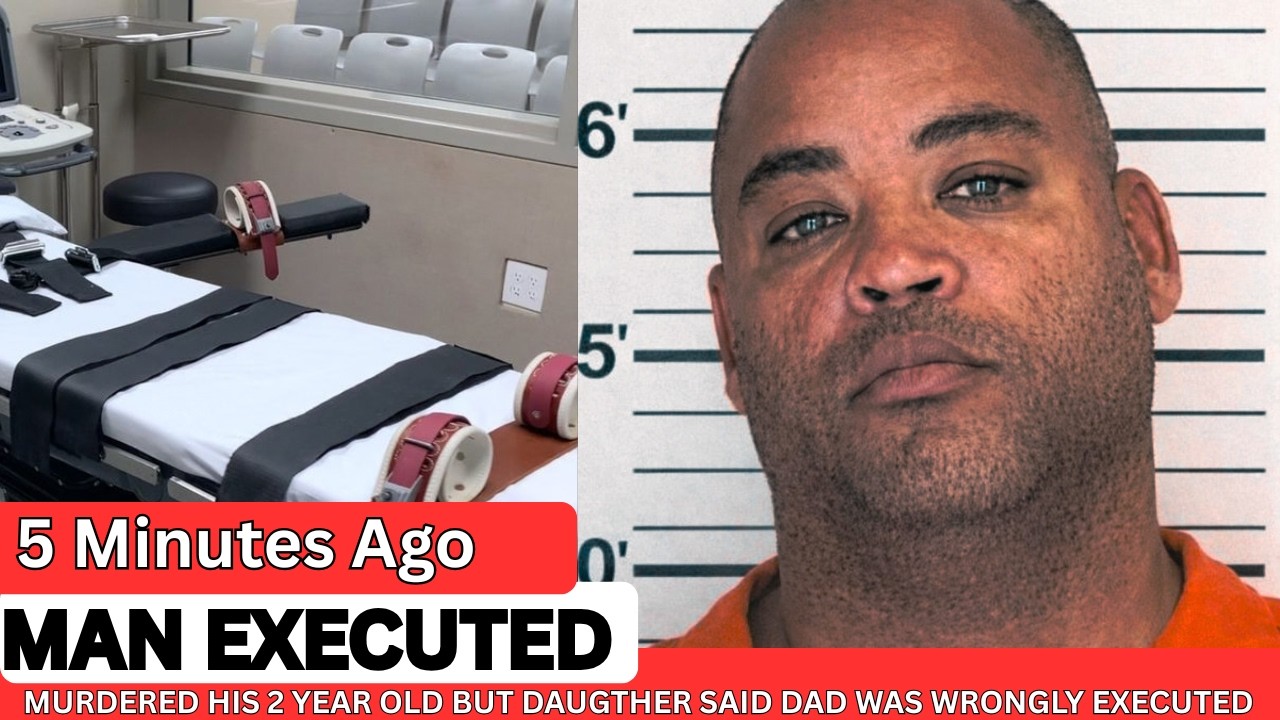 On that fateful Friday evening in Terre Haute, Indiana, Bourgeois, 56, was strapped to a gurney and administered a lethal injection. In his final moments, he did not express remorse or seek forgiveness, but instead proclaimed his innocence, asserting, “I did not commit this crime.” Just 20 minutes later, he was pronounced dead, marking the 10th federal execution that year—a statistic not seen since the 1890s.
Yet, one woman remains unconvinced by the narrative that led to his execution. Bethany Bourgeois George, Alfred’s oldest daughter, has dedicated herself to uncovering what she believes is the truth: that her father was wrongfully executed. Since that day, she has immersed herself in legal documents and medical reports, convinced that the evidence against him was flawed.
Consider the prosecution’s key evidence. The medical expert who testified against Bourgeois later expressed doubts about her conclusions, suggesting she may have made an error. Moreover, the forensic test used to indicate sexual 𝓪𝓫𝓾𝓼𝓮 has since been deemed unreliable by the FBI. The only eyewitness, a 6-year-old girl, initially claimed her father was innocent but changed her story after spending time with her mother and the prosecution.

The timeline of events leading up to Jacquelyn’s death is equally troubling. Alfred had only recently gained temporary custody of his daughter, whom he had never met before May 2002. Just weeks later, on June 26, while traveling in Texas, Jacquelyn was found unconscious and died the following day. The prosecution painted a grim picture of 𝓪𝓫𝓾𝓼𝓮, claiming Bourgeois inflicted severe injuries on the child, but the defense argued that the medical evidence did not support such claims.
The autopsy revealed no fractured skull, contradicting the prosecution’s assertion that Bourgeois had violently harmed Jacquelyn. Experts later suggested that her death could be attributed to hypernatremia, a condition caused by dehydration from ingesting saltwater, which aligned with the family’s beach visit shortly before her death.

Alfred’s wife, Robin, testified against him, but her testimony came under scrutiny as she had made a deal with the prosecution for her freedom. Additionally, four jailhouse informants claimed Bourgeois confessed to them, but their testimonies were not disclosed to the defense, raising serious constitutional concerns.
After being sentenced to death in 2004, Bourgeois spent nearly two decades in solitary confinement, with limited contact with his family. His daughter Bethany struggled with the silence, not hearing her father’s voice for nearly 19 years. When she finally received his ashes in 2021, she felt compelled to act, launching a campaign for justice and seeking a posthumous pardon from President Biden.

As she continues her fight for acknowledgment of what she believes to be a miscarriage of justice, Bethany’s story serves as a stark reminder of the complexities and potential failings of the legal system. The tragic death of Jacquelyn Bourgeois cannot be forgotten, but the questions surrounding her father’s conviction linger.
What does it truly mean when the machinery of justice operates with such finality, yet leaves so many unanswered questions?