The doctor had already pulled the sheet halfway up to his neck when the little girl screamed.
“No! He’s not gone!”
Everyone in the private hospital room froze.
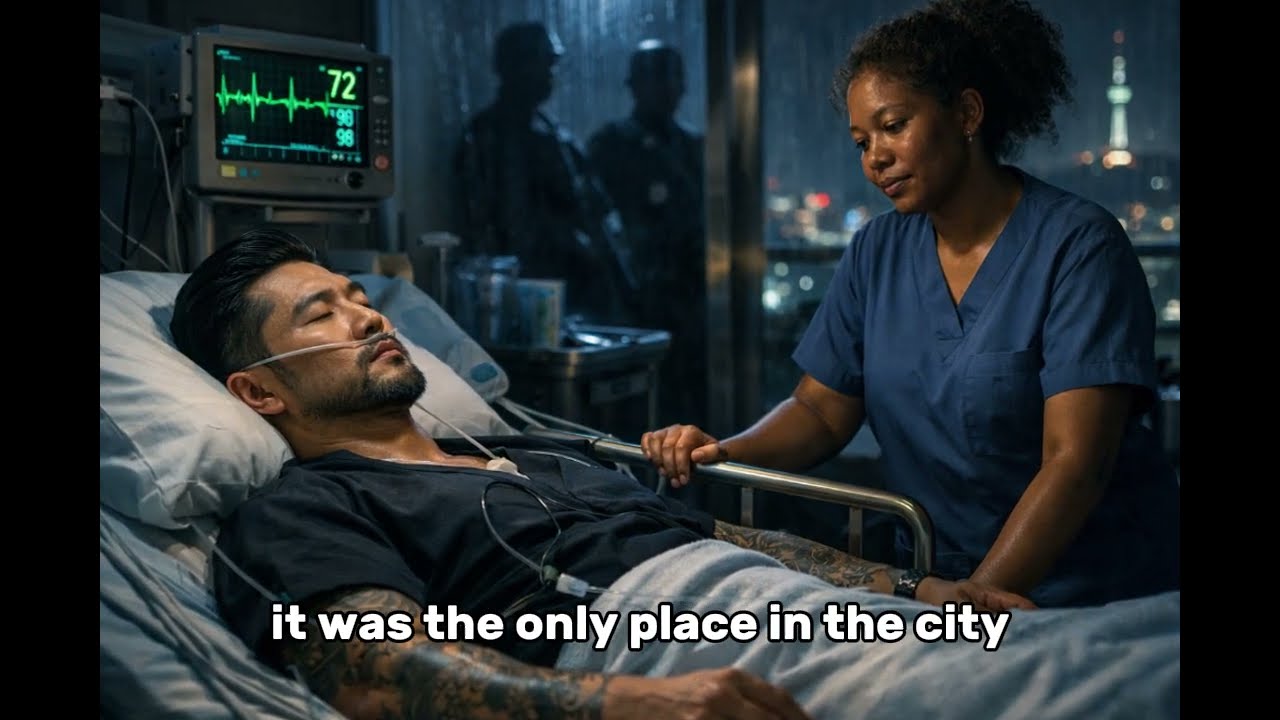
The machines were quiet except for one thin, flat sound that had been drilling into the walls for nearly five minutes. The nurses stood with their hands folded. The attorney at the foot of the bed lowered his eyes. Two men in black suits near the door exchanged a look that said what nobody wanted to say out loud.
Chairman Kang Min-jae, the most feared man in Seoul’s underground business world, had finally lost.
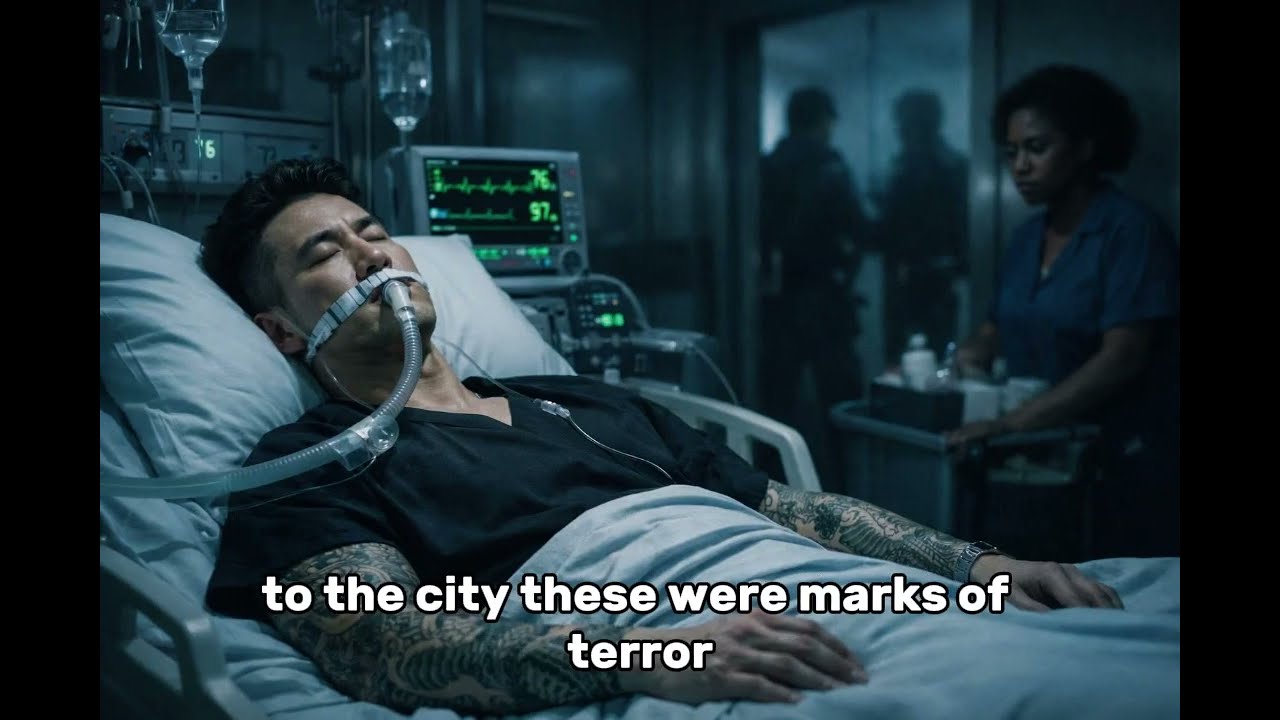
At least that was what the doctors had declared.
Brain dead.
No response.
No chance.
The family had been called. The papers had been prepared. The whispered fight over who would inherit his empire had already begun in the hallway before his body was even cold.
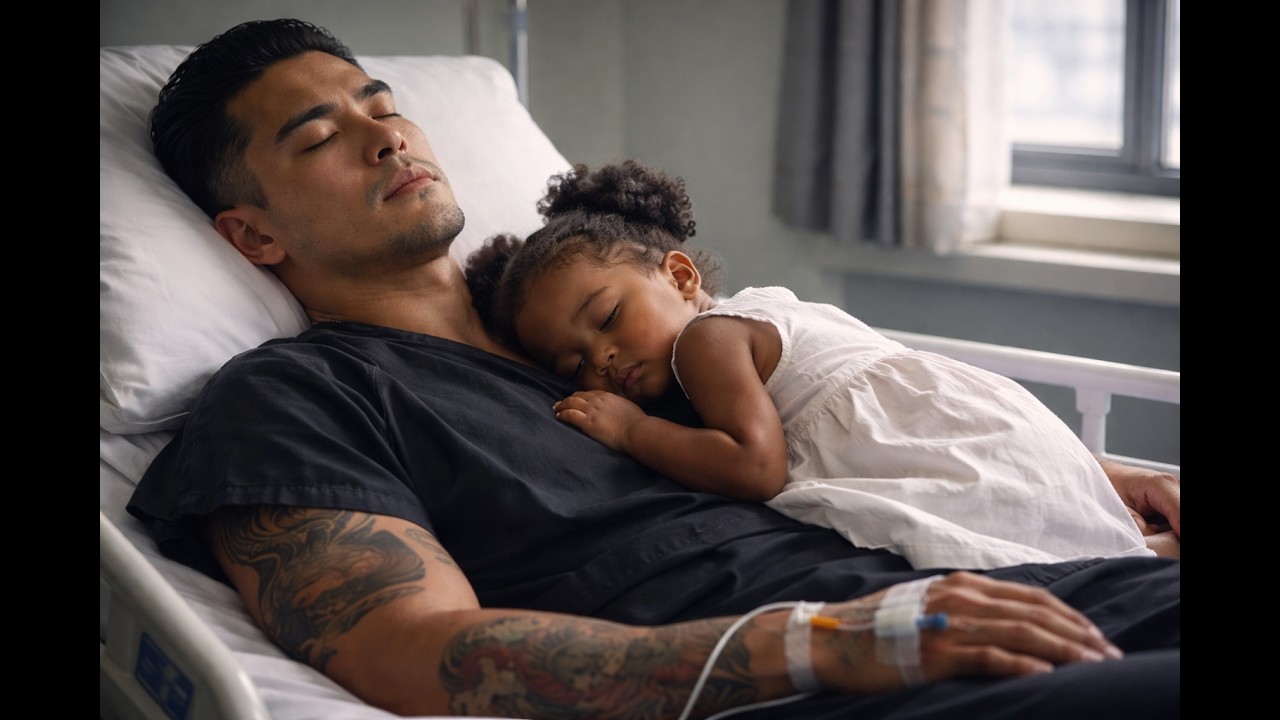
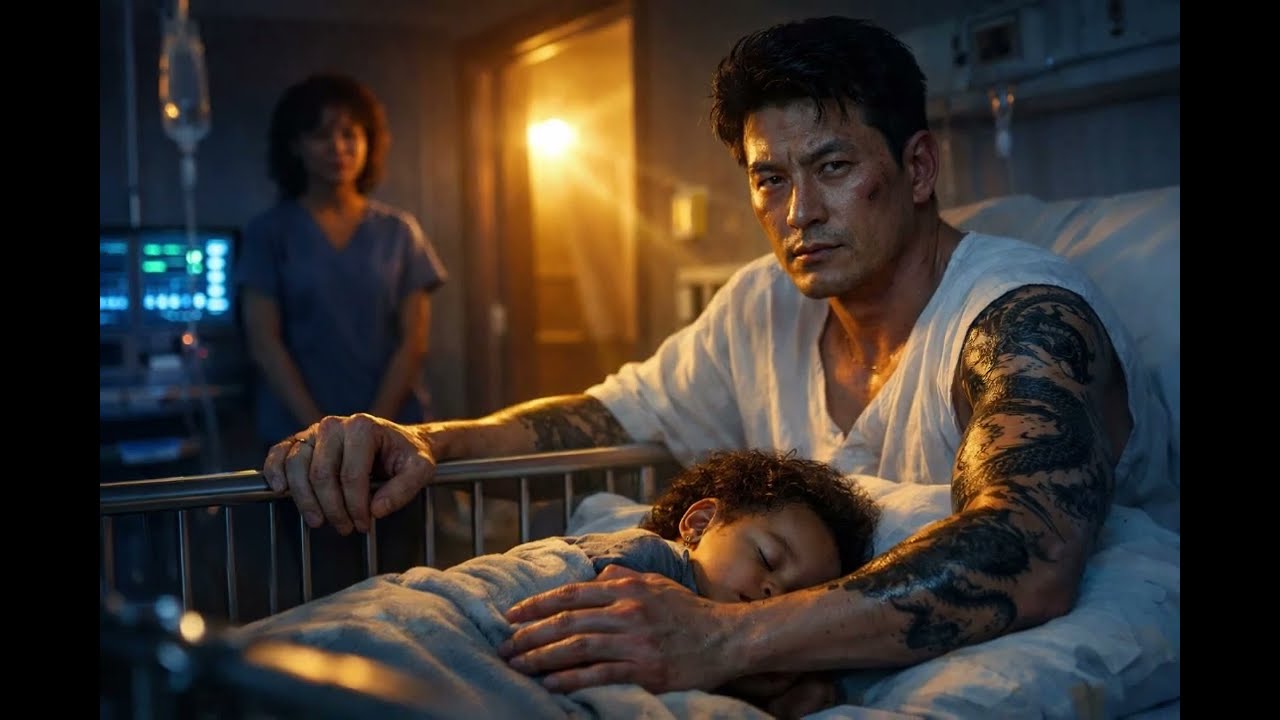
But then a six-year-old girl with wet cheeks and trembling hands climbed onto the hospital bed, pressed her ear against his chest, and refused to move.
“Uncle Min-jae promised,” she sobbed into his hospital gown. “He promised he would wake up.”
The doctor stepped forward gently. “Sweetheart, you need to come down.”
She shook her head harder.
Behind her, Kang Min-jae’s nephew gave an irritated sigh.
“Remove her,” he said.
That was the first mistake.
The little girl’s name was Hana.
She was not family. Not officially. Not by blood, not by law, not by any document that mattered to the men waiting outside that hospital room.
To them, she was a nuisance.
A child from the charity clinic Kang had quietly funded for years. A child whose mother worked nights cleaning office buildings. A child who had somehow become attached to one of the most dangerous men in the city because he had once paid for her heart surgery and then visited her every month without cameras, without reporters, and without explanation.
Most people knew Kang Min-jae as the chairman of Hanseo Holdings, a logistics empire with ports, warehouses, construction contracts, and rumors attached to every floor of its glass headquarters.
The police had watched him for twenty years.
Journalists had written about him in careful language.
Competitors crossed the street when they saw his convoy.
His own men never spoke before he did.
But Hana knew him differently.
She knew he always carried a peppermint candy in his coat pocket. She knew he never liked hospital coffee. She knew he would sit beside her bed and let her beat him at card games even though everyone else in the room was too afraid to laugh.
And she knew one more thing.
The man everyone called a monster had a heartbeat that sounded, to her, like safety.
So when the doctors said there was no brain activity, Hana did not understand medical terms. She only understood the silence around him felt wrong.
Three days earlier, Kang Min-jae had collapsed during a closed-door meeting on the 38th floor of Hanseo Tower.
The official story was simple.
Stroke.
Massive brain bleed.
No foul play.
His nephew, Kang Joon-seok, repeated that sentence to everyone like he had memorized it.
“He pushed himself too hard,” Joon-seok told the board members. “My uncle was stubborn. He refused to rest. We all saw this coming.”
He said it with the practiced sadness of a man who had rehearsed grief in the mirror.
Joon-seok was forty-two, polished, educated in Boston, and famous for smiling without warmth. He had spent ten years standing just behind his uncle, waiting for the old man to step aside.
The problem was Kang Min-jae never stepped aside.
At sixty-one, he still arrived at the office before sunrise. He still read every contract himself. He still remembered the names of drivers, security guards, and cafeteria workers. He still had the kind of quiet authority that made louder men look small.
Joon-seok hated that.
He hated that executives stood when his uncle entered the room.
He hated that gang captains who had known violence longer than he had known privilege bowed to the old man but barely nodded at him.
Most of all, he hated the rumor that Kang Min-jae was planning to retire and leave control of his legitimate businesses not to him, but to a trust.
A trust connected to hospitals, children’s homes, and rehabilitation centers.
A trust nobody in the family could touch.
When Min-jae collapsed, Joon-seok moved quickly.
He controlled the hospital access list. He dismissed two of his uncle’s longtime bodyguards. He brought in a private attorney. He called an emergency board meeting. He told everyone the chairman’s condition was irreversible.
And when Hana and her mother arrived at the hospital after hearing the news from a nurse at the charity clinic, Joon-seok blocked them at the elevator.
“This floor is for family,” he said.
Hana’s mother bowed awkwardly, still wearing her cleaning uniform under her coat. “Sir, my daughter only wants to see him for a moment.”
Joon-seok looked down at Hana, who was clutching a small paper envelope in both hands.
“He doesn’t need visitors from charity cases.”
The hallway went silent.
Even one of the nurses looked away.
Hana’s mother flinched as if the words had landed on her face.
But Hana stepped forward.
“I made him a card,” she whispered.
Joon-seok’s mouth tightened. “He can’t read it.”
From inside the room, an older voice cut through the hallway.
“Let her in.”
Everyone turned.
It was Mrs. Oh, Kang Min-jae’s personal secretary of twenty-seven years.
She was small, silver-haired, and dressed in a plain navy suit. She had spent half her life arranging meetings no one admitted existed and remembering secrets men tried to bury.
Joon-seok smiled thinly. “This is a family decision, Mrs. Oh.”
“No,” she said. “This is still Chairman Kang’s room.”
He leaned closer. “The chairman is brain dead.”
Mrs. Oh did not move.
“Then he won’t mind a child saying goodbye.”
That was how Hana got in.
For two days, she sat beside the bed whenever the nurses allowed it.
She held his hand.
She placed the handmade card on his blanket.
On the front, in crooked purple marker, she had drawn a large tiger lying under a tree with a tiny girl beside it.
Inside, she wrote:
“Dear Uncle Min-jae, you said tigers only sleep when they trust someone to guard them. I will guard you. Please wake up. Hana.”
Nobody laughed at the drawing.
Nobody moved it.
On the third day, the neurologist, Dr. Park, came in with a solemn face and a clipboard. He performed the tests while Joon-seok watched from the corner.
Light in the eyes.
No response.
Pain stimulus.
No response.
Reflexes.
Nothing.
The room felt heavier with each quiet note he made.
Finally, Dr. Park turned to the family and the executives gathered near the bed.
“I’m sorry. Based on the tests, Chairman Kang meets the clinical criteria for brain death.”
Hana did not know what the words meant.
But she knew how adults looked when they had stopped hoping.
Her mother began to cry silently.
Mrs. Oh closed her eyes.
Joon-seok lowered his head for exactly three seconds.
Then he asked, “How soon can we proceed with the paperwork?”
That was when Hana climbed onto the bed.
At first, everyone thought she was only saying goodbye.
She crawled carefully beside Kang Min-jae, laid her cheek against his chest, and wrapped both arms around him.
“Uncle Min-jae,” she whispered. “It’s Hana. I’m here.”
No response.
“You promised we would go see the sea after I got strong.”
The room stayed silent.
“You promised.”
Her voice cracked.
Then came the scream.
“No! He’s not gone!”
The doctor reached for her shoulder. “Sweetheart—”
She slapped his hand away with the weak fury of a child who had already lost too much.
“He moved!”
Joon-seok’s face hardened.
“Enough. Take her out.”
Two security men stepped forward.
Hana clung tighter to Kang’s chest.
And then Mrs. Oh noticed something.
It was small.
So small that anyone not staring at the old man’s face would have missed it.
Kang Min-jae’s right eyelid trembled.
Once.
Then again.
Mrs. Oh’s hand flew to her mouth.
“Doctor,” she whispered.
Dr. Park frowned. “That can happen. Spinal reflexes are sometimes—”
His sentence stopped.
Because Hana had lifted her head and placed her tiny palm flat over Kang’s sternum.
“Uncle,” she cried. “If you hear me, squeeze my hand like before.”
The room held its breath.
Nothing happened.
Joon-seok exhaled sharply, almost amused. “This is ridiculous.”
Then Kang Min-jae’s finger moved.
Not much.
Not dramatically.
Just one slow, impossible curl around Hana’s little hand.
A nurse gasped.
Dr. Park stepped back so fast his clipboard hit the floor.
Mrs. Oh whispered, “Chairman?”
The flat certainty in the room shattered.
Joon-seok’s face changed first.
The sadness disappeared.
Then the confidence.
For one unguarded second, fear crossed his eyes so clearly that even the youngest nurse saw it.
“Run the tests again,” Mrs. Oh said.
Dr. Park was already moving.
Within minutes, the room exploded into controlled chaos.
Monitors were reconnected. A second neurologist was called. A portable EEG was rushed in. Nurses pushed everyone back from the bed except Hana, who refused to let go until her mother carefully lifted her down.
Joon-seok tried to regain control.
“There must be a mistake,” he said.
Dr. Park did not answer.
“There can be residual movements,” Joon-seok insisted. “You said that yourself.”
Dr. Park’s hands were shaking as he adjusted the equipment.
“I said reflexes. Not command response.”
The words landed like a hammer.
Command response.
Kang Min-jae had heard her.
He had obeyed.
He was not gone.
And suddenly the most powerful person in the room was not the nephew with the lawyers, not the board members, not the men in black suits.
It was a crying child who had believed a promise when every adult had already surrendered it.
For the next six hours, Joon-seok made phone calls in the hallway.
He spoke quietly, then angrily, then quietly again.
He demanded the hospital director.
He demanded another examination.
He demanded that Mrs. Oh be removed from the room.
None of it worked.
By midnight, Kang Min-jae’s diagnosis had changed.
Not brain death.
A rare locked-in state complicated by swelling, medication interference, and a catastrophic but survivable neurological event.
He could not speak.
He could barely move.
But he was conscious.
The first person he responded to was Hana.
The second was Mrs. Oh.
The third was not Joon-seok.
When Dr. Park asked Kang to blink once for yes and twice for no, the entire room watched.
“Chairman Kang,” Dr. Park said carefully, “do you understand where you are?”
One blink.
“Do you know who I am?”
One blink.
“Do you want your nephew Kang Joon-seok in this room?”
The pause lasted only two seconds.
Two blinks.
Joon-seok’s jaw tightened.
Mrs. Oh turned toward him slowly.
The old secretary’s face was calm, but her eyes had gone cold.
“Please leave,” she said.
“This is absurd,” Joon-seok snapped. “He is confused. He is heavily medicated.”
Dr. Park looked at him. “He answered all orientation questions correctly.”
“He can’t run a company by blinking!”
From the bed came a sound.
Not a word.
Not even close.
But everyone heard the effort behind it.
Kang Min-jae’s mouth twisted, his breath scraping through his throat.
His right hand moved again.
One finger pointed.
Not at the door.
At Mrs. Oh.
She stepped closer.
His finger tapped the blanket.
Once.
Then twice.
Then paused.
Mrs. Oh went still.
For twenty-seven years, she had taken notes from him in meetings where words could not be safely spoken. They had used shorthand, gestures, symbols, habits built over decades.
Tap twice.
Pause.
Tap once.
Her face drained of color.
She bent close to his hand.
He tapped again.
Slowly.
Painfully.
But clearly.
Mrs. Oh looked up and said the sentence that turned the hospital room into a courtroom.
“He says check the recording from Conference Room 38.”
Joon-seok stopped breathing.
Not visibly.
Not enough for everyone to notice.
But Hana noticed.
Children see faces before they understand lies.
His lips parted. His eyes flicked toward the attorney. His hand, which had been resting casually in his pocket, curled into a fist.
Mrs. Oh saw it too.
And for the first time that night, she smiled.
Hanseo Tower’s 38th floor was not like other offices.
There were no casual visitors there. No interns carrying coffee. No decorative reception area. It was where the chairman met people who came without names and left without signatures.
The conference room had standard security cameras, but everyone knew the audio was disabled for sensitive meetings.
Everyone except Mrs. Oh.
And Chairman Kang.
Years earlier, after a betrayal that had nearly cost him his business, Kang had installed a second system. Not in the ceiling. Not in the walls. In the antique wooden clock facing the conference table.
It recorded only when activated manually from a button beneath the chairman’s side of the table.
Kang Min-jae had activated it the morning he collapsed.
At 9:12 the next morning, Mrs. Oh walked into Hanseo Tower with two police detectives, the hospital’s legal representative, and a court-authorized digital forensics team.
Joon-seok arrived ten minutes later, furious.
“You have no authority to touch company property,” he said in the lobby.
Mrs. Oh held up a document.
“Chairman Kang authorized me as emergency proxy under his medical directive.”
“That directive is outdated.”
“It was notarized six weeks ago.”
His face twitched.
That was the second crack.
The first had happened in the hospital room when the dead man blinked him out.
The second happened when he realized the old man had prepared for betrayal.
The recording was recovered by noon.
By 2 p.m., every board member of Hanseo Holdings had been summoned to an emergency session.
Kang Min-jae could not attend physically, but the hospital arranged a secure video feed. His face appeared on the conference screen, pale and still, a breathing tube removed but oxygen still attached. Hana was not there. Her mother had taken her home to rest.
But her handmade tiger card was visible beside his hospital bed.
Nobody spoke when the audio began.
At first, it sounded like any executive meeting.
Papers shifting.
Chairs moving.
Kang Min-jae’s deep voice, slower than usual but firm.
“You have been moving money through Busan terminals.”
Then Joon-seok’s voice.
Calm.
Confident.
“You’re getting old, Uncle.”
A murmur went around the boardroom.
On the screen, Kang Min-jae’s eyes remained open.
The recording continued.
Kang said, “You used my name.”
Joon-seok laughed softly.
“Your name is the only thing still useful about you.”
Someone in the boardroom whispered, “My God.”
Then came the sound that changed everything.
A glass being placed on the table.
Kang coughing.
Joon-seok saying, almost bored, “Don’t fight it. It won’t kill you immediately. That would be too obvious.”
A chair scraped loudly.
Kang’s breathing became strained.
“You won’t get the trust,” Kang rasped.
Joon-seok’s voice sharpened.
“That charity fantasy ends today. You were going to hand billions to orphans and hospital wards while your own blood waits outside your office like a servant?”
There it was.
Not an accident.
Not a stroke from stress.
A poisoning.
An attempted murder disguised as a medical collapse.
And then, at the end of the recording, Kang Min-jae’s voice came one last time, weak but unmistakable.
“Blood is not family. Loyalty is.”
The boardroom was silent.
Joon-seok sat at the far end of the table.
He had not moved for the entire recording.
But now his face had turned the color of wet ash.
His eyes were fixed on the screen, on his uncle’s still face, on the man he had already buried in his mind.
For years, Joon-seok had stood behind Kang Min-jae believing power was something you inherited when the older man stopped breathing.
Now he understood.
Power was also what remained when a man could not move, could not speak, and still had enough truth stored away to destroy you.
Detective Lee stepped forward.
“Kang Joon-seok, you are under arrest for attempted murder, corporate fraud, and obstruction of justice.”
Joon-seok did not resist at first.
He only stared at his uncle.
Then his mouth opened, but no words came.
The recognition arrived slowly.
It moved across his face like a shadow.
The polished mask was gone. The expensive suit looked suddenly too large. His shoulders dropped. His eyes, once sharp with entitlement, became small and stunned.
He looked less like an heir and more like a child caught stealing from a room he thought was empty.
As the detectives pulled him to his feet, the board members who used to flatter him shifted away from his chair.
No one defended him.
No one said his name.
The same men who had been ready to vote him into power now watched him walk past in handcuffs.
That was the consequence of mistaking fear for respect.
Three weeks later, Chairman Kang was moved from intensive care to a private rehabilitation wing.
He still could not speak clearly. His right side was weak. His recovery would be long, painful, and uncertain.
But he was alive.
More importantly, he was present.
The first day he was strong enough to sit upright, Hana visited him again.
She walked in holding another card.
This one showed a tiger standing.
Not running.
Not roaring.
Just standing.
Kang Min-jae looked at it for a long time. Then he lifted his trembling hand and tapped the paper twice.
Hana smiled.
“That means you like it, right?”
He blinked once.
She climbed into the chair beside his bed and opened her backpack.
“I brought cards,” she said. “But this time you can’t let me win because you’re sick. That’s cheating.”
Mrs. Oh, standing by the window, looked away quickly.
No one mentioned that her eyes were wet.
The story reached the public in pieces.
First, a short news report about the arrest of a Hanseo executive.
Then a leaked detail about the hidden recording.
Then the hospital rumor about the little girl who refused to leave the chairman’s chest.
By the time the full truth came out, people had already chosen the part they would remember.
Not the mafia rumors.
Not the boardroom betrayal.
Not the billions in assets.
They remembered a child who climbed onto a dying man’s bed and heard life where everyone else had accepted silence.
Six months later, Hanseo Holdings announced the creation of the Kang Hana Foundation.
The name surprised everyone except three people: Mrs. Oh, Hana’s mother, and the old chairman who had signed the papers with a shaking hand.
The foundation funded pediatric heart surgeries, emergency housing for single parents, and legal protection for whistleblowers inside corporations.
At the press conference, Kang Min-jae appeared in a wheelchair.
He was thinner. His face had changed. His voice, when he finally spoke, was rough and slow.
Reporters leaned forward.
He said only one sentence.
“A promise kept me alive.”
Then he reached for Hana’s hand.
She was wearing a yellow dress and sitting beside him with her feet swinging above the floor. She did not understand why all the cameras were flashing. She only knew Uncle Min-jae had come back, and the adults who once tried to push her out of the room were now standing behind ropes, waiting for permission to speak.
Mrs. Oh read the official statement.
Kang Joon-seok had been convicted after additional evidence revealed embezzlement, bribery, and the attempted poisoning. Several executives resigned. Two doctors from the first medical team were investigated for rushing the brain death declaration under pressure from Joon-seok’s representatives. Hanseo’s board was restructured. The chairman’s trust became irrevocable.
The empire changed hands.
Not to the nephew.
Not to the loudest men.
Not to the people waiting outside the hospital room with documents ready.
It changed hands to the one thing none of them had respected.
Mercy.
Years later, nurses at that hospital still told the story quietly to new staff.
They told it when families refused to leave.
They told it when a patient’s hand moved and someone said it was probably nothing.
They told it when a powerful visitor acted like money could hurry grief.
They would point, sometimes, to the end of the ICU hallway and say, “That was the room.”
The room where a child challenged a death certificate.
The room where a feared man blinked his way back into the world.
The room where a villain realized too late that the person he dismissed as a charity case had become the only witness who mattered.
Hana grew older, of course.
She eventually learned what people used to call Kang Min-jae. She heard the rumors. She read the articles. She understood that the world was not as simple as good men and bad men.
But whenever someone asked why she had refused to leave his chest that day, she never gave a dramatic answer.
She would only say, “Everyone was listening to the machines. I was listening to him.”
And maybe that was the lesson.
Sometimes the world declares people finished because it is convenient. Sometimes powerful men mistake silence for weakness. Sometimes the smallest voice in the room is the only one brave enough to tell the truth.
Never underestimate the person everyone else ignores, because one day, their love may be the evidence that brings a whole empire to its knees.