In a haunting culmination of a decades-long saga, Ronald Palmer Heath was executed on February 10, 2026, after spending 35 years on death row in Florida. At 64 years old, Heath faced his final moments with a somber resolve, leaving behind a complex legacy of violence and tragedy
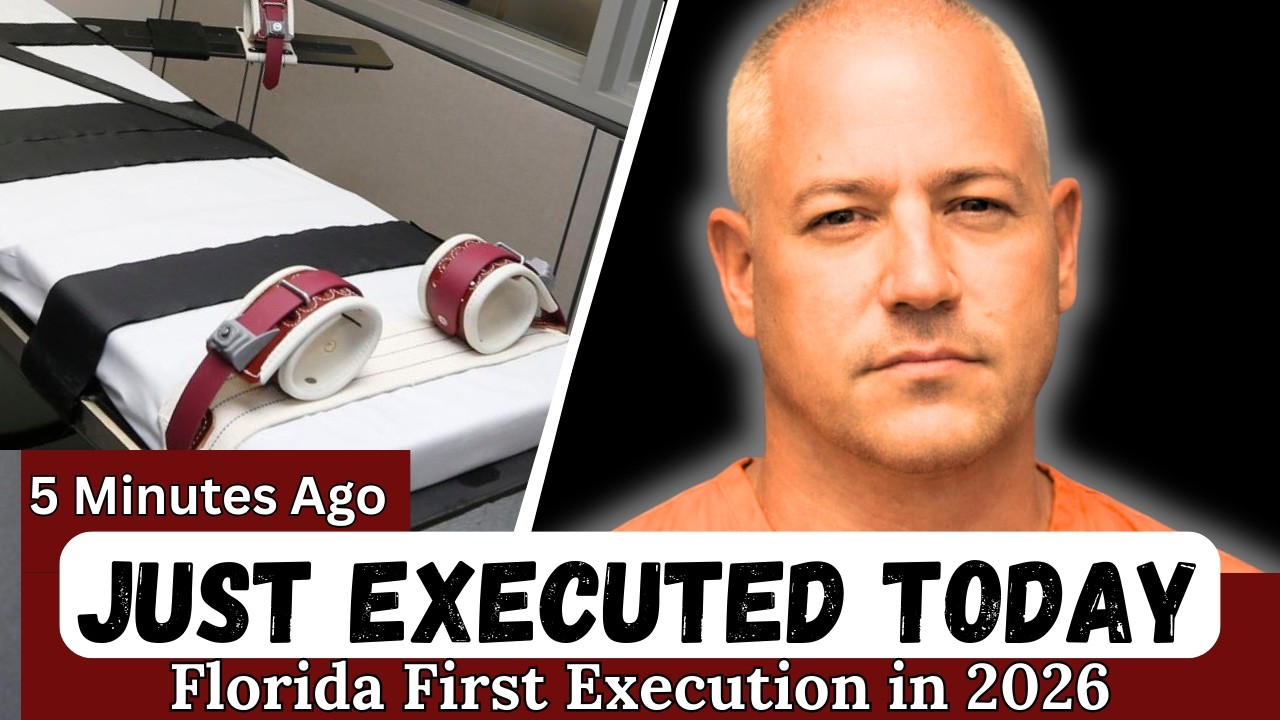 On that fateful morning, Heath awoke for the last time at 7:00 a.m. He spent his final hours in quiet reflection, reading his Bible and declining the offer of a spiritual advisor. Only two visitors came to bid him farewell: his elderly mother and a steadfast friend who had stood by him throughout his lengthy incarceration. When asked about a last meal, Heath chose to forgo a special request, opting for the standard prison fare instead.
As the clock struck 5:50 p.m., guards escorted Heath to the execution chamber. By 6:00 p.m., medical personnel began the process of establishing IV lines in his arms, preparing to administer a lethal cocktail designed to end his life. The execution involved three drugs: an anesthetic to induce unconsciousness, a paralytic to halt breathing, and potassium chloride to stop the heart. Witnesses observed as Heath lay still, his eyes closed, before he gasped once and then fell silent.
When the warden leaned down to ask for any last words, Heath replied softly, “I’m sorry. That’s all I can say. Thank you.” Just 12 minutes later, he was pronounced dead. Among the witnesses were Thomas and Nancy Sheridan, siblings of one of Heath’s victims, who had spent nearly four decades advocating for justice. Thomas Sheridan expressed a mix of dark humor and relief, thanking the governor for what he referred to as the “Ronald Palmer cocktail,” viewing the execution as a long-awaited reckoning.

Heath’s case is particularly notable because he maintained until the end that he did not deserve to die—not due to innocence, but because he claimed he did not pull the trigger. His younger brother, Kenneth, was the one who fired the shots that killed Michael Sheridan, a traveling salesman. Kenneth had confessed and testified against Ronald in court, yet he remains alive today, serving a life sentence with the possibility of parole
The roots of this tragic story trace back to December 17, 1977, when a 16-year-old Ronald Heath committed his first murder, stabbing Michael Green in a brutal attack that escalated into a horrifying series of events. After dragging Green to his car and attempting to burn him alive, Heath ultimately beat him to death with a tree branch. He was sentenced to 30 years but was released on parole after only a decade

Just six months later, Heath was involved in another murder when he and Kenneth lured Michael Sheridan to a remote area under false pretenses. The robbery turned deadly when Kenneth shot Sheridan, and Ronald, frustrated by the slow pace of the attack, ordered his brother to finish the job. This time, the consequences were far-reaching, leading to a conviction for first-degree murder based on Florida’s felony murder rule, which holds all participants in a crime accountable for the outcome
Despite the complexity of the case and the differing fates of the brothers, Ronald Palmer Heath was sentenced to death in 1990. Over the years, his appeals were consistently denied, culminating in Governor Ron DeSantis signing his death warrant in early January 2026.

As the clock ticked down to his execution, the emotional weight of the past hung heavily in the air. Thomas Sheridan’s statement following Heath’s death underscored the long struggle for justice, while family members of other victims expressed mixed feelings about the execution, highlighting the complicated nature of closure.
Now, with Ronald Palmer Heath’s life extinguished, questions linger. Was justice truly served, or does the case of the Heath brothers raise deeper issues about accountability and the legal system? What do you think?


