On June 3, 1955, Barbara Graham faced her final moments at San Quentin State Prison, dressed impeccably in a champagne-colored suit, yet burdened by the weight of her past. As she awaited execution in California’s gas chamber, the tension in the air was palpable, a haunting reminder of the life that led her to this tragic end
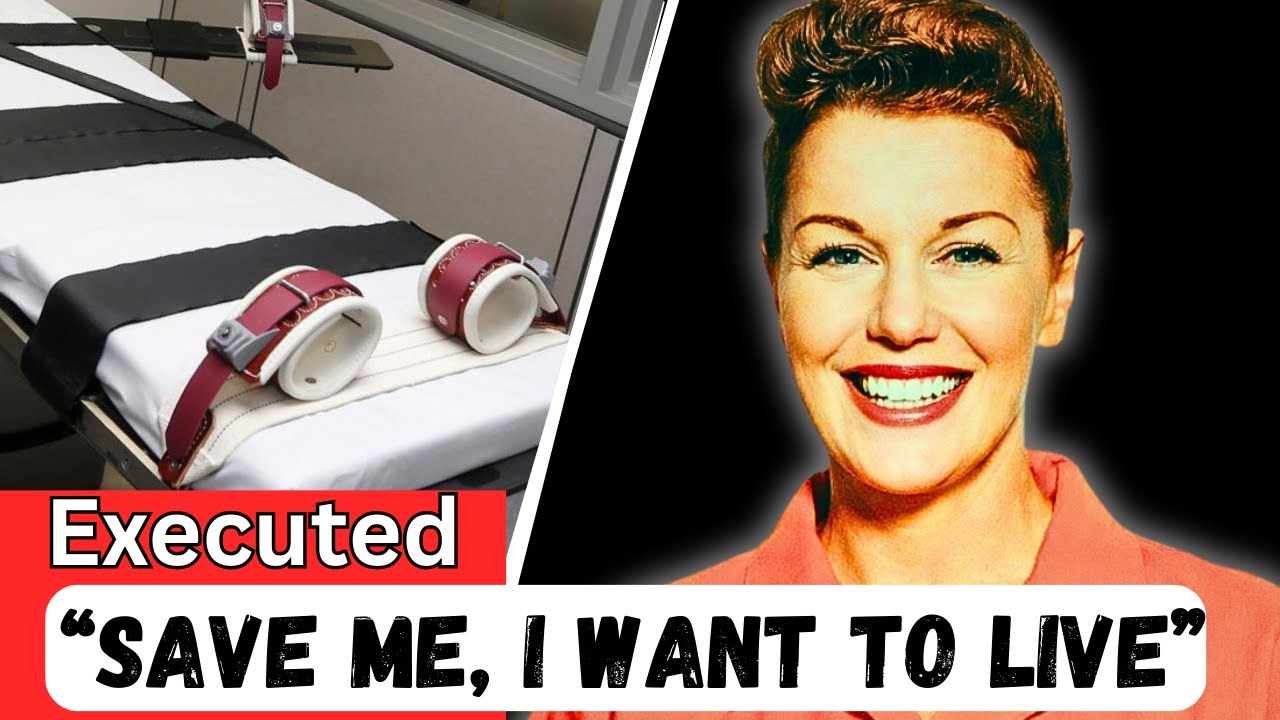 At 10:00 AM, Barbara had prepared herself for death, having said her prayers and savored her last meal—a hot fudge sundae. But just as the clock struck, a last-minute stay of execution arrived, prolonging her agony. Hours of uncertainty followed, filled with her desperate cries: “Why do they torture me? I was ready to go at 10:00.” The emotional toll of waiting proved to be a torment worse than death itself.
When the guards finally arrived to escort her to the gas chamber, Barbara was not just a condemned woman; she was a mother and a survivor, shackled by the cruel twists of fate. As she entered the small, sterile room, 37 witnesses stood behind glass, their faces a mix of curiosity and judgment. In a moment of profound vulnerability, Barbara made a request that had never been granted before—she asked for a blindfold to shield her from those who had come to watch her die
Strapped into the metal chair, Barbara faced her execution with a fierce defiance. When advised to take a deep breath as the gas was released, she shot back, “How the hell would you know?” Her final words, “Good people are always so sure they’re right,” lingered in the air as the gas began to rise, taking her life at just 32 years old.

The media had labeled her “Bloody Babs,” painting a picture of a cold-hearted killer. Yet, three years later, Hollywood would offer a different narrative. Susan Hayward portrayed Barbara in the film “I Want to Live,” which suggested that she was not merely a monster but a woman ensnared by circumstances beyond her control—a life marked by abandonment and betrayal
Barbara’s story began in Oakland in 1923, born to a teenage mother who struggled with addiction and incarceration. Her childhood was a series of foster homes, where she learned early on that love was a luxury she could not afford. As she grew, the cycle of pain continued, leading her into a world of survival that included stints in reform schools and the harsh realities of adulthood.

After a series of tumultuous relationships and failed marriages, Barbara found herself drawn back into a life she had tried to escape. Her involvement with a group of criminals ultimately led to a robbery that turned deadly. The victim, 64-year-old Mabel Monohan, became a tragic casualty in a crime fueled by greed and desperation.
Despite the lack of concrete evidence against her, Barbara was convicted of murder, her fate sealed by a combination of her troubled past and the sensationalism of the media. As she awaited execution, she fought to overturn her sentence, but every appeal was denied.

On that fateful June morning, as the world outside buzzed with anticipation, Barbara Graham’s life came to an end in a gas chamber, a haunting symbol of a flawed justice system. Her story raises unsettling questions about guilt, redemption, and the societal judgments that shaped her fate.
Was Barbara Graham a victim of her circumstances, or was she a perpetrator deserving of her fate? The truth may never be fully known, but her story continues to resonate, inviting reflection on the complexities of justice and humanity.


