The Birth of Dachau and the Creation of the Nazi System of Repression
On January 30, 1933, President Paul von Hindenburg appointed Adolf Hitler as Chancellor of Germany. Many conservative politicians believed they could control him and restore stability after years of economic depression, political violence, and widespread unemployment. Instead, that decision marked the beginning of one of the darkest chapters in modern history.

Within weeks, Germany’s democratic institutions began to collapse.
The Reichstag Fire on February 27, 1933, became the turning point. Claiming that Germany faced an imminent communist uprising, the Nazi government persuaded President Hindenburg to sign the Reichstag Fire Decree. Overnight, fundamental civil liberties—including freedom of speech, freedom of the press, freedom of assembly, and protection against arbitrary arrest—were effectively suspended.
The law no longer protected political opponents.
Instead, it became a weapon against them.
Across Germany, thousands of people disappeared into police custody.
Many had committed no crime.
Their only offense was belonging to the wrong political party, attending the wrong meeting, publishing the wrong article, or simply criticizing the new regime.
The first targets were members of the Communist Party (KPD). Soon afterward came Social Democrats, trade union leaders, liberal politicians, journalists, lawyers, professors, and anyone the Nazis considered a threat to their vision of a totalitarian state.
Germany’s prisons quickly filled beyond capacity.
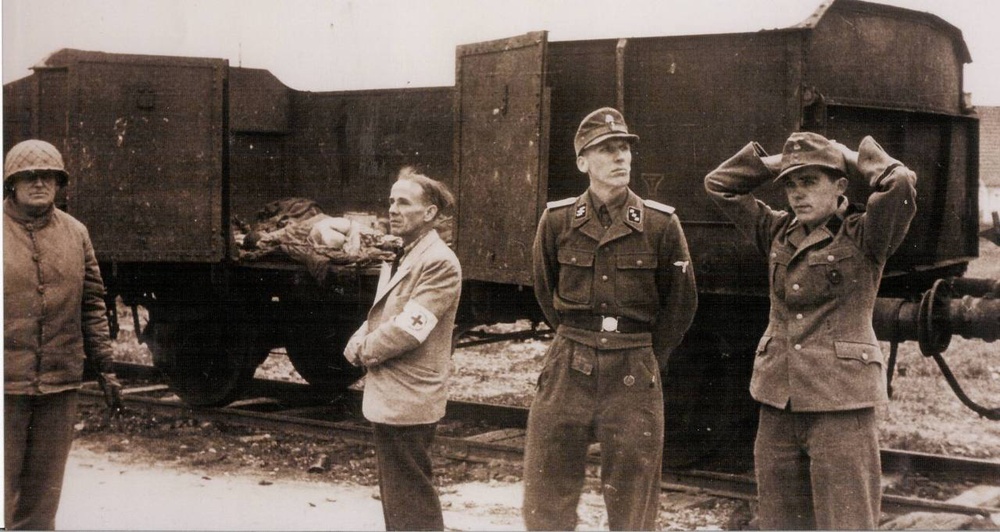
The Nazi leadership needed a different solution.
Not ordinary prisons governed by judges and legal procedures.
They wanted places where people could be detained indefinitely without trial, isolated from society, and broken both physically and psychologically.
This was the original purpose of the concentration camp system.
Contrary to the image most people associate with Nazi camps today, the earliest concentration camps were not initially created as extermination centers. Their first function was political repression—to intimidate opponents, destroy organized resistance, and demonstrate that challenging the regime would carry devastating consequences.
One abandoned industrial site near the city of Munich soon became the perfect location.
Its name was Dachau.
Originally built as a munitions factory during the First World War, the complex contained large industrial buildings, open grounds, and infrastructure that could be rapidly converted into a detention facility.
On March 20, 1933, Heinrich Himmler, then Police President of Munich and an emerging leader within the SS, officially announced the establishment of the Dachau Concentration Camp.
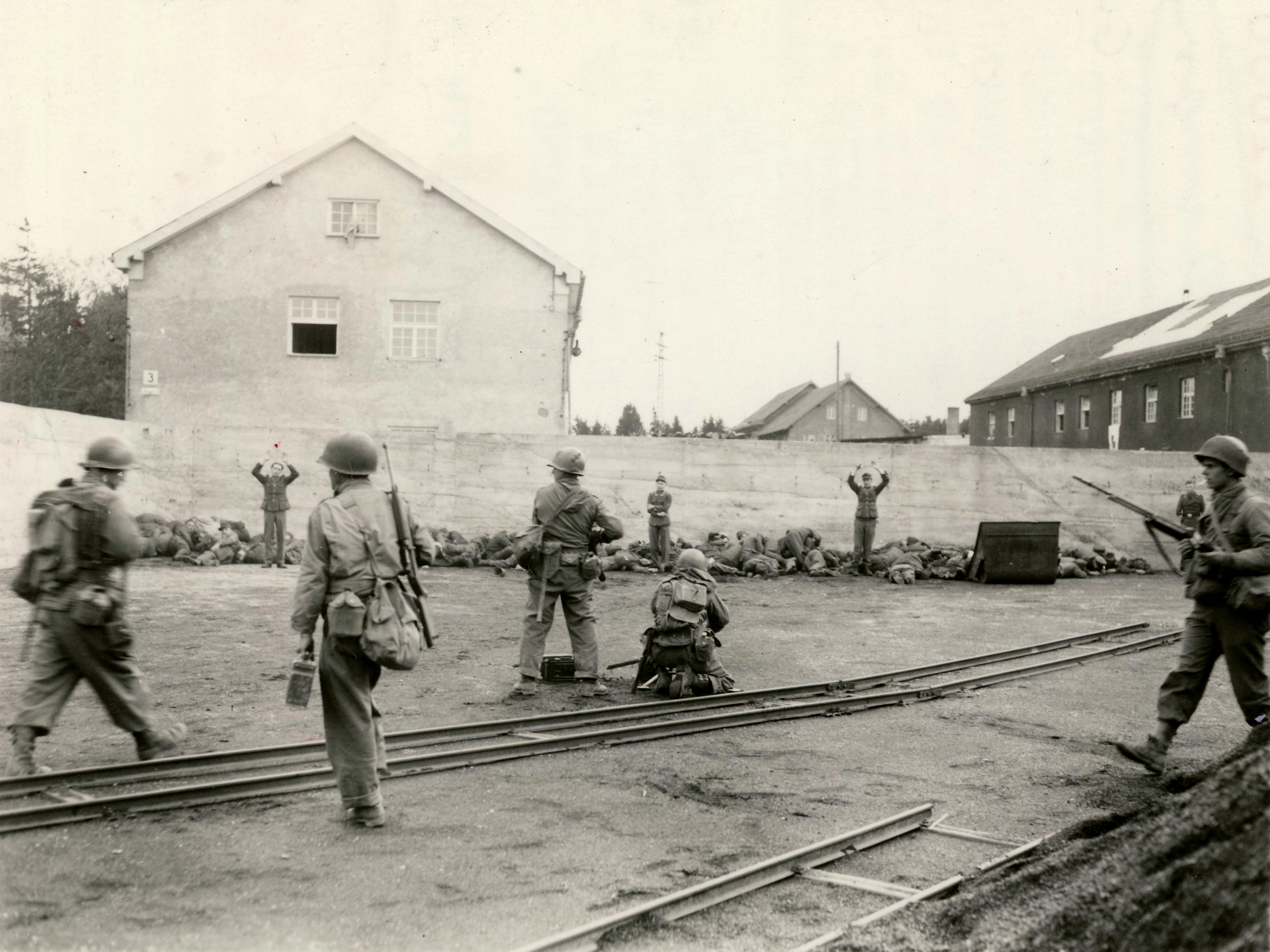
Only two days later, on March 22, the first transport of prisoners arrived.
Approximately two hundred men stepped through its gates.
Most were political prisoners.
None of them could have imagined that they had entered what would become the prototype for the entire Nazi concentration camp system.
From the beginning, Dachau was designed to be more than a prison.
It was an experiment.
A laboratory where methods of intimidation, surveillance, punishment, and absolute control could be developed before being expanded across Germany.
The camp’s physical structures were modest during its early months.
The true danger did not lie in its buildings.
It lay in the system that governed them.
Soon after its establishment, control of Dachau passed almost entirely to the Schutzstaffel—the SS.
Under SS authority, the camp evolved into a place where violence was not merely tolerated.
It became institutionalized.
Every aspect of a prisoner’s daily life was regulated.
When to wake.
When to stand.
When to eat.
When to work.
How to walk.
Where to look.
Even the smallest perceived mistake could result in brutal punishment.
Prisoners were beaten with clubs and whips.
Forced to stand motionless for hours during roll call.
Locked in solitary confinement.
Compelled to perform exhausting labor designed as much to humiliate as to produce results.
These punishments were not random acts of cruelty committed by individual guards.
They became standardized procedures.
Violence was transformed into administrative routine.
Perhaps the most significant role Dachau played was not simply holding prisoners.
It became a training ground for the SS.
Future commandants, guards, and administrators who would later serve in concentration camps across Nazi-controlled Europe learned their profession here. At Dachau, they were taught not only how to maintain discipline but how to use fear as a systematic instrument of control.
Methods developed within Dachau’s fences would later appear in camps such as Sachsenhausen, Buchenwald, Mauthausen, and many others.
For this reason, historians have often described Dachau as the “school of violence” for the SS.
Not because it was the largest camp.
But because it became the model upon which an entire network of concentration camps would be built.
During its first months, most prisoners remained political opponents of the Nazi regime.
That soon changed.
The definition of an “enemy” expanded steadily.
Jehovah’s Witnesses who refused to swear loyalty to Hitler.
Roma and Sinti families.
Jewish citizens.
Homosexual men.
Catholic priests.
Protestant pastors.
People labeled as “habitual criminals” or “asocials.”
Eventually, prisoners from nearly every occupied country in Europe would pass through Dachau’s gates.
To organize this growing population, the SS introduced a classification system using colored triangles sewn onto prisoners’ uniforms.
Each color represented a different category.
Political prisoners.
Religious prisoners.
Jews.
Roma.
Homosexuals.
Criminal offenders.
Others whom the regime deemed undesirable.
These symbols served practical purposes for the guards, but they also stripped individuals of their identities.
Names became numbers.
Lives became categories.
Human beings became administrative records.
Beyond the barbed wire, relatively few ordinary Germans understood what was happening inside Dachau.
Independent newspapers had been silenced.
Public criticism carried enormous personal risk.
Rumors spread, but reliable information was scarce.
That uncertainty itself became another weapon.
People did not need to know exactly what occurred inside the camp.
They only needed to fear ending up there.
For the Nazi regime, Dachau fulfilled two objectives simultaneously.
It physically removed political opposition.
It also served as a warning to everyone else.
The message was unmistakable.
Resistance would not simply be defeated.
It would disappear.
As months turned into years, Dachau ceased to be a temporary emergency measure.
It became the cornerstone of a rapidly expanding system of organized repression.
The procedures tested inside its walls—administrative control, forced labor, institutionalized violence, and ideological indoctrination—would soon spread throughout the Third Reich.
What began as a camp for political prisoners was evolving into something far larger.
In the years ahead, Dachau would expand dramatically, refine its machinery of terror, and become one of the most influential institutions within the Nazi concentration camp network. The political crisis that had given birth to the camp was only the beginning. The true transformation of Dachau into the centerpiece of systematic persecution had yet to unfold.