By sunrise, the wagon tracks had already started to disappear under the dust.
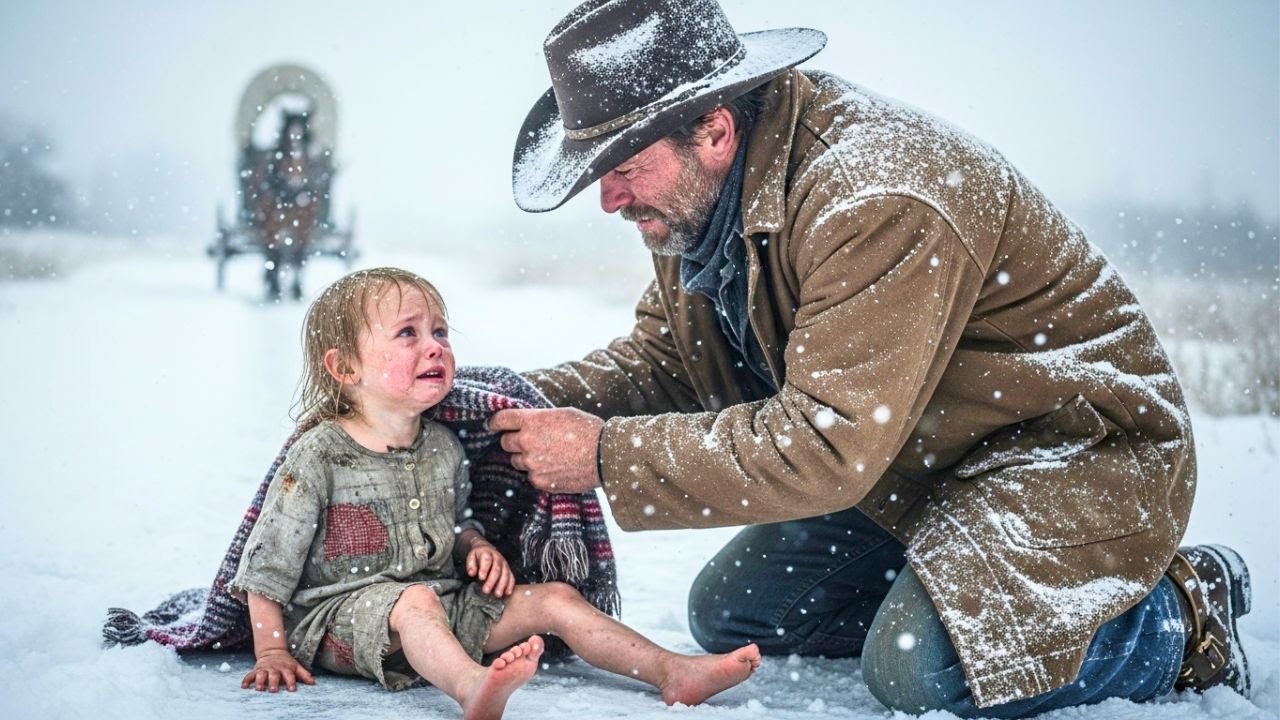
The orphan girl was still standing where they left her.
She was twelve, maybe thirteen, though hunger had made her look younger. Her dress was too thin for the mountain wind, her boots were split at the seams, and the small canvas sack in her hand held everything the county home had given her: one spare pair of stockings, a comb with three missing teeth, and a folded paper saying her name was Elsie Hart.
No one in the wagon train looked back.
Not the woman who had promised to “keep an eye on her” after taking the last of her bread. Not the man who had said an orphan was “one more mouth God forgot to feed.” Not the trail boss who had counted horses, rifles, flour sacks, and water barrels twice—but had not counted the girl.
They had left her on a narrow stretch of trail between Silver Creek and the high pass, where the pines grew thick enough to hide a body and the ravens began circling before noon.
Elsie did not cry.
That was the first thing old Tom Whitaker noticed from the ridge above.
Tom was hauling fence wire for the biggest cattle outfit in three counties, and his mule had gone lame before dawn. He had stopped to check the animal’s hoof when he saw the child below, still as a fence post in the middle of the trail.
Most children would have screamed.
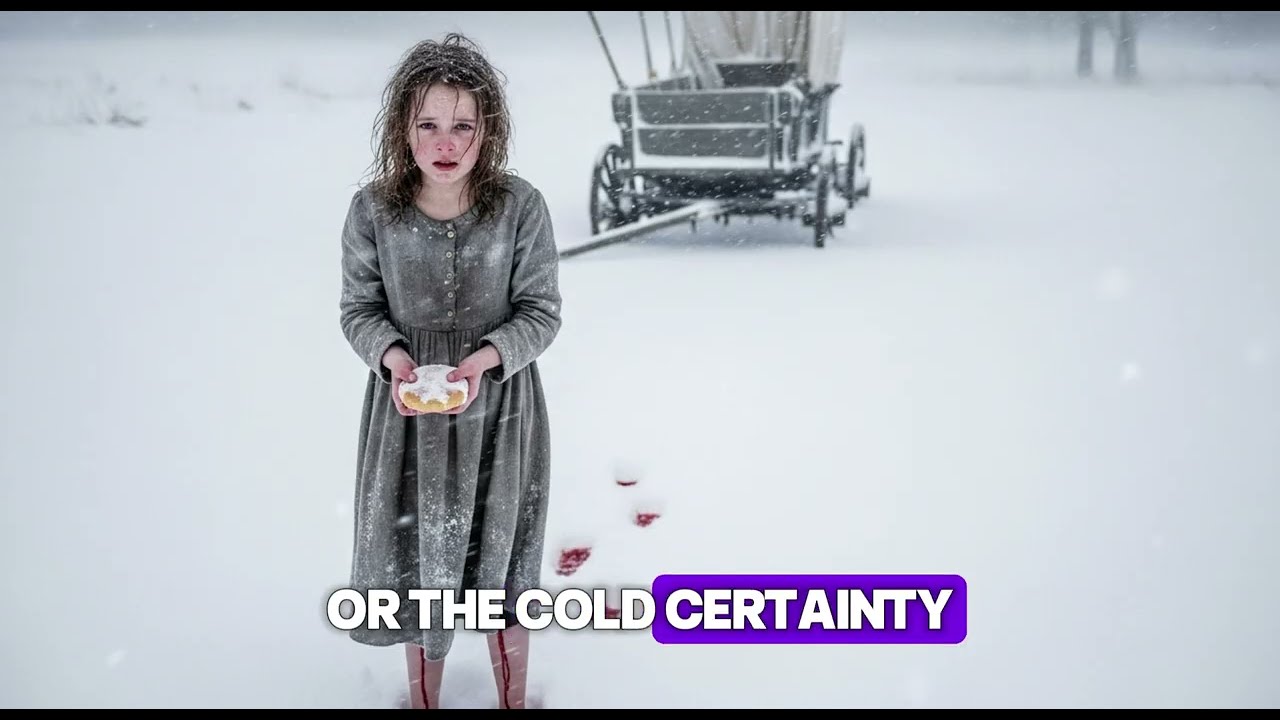
Elsie only turned slowly toward the sound of wheels fading in the distance.
Then she knelt, picked up the little tin cup they had tossed beside her sack, tied it carefully to the strap, and started walking.
Tom spat into the dirt.
“Lord help us,” he muttered. “They really did it.”
He knew that wagon train. Everybody in that part of Wyoming knew it. The Mercer party had passed through the valley the night before, led by Silas Mercer, a man with a black hat, a white smile, and the kind of confidence that came from owning more debts than friends. He had boasted at the trading post that he was taking settlers west “with discipline and order.”
Apparently, discipline meant leaving a hungry girl behind.
By the time Tom got his mule moving, Elsie had reached the bend where the trail narrowed between two rock walls. She walked with one hand against the stone, not because she was weak, but because she knew enough to save her strength. When she stumbled, she did not sit down. She waited, breathed through it, and kept going.
That was the second thing Tom noticed.
The child did not beg the trail to be kinder.
She adjusted to it.
Near midday, the sun lifted high and hard over the ridgeline. Dust turned the air pale. Elsie found a trickle of water slipping over moss near the rocks, filled her cup halfway, and drank only three small sips. Then she poured a little into her palm and rubbed it across the cracked leather of her boots, softening the seams before they tore worse.
Tom watched from a distance, uneasy.
He had seen grown men lose their heads out here. He had seen ranch hands panic when a horse threw a shoe five miles from camp. But this girl moved like someone who had learned early that panic was expensive.
Still, calm did not keep wolves away.
By afternoon, hoofbeats came from behind her.
Not wagons this time.
Three riders.
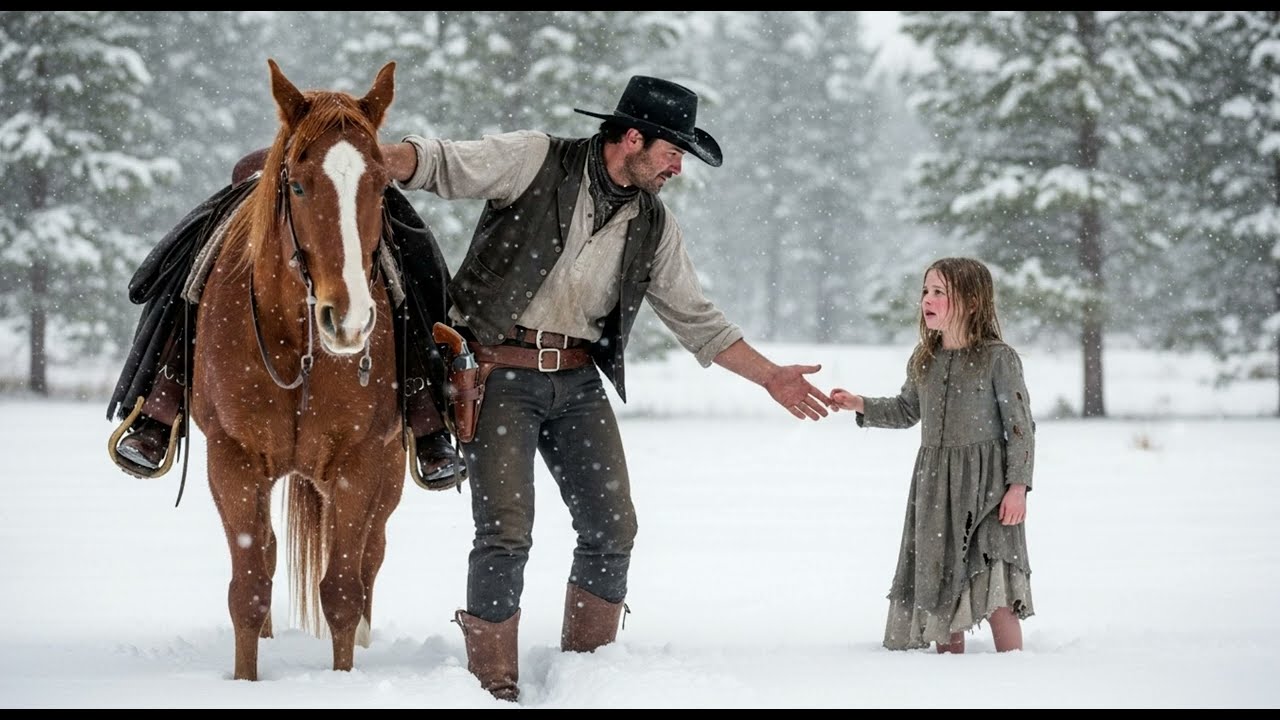
Elsie stepped off the trail before they reached her, lowering her head the way children at county homes learned to do when adults arrived angry. The first rider was a broad-shouldered man with a red beard and a deputy’s badge pinned crookedly to his vest. The second carried a shotgun across his lap. The third had a rope coiled at his saddle and an expression that looked bored until he saw the girl.
“Well now,” the red-bearded man said, pulling up. “What have we got here?”
Elsie kept both hands visible.
“My name is Elsie Hart, sir. I was traveling with the Mercer party.”
The rider smiled, but there was no kindness in it.
“Was?”
She swallowed. “They left me.”
The man with the shotgun laughed under his breath. “Can’t say I blame them.”
Tom, still hidden beyond the pines with his lame mule, tightened his grip on the reins.
The red-bearded rider leaned forward. “Silas Mercer reported a runaway orphan this morning. Said you stole food, caused trouble, and slipped off before camp broke.”
Elsie looked up then.
Only for a second.
But in that second, Tom saw something sharp pass across her face—not fear. Not surprise.
Recognition.
“I didn’t steal,” she said quietly. “Mrs. Mercer gave me a biscuit last night. I saved half.”
“Convenient story.”
“It was in my sack when they took it from me.”
The rider’s smile vanished just enough to show his teeth. “Careful, girl. Out here, folks don’t take well to liars.”
Elsie said nothing.
That seemed to irritate him more.
He dismounted and walked toward her, spurs dragging through the dust. Elsie did not step back until he reached for her sack. Then she moved half a pace, not defiant, not dramatic—just enough to keep it out of his hand.
The deputy stopped.
The two riders behind him noticed.
So did Tom.
A child who had nothing left had just refused to surrender the last proof she existed.
The deputy’s face darkened. “Hand it over.”
“It has my paper in it.”
“I said hand it over.”
Elsie’s fingers tightened around the strap. Her knuckles were white, but her voice stayed steady.
“No, sir.”
The silence that followed was thin and dangerous.
The shotgun rider shifted in his saddle. “Deputy Harlan, we wasting time on this?”
Deputy Harlan took one more step toward the girl.
And that was when another sound rolled down the trail.
Not the uneven clatter of a wagon.
Not the shuffle of a mule.
Hooves.
Many of them.
The three riders turned first. Tom turned too, heart kicking once in his chest.
From the western curve of the trail came six mounted men in dust-dark coats, riding in a clean line. At the center was a tall cowboy on a gray stallion, his hat low, his posture easy, his face unreadable beneath the shadow of the brim.
Even before Tom saw the silver brand on the horse’s tack, he knew who it was.
Caleb Rourke.
The richest cattleman in the territory.
Owner of the Broken Crown Ranch. A man who could buy every wagon, horse, and acre Silas Mercer had ever bragged about and still have money left to feed the town through winter. A man who spoke rarely, paid fairly, and had once fired a foreman in front of thirty cowhands for striking a stable boy.
Deputy Harlan saw him too.
His hand dropped away from Elsie’s sack.
The change was small.
Elsie noticed it anyway.
Caleb Rourke reined in ten feet from them. His men stopped behind him without a word. Dust drifted around their horses’ legs.
For a moment, no one spoke.
Then Caleb looked at the girl.
Not at her torn dress. Not at her split boots. Not at the dirt on her face.
At her.
“What’s your name?” he asked.
“Elsie Hart, sir.”
His gaze moved to the sack in her hand, then to Deputy Harlan, then back to the girl.
“And why are three armed men standing over Elsie Hart on a trail where no child ought to be alone?”
Deputy Harlan’s laugh came too quickly. “Routine matter, Mr. Rourke. Runaway orphan. Mercer party says she’s trouble.”
Caleb did not look impressed.
“Did she run?”
Harlan opened his mouth.
Elsie answered first.
“No, sir.”
Her voice was small, but it carried.
“They left me.”
One of Caleb’s riders shifted in the saddle. Another looked toward the tree line, where Tom stood half-hidden and suddenly wished he had come forward sooner.
Deputy Harlan shook his head. “Girl’s lying. Mercer gave a statement.”
Caleb’s horse stepped once, slow and deliberate. The gray stallion’s shadow fell across Harlan’s boots.
“Mercer gave a statement,” Caleb said. “Did the girl give one?”
Harlan’s jaw worked. “She’s an orphan.”
Caleb’s eyes cooled.
“That wasn’t my question.”
The trail seemed to hold its breath.
Elsie stood between them, clutching the canvas sack, dust on her cheeks, sunlight catching the frayed ribbon at the end of her braid. For the first time since the wagons disappeared, she looked unsure—not afraid of the men exactly, but afraid of what hope might cost if she allowed herself to feel it.
Caleb swung down from his saddle.
He was taller than Harlan by several inches, but he did not use it loudly. He simply removed his gloves, tucked them into his belt, and crouched so his eyes were level with Elsie’s.
“Did they give you water?”
She shook her head.
“Food?”
Another shake.
“Did anyone see them leave you?”
Elsie hesitated.
Then her eyes moved past him.
To the ridge.
To Tom Whitaker.
Tom felt every man on the trail turn.
He stepped out from the pines, leading his limping mule, suddenly aware that his shirt was sweat-stained and his beard badly needed trimming. But he had seen enough in his life to know when silence made a man guilty.
“I saw,” Tom said.
Deputy Harlan’s face tightened. “Careful, Whitaker.”
Tom ignored him. “I saw the wagons leave. I saw the girl standing in the road after they were gone. And I saw her walk half the day with less complaint than most men make over cold coffee.”
Caleb rose slowly.
For the first time, something moved across his face.
Not anger.
Decision.
He turned to Harlan. “Where is Mercer now?”
“Camped near Rattlesnake Crossing.”
“With the child’s belongings?”
Harlan said nothing.
Elsie looked down at her sack. “They took my mother’s locket.”
The words were almost too quiet to hear.
But Caleb heard them.
So did every rider on that trail.
The gray stallion stamped once in the dust. Far above, a raven circled and gave a harsh cry.
Caleb put his hat back on and looked toward the west, where the wagon train had disappeared hours earlier.
Then he said seven words that made Deputy Harlan’s smile disappear completely.
“Then we ride before they sell it.”
[Confirm to continue Part 2]