The recruit laughed when he saw the scars on her arm.
Not loudly at first.
Just enough for the men beside him to hear.
Then he leaned back on the bench, wiped sweat from his upper lip, and said, “Looks like someone lost a fight with a lawn mower.”
A few recruits chuckled.
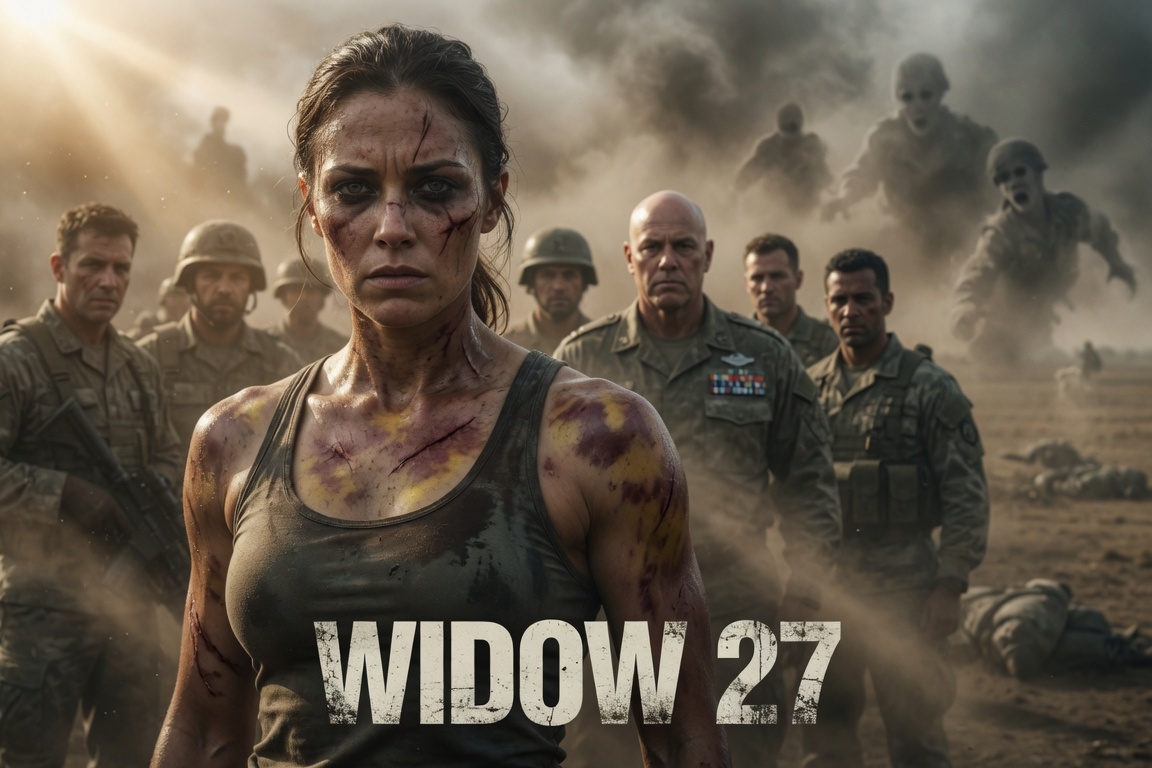
The training bay smelled of rubber mats, gun oil, wet uniforms, and August heat trapped inside concrete walls. Fluorescent lights buzzed overhead. Boots scraped. Someone coughed into the silence that followed.
Captain Lena Cross stood near the weapons table with her sleeves rolled to her elbows.
The scars ran from her wrist to the bend of her arm in pale, uneven lines. Some were thin as thread. Others pulled at the skin in hard ridges, as if fire had once tried to write its name there and failed.
She looked at the recruit.
Private Mason Vale. Twenty-two. Broad shoulders. Clean haircut. Too much confidence sitting badly on a young face.
“Something funny, Private?”
His smile faltered, then returned because the room was watching.
“No, ma’am. Just saying. Must’ve been rough.”
Lena picked up a training rifle and checked the chamber.
“Rough is missing breakfast.”
The recruits shifted.
She set the rifle down.
“This is damage.”
Mason’s ears reddened, but pride kept him upright.
“Didn’t mean anything by it.”
“That’s usually what people say when they meant just enough.”
The room went still.
Before Mason could answer, the doors opened.
Every soldier in the bay snapped straighter.
General Elias Ward entered without hurry.
Silver hair. Dark uniform. Chest heavy with ribbons. His left hand carried a folder; his right moved with the stiffness of an old injury. He looked over the recruits, then stopped when he saw Lena.
For one second, his face changed.
Not surprise.
Recognition with pain inside it.
He walked toward her.
The recruits stared.
General Ward stopped three feet away.
Then, in front of everyone, he said one name.
“Ghostline.”
The air left the room.
Mason’s smile vanished.
Lena’s fingers tightened once around the edge of the weapons table.
No one had called her that in seven years.
Not since the valley.
Not since the fire.
Not since command buried the mission and listed her as medically retired, psychologically unstable, and unfit for return.
General Ward lowered his voice.
“We found the last signal.”
Lena looked at the folder in his hand.
Outside, thunder rolled over the training range.
The recruit who had mocked her scars stared at her now like he had accidentally insulted a grave.
Lena reached for her sleeve and pulled it down.
“What signal, sir?”
Ward’s eyes darkened.
“The one you said was still alive.”
Seven years earlier, Captain Lena Cross had walked into the Korangal Valley with twelve soldiers and came out with three.
That was the official version.
The real version had never fit inside a report.
The real version began in dust, radio static, and a convoy that should have turned back when the first drone feed went black. Lena had been a signals officer then, sharp-eyed, quiet, known for hearing patterns inside noise that other people dismissed as interference. Her call sign came from that gift.
Ghostline.
Because if there was a voice buried under static, she found it.
Because if a lost unit whispered once through a dead radio, she could drag the sound back into the world.
The mission was supposed to be simple: recover a missing reconnaissance team, confirm a weapons route, leave before dawn.
Nothing simple survives first contact with men who profit from silence.
The valley closed around them before midnight.
Their map was wrong. Their extraction window moved without authorization. The ridge team never arrived. Fire came from three directions, then four. A fuel truck exploded beside Lena’s position, throwing her into a wall of heat and metal.
Her arm burned before she felt it.
She remembered the smell first.
Plastic. Hair. Blood. Sand turned hot enough to shine.
A sergeant named Milo Reyes dragged her behind a broken stone wall while rounds cracked overhead.
“Cross,” he shouted, slapping her face. “Stay with me.”
But Lena had heard something.
A signal.
Weak. Buried. Repeating beneath enemy chatter.
Not from their missing recon team.
From someone else.
A civilian child, maybe.
A trapped interpreter.
A survivor no one had counted.
She crawled to the radio with her burned arm tucked against her chest and listened while men screamed around her.
“Negative,” command said in her ear. “Withdraw. Signal assessed non-military. Mission compromised.”
Lena looked at the smoke rising over the village below.
Then at Milo Reyes bleeding through his vest.
Then back at the radio.
“Ghostline copies,” she said.
And disobeyed.
By dawn, she had redirected two helicopters, guided three wounded men through a dry irrigation tunnel, and transmitted the coordinates of a hidden weapons depot using a dead insurgent relay. She also sent one final report before the blast that took the rest of her team.
THERE IS ANOTHER SIGNAL.
Command said there wasn’t.
The report said trauma-induced misinterpretation.
The board said her injuries affected her judgment.
The Army thanked her, decorated her quietly, retired her loudly, and waited for her to disappear into the polite shadow reserved for inconvenient heroes.
But Lena did not disappear.
She healed badly.
She learned to button shirts with fingers that no longer obeyed on cold mornings. She learned which grocery aisles triggered memories of burning plastic. She learned civilians looked away from scars either too quickly or not quickly enough.
Then General Ward called.
Not to apologize.
To ask her to train recruits.
“Why me?” she had asked.
Ward’s voice on the phone had been rough.
“Because the next generation needs to learn what survival costs before someone sells them glory cheap.”
So she came back.
Not for rank.
Not for revenge.
For unfinished work.
Now, in the training bay, unfinished work sat inside the folder in General Ward’s hand.
He dismissed the recruits except Mason.
That was intentional.
Mason stood near the benches, jaw clenched, no longer joking but not ready to apologize either. Young men often held shame like a grenade, afraid it would explode if they loosened their grip.
The bay emptied.
Rain began outside, striking the metal roof in hard, scattered bursts.
Lena looked at Ward.
“Say it.”
Ward opened the folder.
Inside was a grainy image from an old satellite pass. A valley. A ridge line. A ruined compound Lena knew better than some rooms in her own apartment.
Her burned arm throbbed beneath the sleeve.
Ward placed a second photograph beside it.
Newer.
Clearer.
Same compound.
Not empty.
Lena leaned closer.
Three figures stood near the western wall.
One held up a strip of cloth marked with a symbol she had drawn seven years ago in orange smoke powder: a broken circle with a line through it.
A sign for friendly aircraft.
A sign no civilian should have known unless someone from that night taught it to them.
Mason whispered, “What is that?”
Lena looked at him.
He straightened too late.
Ward did not answer the recruit.
He watched Lena.
“The signal resumed four days ago,” he said. “Same interval. Same phrase.”
Lena’s mouth went dry.
“What phrase?”
Ward handed her a transcript.
Three words repeated across seven years of silence.
GHOSTLINE WAS RIGHT.
The paper blurred for half a second.
Lena blinked once and forced the room back into focus.
Mason stared at the transcript. The arrogance had drained from his face, leaving a boy who suddenly understood that wounds had histories.
Lena set the paper down.
“Who else knows?”
“Too many people who want this buried again.”
Ward’s jaw tightened.
“There’s more.”
Of course there was.
There is always more when truth has been hidden long enough.
He pulled another document from the folder.
A personnel file.
Mason Vale’s name sat at the top.
Lena looked from the file to the recruit.
Mason stepped back.
“What is this?”
Ward’s voice hardened.
“Your father worked intelligence review after Korangal.”
Mason’s face changed.
“My father was a logistics officer.”
“He signed the assessment that declared Captain Cross’s final signal unreliable.”
Mason shook his head. “No. He wouldn’t—”
Lena looked at Ward.
“Why is he here?”
Ward did not soften it.
“Because his father disappeared yesterday.”
The rain hammered harder.
Mason’s mouth opened, but no sound came.
Ward closed the folder.
“And because the last message wasn’t sent to me.”
He looked at Lena.
“It was sent to him.”
Mason sat down like his legs had been cut.
The bench creaked beneath him.
For a moment, he looked nothing like the recruit who had mocked her scars. He looked like a son who had just watched the floor vanish under his family name.
Lena had seen that look in war.
The moment someone understands the map was wrong all along.
“My dad?” Mason whispered.
Ward nodded.
“He contacted me two nights ago. Said he had proof the original Korangal review was altered. Said Captain Cross was right about a survivor signal and that someone paid to bury it.”
Mason swallowed hard.
“Where is he?”
Ward’s eyes moved to Lena.
That was answer enough.
Mason stood too fast.
“No.”
Lena’s voice cut through the room.
“Sit down.”
He froze.
She had not yelled.
She did not need to.
Mason sat.
His hands shook now.
Good, Lena thought. Let him feel something useful.
Ward continued.
“Your father left a package at the training center addressed to Ghostline. That’s why I came personally.”
Lena looked toward the weapons table.
“Where?”
Ward set a small evidence bag on the table.
Inside was a metal dog tag, blackened at the edge.
Not hers.
Milo Reyes.
Her sergeant.
Her friend.
The man who had dragged her from the fire and died before evacuation.
Lena did not touch the bag.
If she touched it, the room might tilt.
Mason stared at the tag.
“What does that mean?”
Lena’s voice came out flat.
“It means your father found something that belonged in a grave.”
Ward placed a small drive beside the dog tag.
“And something that didn’t.”
They played the file in the secure classroom beneath the training bay.
The room had no windows. Just concrete walls, a projector, six chairs, a metal table, and the smell of burned coffee from a machine older than half the recruits upstairs.
Mason sat across from Lena, both hands clasped between his knees.
Ward stood near the door.
The video began with darkness.
Then static.
Then a shaky image from a helmet camera.
Lena’s breath stopped.
Milo Reyes’s voice filled the room.
“Cross, you copy? Ghostline, if you hear this—”
Gunfire cracked in the background.
The camera tilted. Smoke. Stone. A flash of Lena herself crawling toward a radio, sleeve on fire, teeth bared not in pain but effort.
Mason looked at her arm.
Then looked away, ashamed.
Milo’s voice came again.
“She heard another signal. Command is wrong. Repeat, command is wrong. There are survivors east of the compound. Someone is jamming us from inside channel control.”
The video shook violently.
A man shouted in another language.
Then English.
“Kill the relay!”
The camera fell.
For three seconds, the image showed a boot stepping over Milo’s hand.
Not enemy boots.
American-issue.
Ward cursed under his breath.
Lena leaned forward.
“Freeze it.”
Ward froze the frame.
A partial boot serial. Mud. Blood. A strip of uniform at the edge of the screen.
Mason stared.
“That can’t be enough.”
“No,” Lena said.
Her voice had gone cold.
“But your father thought the rest was.”
The video resumed.
Milo’s breathing grew wet.
“If this gets out—Cross was right. Ghostline was right.”
Static swallowed him.
Then a final image.
A child’s hand reaching from beneath a collapsed wooden beam.
The recording ended.
No one spoke.
Mason’s face crumpled.
All his earlier swagger had left him. In its place sat something more dangerous than pride: guilt without a place to go.
“I mocked you,” he said.
Lena looked at him.
“Yes.”
His eyes filled.
“I didn’t know.”
“No.”
He swallowed.
“I should have.”
That was better.
Not enough.
Better.
Ward shut off the projector.
“Captain, I need you back in the field.”
Mason looked up sharply.
Lena did not.
She had known the request was coming the moment Ward said Ghostline.
“No.”
Ward’s expression did not change.
“I expected that.”
“Then why ask?”
“Because the survivor signal is active, and the only person who ever found it is sitting in this room.”
Lena stood.
Her burned arm had begun to ache in deep, electric pulses.
“I am here to train recruits. Not ghosts.”
Ward stepped closer.
“You returned to finish what others never could.”
“Don’t make poetry out of my damage, sir.”
The words cut.
Ward accepted them.
Then he opened another file and placed one photograph on the table.
Lena looked despite herself.
A woman in her twenties.
Dark hair. Thin face. A scar near her left eye.
Standing beside her was a little boy holding a hand-drawn broken circle.
Ward’s voice lowered.
“Her name is Samira. She was twelve during Korangal. She says an American soldier guided her family to a tunnel before the compound fell. She has been transmitting your call sign for seven years.”
Lena’s hands curled.
Not into fists.
Into memory.
Mason whispered, “You saved her.”
Lena looked at the photograph.
“No.”
Her voice almost failed.
“I left her.”
That was the wound beneath the scars.
Not the fire.
Not the board.
Not the medals given in small rooms.
The child’s signal.
The one command told her was not real.
The one she had heard every night since.
Ward’s voice softened.
“She’s alive.”
Lena closed her eyes.
For seven years, she had lived with a ghost that had a name.
Now the ghost was breathing.
“When do we leave?” she asked.
Mason stood.
“I’m going too.”
Lena turned on him.
“No.”
“My father—”
“Is missing because he walked into something he didn’t understand.”
Mason flinched.
Lena stepped closer.
“You think guilt is a boarding pass? You think feeling bad makes you useful?”
His jaw tightened.
“No, ma’am.”
“Then why should I take you?”
He looked at the frozen screen where Milo Reyes had died telling the truth.
Then at her scars.
This time, he did not look away.
“Because I started today laughing at wounds I didn’t earn the right to ask about,” he said. “And if my father helped bury what happened to you, I need to stand in the room when it gets unburied.”
Lena studied him.
Young.
Afraid.
Proud, still.
But pride was not always useless. Sometimes it could be carved into courage if pain got there first.
Ward said, “His father’s access codes may be needed.”
Lena did not take her eyes off Mason.
“You follow orders exactly.”
“Yes, ma’am.”
“You speak only when told.”
“Yes, ma’am.”
“You mistake shame for bravery once, and I send you home in cuffs if I have to.”
Mason nodded.
“Yes, ma’am.”
Lena looked back at the screen.
Milo’s final frame waited in silence.
“Then pack light.”
The flight left before dawn.
Military aircraft always smelled the same to Lena: canvas straps, fuel, cold metal, stale air, and men pretending not to be nervous. Mason sat across from her in full gear, helmet between his boots, face pale under red cabin lights.
He had not slept.
Neither had she.
General Ward sat near the front, reviewing files with two intelligence officers. No speeches. No patriotic mood. Just the dull pressure of an operation built on old mistakes.
Lena flexed her left hand.
The fingers responded slowly.
Mason noticed.
He looked away fast.
Then forced himself to look back.
“Does it hurt?”
Lena looked at him.
He braced for punishment.
“Yes,” she said.
He nodded.
“Always?”
“Enough.”
His throat moved.
“I’m sorry for what I said.”
“I know.”
“I mean it.”
“I know that too.”
He looked down at his helmet.
“My dad used to say soldiers exaggerate scars because civilians reward pain.”
Lena watched him carefully.
Mason’s jaw worked.
“I believed him because it made me feel smarter than people who had actually done things.”
Outside the aircraft, darkness pressed against the small round windows.
Lena said, “Your father may have said that because he was afraid of what scars prove.”
Mason looked up.
“What do they prove?”
“That something happened even if the report says it didn’t.”
He absorbed that.
The aircraft shuddered.
Somewhere near the front, Ward’s voice dropped into clipped orders.
Mason leaned forward.
“Were you scared?”
Lena almost told him to shut up.
Instead, she thought of Samira’s face in the photograph.
“Yes.”
Mason waited.
Lena looked at her scarred arm.
“Courage isn’t the absence of fear. It’s function under fear. Your hands shake, but they still load the magazine. Your mouth goes dry, but you still transmit coordinates. You want to run, but somebody behind you can’t move, so you stay.”
Mason’s eyes lowered.
“My hands are shaking now.”
“I know.”
“Is that bad?”
“No.”
“What’s bad?”
“Pretending they aren’t.”
He nodded.
For the first time, Lena saw the recruit he could become if he survived his own ego.
They landed in a country whose name would not appear in any public report.
From there came trucks, false papers, dust, heat, and a border crossing at dusk where local guards pretended not to see the weapons under the floor panels because Ward’s people paid them in medical supplies and silence.
The valley waited beyond a mountain pass.
Lena recognized the shape before the map confirmed it.
Some places enter the body and refuse eviction.
Korangal rose under a copper evening sky, all jagged ridges and narrow roads cut into stone. Wind moved dust across the headlights. The air smelled of dry earth, diesel, goat smoke, and distant rain that might never arrive.
Mason sat beside her in the rear truck.
He had gone quiet hours ago.
Good.
The valley deserved quiet.
They stopped two miles from the old compound. Ward’s team spread out. Drones lifted soundlessly. Radios checked in whispers. Lena knelt over the receiver and tuned through static.
At first, nothing.
Then a pulse.
Weak.
Three beats. Pause. Two beats. Pause. Three.
Her chest tightened.
Mason crouched beside her.
“What is it?”
Lena held up a hand.
Static breathed.
Then a voice.
Female.
Older than the child from memory.
“Ghostline. Broken circle. East wall. Ghostline.”
Lena closed her eyes.
Samira.
Alive.
Ward’s voice came through her earpiece.
“Can you locate?”
Lena listened.
Static shifted.
A hum beneath the signal.
Metal roof. Wind shear. Water echo.
“Underground,” she said. “Not the compound. Beneath it.”
Ward looked toward the ruins.
“Tunnel?”
“Irrigation line.”
Mason whispered, “The one you used?”
“No.” Lena opened her eyes. “The one command said didn’t exist.”
They moved under moonlight.
The compound was a broken shadow against the ridge. Half-collapsed walls. Rusted beams. Bullet scars still visible in stone. Time had not healed it. It had only layered dust over the violence.
Lena touched the wall as they passed.
For one second, she felt heat.
Milo shouting.
Her arm burning.
A child’s hand beneath wood.
She pulled her hand away.
Mason saw.
Said nothing.
Good.
They found the tunnel entrance behind a fall of rock. Fresh scrape marks. Recent use.
Ward signaled two soldiers forward.
Lena stopped him.
“No. I go first.”
Ward’s face hardened.
“Captain—”
“She’s calling Ghostline. If armed people are inside with her, a larger breach gets her killed.”
Mason stepped forward.
“I’ll go with her.”
Lena almost refused.
Then she looked at the tunnel.
Narrow. Dark. Just enough room for two people if one knew how to move without panic.
“Stay behind me.”
The tunnel smelled of damp stone, old smoke, and trapped air. Lena moved slowly, rifle angled down, receiver clipped near her shoulder. Mason followed close enough that she could hear his breathing.
Too fast.
“Control it,” she whispered.
He inhaled through his nose.
Held.
Exhaled.
Better.
Fifty feet in, the tunnel widened.
A lantern flickered ahead.
Lena stopped.
A woman’s voice spoke in English.
“Ghostline?”
Lena lowered her rifle.
“Samira?”
A figure stepped into the lantern light.
The woman from the photograph. Thin, sharp-eyed, scar near her left eye. One hand held a pistol. The other gripped the shoulder of a little boy.
Behind her, three more civilians crouched near a wall.
And beside them, bound to a pipe, bruised and bleeding, sat Mason’s father.
Colonel Peter Vale.
Mason surged forward.
Lena caught his vest and slammed him back against the wall.
“Think.”
His eyes burned.
“That’s my dad.”
“And this is a trap.”
The lantern flame bent.
Someone else was breathing in the dark.
Lena raised her rifle.
“Come out.”
A slow clap echoed from deeper inside the tunnel.
A man stepped into view wearing civilian clothes and an old American field jacket.
Dr. Adrian Kell.
Former intelligence contractor. Officially cleared in the original review. Later promoted. Then retired rich.
The man who had called Lena unstable in a hearing room while her burns were still wrapped.
He smiled like time had treated him kindly.
“Ghostline,” he said. “You’re difficult to bury.”
Lena’s rifle sight settled at the center of his chest.
“Kell.”
Mason stared. “Who is he?”
“Reason your father lied,” Lena said.
Peter Vale lifted his head weakly.
“Mason…”
Kell sighed.
“Touching. The son arrives for the father’s confession. Very biblical.”
Samira’s pistol hand shook.
Lena kept her eyes on Kell.
“You sent the new signal.”
“No. Samira did. Brave girl.” He glanced at her. “Inconvenient habit.”
Samira spat at his feet.
Kell looked amused.
“I came to clean up old paperwork. Then Colonel Vale decided guilt would look better on him than retirement.”
Peter coughed.
“Lena… I signed it. But Kell changed the signal log.”
Mason’s face crumpled.
“Dad.”
Peter looked at his son with bloodshot eyes.
“I was a coward.”
The words filled the tunnel.
Kell’s smile thinned.
“Cowardice is such an ugly word for career preservation.”
Lena shifted her stance.
“Why bury the signal?”
Kell’s eyes sharpened.
“Because the weapons route belonged to people above your rank. Above Ward’s too. Your rescue almost exposed an operation designed to fund assets Congress would never approve.”
“People died.”
“People always die.”
Mason flinched.
Lena did not.
She had expected evil to sound like that.
Calm.
Educated.
Bored by consequence.
Kell reached into his jacket.
Lena fired.
The shot cracked through the tunnel.
Stone dust fell.
Kell’s hand froze inches from his pocket, blood spreading across his sleeve.
“Next one takes the shoulder,” Lena said.
He smiled through pain.
“You won’t kill me.”
“No,” Mason said behind her.
His voice shook, but the rifle in his hands did not.
“She won’t have to.”
Ward’s team flooded the tunnel seconds later.
Kell went to his knees under three weapons. Samira pulled the boy behind her. Peter Vale sagged against the pipe as Mason cut him loose with trembling hands.
Lena stood still until the room was secure.
Then she walked to Samira.
For seven years, she had imagined the child as a ghost.
But Samira was real.
Older.
Scarred.
Alive.
“I heard you,” Lena said.
Samira’s eyes filled.
“I knew.”
Lena’s breath caught.
Samira reached into her coat and removed something wrapped in cloth.
Milo Reyes’s second dog tag.
“I kept it,” she said. “The soldier gave it to me before he died. He said Ghostline would come back for the truth.”
Lena took the tag.
This time, she let herself feel its weight.
Not as proof of failure.
As witness.
Mason helped his father toward the tunnel exit. Peter could barely stand.
As they passed Lena, Peter stopped.
His face was gray with pain and shame.
“I wrote that you were unstable,” he said.
Mason looked at the floor.
Peter continued.
“I told myself I was protecting classified channels. Then my promotion came. Then Kell sent money to my brother’s company. Then years passed, and the lie became easier to maintain than my own reflection.”
Lena looked at him.
Her scarred arm ached.
Her dead wanted more than apology.
But truth had to start somewhere.
“You will testify.”
Peter nodded.
“Yes.”
“No deals that erase Samira.”
“Yes.”
“No language that turns murder into procedural failure.”
His eyes filled.
“Yes.”
Mason watched his father carefully.
A son seeing a man clearly for the first time.
Painful.
Necessary.
They exited the tunnel before dawn.
The valley sky turned pale blue over the ridges. Wind moved through broken stone. The old compound stood quiet behind them, finally less haunted than it had been.
A helicopter lifted dust in the distance.
Ward approached Lena as medics treated civilians and secured Kell.
“You found it,” he said.
“No,” Lena said, looking at Samira. “She kept it alive.”
Ward accepted the correction.
Mason stood nearby, helmet under one arm, face streaked with dust.
He hesitated, then came forward.
“Captain Cross.”
Lena looked at him.
He straightened.
“I mocked your scars because I didn’t understand what they carried.” His voice cracked but held. “That was ignorant. It was cruel. And I’m sorry.”
The valley wind moved between them.
No audience laughing now.
No training bay.
No performance.
Just a recruit, a soldier, and the cost of a lesson learned too late to be painless.
Lena nodded.
“Accepted.”
Relief crossed his face.
She added, “Now earn better behavior.”
“Yes, ma’am.”
General Ward called for extraction.
As they walked toward the landing zone, Mason fell into step beside her.
After a while, he said, “What happens to my father?”
“Consequences.”
He nodded.
“What happens to Kell?”
“More consequences.”
“And you?”
Lena looked at the rising sun touching the ridge where seven years of lies had lived.
For the first time in a long time, the valley did not answer for her.
“I go back,” she said.
“To training?”
“Yes.”
“Why?”
She glanced at him.
“Because recruits keep saying stupid things.”
Despite everything, Mason laughed once.
Small.
Human.
Then he sobered.
“Captain?”
“Yes?”
“When General Ward called you Ghostline, everyone froze because they knew your call sign.”
“No,” Lena said.
The helicopter wind pressed her sleeves against her scars.
“They froze because for one second, they understood names can carry graves.”
Back at Fort Redmond, the training bay smelled the same.
Rubber mats. Gun oil. Concrete heat.
But the recruits were different when she entered.
Or maybe she was.
Mason stood in the front row, bruised, exhausted, eyes clear. He had been given two weeks’ leave after his father’s extraction. He returned in four days.
Lena did not praise him for that.
She did notice.
General Ward observed from the back wall.
The room waited.
Rumors had arrived before them. They always did. Some true. Some inflated. Some wrong enough to become dangerous.
Lena rolled up her sleeves.
This time, no one laughed.
The scars caught the fluorescent light.
Pale. Uneven. Permanent.
She walked to the weapons table and placed Milo Reyes’s dog tag beside the training rifle.
Metal clicked against wood.
“This is not a story about scars,” she said.
The recruits stood very still.
“This is not a story about glory. Glory is what people add later when they don’t want to smell the smoke.”
Mason swallowed.
Lena picked up the rifle.
“This is a story about signals. The ones people ignore. The ones buried under noise. The ones that keep repeating because someone is still alive on the other end.”
She looked across the room.
At young faces. Proud faces. Nervous faces. Future mistakes waiting to be shaped or stopped.
“Your job is not to look brave. Your job is to listen well enough that someone else gets to live.”
No one moved.
General Ward’s eyes lowered for a moment.
Lena set the rifle down.
“Mason.”
He stepped forward.
“Yes, ma’am.”
“What do scars prove?”
The room tightened.
Mason looked at her arm.
Then at the dog tag.
Then straight ahead.
“That something happened, ma’am. Even if the report says it didn’t.”
Lena nodded once.
“Good.”
Outside, thunder rolled beyond the range.
Inside, no one laughed.
And when General Ward left the wall and addressed the class, his voice carried through the bay like a closing door.
“You are standing in front of Ghostline,” he said. “Learn accordingly.”
Mason stood a little straighter.
Not from fear this time.
From respect.
Lena looked at the recruits and saw what she had returned to finish.
Not the war.
Not the valley.
Not the lie.
The lesson.
There will always be another signal beneath the noise.
There will always be someone others dismiss as damaged, unstable, difficult, too scarred to matter.
There will always be a room where cruelty tests silence and calls it humor.
Lena Cross had come back for those rooms.
For the young who needed correction before arrogance became blood.
For the dead who needed truth spoken without decoration.
For the living who still waited on the other end of a broken transmission.
The scars stayed.
The pain stayed.
But so did the signal.
And this time, when it called—
everyone listened.