My father laughed when the ninth language appeared on the ceremony program.
Not a warm laugh.
Not the surprised sound a parent makes when pride arrives too quickly.
It was the short, dismissive laugh he had used throughout my childhood whenever I became interested in something he could not measure with a paycheck, a uniform stripe, or applause from another man.
“Nine languages,” he said, loud enough for the people at our table to hear. “Imagine what she could’ve accomplished if she’d studied something useful.”
My mother’s fingers tightened around the stem of her water glass.
My older brother, Connor, lowered his face to hide a smile.
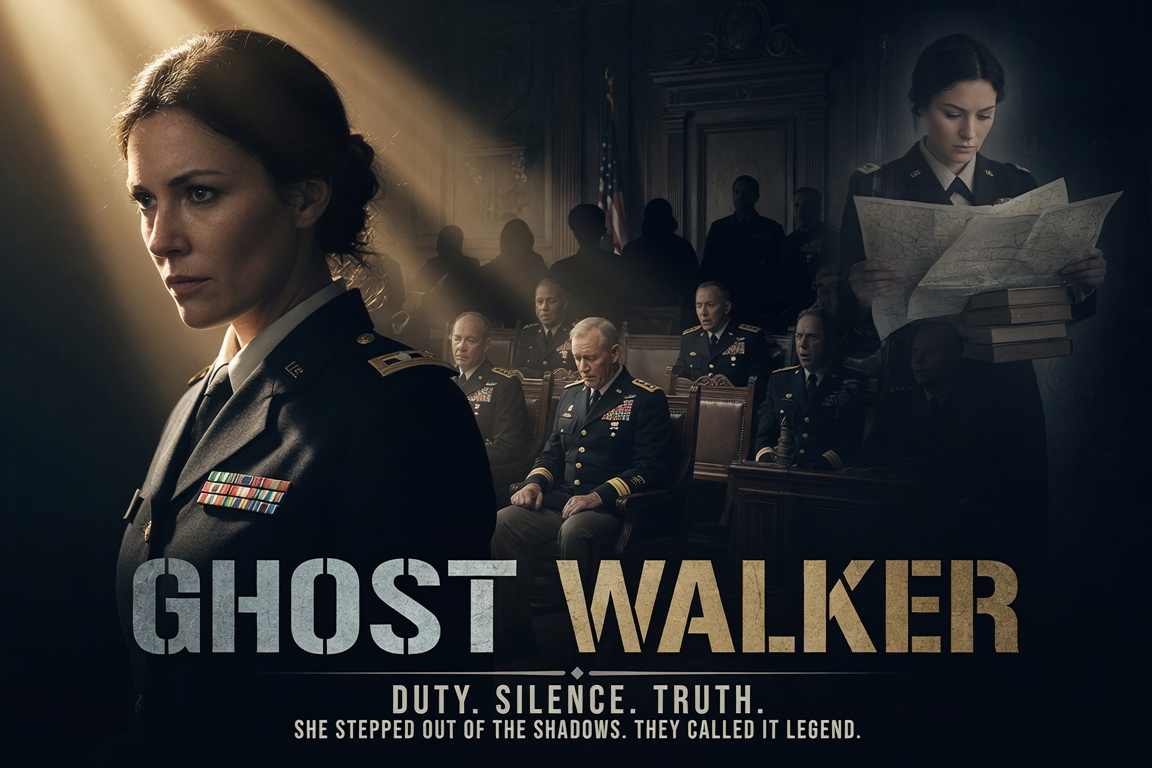
Across the ballroom, officers and intelligence officials moved beneath chandeliers that cast soft gold across dress uniforms and black evening gowns. A military string quartet played near the stage. Waiters slipped between tables carrying plates of rosemary beef and untouched desserts.
I sat beside my father in a midnight-blue dress, my hands folded beneath the table.
No uniform.
No medals.
No visible rank.
That was exactly how the Defense Intelligence Agency preferred me.
To my family, I was still Bridget Lane—the daughter who had spent half her life memorizing strange alphabets, working vague government jobs, and missing holidays without ever producing a title impressive enough for my father to repeat at the country club.
To everyone else in that ballroom, I was not supposed to exist.
My father lifted his whiskey.
“To Bridget,” he said, smiling at the retired colonel seated across from us. “The only woman I know who can say ‘unemployed’ in nine languages.”
Connor laughed.
The retired colonel gave an uncomfortable smile.
My mother whispered, “Robert.”
Dad ignored her.
I looked toward the stage.
Major General Adrian Cole stood near the curtains speaking with two aides. Silver hair. Broad shoulders. A face carved by years of delivering bad news without borrowing emotion from the room.
He saw me.
His expression did not change.
But he touched two fingers to his left cuff.
A signal.
We had a problem.
I returned my gaze to the table.
My father noticed.
“Bored already?”
“No.”
“Then try looking interested. This event honors people who actually served.”
Something cold and familiar settled beneath my ribs.
My father had served twenty-six years in the Army before retiring into defense consulting. In every family photograph, he stood at the center. In every story, his sacrifices had a shape, a date, and a witness.
Mine had aliases.
He leaned closer.
“You know what your problem has always been, Bridget?”
Connor sighed theatrically. “Here we go.”
“You mistake knowing things for doing things.”
My thumb pressed once against the underside of the table.
The wood was smooth.
Solid.
In Kabul, I had translated a dying source’s final warning from a dialect three analysts had called meaningless.
In Tallinn, I had intercepted a six-word exchange hidden inside a children’s radio broadcast and prevented a military attaché’s family from walking into an abduction.
In Aleppo, I had spent eleven hours listening to a frightened teenage courier switch between Arabic, Armenian, and Russian while men outside argued over whether she was lying.
The girl was not lying.
The men had been.
But my father was still waiting for an answer.
“What should I have studied instead?” I asked.
He smiled, pleased that I had stepped into the old game.
“Law. Medicine. Engineering. Something that produces a result.”
My mother looked down.
Connor swirled wine in his glass.
I nodded toward him.
“Like defense contracting?”
Connor’s smile disappeared.
Dad’s jaw tightened.
“Your brother has built a real career.”
“He inherited your client list.”
The retired colonel became fascinated by his napkin.
Connor leaned forward.
“At least people know what I do.”
I looked at him.
That was true.
Connor Lane was vice president of strategic partnerships at Halberd Global, a defense communications contractor with offices in Virginia, London, Warsaw, and Abu Dhabi.
His photograph appeared in trade magazines.
His speeches praised transparency.
His invoices had recently appeared in a classified leak investigation.
He did not know that yet.
Dad placed his glass down.
“You come home twice a year, refuse to discuss your work, sit there judging everyone, and then wonder why no one takes you seriously.”
“I don’t wonder.”
The answer unsettled him.
Before he could respond, the ballroom lights dimmed.
The quartet stopped.
Conversations faded.
Major General Cole walked onto the stage.
Applause rose across the room.
My father straightened immediately.
Connor adjusted his jacket.
Both men admired General Cole because they believed he represented the kind of power that could be photographed.
Cole approached the podium.
“Ladies and gentlemen, tonight was planned as a celebration of service,” he began. “But service is often misunderstood by those fortunate enough to see only its public face.”
My father nodded as if the speech had been written for him.
Cole continued.
“We recognize uniforms. We recognize medals. We recognize names engraved on walls. But some victories cannot survive publicity. Some officers serve without the protection of being known.”
My father stopped nodding.
Across the room, two men in dark suits entered through the rear doors.
They did not take seats.
They positioned themselves beside the exits.
Connor saw them too.
His fingers tightened around his glass.
General Cole’s gaze moved across the ballroom.
Then settled on me.
“Would Bridget Lane please stand?”
My mother inhaled sharply.
My father turned.
Connor whispered, “What?”
Every face at our table moved toward me.
I rose.
A low murmur traveled across the ballroom.
My father stared at my plain dress, searching for an explanation that preserved the world he understood.
General Cole stepped away from the podium.
“Ms. Lane,” he said, “would you join me?”
I walked toward the stage.
My heels crossed polished wood beneath hundreds of watching eyes. The chandeliers seemed brighter now. The air smelled of perfume, candle wax, wine, and the faint metallic edge of danger.
At the bottom of the steps, General Cole waited.
He did not offer his hand.
Instead, he stood at attention.
The ballroom quieted completely.
My father’s chair scraped behind me.
General Cole looked directly at him.
Then he said six words.
“Ghostwalker commanded the operation, Colonel Lane.”
My father went pale.
Connor dropped his glass.
It struck the floor and shattered.
No one moved.
The name hung in the ballroom like a door torn open.
Ghostwalker.
The classified linguistics officer who had dismantled the Black Atlas intelligence network.
The analyst credited in military rumor with extracting twenty-one compromised agents without losing a single civilian.
The commander Connor had mocked in private emails he believed no one outside Halberd Global would ever read.
My father’s lips parted.
“No.”
General Cole turned toward me.
For the first time that night, he saluted.
I returned it.
Behind him, the large screen lit.
A black field appeared.
Then a single white word.
GHOSTWALKER
Under it came nine lines of text in nine languages.
All translating the same sentence:
The breach began at home.
Chapter One
The Language Nobody Valued
My father’s hatred of languages began with my grandmother.
He would never have called it hatred.
Robert Lane preferred respectable words.
Practicality.
Discipline.
Priorities.
But when I was eight and Grandmother Sofia taught me to count in Polish at the kitchen table, he closed the newspaper and told her America had given the family one language for a reason.
Grandmother stared at him over her teacup.
“America gave you safety,” she said. “Do not confuse safety with permission to forget.”
My father left the room.
That evening, she taught me the Polish word for stubborn.
Uparta.
She said it while touching my nose.
My grandmother had crossed Europe as a child after the war, carrying one suitcase, two family photographs, and enough fragments of Russian, German, Polish, and Yiddish to understand danger before adults admitted it was near.
She believed language was not decoration.
It was shelter.
“A person tells you who they are twice,” she once said. “Once through the words they choose. Again through the words they avoid.”
My father believed careers should be visible.
My brother learned that early.
Connor played football, joined ROTC for two years, quit after a knee injury, and turned the story into proof that he had almost served. Dad introduced him as “military-minded.”
I read dictionaries.
At twelve, I spoke English and Polish.
At fourteen, Spanish and Russian.
At seventeen, Arabic.
By college, Persian and French.
Later came Pashto, Mandarin, and Serbo-Croatian.
Nine languages, though fluency is a word used most confidently by people who know only one.
My father called it obsession.
Connor called it my “party trick,” though he never invited me to parties.
My mother quietly bought me language tapes and hid the receipts inside cookbooks.
I joined the Army through intelligence, not infantry.
Dad’s disappointment arrived before my commission ceremony ended.
“You’ll sit behind a desk,” he said.
“Yes.”
He waited for embarrassment.
I gave him none.
He did not understand that desks sit at the edge of every battlefield. Maps spread across them. Orders leave them. Names disappear beneath redactions on them.
A desk can kill a convoy without touching a rifle.
It can also save one.
My first assignment placed me in a windowless room listening to intercepted calls from a network smuggling military-grade electronics through medical supply chains.
The men on the calls switched languages often.
Arabic for business.
Russian for technical details.
French for money.
Polish when they believed no one was listening.
That mistake led us to three warehouses and a courier named Emil Varga.
Varga later became Black Atlas.
But not yet.
At twenty-six, I was still Lieutenant Bridget Lane, the invisible daughter behind a headset.
My commander then was Adrian Cole.
He entered the listening room at 2:14 in the morning carrying stale coffee and a translated report prepared by another analyst.
“Something wrong with this?” he asked.
I read three lines.
“Yes.”
“How wrong?”
“They translated the phrase as ‘the walker is dead.’”
“And?”
“It means ‘the dead one walks between them.’”
Cole stared at me.
“That distinction matters?”
I removed my headset.
“They’re not confirming a death. They’re describing a courier who moves between cells using the identity of someone already dead.”
Cole looked at the report again.
“Ghost identity.”
“Yes.”
“Can you find him?”
“I can find the language around him.”
He slid the coffee toward me.
It tasted burned and metallic.
Six weeks later, we identified the courier.
Cole entered the same room, placed a file on my desk, and said, “Congratulations, Ghostwalker.”
I hated the name.
Then it saved my life.
Chapter Two
The Table After the Reveal
The ballroom did not erupt after General Cole said my call sign.
It contracted.
People who had been leaning back sat straighter. Donors turned toward Connor. Officers looked at my father with the careful neutrality of men calculating how much he had known.
My mother stood beside the table.
One hand covered her mouth.
General Cole motioned toward the screen.
Nine translated lines faded.
A map appeared.
Europe, North Africa, the Middle East, the eastern United States.
Thin red lines connected ports, charities, contractors, and communications hubs.
At the center sat one company name.
HALBERD GLOBAL
Connor rose.
“This is outrageous.”
Two federal agents moved closer to our table.
He saw them and stopped.
Dad looked from the screen to General Cole.
“Adrian, whatever this is, it should not be conducted publicly.”
Cole’s expression remained flat.
“You publicly mocked the commanding officer who spent four years trying to keep your son’s company from compromising American assets.”
Dad flinched at commanding officer.
Connor stepped away from the broken glass.
“Halberd is a legitimate contractor.”
A woman in a dark green suit approached him.
Special Agent Naomi Price, Defense Criminal Investigative Service.
“Mr. Lane, we’ll discuss legitimacy after you surrender your phone.”
He stared at her credentials.
Then at me.
“You did this.”
The accusation carried years of sibling history inside it.
“You put my company on that screen.”
“No,” I said. “Your records did.”
My father moved between us.
Old instinct.
Protect the son. Confront the daughter.
“Bridget, whatever your authority is tonight, he is still your brother.”
General Cole looked at him.
“And she is still the officer you ridiculed.”
Dad ignored him.
He lowered his voice.
“You will not destroy Connor’s life to prove a point.”
I looked at my father.
For most of my childhood, his anger made rooms seem smaller.
That night, it made him seem smaller.
“This is not about a point.”
“What is it about?”
“Twenty-one intelligence officers whose identities appeared inside Halberd translation packets.”
Connor’s face lost color.
My mother gripped the table.
Dad said nothing.
I continued.
“Four military families were moved under emergency protection. Two foreign sources disappeared. One was found dead outside Bratislava.”
Connor shook his head.
“I don’t handle raw intelligence.”
“You approved outsourced language processing.”
“That’s administrative.”
“You signed the vendor exception.”
His jaw tightened.
“The languages were low priority. We used an external service.”
“What service?”
He looked away.
Agent Price answered.
“Atlas Meridian Translation.”
The name struck my father.
He knew it.
I saw recognition before he replaced it with confusion.
General Cole saw it too.
“Colonel Lane,” he said, “when did you last speak to Emil Varga?”
My father’s lips parted.
Connor turned toward him.
“Who?”
Dad stared at the map.
For several seconds, he did not move.
Then he whispered, “That man is dead.”
I felt the old cold pressure return beneath my ribs.
The dead man walks between them.
My first mistranslated phrase.
My first real intelligence victory.
Black Atlas had built its network on identities of people officially declared dead.
Emil Varga was not dead.
He had been hiding inside my family’s business relationships.
General Cole’s voice hardened.
“He attended your consulting retreat in Prague six months ago.”
My father’s face went pale again.
Connor looked between us.
“Dad?”
“I didn’t know it was Varga.”
“You introduced him to Halberd,” I said.
My father turned on me.
“You were monitoring me?”
“No.”
The answer hurt him more.
“We were monitoring him.”
Chapter Three
Black Atlas
Black Atlas was not an organization in the usual sense.
It had no flag.
No headquarters.
No manifesto.
It was a method.
Emil Varga discovered that modern intelligence networks depended on translation faster than they depended on weapons. Military reports, asylum interviews, shipping records, intercepted calls, family documents—everything crossed language before it crossed command.
A mistranslated word could move a convoy.
A missing accent could redirect a payment.
A deliberate ambiguity could transform a civilian into a suspect.
Varga built companies around that weakness.
Translation firms.
Cultural consultancies.
Humanitarian language platforms.
He hired linguists with debts, grudges, or family in vulnerable countries. Some knew they were altering records.
Others believed they were correcting machine errors.
Black Atlas did not steal secrets.
It changed what secrets meant.
My operation began after three intelligence reports contradicted their original audio in precisely the same way.
A warning became a confirmation.
A refusal became consent.
A family name became a location.
Each alteration was subtle enough to survive ordinary review.
Not mine.
My team worked across nine languages and eleven agencies. We stopped using standard contractor software. We built parallel translation chains. We compared rhythm, hesitation, cultural references, and the linguistic fingerprints people leave when they think only machines are listening.
Varga noticed.
He sent me a message in Polish through a corrupted refugee interview.
The girl who listens has no home.
I replied in Russian through a shipping manifest.
Then she cannot be threatened with losing it.
After that, my call sign appeared inside Black Atlas communications.
Ghostwalker.
They knew the name.
Not the woman.
That kept me alive.
Until Connor’s company began processing our reports.
At first, Halberd’s involvement looked like negligence.
A rushed vendor contract.
Underpaid translators.
Weak oversight.
Then we found deliberate routing.
Rare-language packets were diverted to Atlas Meridian.
Personnel identifiers were stripped from English versions but preserved inside original-language metadata.
Someone inside Halberd had designed the loophole.
Connor claimed he knew nothing.
That was possible.
He enjoyed authority more than detail.
But someone had used his signature.
Someone had benefited from my father’s introductions.
And Grandmother Sofia’s old lesson returned.
Listen to the words avoided.
My father kept saying consultant.
He never said Varga’s name.
Chapter Four
The Family Room
Federal agents cleared the ballroom.
Guests were asked to remain available for interviews. Phones were collected from selected tables. The event staff began removing wine glasses around officers who refused to leave.
My family was taken to a private conference room on the hotel’s second floor.
The room had beige walls, one long table, and no windows.
My father hated rooms without an audience.
He sat at one end.
Connor beside him.
My mother sat alone in the middle.
I remained standing near General Cole.
Agent Price placed three files on the table.
“Connor Lane, you are not currently under arrest. You are being questioned regarding unlawful transfer of protected intelligence information, contractor fraud, and obstruction.”
Connor laughed nervously.
“Not currently?”
“Your cooperation will affect the next sentence.”
My father leaned forward.
“He needs counsel.”
“He may request it.”
Connor looked at Dad.
Then at me.
For once, he did not know which family role to perform.
“Did you know?” I asked.
He stared.
“Know what?”
“That Atlas Meridian was connected to Varga.”
“No.”
“Did you know the company lacked security certification?”
“We were told the certification was pending.”
“By whom?”
He rubbed his jaw.
“Strategic liaison.”
“Name.”
His eyes shifted toward Dad.
Agent Price noticed.
General Cole noticed.
My mother closed her eyes.
Connor whispered, “Dad handled the introduction.”
My father’s hand flattened on the table.
“I recommended a language contractor. I did not approve data access.”
“Why that contractor?” I asked.
“They had European capability.”
“So do fifty other firms.”
“They were affordable.”
“You have never chosen affordable over prestigious in your life.”
His jaw tightened.
I stepped closer.
“Why Varga?”
Dad looked at General Cole instead of me.
“He approached me under another name.”
“What name?”
“Eric Vaughn.”
Of course.
Varga often built aliases using translated versions of his own name. Emil became Eric. Varga—wolf—became surnames associated with hunters, wildness, or old regional forms.
“When did you recognize him?” Cole asked.
Dad’s silence answered.
Connor stared at him.
“You knew?”
“Not at first.”
“When?”
“Prague.”
Six months ago.
Before the largest leak.
My father continued.
“He used a phrase from an old operation. I understood then.”
“What operation?” I asked.
His eyes finally met mine.
“Glass Harbor.”
General Cole went still.
I knew the name from sealed records.
A Cold War-era communications operation involving defectors, translators, and falsified diplomatic traffic.
My father had served as a junior intelligence liaison.
Varga had been one of their assets.
Cole’s voice dropped.
“You recruited him.”
My father shook his head.
“I inherited him.”
“But you knew what he was capable of.”
“Yes.”
“Why not report him?”
Dad looked down at his hands.
For the first time that night, the retired colonel disappeared.
An older man remained.
“He had recordings.”
“Of what?”
My mother whispered, “Robert.”
He did not look at her.
“Glass Harbor used coerced interpreters,” he said. “Families were threatened. Reports were altered to protect a political agreement.”
Cole’s expression hardened.
“You participated?”
“I was twenty-seven.”
“That is an age, not a defense.”
Dad flinched.
“He had proof. If released, it would destroy officers, diplomats, people long retired—”
“And expose crimes,” I said.
His eyes snapped toward me.
“You think history is clean because you arrived later.”
“No. I think silence compounds interest.”
Connor pushed away from the table.
“You endangered my company to hide your past?”
Dad turned.
“I tried to contain him.”
“You gave him our systems.”
“I gave him low-level work.”
“You used my signature.”
“I protected the family.”
Connor laughed.
It came out broken.
“Which part? Your reputation or my prison sentence?”
My mother began to cry.
Quietly.
No one moved to comfort her.
The family had spent too many years using her tears to end conversations.
This time, the conversation continued.
Chapter Five
The Commander’s Six Words
My father looked at me across the table.
“Why did Cole choose those words?”
I knew what he meant.
Ghostwalker commanded the operation, Colonel Lane.
Not your daughter served.
Not Bridget helped.
The sentence had been designed to break his assumptions in public.
I glanced at General Cole.
He answered for himself.
“Because you were still addressing her as if she were an embarrassed child at your table.”
My father’s face tightened.
Cole continued.
“Colonel Lane held operational authority over twelve field teams, three interagency cells, and emergency protection for your son’s employees after Black Atlas began eliminating witnesses.”
Connor looked up.
“My employees?”
“Yes,” I said. “Seven Halberd linguists were moved last month.”
“Why wasn’t I told?”
“Because one of your executives was passing relocation schedules.”
His face drained.
“Who?”
Agent Price opened the second file.
A photograph slid across the table.
Connor’s chief operating officer, Lydia Kessler.
His former fiancée.
The woman he still called whenever he wanted someone competent to repair his decisions.
Connor sat down slowly.
“No.”
“She designed the Atlas routing path,” I said.
“She hated foreign outsourcing.”
“She hated uncontrolled outsourcing. She wanted control.”
His eyes reddened.
“You’re wrong.”
“I hope I am.”
But I wasn’t.
Kessler had built the internal system. She used Connor’s passwords when he left his credentials exposed during travel. She used my father’s relationship with Varga. She recruited translators through financial pressure and visa threats.
And she had sent Varga my family’s ceremony invitation.
The gala was not only a reveal.
It was bait.
Kessler was expected to contact Varga after seeing Ghostwalker publicly identified.
The risk was deliberate.
My family had not known.
That was the part I hated most.
Not because they deserved operational details.
Because once again, I had entered a room where danger sat beside people I loved badly and still felt responsible for keeping them alive.
Agent Price’s earpiece crackled.
Her expression changed.
She looked at General Cole.
“We have movement.”
Cole turned to me.
“Kessler?”
“Phone activated near the service garage.”
Connor stood.
“She’s here?”
The conference-room lights went out.
Darkness swallowed the table.
My mother gasped.
A lock clicked at the door.
Then a voice came through the ceiling speaker.
Female.
Calm.
Lydia Kessler.
“Ghostwalker, you finally let them see you.”
Emergency lights flickered red along the floor.
Agent Price drew her weapon.
Cole moved toward the wall.
I stayed still.
Kessler’s voice continued.
“Was it worth it?”
“Which part?” I asked.
“Letting your father learn your value from strangers.”
My father’s breathing changed in the dark.
She knew exactly where to cut.
I looked toward the ceiling camera.
“You didn’t come here for family therapy.”
“No.”
“Where is Varga?”
A soft laugh.
“Closer than your commander thinks.”
Gunfire cracked in the hallway.
My mother screamed.
Agent Price pushed her beneath the table.
Cole drew his sidearm.
Connor froze.
My father grabbed his arm and pulled him down.
The door opened.
A man entered in a hotel security uniform, weapon raised.
I drove the metal water pitcher into his wrist before he could clear the frame.
The gun struck the floor.
Cole tackled him.
Agent Price secured his hands.
Another shot sounded near the stairwell.
Then silence.
The ceiling speaker clicked again.
Kessler whispered, “Nine languages, Bridget. Did none of them teach you goodbye?”
The red lights died.
Complete darkness returned.
Then my phone vibrated inside my dress.
One message.
In Polish.
Your mother is not the woman you should protect.
I looked beneath the table.
My mother was gone.
Chapter Six
The Missing Mother
The service door at the rear of the conference room stood open.
No one had seen it unlock.
No one had seen my mother crawl away beneath the table.
Her shoes remained beside the chair.
One heel broken.
Agent Price called in the abduction.
Hotel floors were sealed.
Security feeds looped the previous six minutes.
Kessler had prepared the building.
Connor paced near the wall.
“She took Mom because of you.”
My father turned on him.
“Stop.”
“No. Every danger in this room follows Bridget’s job.”
I looked at my brother.
“She was taken because someone inside your company sold access to our family.”
His face twisted.
“You always have an answer.”
“No. I have evidence.”
“That doesn’t make you right about everything.”
“No.”
The agreement stopped him.
I moved closer.
“But right now, being angry at me is easier than asking why Lydia knew Mom would leave through that door.”
Connor looked toward the empty chair.
My father went still.
“What are you saying?”
I picked up my mother’s broken shoe.
The heel had not snapped from force.
The pin had been removed beforehand.
Inside the hollow heel was a thin strip of paper.
A hotel room number.
And one word in Russian.
Voluntarily.
My father stared at it.
“She went to them?”
“I don’t know.”
But a memory surfaced.
My mother buying language tapes when I was young.
My mother hiding receipts.
My mother understanding my Russian pronunciation better than she admitted.
My mother crying whenever Grandmother Sofia mentioned Glass Harbor.
Words avoided.
She had never said she did not know Varga.
She said she hated my father’s old work.
General Cole looked at me.
“Bridget?”
“My mother speaks Russian.”
Dad shook his head.
“No.”
“She understands Polish too.”
“She learned phrases from your grandmother.”
“No. She corrected my grammar when I was thirteen and pretended it was luck.”
Connor stared.
“This is ridiculous.”
I looked at the paper again.
The handwriting was hers.
Room 1417 sat near the top of the hotel, registered under a Latvian diplomatic trade delegation.
Agent Price called the tactical team.
I stopped her.
“No breach yet.”
Cole frowned.
“Why?”
“If Mom went voluntarily, Kessler expects force. We need to know what she is doing.”
My father stepped closer.
“You are not using your mother as bait.”
I looked at him.
“You used our whole family as cover for thirty years.”
The words struck.
He stepped back.
No defense came.
General Cole handed me an earpiece.
“Your call, Ghostwalker.”
My father heard the call sign differently this time.
Not rumor.
Authority.
He went silent.
Chapter Seven
The Woman Who Pretended Not to Listen
Room 1417 smelled of smoke and expensive tea.
We entered through the adjoining suite after hotel engineers opened a maintenance passage. Agent Price went first. I followed with Cole behind me.
The main room stood empty.
Curtains closed.
A laptop on the desk.
Two teacups.
My mother’s voice came from the bedroom.
“You promised no one would be hurt.”
Kessler answered.
“I promised Robert’s children would survive if he cooperated.”
I moved closer to the doorway.
My mother sat on the edge of the bed, hands unbound.
Lydia Kessler stood near the window holding a pistol.
Beside her sat Emil Varga.
Alive.
Older. Thin. White hair combed back. A hearing aid in one ear. He looked less like a global intelligence broker than a retired professor waiting for a delayed train.
His eyes moved toward the doorway before I entered.
“Ghostwalker,” he said in Russian.
I answered in Polish.
“You always did listen for the wrong language.”
His smile widened.
My mother closed her eyes.
“Bridget.”
I entered slowly.
Kessler raised the pistol.
Agent Price remained hidden beyond the wall.
“Why did you come voluntarily?” I asked Mom.
Her face looked twenty years older.
“Because Emil contacted me before the gala.”
My father’s old associate.
My mother’s secret.
Varga poured himself tea.
“Margaret Lane was our finest civilian translator during Glass Harbor.”
The sentence rearranged my childhood.
My mother had not merely learned phrases from Grandmother.
She had worked inside the operation.
Dad’s first betrayal had not been professional.
It had been marital.
Mom looked at me.
“I was an interpreter. Your father and I met there.”
“What happened?”
She swallowed.
“We translated testimony from defectors. Some were lying. Some were terrified. Officials wanted a version that supported negotiations. Emil altered reports. Robert signed them.”
“And you?”
“I kept copies.”
Varga tapped his cup.
“She threatened to expose us.”
My mother’s voice hardened.
“I threatened to expose him.”
Dad had married the witness.
Then spent decades calling her fragile.
Kessler said, “Margaret contacted me after she recognized Atlas Meridian in Connor’s company files.”
I looked at Mom.
“You knew?”
“Not everything. I tried to gather proof.”
“Why not tell me?”
Her eyes filled.
“Because I knew Ghostwalker was hunting them.”
The room seemed to lose sound.
“You knew my call sign?”
“Grandmother Sofia guessed first.”
Of course she did.
My mother continued.
“She recognized phrases in your letters. Then Adrian Cole contacted her when Varga resurfaced.”
General Cole entered the room.
Mom looked at him with tired anger.
“You promised Bridget would remain protected.”
“I tried.”
Varga laughed softly.
“No one protects a name once it becomes useful.”
I looked at my mother.
“All those years, you let Dad mock my work.”
Pain moved across her face.
“I was protecting your cover.”
“At dinner tables?”
“I was afraid reacting would tell him I knew.”
“You chose the operation over your daughter.”
The words came out before rank could clean them.
She flinched.
“Yes.”
Honesty.
That was our family’s rarest language.
Kessler shifted the gun toward me.
“This reunion is touching.”
I looked at her.
“You sent my family the invitation leak.”
“I needed Varga to surface.”
Varga’s smile disappeared.
Kessler continued.
“He believed your father still controlled Ghostwalker. Your public identification proved otherwise.”
I understood then.
Kessler had not remained loyal to Varga.
She was replacing him.
Black Atlas had become too dependent on an old man’s secrets.
She wanted the network.
The gala gave her a stage to eliminate both Ghostwalker and Varga while framing a family struggle.
Varga understood too.
His eyes moved toward her gun.
“Young people always mistake access for ownership,” he said.
Kessler fired.
My mother moved first.
She struck Kessler’s arm.
The shot tore through the curtain.
Agent Price entered.
Cole crossed the room.
I drove Kessler against the wall and trapped her wrist until the gun fell.
Varga reached for the laptop.
My mother threw the teapot into his hands.
He cried out.
Cole pinned him across the desk.
In less than ten seconds, the room ended thirty years of secrets.
My mother sat on the carpet, breathing hard.
I knelt beside her.
“Are you hit?”
“No.”
“Are you sure?”
She looked at me.
“I have spent my whole life saying I’m fine when I mean afraid.”
Her mouth trembled.
“No. I’m not sure of anything.”
I helped her stand.
That answer was the beginning of knowing her.
Chapter Eight
What My Father Heard
The arrests became public before dawn.
Halberd Global’s shares collapsed by noon.
Connor was suspended pending investigation. Evidence eventually showed he had been negligent, vain, and careless, but not knowingly part of Black Atlas.
That did not save his career.
It did save him from prison.
My father faced charges related to concealed intelligence activity, obstruction, and contractor influence. His cooperation reduced some counts.
His reputation did not survive.
My mother testified under sealed conditions.
For the first time in forty years, she spoke about Glass Harbor under her own name.
Three months after the gala, my father asked to meet me.
We sat in the same ballroom, now empty between events.
No chandeliers lit.
No officers.
No Connor.
No audience.
Only gray afternoon light crossing stacked chairs.
Dad stood beside the table where he had mocked me.
“You chose this place,” he said.
“Yes.”
He looked at the stage.
“I keep hearing Cole’s words.”
I waited.
“Ghostwalker commanded the operation, Colonel Lane.”
Six words.
He had counted them too.
“When he said them,” Dad continued, “I thought he was correcting my understanding of your rank.”
“He was.”
“No.” My father looked at me. “He was correcting my understanding of you.”
The old part of me wanted the sentence.
The daughter who had brought home language certificates and watched him praise Connor’s football trophies.
The young officer who invited him to her commission and heard him tell guests she would “mostly translate paperwork.”
The colonel who returned to dinner in civilian clothes because his approval still had a room inside her.
I let that daughter listen.
Then I answered as myself.
“You had years to understand me.”
“I know.”
“Mom’s secrets don’t excuse your contempt.”
“I know.”
“Connor’s success didn’t require my humiliation.”
His face tightened.
“I know.”
He sat.
Without rank or anger, he looked older.
“I was afraid of what you understood.”
That surprised me.
He rubbed his hands together.
“Connor wanted what I could give him. Introductions. clients. approval. You wanted answers. Every time you learned another language, I felt you entering a room I couldn’t control.”
“So you called it useless.”
“Yes.”
The word hurt him now.
Good.
“I thought if your talent had no practical value, then my inability to understand it wasn’t failure.”
He looked toward the stage.
“And then Cole told the room you commanded the operation that exposed everything I had hidden.”
I sat across from him.
“Did you know Connor’s company was compromised?”
“Not at first.”
“And later?”
“I suspected.”
“Why say nothing?”
His mouth tightened.
“I thought I could solve it quietly.”
“There is our family motto.”
A bitter smile touched his face.
“Your grandmother once said the same.”
Silence settled between us.
He reached into his coat and removed an old cassette tape.
My first Russian language recording.
Grandmother Sofia’s handwriting on the label.
For Bridget—listen twice.
“I found it in your mother’s things,” Dad said.
I took it.
The plastic case was scratched.
“When you were ten,” he continued, “you played this until I wanted to throw the machine out the window.”
“I remember.”
“I was proud of you.”
I looked at him.
He lowered his eyes.
“I simply hated that your ability came from a part of the family I had tried to bury.”
There it was.
Not enough.
True.
“I don’t know what our relationship becomes now,” I said.
“I know.”
“I won’t translate your guilt into forgiveness.”
He nodded.
“That sounds like something Sofia would say.”
“No.”
I stood.
“It sounds like me.”
Chapter Nine
Connor’s Language
Connor lost Halberd.
The board removed him.
Investigators cleared him of espionage but cited severe security failures and unauthorized credential sharing. Newspapers called him careless. Industry friends stopped taking his calls.
For the first time in his life, the family name could not open the next door.
He came to my apartment carrying a cardboard box.
I almost did not let him in.
Then I saw Grandmother’s Polish dictionary inside.
He placed the box on my kitchen table.
“Mom said these belong to you.”
I looked through the contents.
Language tapes.
Old letters.
A notebook of phrases Grandmother used to teach me.
Connor leaned against the counter.
“You could have warned me.”
“No.”
“Why not?”
“Because your company was under investigation.”
“I’m your brother.”
“You were also the possible breach.”
His jaw tightened.
Then relaxed.
Consequences had begun teaching him pauses.
“I mocked you,” he said.
“Yes.”
“I let Dad do worse.”
“Yes.”
He laughed once.
“You really make apologies easy.”
“They’re not supposed to be easy.”
He looked at the dictionary.
“I thought you learned languages because you wanted to feel smarter than us.”
“I learned them because the world was larger than our house.”
He absorbed that.
Then said, “Lydia used me.”
“Yes.”
“I loved her.”
“I know.”
That was the first kindness I offered him.
His eyes reddened.
“She said I was important.”
“You were useful.”
He flinched.
I understood the pain.
Our father had taught both of us to confuse usefulness with love.
Connor touched the edge of the box.
“What do I do now?”
“For a career?”
“For anything.”
I thought about it.
“Learn the difference between not knowing and not wanting to know.”
He nodded slowly.
At the door, he turned.
“How do you say ‘I’m sorry’ in Polish?”
“Przepraszam.”
He tried.
Badly.
I corrected him.
He tried again.
Better.
It did not repair us.
But it was the first language we had learned together.
Chapter Ten
The Woman Behind Ghostwalker
Varga was convicted under charges that would never fully explain what he had done.
Kessler cooperated after realizing the network she wanted to inherit had already been mirrored by my team.
Black Atlas collapsed in stages.
Translation vendors raided.
Contractors suspended.
Protected families relocated.
Reports reviewed word by word.
We found seven more altered intelligence assessments.
Three wrong arrests were reversed.
A former source’s widow finally learned why her husband had vanished.
Not every correction saved someone.
Some arrived years too late.
That is the cruelty of linguistic crime.
A bullet kills once.
A mistranslated record can continue killing every time someone believes it.
General Cole offered me a promotion and a visible command post.
I declined the visibility.
Accepted the command.
My new unit trained intelligence officers to detect manipulation across language systems. We recruited native speakers, historians, refugees, military spouses, anthropologists, and people who had spent their lives being told their knowledge was not practical.
On the first day, I stood before thirty analysts.
Behind me, nine translations filled the screen.
A young lieutenant raised his hand.
“Ma’am, how do we know which version is true?”
“You don’t,” I said.
He frowned.
I continued.
“You test context. You test motive. You listen for what changes when power enters the sentence.”
Another analyst asked, “And if all versions are technically correct?”
“Then someone may be using accuracy to hide truth.”
They wrote that down.
I almost stopped them.
Some lessons need to be lived.
Instead, I looked at the room.
People from twelve countries.
Sixteen first languages.
No one laughing.
No one asking what useful thing they might have studied instead.
General Cole observed from the back.
After class, he approached.
“Your father wrote to the review board.”
“What did he say?”
“He asked them to preserve your operational commendation under your real name.”
I looked at him.
“That would expose—”
“Not the details. Only that Ghostwalker was commanded by Colonel Bridget Lane.”
For years, anonymity had protected me.
Then it became another room I lived inside.
Grandmother’s warning returned through my mother.
Secrecy can become a home you are afraid to leave.
“Approve it,” I said.
Cole studied me.
“You sure?”
“No.”
He smiled faintly.
“Good command answer.”
Epilogue
Nine Languages
The formal commendation took place one year after the gala.
Smaller room.
No chandeliers.
No donors.
Just officers, analysts, family members of relocated personnel, and several linguists whose names would never appear in newspapers.
My mother attended.
She sat in the front row wearing Grandmother Sofia’s silver pin.
Connor came alone and took a seat near the back.
My father was absent.
He remained under supervised release and had chosen not to request permission.
That mattered.
He had finally learned presence was not automatically a gift.
General Cole stood at the podium.
He spoke about Black Atlas without naming the countries, methods, or agents.
Then he said my name.
Not Ghostwalker.
Bridget Lane.
I walked to the stage in uniform.
This time, my family saw the rank before anyone explained it.
Cole pinned the commendation above my ribbons.
“Colonel Lane,” he said quietly, “anything you’d like to say?”
I looked at the audience.
At my mother.
At Connor.
At young analysts who had built careers from knowledge people once called impractical.
Then I spoke nine short sentences.
One in each language I had studied.
I did not translate them immediately.
The room listened.
That was the point.
Finally, in English, I said:
“Each sentence meant the same thing: No knowledge is useless when someone’s life depends on being understood.”
Silence held for one breath.
Then applause rose.
Not because they knew Ghostwalker.
Because they finally knew the woman.
Afterward, Connor found me near the hallway.
“You said the Polish one differently.”
I looked at him.
“You noticed?”
“I’ve been studying.”
That surprised me.
“Why?”
He shrugged.
“Thought I should learn something useful.”
The joke was careful.
Not cruel.
I almost smiled.
My mother joined us.
She touched my sleeve.
“Your father sent something.”
She handed me a folded note.
Six words.
His handwriting.
I was wrong. You were listening.
I read it once.
Then folded it again.
Connor watched my face.
“Does that help?”
I considered the question.
“Some.”
Not forgiveness.
Not erasure.
Some.
Outside, snow had begun falling across the base. White gathered along the steps, softening tire tracks without removing them.
My father once mocked me for learning nine languages.
Then my commander said six words that made him go pale.
But the real reversal was not that the room learned my call sign.
It was that I stopped needing my father to translate my worth into something he respected.
I had spent years walking unseen between languages, borders, and shadows.
Ghostwalker.
A name built for survival.
Now, for the first time, my own name felt large enough to carry everything I had done.
Colonel Bridget Lane.
Daughter.
Sister.
Linguist.
Commander.
Not a desk girl.
Not a party trick.
Not useless.
I stepped into the snow while voices from the ceremony faded behind me.
Nine languages lived inside my memory.
But the truth required only one.
I belonged to myself.