The receptionist looked at the wheelchair, looked at the couple’s worn leather folder of medical documents, and then quietly moved their name to the bottom of the surgery list.
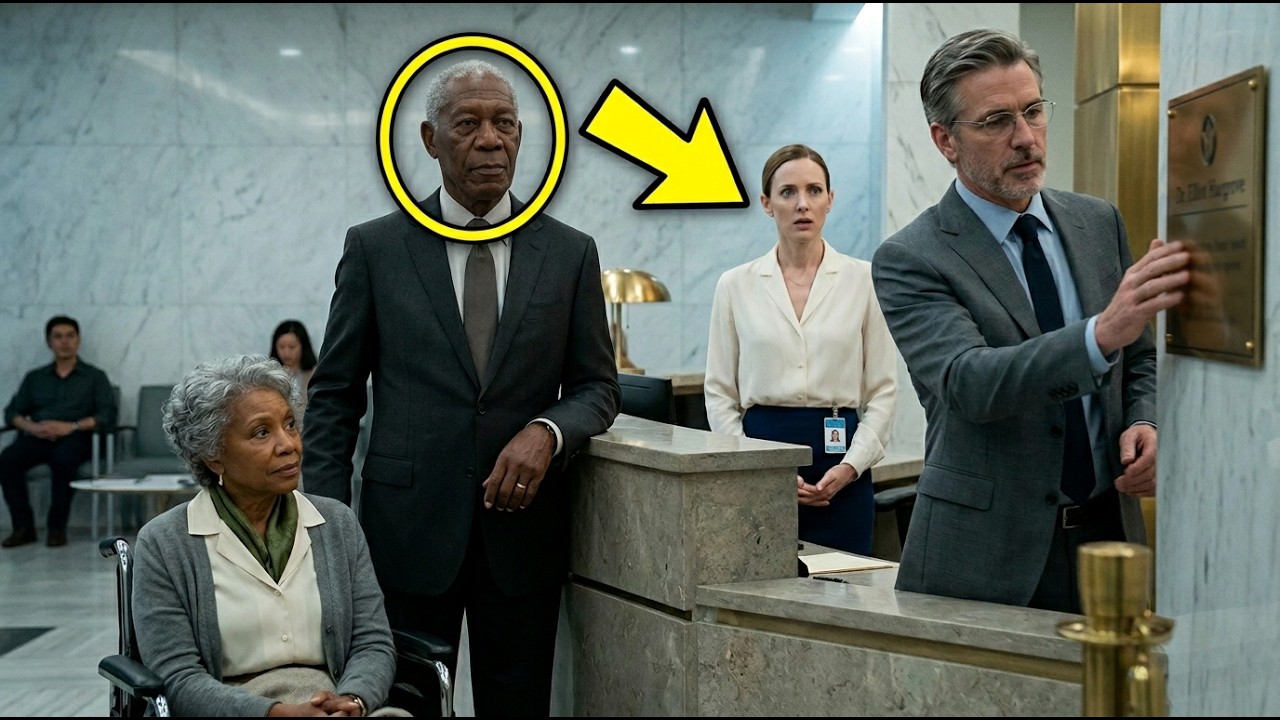
She did it with a smile.
That was the part Samuel Whitfield remembered most.
Not the delay.
Not the extra paperwork.
Not even the words she used.
It was the smile.
The kind of smile that made a person feel like they were being treated politely while being pushed away.
The marble floors of the cardiovascular wing at St. Aurelia Private Medical Center reflected the morning lights like glass. Everything about the place was designed to communicate excellence — the expensive artwork on the walls, the silent elevators, the polished reception desk where every visitor was greeted by name.
But on that Monday morning, Samuel and his wife Loretta learned that a building could look welcoming and still make certain people feel like they did not belong.
Loretta sat quietly in her wheelchair, wearing the navy-blue sweater Samuel had bought her for their anniversary. Her hands rested on a small purse in her lap, and inside that purse was a handwritten note she had carried for years.
It was from Samuel.
Forty-two years earlier, when they first met, he had written:
“Whatever happens, we face it together.”
That morning, they were there for the biggest test of that promise.
Loretta needed heart surgery.
The procedure had been scheduled for months. The cardiology team had approved everything. Insurance paperwork had been completed. Payments had been processed.
There was no reason for anything to go wrong.
Until Brenda Mott looked at their file.
Brenda was the senior receptionist overseeing the surgical wing that morning. She had worked at St. Aurelia for almost eight years and knew exactly how the system worked.
She knew which patients were executives.
Which ones were donors.
Which ones received immediate attention.
And which ones could be quietly delayed.
She glanced at the computer screen, then looked back at Samuel.
“Mr. Whitfield, it appears your financial verification is still pending.”
Samuel remained calm.
“That’s strange. We completed everything last week. The surgical coordinator confirmed yesterday that everything was cleared.”
Brenda typed a few more times.
“I understand, but according to our system, there is still a hold.”
Loretta looked toward Samuel.
“A hold?”
Her voice was quiet.
The surgery was not something they could simply reschedule. Her condition had been getting worse. Every day mattered.
Samuel leaned slightly closer to the desk.
“Could you please double-check? The approval number is right here.”
He handed over the document.
Brenda barely glanced at it.
“I’m sure it’s just a misunderstanding.”
Then she lowered her voice.
“You know, there is sometimes confusion between this wing and the community clinic next door. They handle different types of cases.”
The sentence was carefully chosen.
She never directly said they were in the wrong place.
She never directly said they did not belong.
But everyone standing nearby understood what she meant.
Samuel felt Loretta’s hand tighten around her purse.
She heard it too.
For decades, she had worked as a school counselor. She had spent her life making children feel seen.
Now, sitting in a hospital waiting area, she suddenly felt invisible.
Samuel had lived through moments like this before.
He knew the pattern.
The polite questions.
The unnecessary suspicion.
The assumption that someone like him must have made a mistake if he entered a room reserved for people with power.
He had learned something over the years.
Anger was often exactly what people expected.
So he refused to give it to them.
“My wife has a scheduled procedure,” Samuel said evenly. “We are not asking for special treatment. We are asking you to follow the appointment that was already confirmed.”
Before Brenda could respond, the glass doors behind the reception desk opened.
A tall man in a designer coat walked in carrying a briefcase.
Brenda immediately stood.
“Mr. Anderson, good morning. We’ve been expecting you.”
Her entire posture changed.
The same person who had been carefully questioning Samuel and Loretta was suddenly warm and welcoming.
“Your private room is ready. The surgical team has been notified.”
The man nodded and walked past.
No extra paperwork.
No questions.
No waiting.
Samuel noticed.
So did everyone else.
An elderly woman sitting nearby looked up from her magazine. A nurse pushing a supply cart slowed down for a moment.
The difference was impossible to miss.
Loretta looked away.
“Maybe we should just leave,” she whispered.
Samuel turned toward her.
“No.”
“But Samuel…”
“No.”
His voice was gentle, but firm.
“We waited months for this appointment. You deserve this care.”
Brenda heard him.
She looked irritated now.
Not because he was being rude.
Because he was refusing to disappear.
“Sir, I’m only trying to help,” she said.
Samuel looked at her.
“I know.”
That answer surprised her.
“I know you believe that.”
For a moment, the room went quiet.
Then Brenda picked up the phone.
“I’ll have someone review the file.”
The words sounded helpful.
But the meaning was clear.
Not yet.
Not until someone more important approved them.
Samuel and Loretta waited.
Ten minutes passed.
Then twenty.
Then forty-five.
Loretta’s surgery time came closer.
A nurse finally approached the desk.
“Ms. Mott, the operating room is ready for Mrs. Whitfield.”
Brenda looked uncomfortable.
“I’m sorry. There’s still an administrative issue.”
The nurse frowned.
“Administrative issue? Her procedure is on the schedule.”
“I’m aware.”
The nurse looked between them.
“This was cleared.”
Brenda said nothing.
The nurse walked away.
Samuel watched the interaction carefully.
Something was wrong.
Someone had already approved everything.
Someone had already done their job.
The delay was not coming from the medical team.
It was coming from the front desk.
Then Brenda made the mistake that changed everything.
She stood up quickly to grab another file from a cabinet behind her desk.
As she moved, a framed certificate on the wall beside the reception area fell slightly crooked.
A small gap appeared behind it.
The nurse passing by noticed something.
“Wait.”
She stepped closer.
Behind the frame was not a blank wall.
It was a printed notice.
A large laminated document that had been hidden from view.
The nurse pulled the frame aside.
Everyone nearby could read it.
It was a recognition certificate from St. Aurelia’s internal quality review.
And attached beneath it was a list of patient complaints that had been investigated.
Brenda froze.
Because one of the complaints had Samuel Whitfield’s name on it.
Not from that day.
From years earlier.
The nurse looked confused.
“Why is this hidden?”
Brenda’s face changed.
For the first time that morning, she was not in control.
Samuel stepped closer.
He recognized the document.
It was from a previous hospital.
A hospital where Brenda had worked before joining St. Aurelia.
A hospital where she had been disciplined for improperly delaying care for certain patients because of “financial concerns.”
The investigation report had followed her.
But the final page revealed something no one expected.
The complaints were not only against Brenda.
They were against a supervisor who had pressured her to treat certain patients differently.
And the person who had reported it?
Samuel Whitfield.
Years earlier, Samuel had not known Brenda’s name.
He had simply helped a group of patients who were being treated unfairly.
He had written letters.
He had provided testimony.
He had pushed until the system changed.
Brenda had never forgotten.
But she had convinced herself that no one else would remember.
Now she was standing across from the same man.
The same man she had tried to dismiss.
The same man whose wife she had delayed.
The room became silent.
Brenda stared at Samuel.
Her confidence disappeared.
Her shoulders lowered.
Her eyes moved from the hidden document to Loretta’s wheelchair.
Then back to Samuel.
And in that moment, she understood.
The person she had judged as someone who did not belong was the very person who had once fought to make hospitals better for people like her.
Samuel did not raise his voice.
He did not celebrate.
He simply said:
“You knew exactly what it felt like to be ignored.”
Brenda looked down.
The nurse standing nearby watched her expression change.
The receptionist who had been so certain of herself just an hour earlier suddenly had no explanation.
“I…” Brenda whispered.
But nothing came out.
Because there was nothing she could say that would erase what happened.
The hospital administrator arrived within minutes.
After reviewing the records, he confirmed what Samuel had already known.
The surgery had been fully approved.
The delay was unnecessary.
The decision had been personal.
Brenda was removed from the reception desk pending a formal investigation.
The surgical team immediately prepared Loretta for her operation.
Before she was taken inside, she reached for Samuel’s hand.
“You stayed calm.”
Samuel smiled.
“I promised you.”
Hours later, the surgeon walked out with good news.
The procedure was successful.
The Whitfields’ family members cried with relief.
The nurses hugged Loretta when she woke up.
And the people who had witnessed what happened that morning never forgot it.
Several staff members later admitted that they had seen patients treated differently before, but they had stayed silent because the behavior was subtle.
That day changed that.
Because subtle injustice only survives when everyone agrees not to see it.
Weeks later, Samuel received a letter from St. Aurelia.
Not an apology written by a public relations department.
A real letter.
The hospital promised new training, stronger oversight, and a review of how administrative decisions were made.
Samuel kept the letter.
Not because he needed recognition.
Because he wanted proof that change was possible.
As for Brenda, the last time anyone saw her at St. Aurelia, she was standing outside the same reception area where she once decided who belonged.
The wall beside the desk had been changed.
The hidden frame was removed.
The complaint records were no longer covered.
And every person who walked through those doors could see them.
Because sometimes the truth does not need someone to reveal it.
Sometimes it has been sitting there the entire time.
Waiting for the right moment to be uncovered.