The Harrington Hotel ballroom looked as though someone had built a fairy tale out of crystal, white roses, and money.
Three chandeliers floated above the dance floor. A string quartet played near a wall of candles. Waiters in white gloves moved between tables carrying champagne that cost more per bottle than some families spent on groceries in a week.
Every detail had been designed to suggest perfection.
At the farthest table from the bride and groom, Cynthia Ward sat alone.
She was fifty-eight, wearing a simple navy dress she had bought six years earlier for a church anniversary dinner. Her shoes were polished but old. A small pearl pin rested at her collar.
No designer label.
No diamonds.
No attempt to compete with the room.
The seating card in front of her said only:
CYNTHIA WARD
MOTHER OF THE GROOM
It should have placed her near the center.
Instead, table nineteen sat beside the service doors.
From there, Cynthia could see her son Marcus laughing with his new wife beneath an arch of imported roses.
He looked happy.
That was why she stayed quiet.
Marcus had always been easy to recognize in a crowd. Even as a child, he carried warmth with him. He was the boy who shared lunch with students who had forgotten theirs, the teenager who walked elderly neighbors home, the young man who called his mother every Sunday even after moving three states away.
At thirty-two, he had become a successful architect.
Cynthia had attended every graduation, every small apartment move, every moment of doubt he had allowed her to see.
Now he was marrying Ashley Montclair.
The Montclairs were old money—or at least they behaved as though no other kind counted.
Ashley’s father, Charles, owned a chain of luxury residential developments. Her mother, Vanessa, served on museum boards and charity committees that published more photographs than financial reports.
The family had welcomed Marcus.
They had tolerated Cynthia.
There was a difference.
During the rehearsal dinner, Vanessa had asked Cynthia whether she had found the hotel “overwhelming.”
One of Ashley’s cousins had offered to show her how to use the digital room key.
Another guest had asked whether she worked in housekeeping.
Cynthia had smiled each time.
She had spent most of her life learning that dignity did not require correction.
When Marcus spotted her across the ballroom, his expression softened.
He excused himself from a group of guests and walked over.
“You’re too far away,” he said.
“I can see everything from here.”
“You should be at the family table.”
Cynthia adjusted his tie, though it did not need adjusting.
“This is your day.”
“You’re my mother. That makes it your day too.”
He bent and kissed her forehead.
For a moment, the room disappeared.
Cynthia saw the nine-year-old boy who used to wait for her beside the kitchen window when she worked late. She saw him asleep over math homework while she removed her shoes in the hallway so the sound would not wake him.
Thomas, Marcus’s father, had died when Marcus was ten.
A heart condition no one knew he had took him in less than forty-eight hours.
Afterward, Cynthia worked wherever she could.
She managed inventory at a medical supply company during the week. She cleaned offices at night. On Saturdays, she helped an elderly accountant organize records.
For three years, she slept in pieces.
Two hours before dawn.
Forty minutes on the bus.
Sometimes sitting upright beside Marcus’s bed when he had nightmares.
People called her strong.
Cynthia never liked the word.
Strength was often just what people named survival when they did not want to ask what it had cost.
She had been asked to remarry twice.
Both men were kind.
She said no.
Marcus had already lost one parent. Cynthia wanted him to know that, whatever changed, one person would always be fully present.
There were things Marcus did not know.
He did not know that before she became Cynthia Ward, widow and working mother, she had been Cynthia Elaine Ward—the only granddaughter of Elias Ward, founder of Ward Global Logistics.
He did not know that the Ward family controlled ports, freight lines, warehouses, and shipping contracts across four continents.
He did not know that twenty-two years earlier, Cynthia had walked away from the family estate after refusing the marriage her father had arranged and the position he had designed for her.
She chose Thomas.
She chose an ordinary house, an ordinary paycheck, and a life where no one measured her worth by what she would inherit.
When her father died, lawyers found her.
She refused to return.
The family trust remained active, growing quietly under professional management.
Only a handful of people knew Cynthia was still its sole legal beneficiary.
That morning, before the ceremony, her phone had rung.
“Ms. Ward,” said a familiar voice, “the trustees have approved the final succession documents. Mr. Ashford needs your signature before Monday.”
“I’m at my son’s wedding.”
“Of course. We can send a team.”
“No. I’ll come to Atlanta next week.”
Cynthia had ended the call without noticing Ashley standing several feet away.
Ashley had heard only fragments.
Trustees.
Succession.
Atlanta.
She had watched Cynthia slip the old phone into an inexpensive handbag and assumed she was pretending to be important.
That assumption irritated her.
Everything about Cynthia irritated her.
The plain dress.
The composure.
The way Marcus’s face changed when he looked at his mother.
The way Cynthia never seemed impressed by the Montclairs.
Ashley had expected Marcus’s mother to be grateful simply to be included.
Instead, Cynthia carried herself like someone who needed nothing from anyone in the room.
By the time dinner was served, Ashley had decided to correct that.
The ceremony had been flawless.
Marcus cried during his vows. Ashley smiled beneath her veil. Guests applauded as though they had personally invested in the union.
Cynthia cried too, silently.
She thought of Thomas.
You would be proud of him, she told him.
During the speeches, Charles Montclair described Marcus as “a remarkable addition to our family.”
The phrase drew applause.
Cynthia noticed that no one described Ashley as an addition to hers.
Still, she said nothing.
When Marcus thanked his mother, his voice broke.
“She taught me that character is what you do when no one is rewarding you,” he said. “Everything good in me began with her.”
Cynthia lowered her eyes.
Across the room, Ashley’s smile tightened.
Later, as guests moved toward the dance floor, Ashley approached table nineteen carrying a glass of red wine.
Her two bridesmaids followed.
Cynthia stood.
“You looked beautiful during the ceremony,” she said.
Ashley did not respond.
“Marcus wants you to leave.”
Cynthia’s expression did not change.
“He told me ten minutes ago that he wanted me to stay.”
“He’s trying to be kind.”
“Is that what you’re doing?”
One bridesmaid looked away.
Ashley leaned closer.
“You’ve had your moment. People are beginning to notice how uncomfortable you make the room.”
Cynthia glanced around.
“No one appears uncomfortable except you.”
That answer was enough.
Ashley stepped forward and tilted the wineglass against her own dress.
Red liquid spread across the white fabric.
She gasped.
Guests turned.
Then she looked directly at Cynthia.
“What did you do?”
Cynthia stared at the stain.
“You poured it yourself.”
Ashley raised her voice.
“She ruined my dress.”
The music stopped.
Marcus pushed through the crowd.
“Ashley, what happened?”
“Your mother threw wine on me.”
“No,” Cynthia said. “I did not.”
Ashley’s face hardened.
“You have been jealous since you arrived.”
“Jealous of what?”
A murmur moved through the guests.
Ashley stepped closer.
“This is exactly why you don’t belong here.”
Marcus looked between them.
“Let’s go somewhere private.”
“No,” Ashley said. “She needs to hear this.”
Cynthia stood straight, her hands resting calmly at her sides.
Ashley pointed toward the service doors.
“You came here dressed like you were attending a church lunch. You sat in the corner judging everyone. You’ve spent this entire wedding acting as though you’re too proud to admit you don’t fit in.”
“Ashley,” Marcus warned.
But he did not step between them.
Cynthia saw that.
So did everyone else.
Ashley slapped her.
The sound rose to the chandeliers.
A champagne flute struck the floor and shattered.
No one moved.
Cynthia’s head turned with the force of the blow.
For several seconds, she remained completely still.
Then she looked at her son.
Marcus looked horrified.
But he said nothing.
That silence hurt more than the slap.
Cynthia bent down and picked up one of the larger pieces of broken glass before a waiter could step on it.
Her hand did not shake.
She placed it carefully on a tray.
Then she lifted her handbag.
“Mom,” Marcus said.
She walked past him.
“Mom, wait.”
Cynthia did not run.
She did not cry.
She crossed the ballroom while hundreds of guests watched the woman at table nineteen leave through the service corridor.
Outside the hotel, the October air felt cold against her cheek.
She stood beneath the front awning and waited for the valet.
Then three black vehicles turned into the drive.
The first was a Rolls-Royce.
The second carried a private security team.
The third stopped behind them as a tall silver-haired man stepped out holding a leather portfolio.
Robert Ashford had represented the Ward family for thirty-one years.
He crossed the pavement quickly.
When he reached Cynthia, he stopped, lowered his head, and said, “Ms. Ward, I apologize for arriving without notice.”
Behind him, two security officers took their positions.
The hotel doorman straightened.
Cynthia looked at Robert.
“What are you doing here?”
“The board received information that there may be a concern regarding your safety.”
“There is no safety concern.”
Robert saw the mark on her face.
His expression changed.
“With respect, ma’am, that appears to be incorrect.”
The ballroom doors opened behind them.
Marcus came outside first.
Ashley followed, still wearing the stained wedding dress. Her parents and several guests crowded the entrance.
Robert turned toward the sound, then returned his attention to Cynthia.
“The succession resolution is complete,” he said. “As the sole surviving beneficiary of the Ward Family Trust, your authority over Ward Global Logistics and its associated holdings is effective immediately upon signature.”
The words settled over the entrance.
Charles Montclair stopped walking.
Vanessa’s face lost color.
Ashley stared at the Rolls-Royce, the security officers, and the man addressing Cynthia with the deference usually reserved for heads of state.
Marcus looked at his mother.
“What did he just say?”
Cynthia closed her eyes briefly.
This was not how she had planned to tell him.
Robert opened the portfolio.
Inside were documents bearing the seal of the Ward Family Trust.
Marcus read the name across the top.
Then he looked at Cynthia again.
“Who are you?”
The question struck her unexpectedly.
“I am your mother.”
“You know what I mean.”
Cynthia glanced toward the ballroom, where whispers were already moving faster than facts.
“My family built a shipping company a long time ago.”
Charles stepped forward.
“Ward Global?”
Robert answered before Cynthia could.
“Ms. Ward is the controlling beneficiary of the family trust.”
Charles knew the numbers.
Everyone in his world did.
Ward Global managed freight operations in forty-two countries. Its holdings were valued in the billions.
The woman seated beside the service doors had more financial power than everyone in the ballroom combined.
Ashley’s lips parted.
“I didn’t know.”
Marcus turned toward her.
“Would it have mattered?”
Ashley looked at him.
“What?”
“If you knew she was rich, would you have treated her differently?”
“This is not the time.”
“It is exactly the time.”
Guests stood in the doorway listening.
Marcus’s voice shook.
“You accused her of ruining your dress. You humiliated her. You hit her.”
Ashley looked toward Cynthia.
“I’m sorry.”
Cynthia studied her.
“For what?”
Ashley seemed confused by the question.
“For what happened.”
“What happened,” Cynthia repeated, “or who I turned out to be?”
Ashley’s eyes moved toward the Rolls-Royce.
That movement answered before she did.
Cynthia stepped closer.
“If I were exactly the woman you believed I was—if I had no trust, no company, no car waiting—would you still be apologizing?”
Ashley said nothing.
The silence was complete.
Cynthia nodded once.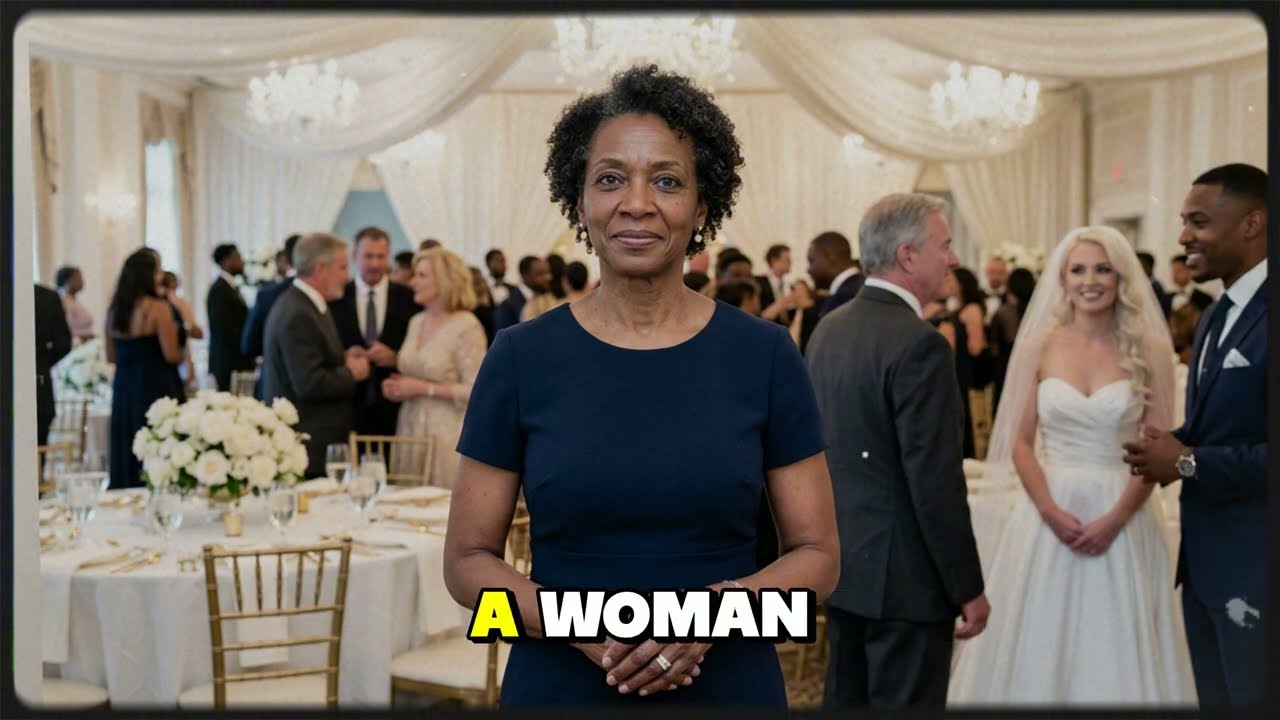
“That is what I thought.”
Marcus looked down.
“Mom, I should have stopped her.”
“Yes.”
The answer surprised him.
He had expected comfort.
Cynthia did not offer it.
“I froze.”
“Yes.”
“I was shocked.”
“So was I.”
He looked at the bruise forming on her face.
“I failed you.”
Cynthia’s voice softened, but not enough to erase the truth.
“You did.”
Behind them, the quartet had begun playing again inside the ballroom, though almost no one had returned to dancing.
Marcus removed his wedding jacket.
“I’m not going back in.”
Ashley stared at him.
“You can’t leave our wedding.”
“Our wedding ended when you hit my mother and I stood there.”
“Marcus—”
“No.”
It was the first word he had spoken that night without hesitation.
He walked toward Cynthia.
“May I come with you?”
She looked at him for a long moment.
“Yes.”
They sat outside the hotel until nearly sunrise.
Robert dismissed the security team to a respectful distance. A waiter brought tea, then quietly disappeared.
Under the hotel’s garden lights, Cynthia told Marcus the truth.
She told him about Elias Ward, who had started with two trucks and a borrowed warehouse.
She told him about her father, who turned the company into an international empire and expected his daughter to become part of a carefully arranged future.
She told him about meeting Thomas at a community fundraiser.
Thomas did not know who she was when he asked her to dance.
When he found out, he did not change.
That was why she loved him.
“My family said he was beneath me,” Cynthia said.
Marcus looked toward the dark garden.
“And you left.”
“I chose.”
There was pride in the distinction.
She described the small apartment where she and Thomas began. The years when they counted grocery money. The joy of buying their first used car.
Then Thomas died.
“Why didn’t you go back after Dad was gone?”
“Because grief is not the same as regret.”
She had loved the life they built, even when it became difficult.
Returning to the Ward estate would have meant allowing her family to call her marriage a mistake.
Thomas had never been a mistake.
Marcus listened as Cynthia described the jobs she worked, the nights she came home exhausted, and the fear she hid from him.
He began remembering things differently.
The new shoes that appeared before each school year.
The school trips she always found a way to afford.
The nights she claimed she had already eaten.
“You had all that money,” he said.
“It was held in trust.”
“But you could have used it.”
“Yes.”
“Why didn’t you?”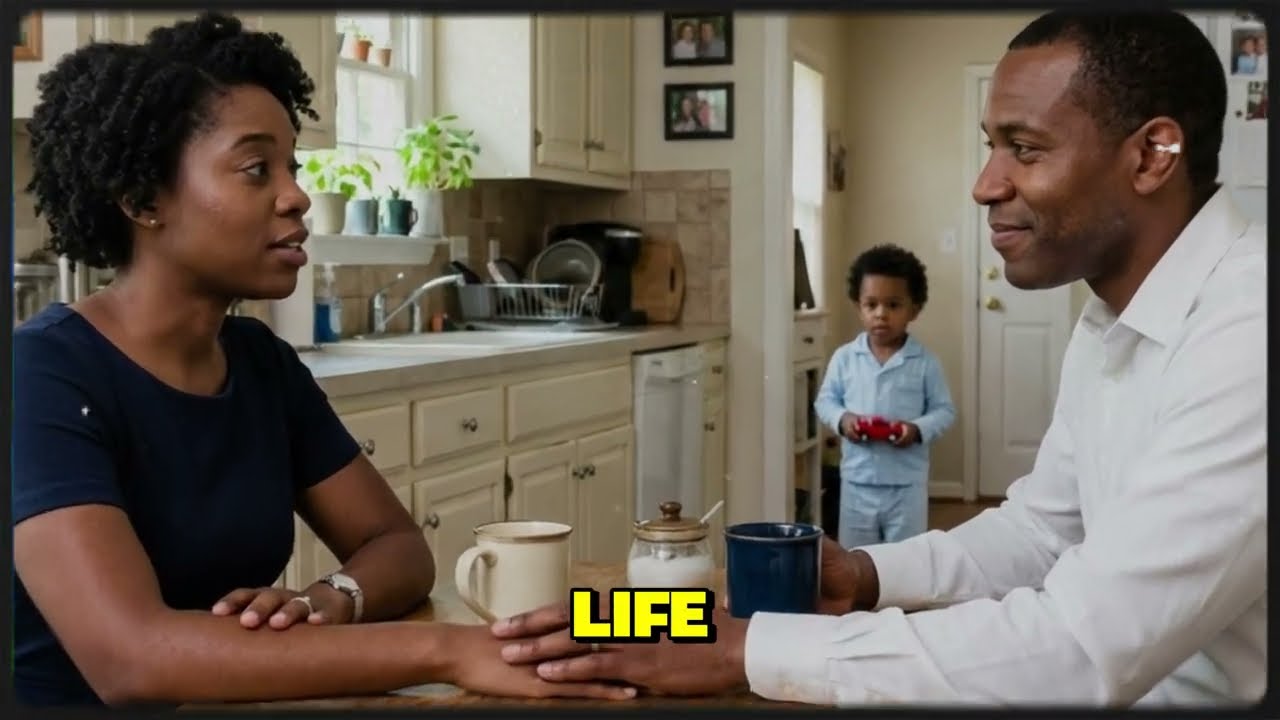
“At first, pride. Later, purpose.”
Cynthia explained that she had eventually accepted limited access to the trust—not for herself, but to create an anonymous scholarship fund.
For fifteen years, it had paid tuition, nursing fees, trade certifications, and childcare costs for students from low-income families.
Marcus stared at her.
“How many?”
“Enough.”
“That sounds like you avoiding the number.”
She smiled faintly.
“Four hundred and twelve.”
He leaned back.
“You helped more than four hundred people and never told me?”
“I didn’t want you to look at me and see an inheritance.”
“What did you want me to see?”
“Your mother.”
Marcus reached across the table and took her hand.
“That is all I ever saw.”
For the first time since leaving the ballroom, Cynthia’s composure broke.
Not dramatically.
Her eyes filled, and she looked down at their joined hands.
The marriage did not survive the week.
Ashley issued a public apology drafted by a communications firm. It spoke of stress, misunderstanding, and emotional pressure.
It did not mention the deliberate wine spill.
It did not explain why the apology came only after Cynthia’s identity became known.
Marcus filed for an annulment.
He did not blame Ashley alone.
In his statement, he wrote that the marriage had exposed failures in judgment, including his own.
Cynthia returned to Atlanta.
The Ward Global headquarters occupied thirty-one floors of a stone-and-glass building bearing her family name.
On her first morning, executives gathered in the boardroom expecting a symbolic heir.
They found a woman who had spent decades studying people from rooms where no one considered her important.
She asked about warehouse injury rates.
She requested employee turnover reports.
She questioned why scholarship funds favored traditional university programs while nursing students, mechanics, early-childhood educators, and commercial drivers received almost nothing.
Within six months, the trust expanded its education programs.
A new fund opened in Cynthia’s old neighborhood.
Childcare grants were created for working parents.
Training programs were established for technical careers that required certification but not four-year degrees.
There were no launch parties.
Cynthia rejected a magazine profile.
“Use the money for the program,” she told the communications director.
Marcus changed too, though more slowly.
He spent months examining the compromises he had called peace.
He saw how often he had allowed Ashley to dismiss people because challenging her created discomfort.
He remembered the ballroom and understood that silence was not neutrality.
It had chosen a side.
When he apologized again, Cynthia did not tell him to stop feeling guilty.
“Guilt that only looks backward becomes vanity,” she said. “The question is what you do next.”
Marcus began volunteering with one of the trust’s housing programs.
He designed affordable community centers without charging architectural fees.
He attended meetings where no one knew his mother’s name.
Cynthia watched him learn that responsibility was not a speech.
It was repetition.
It was returning.
It was doing the right thing after the emotional moment had passed.
A year after the wedding, Cynthia spoke at an international logistics conference.
Thousands of executives filled the auditorium.
She wore the same pearl pin she had worn at the Harrington Hotel.
“I have sat at the farthest table in a ballroom,” she told them. “I have also sat at the head of a boardroom.”
The audience became still.
“My value did not increase during the walk between those two places.”
She spoke about workers judged by uniforms, mothers judged by addresses, and people dismissed because their lives did not display wealth in recognizable ways.
“Ownership can give a person authority,” she said. “It cannot give them dignity. Dignity is not issued by a company, inherited through a trust, or granted by a room full of important people.”
She paused.
“And it cannot be taken away by someone too shallow to recognize it.”
On a cold November morning, Cynthia’s car stopped outside the Ward Global headquarters.
A driver opened the door.
She stepped onto the pavement in a dark coat, carrying the same inexpensive handbag she had brought to her son’s wedding.
Employees greeted her as she entered the lobby.
Some called her Ms. Ward.
Others called her Madam Chair.
Cynthia nodded to each of them, including the security guard, the receptionist, and the woman polishing the brass railing near the elevators.
The building carried her family’s name.
For decades, she had believed returning would mean surrendering the life she had chosen.
Now she understood that inheritance did not have to control her.
It could be redirected.
The elevator doors opened on the thirty-first floor.
Cynthia walked down the long corridor toward the boardroom.
Nothing about her had become larger.
The world had simply stopped insisting that she make herself smaller.
And that is the truth people often learn too late: a person’s worth does not begin the moment wealth, power, or status forces others to notice it—it was there all along, waiting for the room to become worthy enough to see it.