Chapter 1 — The Man Who Sat Beside Power
Rome, Italy
July 24, 1943
The room was filled with men who believed they controlled history.
They wore elegant suits.
Military uniforms.
Decorations earned from years of service.
They arrived in polished cars through the streets of Rome, protected by guards and surrounded by the symbols of Fascist power.
For more than two decades, these men had helped build Benito Mussolini’s Italy.
They had watched the dictator rise.
They had repeated his speeches.
They had celebrated his victories.
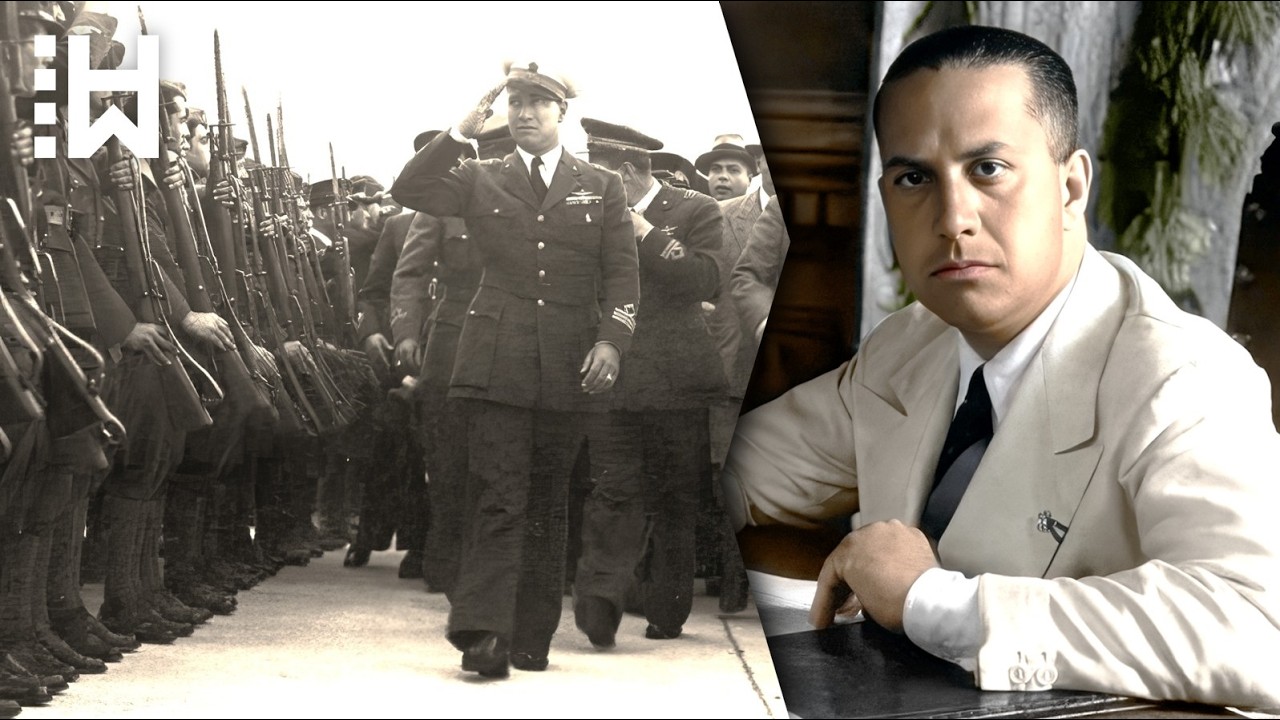
And now they sat inside the Grand Council of Fascism facing a question nobody wanted to ask aloud.
Was Mussolini leading Italy toward destruction?
Galeazzo Ciano sat quietly at the table.
He was forty years old.
The former foreign minister of Italy.
The husband of Mussolini’s daughter.
A man who had spent years standing among the highest levels of European power.
The room around him was familiar.
The faces were familiar.
The fear was familiar.
But something had changed.
For the first time in years, nobody knew what would happen next.
Outside, Rome was suffering.
The war that had once been presented as a glorious mission had become a national disaster.
Italian cities were bombed.
Soldiers were dying.
The alliance with Nazi Germany had brought humiliation after humiliation.
The powerful men inside the room could no longer ignore reality.
Italy was losing.
And the man responsible for leading them there was sitting in the same building.
Ciano looked toward the table.
A document waited.
A vote.
A decision.
A possible act of betrayal.
The irony was impossible to ignore.
Years earlier, Ciano had helped strengthen Mussolini’s power.
Now he was preparing to challenge him.
The man who had entered Fascist politics through family privilege was about to discover something dangerous:
In dictatorships, loyalty is valuable only until power changes hands.
The Golden Boy of Fascist Italy
Before the war.
Before the collapse.
Before the firing squad.
Galeazzo Ciano was everything Fascist Italy wanted to display.
Young.
Educated.
Wealthy.
Connected.
He was born in 1903 into privilege.
His father, Costanzo Ciano, was a decorated naval officer and one of the founding figures of Italian Fascism.
The family name carried influence.
The Cianos were not outsiders looking for power.
They were already close to it.
Growing up, Galeazzo learned an important lesson early:
Politics was not only about ideas.
It was about relationships.
Who you knew.
Who trusted you.
Who opened doors.
He studied law in Rome and entered diplomatic service.
To many observers, he seemed perfectly suited for the world of international politics.
He was charming.
Confident.
Well-spoken.
He understood how to impress powerful people.
But beneath the polished appearance was a man with a complicated ambition.
He wanted influence.
Recognition.
A place in history.
And Fascist Italy offered him exactly that.
The Marriage That Changed Everything
In 1930, Galeazzo Ciano married Edda Mussolini.
The wedding was not just a family celebration.
It was a political alliance.
By marrying Mussolini’s eldest daughter, Ciano moved closer than almost anyone to the center of Fascist power.
Suddenly, he was no longer only Costanzo Ciano’s son.
He was Mussolini’s son-in-law.
The family connection transformed him.
Doors opened.
Opportunities appeared.
His future seemed limitless.
Inside Mussolini’s circle, family relationships and politics became intertwined.
Edda was strong-willed, independent, and far from a simple political symbol.
Their marriage was passionate but complicated.
They lived among wealth and influence.
They attended diplomatic events.
They traveled internationally.
They represented the image of Fascist Italy’s elite.
From the outside, it looked like a perfect life.
A young couple at the center of power.
But behind the luxury was a dangerous reality.
Every privilege came with a price.
Foreign Minister at Thirty-Three
In 1936, Mussolini appointed Ciano as Italy’s foreign minister.
He was only thirty-three years old.
One of the youngest men ever to hold the position.
The appointment stunned some observers.
Experience mattered less than trust.
And Mussolini trusted him.
Ciano became the public face of Italian diplomacy.
He met foreign leaders.
Negotiated agreements.
Represented the regime abroad.
He was no longer simply the dictator’s son-in-law.
He was one of the most important men in Fascist Italy.
But power can change people.
And Ciano began to discover something about the system he served.
Fascism promised strength.
Unity.
National greatness.
But behind the speeches were compromises, rivalries, and calculations.
Every decision had consequences.
Every alliance created enemies.
The Road Toward Germany
One of Ciano’s most important roles was helping bring Italy closer to Nazi Germany.
At first, the relationship between Mussolini and Hitler was not based on complete trust.
The two dictators competed for influence.
They had different visions.
But international pressure and shared ambitions pushed them together.
Ciano became one of the key figures in developing the alliance.
He met German officials.
He negotiated with Joachim von Ribbentrop.
He observed Adolf Hitler directly.
At first, Ciano admired aspects of German power.
The organization.
The military discipline.
The confidence.
But over time, his private writings revealed growing concerns.
The famous Ciano Diaries would later provide one of the most valuable insider accounts of Fascist leadership.
They showed a man who was not an innocent outsider.
He had helped build the system.
But he was also increasingly disturbed by where it was leading.
The Secret Doubts of a Powerful Man
In public, Ciano represented Fascist Italy.
In private, he began questioning the decisions being made.
The invasion of Poland.
The growing influence of Nazi Germany.
The decision to enter the war.
He saw military failures.
He saw German pressure.
He saw Italy becoming trapped.
But there was one problem.
A man who spends years building a system cannot easily escape from it.
Ciano’s greatest strength had always been his connection to power.
Now it became his greatest weakness.
Because when the Fascist regime began collapsing…
everyone remembered his role in creating it.
July 1943
The vote approached.
The men around the table understood the danger.
Removing Mussolini was not simply a political disagreement.
It was a direct challenge to the dictator.
A challenge that could mean imprisonment.
Exile.
Death.
Ciano knew this.
He understood the risks better than anyone.
After all…
he was not just another Fascist official.
He was Mussolini’s family.
The document was placed before him.
His hand moved toward the paper.
A lifetime of privilege.
A lifetime of ambition.
A lifetime spent beside one of the most powerful men in Europe.
All of it led to this moment.
The question was no longer:
Would Ciano betray Mussolini?
The real question was:
Would Mussolini ever forgive the man who helped destroy his rule?
Because in Fascist Italy…
friends could become enemies overnight.
And family could become a death sentence.
To be continued — Chapter 2: The Alliance With Hitler and the Road to Disaster