The words came out of my daughter’s mouth like a door slamming shut.
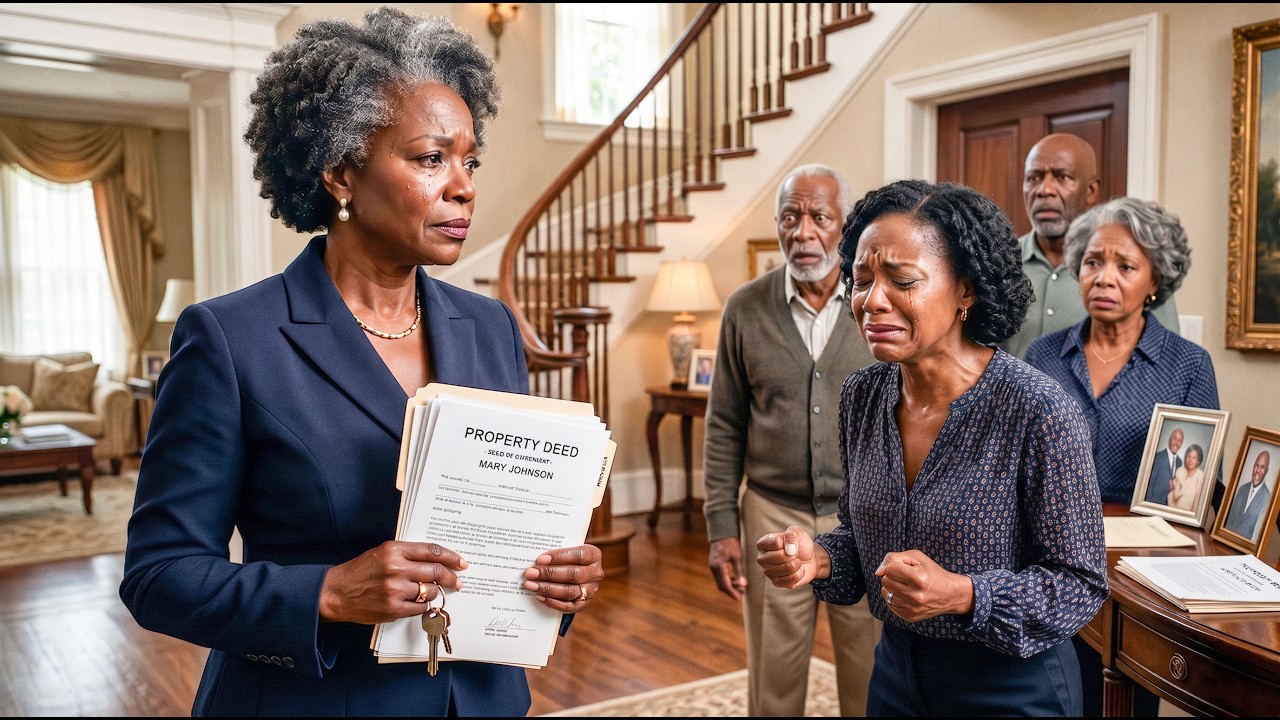
“This isn’t your family anymore, Mom.”
I stood in the kitchen of the house I had built with my husband, holding a coffee mug that still had a tiny crack Henry had promised to fix three years before he died.
For a moment, I didn’t recognize the woman standing in front of me.
Because Ashley wasn’t supposed to be the person who made me feel like a stranger in my own home.
Not my little girl who used to sit on the front porch of our white house on Maple Ridge Lane, waiting for her father to come home from work.
Not the child who helped Henry plant tulips every spring and cried when the first maple leaves fell because she thought summer should last forever.
But that morning, she wasn’t looking at me like her mother.
She was looking at me like I was an obstacle.
Behind her stood her husband, Derek, holding a folder full of papers.
He had the calm expression of someone who believed the outcome had already been decided.
And maybe that was the moment I finally understood.
They weren’t asking me for permission.
They were expecting me to surrender.

But there was one thing they had forgotten.
The name on the deed.
Mine.
And before that day was over, they would remember exactly whose house they were standing in.
For 31 years, the house on Maple Ridge Lane had been more than four walls and a roof.
It was where Henry and I brought Ashley home from the hospital.
It was where we measured her height against the hallway wall every birthday.
It was where Henry cooked pancakes every Sunday morning, usually burning the first batch because he insisted the secret was “confidence.”
It was where we sat together after difficult days and reminded each other that we were lucky.
We didn’t buy that house because we were wealthy.
We bought it because we were willing to sacrifice.
Henry worked overtime for years.
I took extra shifts whenever we needed money.
We fixed broken cabinets ourselves. We painted rooms ourselves. We learned how to repair things because hiring someone wasn’t always possible.
Every corner carried a memory.
The scratch on the staircase came from when Ashley dragged her bicycle inside too quickly.
The mark near the dining room table came from Henry dropping a toolbox while fixing a light.
The tree outside the window was one of the first things we planted together.
Henry always said, “Someday, this tree will be bigger than us.”
He was right.
The tree grew.
Our family grew.
Then, slowly, life changed.

Henry got sick.
At first, it was small things.
A little more tired than usual.
A little less energy.
A few doctor appointments that became more appointments.
Then came the word nobody wants to hear.
Cancer.
The months that followed were filled with hospital rooms, medication schedules, quiet conversations, and moments where we pretended everything would be okay because admitting the truth felt impossible.
Near the end, Henry held my hand and looked toward the bedroom window.
“Brooke,” he said quietly, “promise me something.”
“What?”
“Don’t let anyone make you feel like a guest in your own home.”
I laughed sadly.
“Henry, nobody would ever do that.”
He looked at me for a long moment.
“You’d be surprised what people do when they decide something belongs to them.”
At the time, I thought he was talking about strangers.
I never imagined he was talking about family.
Before he passed away, he made one more request.
“Don’t sign anything you don’t understand.”
“Henry—”
“I mean it.”
He squeezed my hand.
“If anyone ever brings you papers and says it’s just easier this way, call Charles first.”
Charles Whitman had been our family attorney for years.
I promised Henry.
I just never thought I would need that promise because of our own daughter.
After Henry died, the house became painfully quiet.
Every room reminded me of him.
The chair where he read newspapers.
The garage where he kept his tools organized perfectly.
The kitchen where he sang badly while making coffee.
Ashley came around often at first.
She brought meals.
She sat with me.
She told me she hated seeing me alone.
And I believed her.
Because I wanted to believe her.
A few months later, she called.
“Mom, Derek and I have been talking.”
I remember smiling.
I thought she was going to tell me they wanted to spend more time together.
Instead, she said:
“We think it would be good if we moved in with you.”
My heart lifted.
Maybe this was what I needed.
Maybe my family was coming back.
Maybe the house would feel alive again.
I ignored the little voice telling me things were changing.
For the first few weeks, everything seemed wonderful.
My grandson Noah brought laughter back into the house.
He asked me about Henry.
He wanted to hear stories.
He sat with me on the porch and listened.
For the first time in months, I felt like I had my family again.
Then the small changes started.
At first, they were easy to explain.
Derek moved the coffee maker because he said the counter space was better somewhere else.
He reorganized the kitchen cabinets because he said he was “making things more efficient.”
He replaced the curtains because he thought the house needed “a modern touch.”
Then Henry’s photographs disappeared from the living room.
When I asked about them, Ashley shrugged.
“They’re safe, Mom. We’re just reducing clutter.”
Clutter.
That was the word she used.
The memories of my husband were clutter.
I told myself not to overreact.
I told myself families adjusted.
But adjustment became control.
Derek started talking about the house differently.
Not as a home.
As an asset.
“Property values around here have increased a lot,” he said one evening.
“This neighborhood is becoming very desirable.”
I looked at him.
“Yes. We’ve always loved this neighborhood.”
He smiled.
“Exactly. There’s a lot of potential here.”
I didn’t like the way he said potential.
Because he wasn’t talking about memories.
He was talking about money.
The first time I realized something was seriously wrong was when Derek changed the locks.
I came home from visiting my friend Linda and my key didn’t work.
I stood outside for several minutes before Ashley opened the door.
“Oh, Mom. I forgot to tell you.”
“Tell me what?”
“We changed the locks. Derek thought it was safer.”
“Without asking me?”
She looked uncomfortable.
“It’s not a big deal.”
But it was.
Everything was becoming something I wasn’t allowed to question.
Then came the bedroom conversation.
Ashley sat beside me on the couch.
“Mom, we’ve been thinking.”
That sentence never brings good news.
“What?”
“The master bedroom is a lot of space for one person.”
I stared at her.
“Are you asking me to leave my bedroom?”
“Not leave. Just move. The smaller room would be easier for you.”
Easier.
Another word that sounded kind but carried something else underneath.
That room was where Henry and I had slept for 31 years.
Where we held each other during storms.
Where we whispered about dreams.
Where we said goodbye.
And now they wanted me to pack it away.
Like an old decoration.
That night, Noah came quietly to my door.
“Grandma?”
“Yes?”
“Are you okay?”
I forced a smile.
“I’m fine.”
He looked at the boxes stacked near my closet.
“No, you’re not.”
Then he whispered something that changed everything.
“Dad and Mom have been talking about this for months.”
My stomach tightened.
“Talking about what?”
“The house.”
The next morning, I found a folder on the kitchen counter.
Derek’s folder.
I wasn’t trying to invade anyone’s privacy.
I was looking for a recipe.
But what I saw inside wasn’t a recipe.
It was a plan.
Renovation estimates.
Property value reports.
Loan documents.
Notes about “equity opportunities.”
And one sentence written at the top of a page:
“Need control before future decisions become difficult.”
My hands started shaking.
They weren’t helping me.
They were positioning themselves.
They weren’t moving in because they wanted to take care of me.
They were moving in because they wanted access.
That afternoon, I went to the attic.
I found Henry’s old document box.
Inside was our deed.
Our insurance papers.
Our tax records.
And a letter.
My name was written on the envelope.
My hands trembled as I opened it.
“Brooke,” it began.
“If you are reading this, something probably happened that made you question whether you still have control over your own life.”
I stopped breathing.
Henry had known.
“I trust Ashley with my whole heart. But people change. Pressure changes people. Love should never require you to surrender your independence.”
At the bottom was one final line.
“Call Charles.”
So I did.
Three days later, Derek and Ashley called a family meeting.
They thought they were in control.
They sat across from me in the living room.
The same living room where Henry used to read Christmas stories to Ashley.
Derek placed papers on the table.
“We’re doing this because we love you.”
Ashley nodded.
“We just want to make sure everything is handled.”
I looked down.
Power of attorney documents.
Financial management papers.
Requests that would give them authority over decisions involving my life.
Ashley reached for my hand.
“Mom, this is what families do.”
I looked at my daughter.
The little girl who once cried because she broke my favorite vase.
The woman who was now asking me to sign away control.
“I need time to think.”
Derek sighed.
“Brooke, this is just paperwork.”
Then the front door opened.
Everyone turned.
Charles Whitman walked in.
Derek’s face changed immediately.
Not dramatically.
Just slightly.
But I saw it.
That tiny moment when someone realizes their plan is no longer private.
Charles placed his briefcase down.
“Good afternoon.”
Ashley looked confused.
“Why are you here?”
I answered.
“Because your father asked me to come if anyone ever tried to convince me to sign something I didn’t understand.”
The room went silent.
Charles opened a file.
“Henry prepared protections years ago. The house belongs solely to Brooke. The deed is clear. No one else has ownership rights.”
Derek’s confident expression disappeared.
Charles continued.
“And I should mention something else.”
He looked directly at Derek.
“Henry also documented concerns about anyone attempting to pressure Brooke into transferring control of her property.”
Ashley’s face went pale.
For the first time, she looked at her husband differently.
Not as the person with the answers.
But as the person who had created the problem.
Derek leaned back.
His jaw tightened.
He had spent months believing he was the smartest person in the room.
He forgot one thing.
The quietest person in the room is often the one paying the closest attention.
After that day, everything changed.
Derek moved out first.
Ashley stayed.
For weeks, we barely spoke.
Then one evening, she sat beside me on the porch.
The same porch where she used to wait for her father.
“Mom,” she whispered.
“I’m sorry.”
I didn’t answer immediately.
Because apologies don’t erase damage.
But they can be the first step toward repairing it.
“I lost myself,” she said.
“I thought I was building a future. I didn’t realize I was destroying the one I already had.”
I looked at the maple tree.
The one Henry planted.
The one that survived every storm.
“I loved you enough to give you everything,” I said.
“But loving you never meant giving you ownership of me.”
Ashley cried.
And for the first time in a long time, she looked like my daughter again.
Not someone trying to win.
Not someone trying to take.
Just my daughter.
I still live in the house on Maple Ridge Lane.
The tulips still bloom every spring.
The maple leaves still cover the yard every fall.
Henry’s pictures are back on the walls.
His chair is still by the window.
And every morning, I drink my coffee in the kitchen where we built our life.
People often think losing someone means losing their protection.
They’re wrong.
Sometimes the things they leave behind—their words, their wisdom, the lessons they taught us—become the strongest protection we have.
A house is not valuable because of its walls.
It is valuable because of the people who loved inside it.
And no one, not even family, has the right to make you feel like a stranger in the place you built with your own hands.