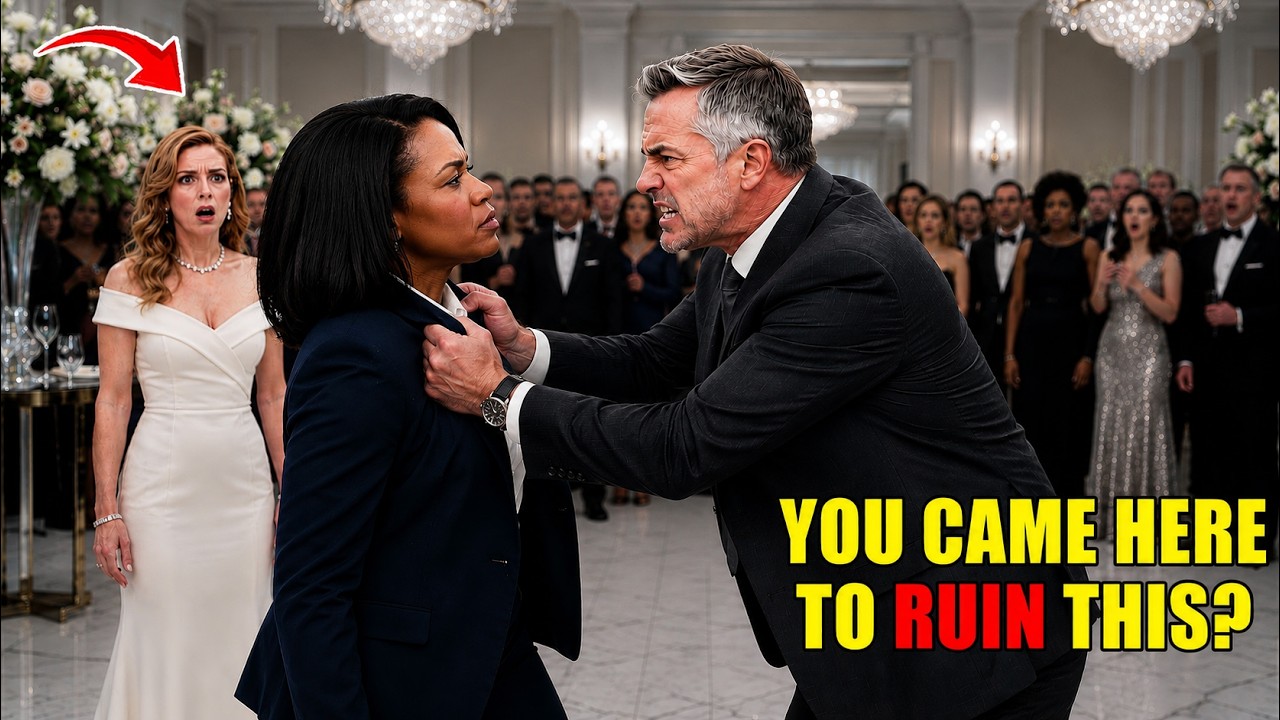
The slap landed in the middle of Vanessa Caldwell’s applause.
One moment, the ballroom on the top floor of the Meridian Grand Hotel was filled with polite approval. Crystal glasses caught the light. White orchids climbed from silver vases. Waiters moved between tables so quietly that they seemed to disappear into the walls.
The next moment, Ethan Caldwell’s hand struck Naomi Reeves across the face.
The sound reached every corner of the room.
No one spoke.
Three hundred guests—bankers, judges, developers, politicians, and donors—watched Naomi turn her head slowly back toward the man who had hit her.
She wore a plain navy dress.
No diamonds.
No assistant.
No security detail waiting at the edge of the room.
At forty-nine, Naomi carried herself with the controlled stillness of someone who had spent years learning that anger could be turned against the person who had earned the right to feel it.
A red mark rose along her cheek.
Ethan stood in front of her holding a white cane in his left hand.
He was fifty-two, the chief executive of Caldwell Group, and one of the most recognized business figures in the city. He had lost his sight after a warehouse fire twenty-five years earlier and built his public identity around endurance.
Business magazines called him relentless.
Universities invited him to speak about overcoming adversity.
The Caldwell Foundation used his story to raise millions for education programs and children with disabilities.
Beside him stood Vanessa Caldwell, his wife of twenty-four years.
She wore ivory silk and the expression of a woman who had perfected concern.
“What possessed you to come here?” Ethan asked.
Naomi did not touch her cheek.
She looked at Vanessa.
Then she said three words.
“New Orleans. 1998.”
Ethan’s face changed.
Not dramatically.
Only enough for Vanessa to notice.
Her fingers tightened around the edge of the podium.
Minutes earlier, the evening had belonged completely to her.
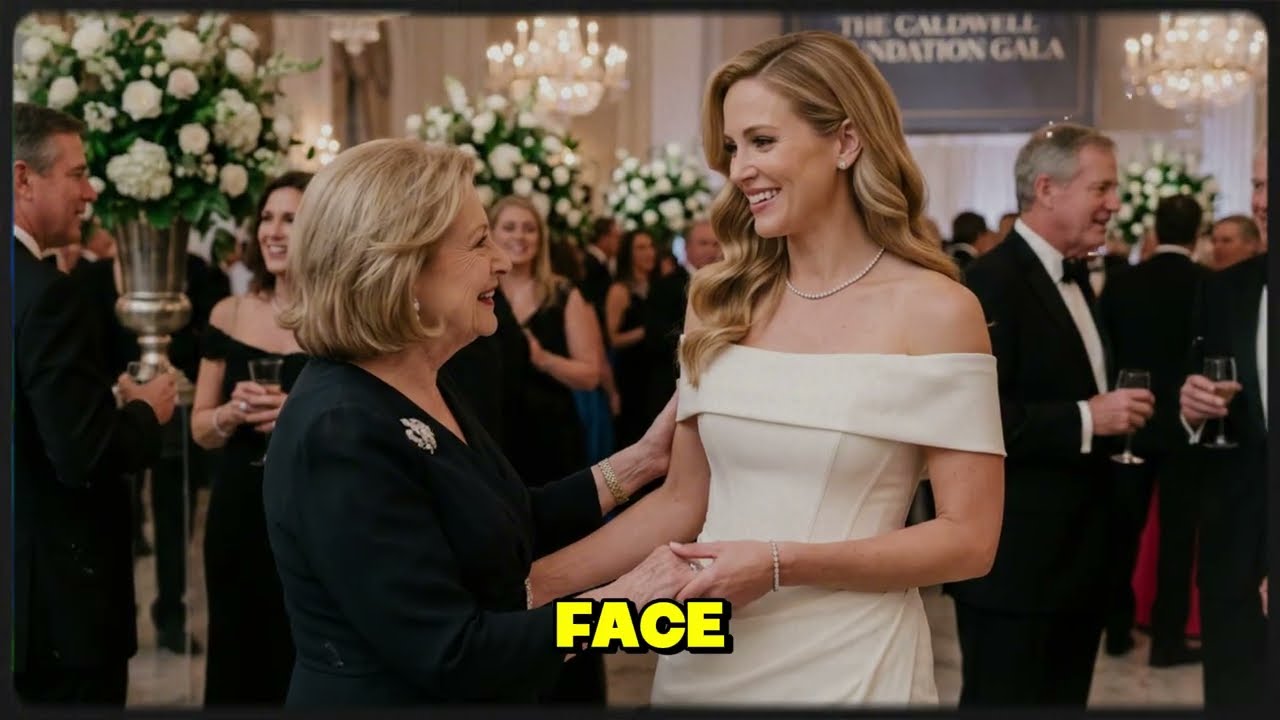
The annual Caldwell Foundation gala was the most carefully managed charity event in the city. It took place forty-two floors above the streets in a ballroom designed to make every guest feel that wealth had lifted them above ordinary life.
The chandeliers had been imported from Venice.
The flowers had cost more than the foundation awarded to some individual schools.
Each table carried the name of a major donor.
Every camera angle had been planned.
Vanessa moved through the room like someone born for it.
She greeted trustees by name, remembered spouses, asked about children, and placed one compassionate hand over another whenever the conversation turned to hardship.
People described her as gracious.
They used the word often enough that it became part of her identity.
Naomi had arrived alone.
At the entrance, the receptionist checked her invitation twice.
A security guard glanced at her shoes, then at the guest list.
Two women near the registration table whispered when they recognized her name.
“I heard she used to work for Caldwell.”
“No, she was fired.”
“Wasn’t there a lawsuit?”
Naomi heard every word.
She kept walking.
She had not entered that ballroom to defend her reputation.
She had come to reclaim the truth.
From a table near the back, she watched Ethan navigate the room by sound and memory.
He counted his steps between familiar points. He recognized voices immediately. When someone approached, he tilted his head slightly and listened with such complete attention that people mistook being studied for being valued.
His blindness had sharpened other parts of him.
His memory was nearly perfect.
His control was stronger.
Naomi remembered when he had been twenty-seven, exhausted, ambitious, and terrified that his company would die before it had truly begun.
She also remembered the person who had helped him survive.
It was not Vanessa.
But Vanessa had spent twenty-five years accepting gratitude for it.
The gala program reached its fundraising appeal shortly after dinner.
Vanessa stepped onto the stage.
“Every child deserves to be seen,” she said.
The sentence appeared on screens around the ballroom.
She spoke about honesty, opportunity, and the moral responsibility of those with power.
Guests nodded.
Some dabbed their eyes.
Pledge cards appeared on tables.
Naomi listened until Vanessa said, “Our family has always believed that truth is the foundation of trust.”
Then Naomi stood.
“Everything she just told you is a lie.”
The sentence cut through the room.
The applause died.
Vanessa stopped speaking.
Ethan turned toward Naomi’s voice immediately.
He had not heard it in twenty-five years, but some sounds remain stored deeper than memory.
“Who said that?” he asked.
Naomi stepped into the aisle.
“I did.”
A security officer moved toward her.
Vanessa lowered her voice into the careful register she used whenever cameras were present.
“Ethan, she is disturbed. Please don’t engage.”
Naomi laughed once.
It held no humor.
“Still using other people’s voices to protect your story?”
Vanessa’s expression tightened.
Ethan raised one hand toward security.
“Remove her.”
Naomi did not move.
“You do not know who your wife is.”
“I know exactly who my wife is.”
“No,” Naomi said. “You know the person she invented after stealing my life.”
The ballroom shifted.
Guests who had been offended now became interested.
Vanessa stepped down from the stage.
“This woman worked briefly for the company many years ago. She developed an unhealthy fixation.”
Naomi looked at Ethan.
“She told you I caused the fire.”
Ethan’s jaw hardened.
“She told you I abandoned you.”
“Enough.”
“She told you she carried you out.”
“I said enough.”
Naomi took one step closer.
“She lied.”
Ethan’s hand moved before anyone expected it.
The slap turned public scandal into something heavier.
And then Naomi said the date.
New Orleans. 1998.
Ethan went completely still.
Vanessa did not.
She reached for his arm too quickly.
“Ethan, don’t listen to her.”
He turned his face toward his wife.
“Everyone out.”
Vanessa blinked.
“What?”
“Clear the room.”
The guests began leaving reluctantly, some guided by staff, others lingering long enough to catch one more detail.
Within minutes, the ballroom emptied.
The orchids remained.
The candles continued burning.
Only Ethan, Vanessa, Naomi, two security officers, and the foundation’s general counsel remained.
Naomi sat at the nearest table and placed a leather file on the white tablecloth.
“Twenty-five years is a long time to carry documents no one wants to read,” she said.
Ethan remained standing.
“Start talking.”
In 1998, Caldwell Group was not a group.
It was three leased offices above a shipping warehouse in New Orleans and a company account that could not survive another bad quarter.
Ethan was intelligent, persuasive, and reckless.
He could convince investors to listen.
He could not make the numbers work.
Naomi arrived as an independent financial consultant.
She was twenty-four and had already developed a reputation for finding weaknesses hidden inside complicated balance sheets.
She did not care about Ethan’s confidence.
She cared whether invoices matched contracts.
Within four months, Naomi restructured the company’s debt, negotiated an extension with its primary lender, and found a capital partner willing to keep the operation alive.
She also discovered that a larger competitor had been exploiting a regulatory loophole to undercut Caldwell’s bids.
Her work turned Ethan’s company from a failing experiment into a business with a future.
He began trusting her with everything.
Payroll.
Negotiations.
 Fears he refused to admit to anyone else.
They worked late, ate from the same takeout containers, and learned the rhythms of each other’s silence.
There was something between them neither named.
Vanessa Hartley worked as Ethan’s administrative assistant.
She scheduled meetings, arranged travel, and observed.
She saw how Ethan listened when Naomi spoke.
She saw how he searched for Naomi first whenever a problem appeared.
She also saw the company becoming valuable.
The fire began shortly after midnight on a humid August evening.
Naomi smelled smoke before the alarm sounded.
At first, she thought it came from the warehouse below.
Then the lights flickered.
She ran toward Ethan’s office and found him asleep at his desk after working nearly thirty hours.
Smoke had already entered the corridor.
Naomi shook him awake.
They tried the main stairwell, but flames had reached the landing.
She led him toward a rear emergency exit.
A ceiling panel collapsed.
Burning material struck Naomi’s right hand and forearm.
She kept moving.
Ethan inhaled smoke and became disoriented.
When a window shattered, the force threw both of them against the wall.
Naomi lost hearing in her left ear for several weeks.
She dragged Ethan down the rear stairs one step at a time.
Outside, a local photographer captured an image of a woman supporting an unconscious man beneath one arm while flames climbed behind them.
Naomi collapsed minutes later.
They were taken to different hospitals because emergency rooms nearby were overwhelmed.
Ethan suffered severe smoke inhalation and damage to the optic nerves.
His sight deteriorated rapidly.
Naomi underwent surgery for burns and a fractured wrist.
While she was still medicated, two attorneys representing Caldwell’s insurer entered her hospital room.
They accused her of removing proprietary financial documents.
They told her she was under investigation.
They gave her a termination notice and warned her not to contact Ethan.
She thought it was a misunderstanding.
It was not.
Vanessa had reached Ethan first.
She sat beside his hospital bed while he moved between panic, pain, and darkness.
She told him Naomi had left a heater near combustible files.
She said Naomi ran when the fire began.
She claimed she—Vanessa—had returned to the building and helped emergency workers locate him.
Ethan was newly blind, physically weak, and dependent on the person speaking into the silence.
He believed her.
Naomi wrote letters.
None reached him.
She called the hospital.
She was blocked.
She contacted mutual colleagues.
They told her Ethan did not want to hear her name.
For two years, she tried.
Then she stopped.
She rebuilt her life in another city.
The burns healed into pale, uneven scars.
Her career did not recover as quickly.
The accusations followed her.
A financial consultant accused of stealing records was not welcomed into rooms built on trust.
Naomi moved into compliance work, then forensic accounting.
She began again at a lower salary and with no network.
It took almost a decade to regain what had been destroyed in weeks.
Back in the empty ballroom, Naomi opened the leather file.
She placed a hospital record on the table.
“Admission time, 1:47 a.m. Burns to the right hand and forearm. Smoke inhalation. Wrist fracture.”
She placed down the old newspaper photograph.
The image was grainy.
But the woman supporting Ethan wore Naomi’s torn jacket.
Next came bank records.
Three payments had been transferred from a Caldwell emergency account to an account belonging to Vanessa’s mother within six weeks of the fire.
Ethan turned his face toward the table, unable to see the pages.
“What were the payments for?”
Vanessa answered too quickly.
“Family expenses. My mother was helping me.”
Naomi looked at her hands.
“They’re shaking.”
Vanessa pulled them together.
“This proves nothing.”
Naomi placed down a notarized statement.
“The attorney who delivered my termination papers retired last year. He finally agreed to testify.”
Vanessa’s voice rose.
“A statement from a confused old man?”
“He describes you providing the allegation before the fire investigator completed his report.”
Ethan turned toward Vanessa.
“You always told the story the same way.”
She became still.
“Because it happened.”
“No,” Ethan said slowly. “Exactly the same way. Every word.”
For years, he had admired the consistency.
Now he heard rehearsal.
Naomi nodded to one of the security officers.
The ballroom door opened.
Gregory Marsh entered.
He had worked as a junior controller for Caldwell in 1998.
Age had bent his shoulders, but his voice remained clear.
“I handled the transfers,” he said.
Vanessa stepped backward.
Gregory continued.
“Mrs. Hartley’s mother received the money. The payments were classified as emergency consulting fees, but no consulting work existed.”
“Why?” Ethan asked.
Gregory looked toward Vanessa.
“She told me the money was necessary to keep her family quiet.”
Vanessa’s composure broke.
“This is absurd.”
Gregory removed a folder.
“She also instructed us to intercept correspondence addressed to you from Naomi Reeves.”
Ethan gripped the handle of his cane.
“How many letters?”
“More than twenty.”
The room seemed to narrow.
Vanessa looked toward Ethan.
“I protected you.”
“From what?”
“From her.”
Naomi stood.
“I was in surgery when you began destroying my name.”
“You would have taken everything,” Vanessa said.
“What?”
“His trust. The company. The future.”
Naomi stared at her.
“I had already saved all three.”
Vanessa turned toward Ethan.
“She left.”
“I was removed.”
“She did not fight hard enough.”
“I spent two years trying to reach him.”
“You could have done more.”
Naomi’s voice became colder.
“I was burned, unemployed, accused of theft, and threatened with prosecution by attorneys you sent. How much more suffering would have satisfied you?”
Vanessa’s face twisted.
“You think you were the only one who loved him?”
The word changed the room.
Love.
At last, the argument beneath twenty-five years of lies had named itself.
Vanessa had wanted Ethan.
Naomi had his trust.
The fire created the opportunity to erase one woman and replace her with another.
Ethan took out his phone.
He called the current general counsel and asked for verification of the transfers, correspondence logs, and archived insurance records.
The call lasted fourteen minutes.
By the end, his voice had changed.
The documents were authentic.
The account existed.
The letters had been received and diverted.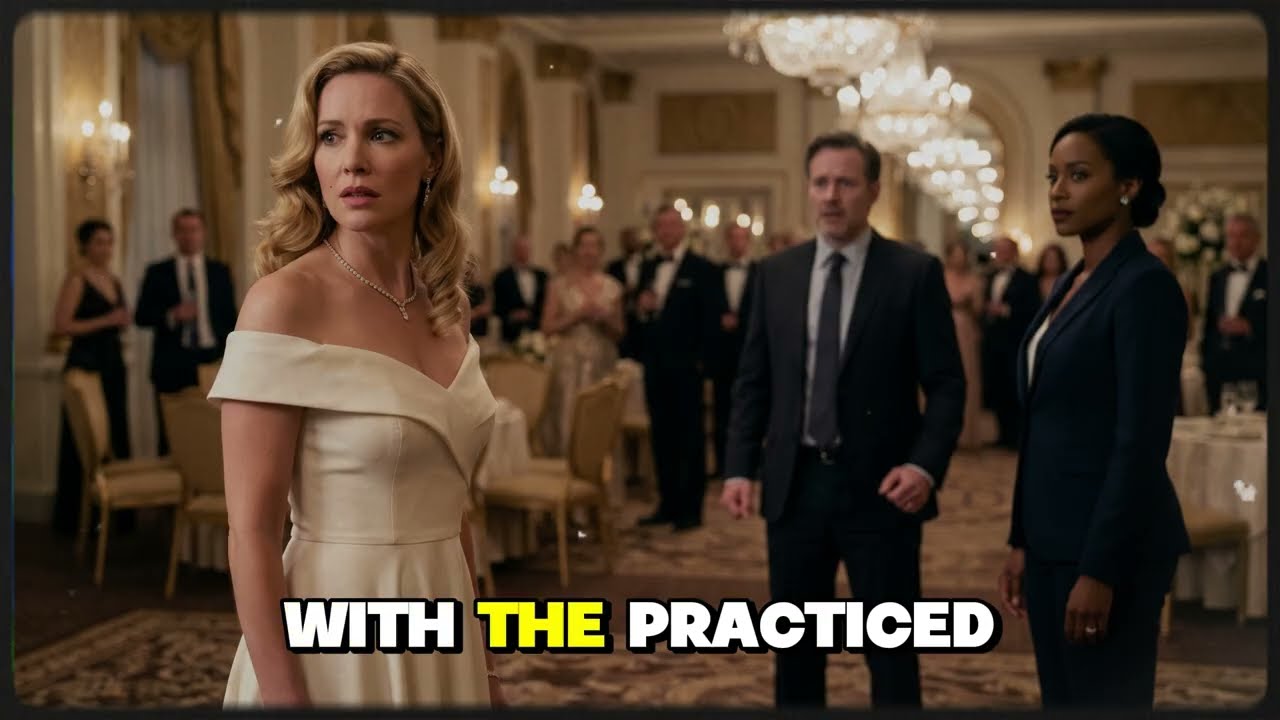
A suppressed investigator’s note identified an unidentified woman—not Vanessa—as the person who had carried Ethan from the building.
Ethan ended the call.
Vanessa moved toward him.
“I stayed with you.”
He stepped away.
“You built the place where I needed you to stay.”
“I gave you twenty-five years.”
“You took them first.”
Vanessa ran.
She left the ballroom through the side entrance and headed toward the private parking structure.
Naomi did not follow immediately.
Ethan did.
Gregory and the security team went with him.
Rain blew sideways through the open levels of the garage.
Vanessa reached her car carrying a document case.
One security officer activated the recorder on his phone.
Ethan stopped several feet away.
“What is in the case?”
“Nothing that concerns you.”
“Put it down.”
Vanessa laughed, but there was no control left in the sound.
“You believe her now? After one night?”
“After evidence.”
“I did what I had to do.”
The rain struck the concrete around them.
Naomi approached slowly.
Vanessa saw her and understood that there was no version of the story left to manage.
“I loved him,” she said.
Naomi did not answer.
“He would have chosen you.”
“That was never your decision to make.”
“I was there when he woke up blind. I fed him. I taught him the house. I read every document. I built a life around his darkness.”
“And you caused the darkness inside that life.”
Vanessa looked toward Ethan.
“You needed me.”
“I needed the truth.”
She began speaking in fragments.
Yes, she had told the attorneys Naomi stole files.
Yes, she had redirected the letters.
Yes, she had paid her mother to hold documents and repeat the rescue story if anyone asked.
She denied planning the fire.
She admitted using it.
The confession came not from remorse, but from exhaustion.
When police arrived, Vanessa was still arguing that twenty-five years of marriage should matter more than what happened at the beginning.
The recording reached the press before sunrise.
By morning, the city had turned the story into a spectacle.
The foundation canceled events.
Donors demanded explanations.
Caldwell Group’s board called an emergency meeting.
Former employees began speaking to reporters.
Naomi refused every interview.
Her only public statement contained two sentences.
“The historical record has now been corrected. I will address the remaining matters through appropriate legal channels.”
Ethan issued a longer statement.
He named Naomi.
He described what she had done during the fire.
He acknowledged that Caldwell Group had falsely accused and terminated her.
He admitted that he had accepted a convenient account without demanding proof.
The statement did not ask for sympathy.
That was the first responsible decision he had made in the story.
Three weeks later, Naomi agreed to meet him at a quiet hotel outside the city center.
There were no cameras.
Ethan arrived alone.
He sat across from her in a small lounge where no one recognized them.
“I’m not asking you to forgive me,” he said.
“Good.”
“I loved you.”
Naomi looked toward the window.
“You loved the version of me that existed before trusting me became difficult.”
Ethan absorbed that.
“After the fire, I was terrified. I could not see. I could barely walk without help. Vanessa became the person explaining the world to me.”
“That explains the beginning.”
“Yes.”
“What explains the next twenty-four years?”
His hands tightened around the cane.
“Cowardice.”
Naomi turned back toward him.
Ethan continued.
“There were moments when details did not fit. I asked once why there were no photographs of Vanessa near the building. She said the reporters arrived late. I accepted it.”
“Why?”
“Because questioning her meant questioning the entire life I had built after the fire.”
“So you chose not to know.”
“At first, I believed her. Later, I chose not to know.”
The honesty did not heal Naomi.
But it ended one question she had carried for decades.
Ethan offered financial restitution, legal support, and a formal correction of her employment record.
Naomi listened.
“Money matters,” she said. “People with money often say it cannot replace time because they have never had their future reduced by losing it.”
“I understand.”
“No. You understand the sentence.”
He lowered his head.
“I was twenty-four. I lost the years when I should have been building my name. I spent a decade climbing back to the place from which your company pushed me.”
“I know I cannot return that.”
“No.”
“What can I do?”
“Correct every record. Pay what is owed. Cooperate with every investigation. And do not turn your guilt into another performance that requires me to witness it.”
Ethan nodded.
Naomi stood.
She had arrived expecting hatred to rise when she finally faced him.
It did not.
She saw that Ethan had also been deceived.
But his victimhood did not cancel his responsibility.
Two truths could exist together.
He had been manipulated.
He had also chosen comfort over doubt long after doubt became reasonable.
“I don’t hate you,” Naomi said.
Ethan lifted his face toward her voice.
“I thought I would.”
“And now?”
“Now I’m tired of carrying you.”
She left.
Naomi returned to her own city, her own office, and the team she had built without Caldwell’s name.
The legal consequences continued.
Vanessa faced charges related to fraud, witness interference, document concealment, and false statements.
Civil claims followed.
Her social circle disappeared with remarkable speed.
The people who had praised her grace began saying they had always sensed something false.
Caldwell Group reopened the 1998 fire investigation and submitted archived records to authorities.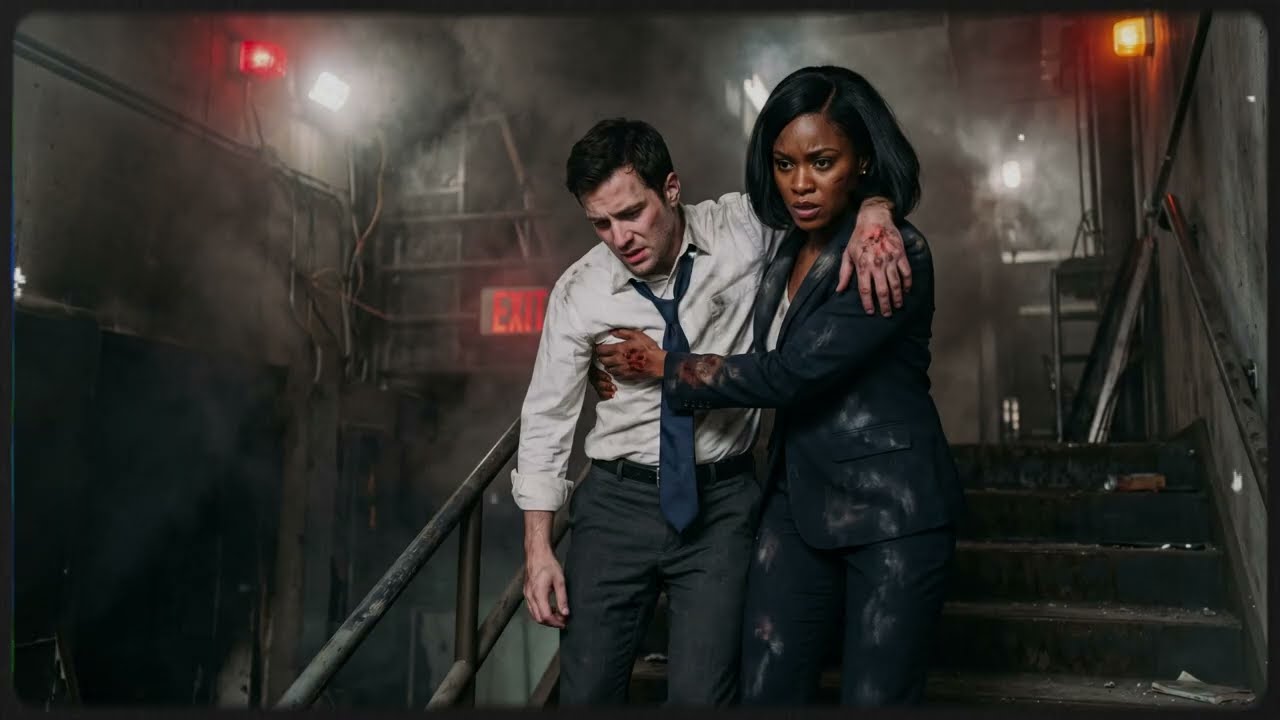
The board imposed independent oversight.
Ethan kept his title temporarily but lost unilateral control over major decisions.
He accepted the restrictions.
The settlement offered to Naomi was substantial.
She did not accept the first number.
Or the second.
On the third, the company acknowledged lost earnings, reputational damage, medical expenses, and wrongful termination.
Naomi signed.
She used part of the money to establish a fellowship for women of color entering finance, forensic accounting, and corporate compliance.
The program provided tuition, mentoring, and legal support for professionals who reported misconduct.
It could not give Naomi back twenty-five years.
It could help prevent someone else from losing them.
Ethan kept an old copy of the newspaper photograph in his office.
He could not see it.
Every morning, he touched the frame and remembered what it represented.
For years, people had described his blindness as the tragedy that defined his life.
He understood now that physical blindness had not been the most damaging kind.
The greater blindness had been moral.
It was the refusal to ask what might threaten the story he preferred.
Naomi did not receive a perfect ending.
No court could restore the career she should have had.
No apology could return the letters Ethan never read.
No settlement could make her twenty-four again.
But she recovered something more important than public admiration.
She reclaimed authorship.
The fire no longer belonged to Vanessa’s performance.
The company’s survival no longer appeared as an unexplained triumph.
Naomi’s name returned to the documents, the history, and the truth.
Months later, she stood before the first group of fellowship recipients.
They were young, ambitious, and still hopeful that competence would always be recognized.
Naomi did not tell them that the world was fair.
She told them to preserve records.
To build networks outside the rooms that employed them.
To trust discomfort when a story sounded too perfect.
And to understand that silence could protect a lie longer than evidence ever should.
Afterward, she walked outside alone.
The evening air was cool.
For the first time in twenty-five years, New Orleans felt like a place she had survived rather than a room she was still trapped inside.
The truth had arrived late.
Late enough to leave scars.
Late enough to make full restoration impossible.
But it had arrived.
And responsibility, Naomi had learned, was not the promise that everyone would be forgiven.
It was the demand that every person finally stand in the correct place inside the truth—and live differently once there.