
Content warning: This account discusses sexual violence, coercion, and the Holocaust.

The women were taken from their barracks without being told where they were going.
Some had survived Ravensbrück for months. Others had already endured years of hunger, disease, beatings, forced labor, and the daily uncertainty of whether they would still be alive by nightfall.
Then their names appeared on a list.
An SS guard ordered them to step forward.
They were examined, questioned, and judged according to their age, health, and appearance. Afterward, a few were told they had been selected for “special work.”
The words sounded almost hopeful.
They would receive more food, the guards promised. They would sleep in cleaner rooms. They might avoid the most dangerous labor details. Some were even told that after six months, they could be released.
Inside a concentration camp, where a crust of bread could determine whether a person survived another day, those promises carried enormous power.
But there was no genuine offer.
There was no meaningful consent.
The women were being transferred into one of the most secretive and deliberately obscured parts of the Nazi concentration camp system: brothels created by the SS for selected male prisoners.
The Nazis referred to them with administrative language such as Sonderbauten—“special buildings.”
They were sometimes described more casually as “pleasure houses.”
For the women imprisoned inside them, there was no pleasure.
There was only another form of forced labor, designed to turn their bodies into instruments of discipline, productivity, and control.
A REWARD BUILT INSIDE A WORLD OF PUNISHMENT
By 1942, Nazi Germany’s concentration camp system had become much more than a network of detention centers.
It was also an enormous forced-labor enterprise.
Prisoners were worked in quarries, factories, construction projects, mines, and armaments facilities. Many were deliberately given inadequate food and forced to labor until they collapsed.
The SS wanted greater production without surrendering any of its power.
Violence remained the foundation of the camp system. But some Nazi officials believed terror could be made even more effective when combined with carefully rationed privileges.
A prisoner might receive extra food.
He might be assigned lighter work.
He might be allowed to wear better clothing, obtain cigarettes, or exercise authority over other prisoners.
Every privilege could be granted.
Every privilege could be withdrawn.
Heinrich Himmler, head of the SS, embraced the idea that access to women could become another such reward. The stated objective was to encourage selected male prisoners to work harder. It was also intended to reinforce the internal hierarchy that helped the SS govern enormous camp populations with relatively limited personnel.
The women would be exploited.
The men would be divided.
And the SS would control both.
This was not simply the uncontrolled behavior of individual guards. The brothels were organized, staffed, inspected, and incorporated into the camp administration.
That bureaucratic structure is what made the system especially chilling.
The same regime that registered prisoners by number, calculated their food portions, assigned them to labor details, and documented their deaths also calculated how sexual coercion might improve productivity.
THE MEN WHO TURNED ABUSE INTO POLICY
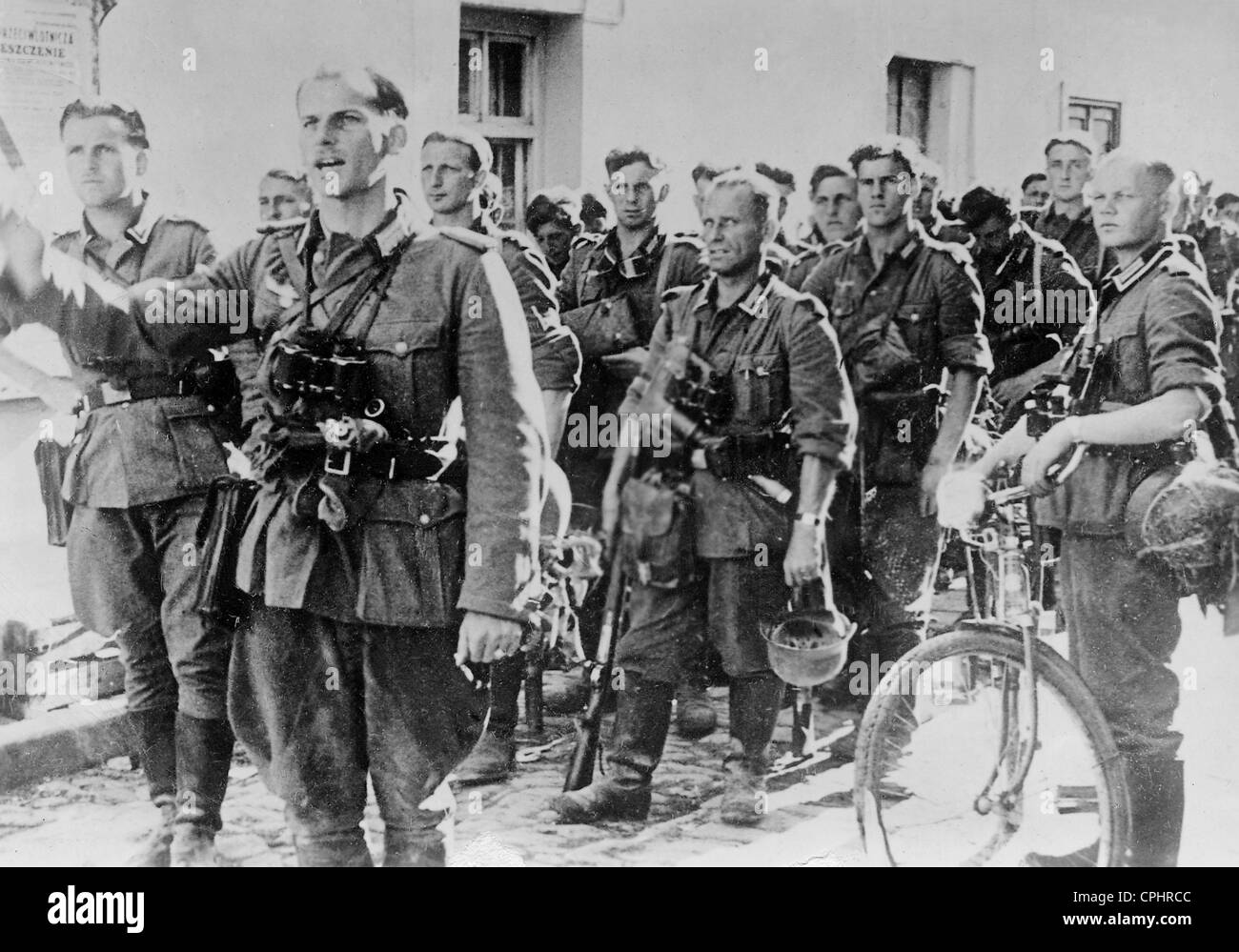
One of the most powerful administrators in the SS economic system was Oswald Pohl.
Pohl was not known primarily as a battlefield commander or public speaker. His power came from administration.
In 1942, he became head of the SS Main Economic and Administrative Office, known by its German abbreviation, WVHA. This organization oversaw the concentration camps, SS construction programs, economic enterprises, and the exploitation of prisoner labor.
To men such as Pohl, prisoners were units of labor.
Their hunger was a management problem.
Their exhaustion was a production problem.
Their relationships, fears, ambitions, and desperation were vulnerabilities to be manipulated.
Himmler had already considered brothels as incentives for prisoners engaged in difficult construction work. Under the administrative machinery controlled by Pohl, the idea developed into a wider system.
Its purpose was never simply sexual gratification.
The brothels helped the SS create visible differences between prisoners.
A man who obeyed orders, exceeded a production quota, collaborated with camp authorities, or held a privileged position might be allowed access. A man who resisted had no such possibility.
The result was a hierarchy inside a hierarchy.
Kapos, block elders, functionaries, and other favored prisoners often possessed better access to food and influence than the people beneath them. The brothels became another privilege associated with that power.
For the SS, this division was useful.
A prisoner who depended on the system for small advantages had something to lose. A prisoner hoping to earn those advantages had a reason to compete, inform, or comply.
Human longing had been converted into camp currency.
THE FIRST EXPERIMENT
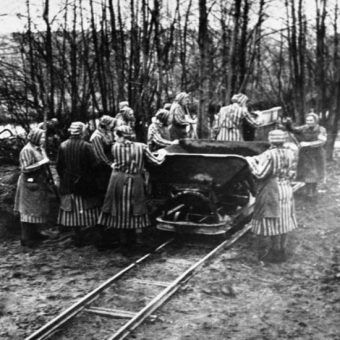
The first prisoner brothel in the concentration camp system was established in 1942 within the Mauthausen-Gusen complex.
Mauthausen was one of the most brutal camps in the Nazi system. Prisoners were subjected to exhausting labor, particularly in the nearby granite quarries. Thousands died from starvation, disease, executions, beatings, and working conditions designed to destroy them.
It was there that the SS tested whether a sexual reward system could increase prisoners’ output.
The process was organized with the same cold precision found elsewhere in the camp.
Rooms were prepared.
Rules were established.
Applications and payments were required from male prisoners.
Schedules were imposed.
Women were transferred primarily from Ravensbrück, the largest concentration camp for women in Nazi Germany. At least 100 women from Ravensbrück were forced to work in brothels established in men’s camps, according to the United States Holocaust Memorial Museum.
Many of those selected had been classified by the Nazis as “asocial.”
That label could be applied to women accused of prostitution, poverty-related offenses, homelessness, behavior considered sexually improper, or simply failing to conform to Nazi ideas about womanhood.
The classification had devastating consequences after the war.
Because some had previously worked in prostitution—or had merely been accused of it—people later assumed that what happened in the camp brothels had been voluntary.
It was not.
A prisoner cannot freely consent to an arrangement controlled by the people who have imprisoned, starved, beaten, and threatened to kill her.
Even when a woman stepped forward after hearing promises of better food or possible release, she was choosing under conditions created to eliminate genuine choice.
The alternatives were not freedom and exploitation.
They were different forms of exploitation.
At Gusen, approximately ten prisoners from Ravensbrück were forced into the brothel. Male prisoners needed formal authorization and had to pay a fee. Access was largely restricted to those who had received privileges or rewards from the SS.
The women, meanwhile, remained prisoners.
They could not leave.
They could not set their conditions.
They could not refuse without risking punishment.
And the promise that they might be released after six months was generally another instrument of control.
Hope was extended just far enough to secure obedience.
Then it was withdrawn.
THE SYSTEM EXPANDS
From Mauthausen-Gusen, the system spread.
Brothels were opened in major camps including Buchenwald, Auschwitz, Dachau, Sachsenhausen, Neuengamme, Flossenbürg, and Mittelbau-Dora.
At Buchenwald, women from Ravensbrück were forced into the camp brothel beginning in July 1943. The SS explicitly calculated that their exploitation might improve the work performance of male prisoners.
The buildings differed from camp to camp, but the underlying structure remained recognizable.
The women lived in segregated rooms under guard.
Their movements were controlled.
Their bodies were subjected to medical inspections intended primarily to protect the functioning of the system, not their well-being.
The encounters were scheduled and monitored. In some locations, guards could observe through peepholes or enforce strict time limits.
Conversation could be restricted.
The entire process was stripped of privacy, dignity, and human connection.
Even appearance became part of the administration.
Some women received additional food, cleaner clothing, bathing facilities, or medical attention—not as acts of compassion, but because the SS wanted them to remain usable.
These relative improvements later became another source of stigma.
Other prisoners sometimes saw that the women appeared cleaner or better fed without understanding, or wanting to understand, the violence behind those conditions.
A slightly larger ration did not make them privileged.
It kept them alive so they could continue being exploited.
The Nazis also imposed racial rules on the system.
Jewish male prisoners were generally prohibited from using the brothels. Access was reserved for selected non-Jewish prisoners, reflecting the same racial ideology that governed every other aspect of the camps.
The SS did not abandon its racial doctrines in creating the brothels.
It embedded those doctrines within them.
THE REAL PURPOSE WAS CONTROL
The policy was presented as a productivity incentive.
But its broader effect was to reshape relationships inside the camps.
The SS had created something prisoners could compete for.
That alone increased its power.
A favored prisoner might fear losing access if he failed to meet expectations. Another might believe cooperation would bring him closer to obtaining it. Privileges could encourage informants to report escape plans, hidden food, black-market exchanges, political discussions, or acts of resistance.
Not every prisoner participated.
Some refused on moral grounds.
Some regarded the brothels as another crime committed against fellow prisoners.
Others lacked the money, position, or authorization required to enter.
But the system did not need universal participation to achieve its purpose.
It only needed to make prisoners aware that the SS could distribute rewards as easily as it distributed punishment.
The brothels also reinforced the authority of prisoners who already occupied privileged positions.
Kapos and functionaries were often hated because some abused the people under their control. Yet their own positions remained dependent on the SS.
That dependency was deliberate.
The SS placed selected prisoners above others, then reminded them that their advantages could disappear at any moment.
The brothel system fit perfectly within that structure.
It encouraged ambition among the powerless while ensuring that real power never left Nazi hands.
THE MOMENT THE PROMISE COLLAPSED
For many women, the decisive moment came when the six-month deadline approached.
They had endured what had been demanded of them.
They had obeyed the schedules.
They had submitted to inspections.
They had survived by focusing on the promise that this assignment would eventually end.
Then no release order came.
There was no gate opening.
No civilian clothing.
No document returning their name and freedom.
Some were transferred to another brothel. Some were returned to the general prisoner population. Some became ill or physically unable to continue. Their later fates were often poorly recorded.
The promise had never been a contract.
It was bait.
One can imagine the recognition without inventing a speech: the silence after another order was read, the women watching a guard avoid their eyes, the absence of surprise on the faces of SS personnel who had known all along.
The system depended on that exact imbalance.
The prisoner had to believe.
The administrator did not.
The revelation changes how the entire operation must be understood.
The women had not been selected for protection.
They had been selected because the SS believed their hope could be exploited more efficiently than their despair.
LIBERATION DID NOT END THE PUNISHMENT
When Allied forces liberated the concentration camps in 1945, they uncovered evidence of crimes on a scale that challenged comprehension.
Mass graves.
Gas chambers.
Crematoria.
Starvation barracks.
Warehouses filled with belongings taken from murdered people.
Against that overwhelming landscape, the camp brothels received comparatively little attention.
Many records had been destroyed.
Surviving SS personnel had every reason to remain silent.
Male prisoners often did not want to discuss whether they had visited the brothels or how the system had functioned.
The women faced an even crueler silence.
Sexual violence carried enormous stigma. Women feared being blamed, rejected, or treated as willing participants. Those marked by the Nazis as “asocial” were frequently denied the recognition and sympathy granted to other victim groups.
Some survivors told no one.
Not their neighbors.
Not their children.
Sometimes not even their spouses.
The Nazis had taken control of their bodies during the war.
Postwar shame helped take control of their stories.
For decades, the subject remained at the margins of Holocaust history.
The women were mentioned in rumors, fragments of testimony, administrative references, or judgmental recollections. Their experiences were often reduced to the word “prostitute,” a label that erased the coercive system surrounding them.
The silence protected the perpetrators far more than it protected the victims.
THE PAPER TRAIL THE SS COULD NOT COMPLETELY ERASE
Historian Robert Sommer spent years reconstructing the system through surviving documents and testimony.
His research drew on SS correspondence, payment records, visitor lists, medical documents, camp files, and interviews with survivors. His major study, Das KZ-Bordell: Sexuelle Zwangsarbeit in nationalsozialistischen Konzentrationslagern, was published in 2009.
The surviving evidence revealed an organized network rather than isolated misconduct.
The brothels existed in roughly ten major concentration camps.
Women were transported between institutions.
Rules were recorded.
Fees were collected.
Medical examinations were documented.
The SS assessed the system according to its usefulness.
This administrative trail matters because sexual crimes are often hidden by the absence of conventional evidence.
Victims may remain silent.
Perpetrators may destroy records.
Witnesses may remember only fragments.
But bureaucracy leaves traces.
An invoice can reveal a building’s function.
A transport list can show where women were taken.
A medical record can expose how their bodies were controlled.
A visitor register can demonstrate that the operation was organized rather than spontaneous.
Piece by piece, those documents returned the crime to history.
THE TRUTH BEHIND THE “PLEASURE HOUSES”
The Nazi regime publicly promoted rigid ideas about sexual morality, racial purity, and social discipline.
Yet it willingly organized sexual exploitation whenever doing so served the interests of the state.
That contradiction was not accidental.
Nazi morality never applied equally to everyone.
People considered racially, politically, or socially undesirable were denied the protections supposedly offered to respectable members of society.
Their labor could be stolen.
Their property could be taken.
Their families could be destroyed.
Their bodies could be used.
The camp brothels therefore reveal something fundamental about the Nazi system.
The regime did not merely imprison and murder human beings.
It studied their needs.
It measured their desperation.
It identified what they loved, feared, desired, and hoped for.
Then it turned those things against them.
For the male prisoners, intimacy was transformed into a controlled reward.
For the women, survival was transformed into coercion.
For the SS, both became administrative tools.
This is why calling the buildings “pleasure houses” is so dangerously misleading.
The phrase reflects the viewpoint of the people who designed the system, not the women trapped inside it.
There was no pleasure in being examined and selected by captors.
There was no privilege in receiving food so that exploitation could continue.
There was no consent in a place where refusal could lead to punishment, starvation, or death.
And there was no freedom in being offered a choice between two forms of destruction.
The women were not a footnote to concentration camp history.
Their experience demonstrates how far a regime can descend once it decides that some human beings are not people, but resources.
Resources can be cataloged.
Resources can be rationed.
Resources can be exhausted.
And when they are no longer useful, resources can be discarded.
That was the logic behind the barbed wire.
It is also the reason their stories must be told without sensationalism, without judgment, and without allowing the language of their perpetrators to define them.
Because the final victory of an inhuman system is not only that it harms its victims.
It is that, years later, the world remembers the shame forced upon them more clearly than the guilt of those who created it.
The women were never the disgrace—the disgrace belonged to the system that imprisoned them, exploited their hope, and then counted on our silence.