
On June 4, 1944, the people of Rome poured into the streets to welcome the Allied soldiers.
After nine months of German occupation, the city was finally free.
Church bells rang. Strangers embraced. Flags appeared from windows where families had spent months whispering behind closed shutters. Men climbed onto military vehicles. Women handed flowers to exhausted soldiers. Children ran beside the convoys as if the war had ended that afternoon.
But beneath the celebration, Rome was a wounded city.
Its people were hungry. Entire families were grieving. Hundreds of civilians had been murdered in reprisals. More than a thousand Roman Jews had been seized from their homes and deported, most of them never to return.
And somewhere far beyond the cheering crowds, an Italian woman was still a prisoner of Hitler.
She was not an anonymous civilian.
She was the daughter of the King of Italy.
At Buchenwald concentration camp, however, Princess Mafalda of Savoy no longer had a title.
The guards called her Frau von Weber.
Her real name was not supposed to be spoken.
Her family did not know exactly where she was. Her children could not reach her. Her husband was imprisoned elsewhere. And the Nazi regime that had once welcomed members of Europe’s aristocracy now treated her as a dangerous political hostage.
The contrast was almost impossible to comprehend.

Mafalda had been born in Rome on November 19, 1902, the second daughter of King Victor Emmanuel III and Queen Elena of Italy. She grew up inside royal residences, surrounded by formal ceremonies, military uniforms and the rigid expectations placed upon a princess.
But much of her character came from her mother.
Queen Elena was known for her interest in medicine and charitable work. During the First World War, she helped organize care for wounded soldiers, and Mafalda accompanied her mother and sisters on visits to military hospitals.
There, the young princess saw men without limbs, men blinded by explosions and boys scarcely older than children calling for their mothers.
She learned early that rank could not stop pain.
She loved music and art, but those hospital visits left a deeper mark. People who later knew her described a woman who valued family, disliked unnecessary display and possessed a quiet instinct to care for others.
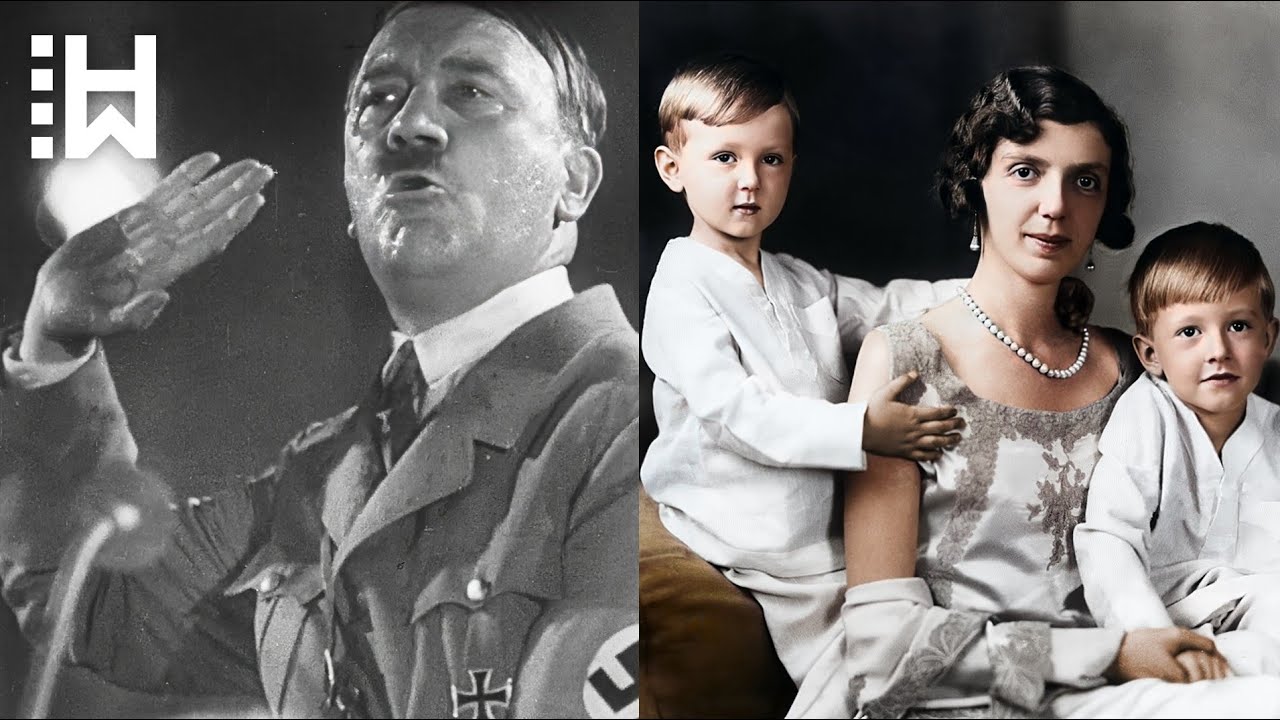
In 1925, Mafalda married Prince Philipp of Hesse, a German aristocrat from one of Europe’s oldest royal houses.
The wedding appeared to represent everything the continent wanted to believe about itself after the First World War: an Italian princess and a German prince joining two great families, proof that the old wounds were healing.
They eventually had four children—three sons and a daughter.

But the Europe in which they raised those children was becoming more dangerous by the year.
In Italy, Benito Mussolini transformed fascism from a political movement into a dictatorship. In Germany, economic collapse, fear of communism and humiliation after the First World War created fertile ground for Adolf Hitler.
Many aristocrats believed fascism would protect their property, restore national pride and hold back revolution.
Some treated Hitler as a temporary political instrument.
Others saw him as the man who could restore the influence they had lost.
Prince Philipp joined the Nazi Party in 1930 and the SA in 1932. His royal connections made him particularly useful. He developed a close relationship with Hermann Göring and became an intermediary between Hitler and Mussolini.
He also assisted Hitler with art purchases in Italy, acquiring works intended for the enormous museum Hitler planned to build in Linz.
For a time, Philipp moved confidently through the highest circles of Nazi power.
He had access.
He had status.
He believed his family name protected him.
It did not.
As the war continued, Hitler became increasingly suspicious of Germany’s princes. He had used aristocrats to make his movement appear respectable, but once their usefulness declined, their international connections became liabilities.
Philipp’s position was especially fragile because his father-in-law was the King of Italy.
By 1943, Italy was collapsing.
Its armies had suffered devastating defeats. Allied forces were approaching. Mussolini’s support inside his own government was disappearing.
On July 25, 1943, King Victor Emmanuel III dismissed Mussolini and had him arrested.
For Hitler, this was not merely a political setback.
It was betrayal.
And he suspected that Philipp, because of his connection to the Italian royal family, might have known about the plan.
Philipp’s years of service to the Nazi regime suddenly meant nothing.
In September 1943, after Italy announced an armistice with the Allies, he was arrested.
Mafalda did not yet understand the full danger.
At the end of August, she had traveled to Bulgaria to support her sister Giovanna, whose husband, King Boris III, had died unexpectedly.
Boris had recently returned from a tense meeting with Hitler.
The Bulgarian king had resisted demands that would have placed more of Bulgaria’s Jewish population in Nazi hands. His sudden illness and death generated rumors almost immediately. Some suspected poisoning. No conclusive proof ever established that Hitler ordered his death, but the timing ensured that the suspicion never disappeared.
While Mafalda was in Bulgaria, Italy’s alliance with Germany disintegrated.
German forces moved rapidly to occupy Rome and other strategic areas. Italian soldiers were disarmed. Officers who resisted were executed. The royal family fled the capital.
Mafalda faced a choice.
She could remain outside Italy, where she had a better chance of avoiding the Gestapo.
Or she could return to Rome, where her children had been placed under Vatican protection.
She chose her children.
It was not a political decision.
It was a mother’s decision.
Mafalda began the dangerous journey back through a Europe controlled by armies, checkpoints and secret police. By the time she reached Rome on September 22, German forces were already hunting her.
She did not know that Philipp had been arrested.
The following day, she received a message requesting that she come to the German diplomatic mission. She was told that an important telephone call from her husband was waiting.
It was exactly the kind of message she could not ignore.
She entered expecting to hear Philipp’s voice.
Instead, the doors closed behind her.
German officers arrested her on the spot.
There was no meaningful hearing. No opportunity to return to her children. No final embrace. No chance to explain where she was being taken, because Mafalda herself did not know.
She was flown out of Italy, interrogated in Germany and eventually transported to Buchenwald concentration camp.
The daughter of the King of Italy arrived not as Princess Mafalda, but as a prisoner whose identity the SS attempted to conceal.
At Buchenwald, she was held in an isolation barrack reserved for prominent prisoners and political hostages.
Her conditions were different from those endured by the mass of prisoners who were starved, beaten, worked to death or murdered.
But “special treatment” inside a concentration camp was still imprisonment.
She was cut off from her family. She had little reliable information about her children or husband. She lived under constant surveillance. Hunger weakened her. Fear followed every sound of approaching boots.
The Nazis had taken almost everything that once defined her public life.
Her palace.
Her title.
Her household.
Her freedom.
But witnesses remembered that she still shared what little she had.
Food was power in Buchenwald. A crust of bread could mean another day of life. Yet Mafalda reportedly gave portions of her rations to prisoners she believed needed them more.
She had no throne there.
No servants.
No audience.
Kindness offered her no political advantage.
That was precisely why it mattered.
Months passed.
Rome was liberated in June 1944, but Mafalda remained behind barbed wire in Germany.
She may have learned that her home city was free. If she did, the knowledge must have been almost unbearable.
Her children were closer to safety.
She was not.
Then, on August 24, 1944, American aircraft appeared over the industrial complex beside Buchenwald.
The camp contained armaments facilities connected to the German war machine. The bombers struck the area, sending explosions through workshops, barracks and surrounding buildings.
The isolation compound where Mafalda was held was hit.
Walls collapsed.
Fire spread through the wreckage.
Smoke swallowed the air.
Prisoners screamed beneath shattered beams and burning debris.
Mafalda was found alive, but her injuries were catastrophic.
Her arm had been badly crushed and burned. Her body was covered with wounds. Other prisoners tried to help her, pulling her from the ruins and carrying her toward the camp infirmary.
The princess who had once walked through royal receptions was now lying among bloodied prisoners on the grounds of a concentration camp.
According to later accounts, when Italian prisoners recognized her and attempted to address her by her title, she rejected the distance the word created between them.
She wanted to be remembered not merely as a princess, but as an Italian sister.
It was the final stripping away of rank.
Not by her captors.
By Mafalda herself.
She was taken for treatment, but proper medical intervention did not come quickly enough.
Her injured arm became infected. Gangrene developed. Amputation was necessary.
Whether the delay was the result of deliberate cruelty, criminal neglect or the chaos following the bombing has remained a subject of historical argument. What is not in dispute is that the operation came too late to save her.
Mafalda was already dangerously weak.
The surgery placed even more strain on her body.
In the days after the bombing, she drifted toward death inside the camp that had erased her name.
There was no family beside her bed.
Her mother could not hold her hand.
Her children could not say goodbye.
Her husband did not even know what was happening.
Princess Mafalda of Savoy died at Buchenwald in late August 1944.
She was forty-one years old.
The camp administration did not announce the death of a royal prisoner to the world.
Her body was handled without ceremony and buried under an assumed identity.
For months, uncertainty surrounded her fate.
Her family hoped for information. Rumors circulated. Nothing could undo the machinery of secrecy that had swallowed her.
Then Germany collapsed.
Buchenwald was liberated in April 1945.
Survivors emerged carrying memories that no official record could contain. Among them was the story of the Italian woman hidden under the name Frau von Weber—the prisoner who shared food, endured isolation and died after the bombing.
Only then did the truth fully return to her family.
Philipp survived the war.
But survival did not erase his past.
The man who had once joined Hitler’s party, befriended leading Nazis and served as a bridge between two fascist governments had eventually become Hitler’s prisoner himself.
That was one of the cruelest revelations of Mafalda’s story.
The twist was not that a princess could be imprisoned.
The Nazis had imprisoned royalty before.
The twist was that proximity to tyranny had never provided protection.
Philipp and other aristocrats had believed they could cooperate with Hitler, influence him or benefit from the order he promised. They assumed their names, connections and usefulness would place them beyond the reach of the system.
But dictators do not create circles of trust.
They create temporary circles of usefulness.
When Philipp was useful, he was welcomed.
When his family became inconvenient, he was arrested.
And when Hitler wanted revenge against the Italian monarchy, Mafalda—who had not engineered Mussolini’s removal—became the target.
The regime did not punish only its declared enemies.
It consumed former allies, servants, messengers and relatives.
Years earlier, Europe’s royal houses had looked at fascism and imagined they could stand beside the fire without being burned.
At Buchenwald, Mafalda paid the price for that illusion.
Yet the final memory of her was not political.
It was personal.
It was a woman returning to an occupied city because her children were there.
It was a prisoner dividing her food when she did not have enough for herself.
It was a wounded Italian asking not to be separated from other prisoners by a royal title.
Her father had been a king.
Her husband had walked beside powerful Nazis.
Neither fact saved her.
What remained in the end was the part of her identity no dictatorship could grant and no prison guard could remove.
Her humanity.
Rome celebrated liberation on June 4, 1944, without knowing that one of its daughters was still trapped inside Hitler’s empire.
She would never walk its streets again.
But history remembered the name the Nazis tried to bury.
Mafalda.
Not because she was born in a palace, but because when every privilege was taken from her, she still chose to behave as though another person’s suffering mattered.
Power may decide where a person is imprisoned.
It may erase a title, replace a name and hide a body beneath the wrong inscription.
But it cannot control what survivors remember—and sometimes, that is where justice begins.