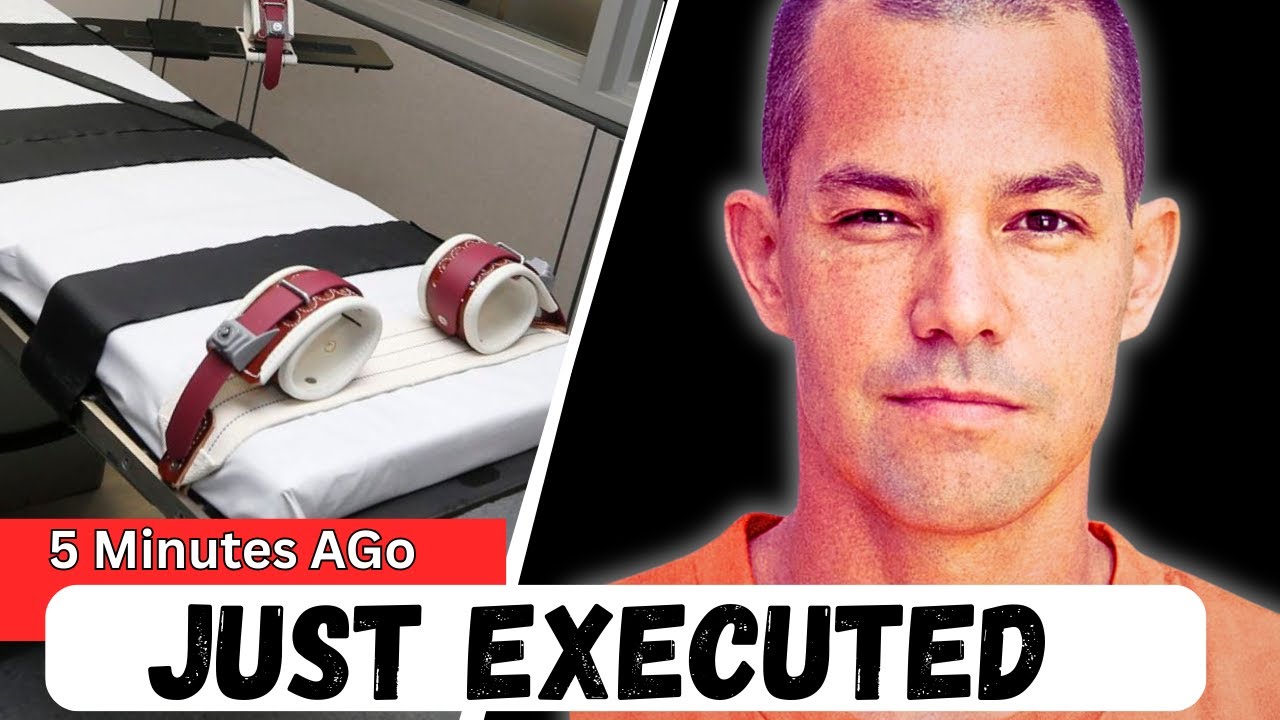
In a haunting twist of fate, Romero Felix Gonzalez was executed on June 26, 2024, after spending 23 long years on death row. The date was particularly poignant—it marked what would have been the 41st birthday of his victim, Bridget Townsend, whose life was tragically cut short two decades earlier
 Romero’s journey to the execution chamber began on January 15, 2001, in the quiet surroundings of Bandera County, Texas. The 18-year-old was reportedly searching for drugs when he invaded a home, where Bridget, the girlfriend of his dealer, was present. What started as a burglary escalated into a nightmare. Gonzalez kidnapped Bridget at gunpoint, drove her to a remote area, and after a horrific assault, took her life before abandoning her body in a field
For nearly two years, Bridget’s family endured the agony of uncertainty, desperately searching for answers. Their nightmare ended when Gonzalez, while serving a life sentence for another crime, confessed to Bridget’s murder and led authorities to her remains. The discovery brought closure but also ignited a legal battle that would raise critical questions about justice and the death penalty in America.
In 2006, Gonzalez was tried and convicted of capital murder. The prosecution presented a compelling case, including his confession. However, the jury’s decision hinged on a controversial aspect of Texas law: future dangerousness. An expert psychiatrist testified that Gonzalez was a continuing threat to society, a claim that would later come under scrutiny when the same expert recanted, stating that the methods used to assess future danger were flawed.

Gonzalez’s time on death row was marked by profound transformation. Reports indicate he found faith and became a spiritual advisor to fellow inmates, reaching out to Bridget’s family to express his remorse. His request to donate a kidney to someone in need sparked national discussions about redemption, even as others viewed it as a manipulative ploy.
As his execution date approached, Gonzalez’s legal team filed numerous appeals, arguing that the psychiatric testimony was discredited and that executing someone who was only 18 at the time of the crime raised ethical concerns. They emphasized his transformation, hoping for clemency from the Texas Board of Pardons and Paroles. However, their efforts were met with unanimous denial.

In a final bid for justice, his lawyers took the case to the U.S. Supreme Court, but the court declined to intervene. With all legal avenues exhausted, Gonzalez was executed at 6:50 p.m. on that fateful day. His last meal was standard prison fare, as Texas no longer allows special requests for condemned inmates.
As he faced his final moments, Gonzalez addressed Bridget’s family directly, expressing his sorrow and acknowledging the pain he had caused. His last words, “Warden, I’m ready,” marked the end of a life filled with regret and transformation.

The execution has ignited fierce debate across the nation. Some view it as a necessary act of justice for Bridget’s family, while others question the ethics of capital punishment, especially in light of the recanted testimony and Gonzalez’s apparent change over the years.
As the dust settles on this tragic chapter, the questions linger: What does justice truly mean in a system that allows for such finality? And in the quest for justice, do we risk overshadowing the memory of the victim?