By the time Claire Bennett realized the company vehicles were not coming back, the temperature had already climbed past 104 degrees.
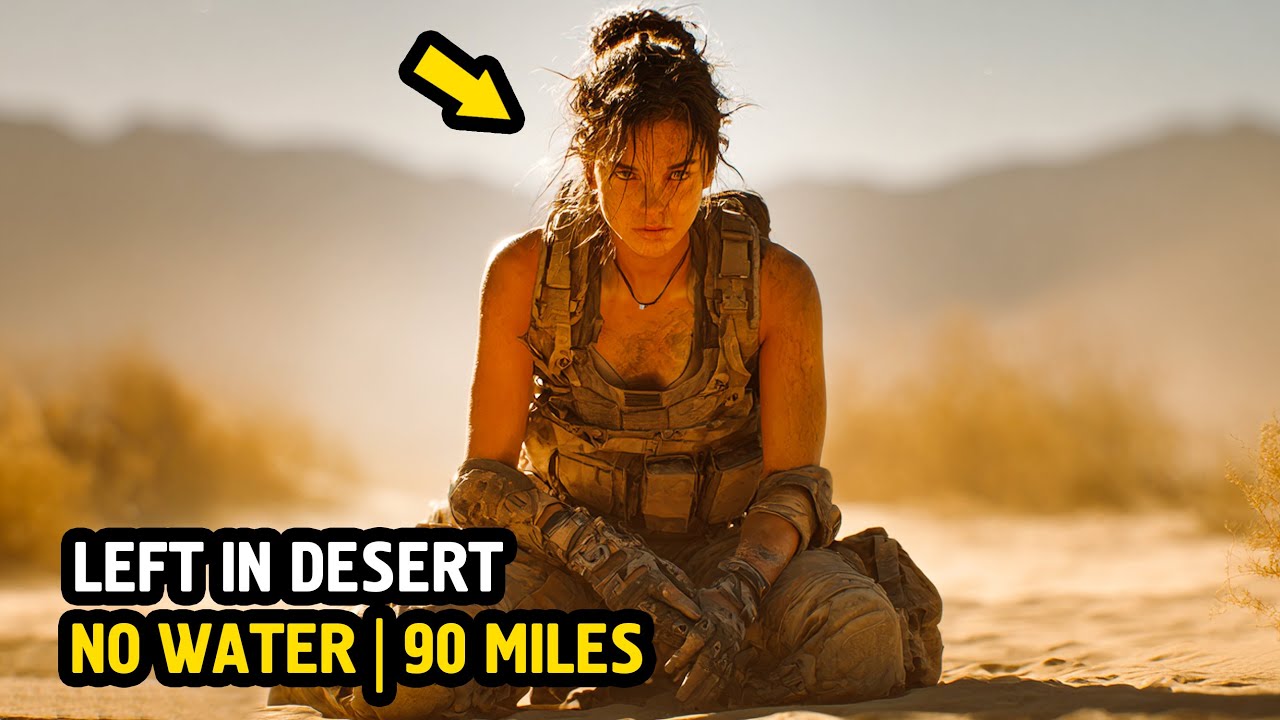
She stood alone beside a rusted survey marker in the Arizona desert, watching two black SUVs disappear behind a ridge of red rock.
Her backpack was gone.
Her phone had been left charging in the lead vehicle.
And the metal bottle clipped to her belt was empty.
For several seconds, Claire didn’t move.
She simply watched the dust settle over the road.
Then she looked down at the tire tracks and understood something far worse than being forgotten.
They had taken the wrong road on purpose.
Three hours earlier, the twelve-person team from Meridian Ridge Energy had left their hotel outside Phoenix for what Chief Operations Officer Grant Mercer called a “leadership assessment.”
The company was preparing to purchase 40,000 acres for a solar development project, and Grant wanted his senior managers to inspect the location before the board approved the final investment.
Claire had been included because she was the company’s new director of operational risk.
Grant had opposed her hiring from the beginning.
At thirty-eight, Claire was younger than most of the executives. She rarely raised her voice in meetings, never interrupted anyone, and had the irritating habit of asking questions Grant could not answer.
Where was the emergency extraction plan?
Who had verified the water reserves?
Why were they using rental SUVs without satellite trackers?
Grant called her questions “administrative anxiety.”
At breakfast that morning, he had laughed while Claire checked the weather forecast for the third time.
“We’re inspecting solar panels, Claire,” he said loudly enough for the whole table to hear. “We’re not invading a country.”
Several managers smiled.
Claire folded her phone and placed it beside her plate.
“No,” she replied. “But heat doesn’t care what your job title is.”
Grant’s smile tightened.
It wasn’t the first time she had embarrassed him without appearing to try.
The convoy reached the property shortly after 9 a.m. A local contractor led them along a graded road before stopping near an abandoned monitoring station.
The original plan was simple: inspect the northern boundary, photograph the access points, then return to the hotel before the worst afternoon heat.
But Grant had recently learned that the board was questioning his management of the project.
He needed to look decisive.
So when Claire pointed out that a southern route had not been cleared for travel, Grant announced that they would inspect it personally.
“The map says it connects to the county highway,” he said.
“The map is eight years old,” Claire replied. “Flash flooding may have changed the route.”
Grant turned to the others.
“This is exactly what I mean. Every decision becomes a disaster scenario.”
No one defended her.
The group separated into two vehicles. Grant drove the first SUV with three vice presidents. Claire rode in the second with finance director Luke Harmon, project manager Sandra Lee, and two junior analysts.
Twenty minutes later, the road narrowed into a dry wash.
Claire noticed the first warning sign when the scrub along the trail became taller than the vehicles.
Then she saw that the tire tracks ahead belonged only to Grant’s SUV.
No recent contractor traffic.
No maintenance vehicles.
No exit route.
She radioed him.
“We need to turn around.”
Grant answered immediately.
“We’re less than two miles from the southern marker.”
“You don’t know that.”
“I can read a map.”

“The terrain no longer matches the map.”
There was a pause.
Then Grant’s voice came through the radio, calm and mocking.
“Claire, some of us are trying to run a company. We can’t stop every time you feel uncomfortable.”
Luke stared out the passenger window.
Sandra looked down at her tablet.
No one spoke.
They continued for another fifteen minutes before both vehicles stopped beside a faded metal post.
The road ahead had collapsed into a ravine.
Grant climbed out, slammed his door, and walked directly toward Claire.
“You knew this would happen,” he said.
“I warned you it might.”
“You wanted it to happen.”
Claire looked at him without blinking.
“That doesn’t make sense.”
“It makes perfect sense. You joined this company three months ago, and ever since then you’ve been documenting every minor mistake like you’re building a case.”
Several people had stepped out of the vehicles.
They stood in the heat, pretending to examine the landscape while listening to every word.
Claire lowered her voice.
“We have eleven people in extreme heat with an uncertain route back. This is not the time.”
But Grant wanted an audience.
He pointed toward the survey marker.
“You were hired to identify risks, not manufacture them.”
Claire glanced at the sun, then at the vehicles.
“We need to leave now.”
“Walk back to the marker and photograph the identification plate,” Grant ordered.
“It’s almost half a mile.”
“That’s why we brought you.”
Claire studied his face.
Grant mistook her silence for surrender.
“Take your phone,” he added. “Document something useful for once.”
Her phone was still charging in the front SUV, so she removed the empty bottle from her belt and handed it to Luke.
“Refill this for me.”
Luke reached for it, but Grant stepped between them.
“She’ll be gone ten minutes.”
“We have plenty of water,” Luke said quietly.
Grant stared at him until Luke lowered his hand.
Claire clipped the empty bottle back onto her belt.
Then she walked toward the marker.
She had gone perhaps three hundred yards when she heard engines.
At first, she assumed Grant was repositioning the vehicles.
Then both SUVs turned around.
Claire stopped.
The lead vehicle accelerated.
The second followed.
She raised one arm, waiting for brake lights.
None appeared.
Within seconds, the vehicles vanished behind the ridge.
Back at the SUVs, Sandra asked the question everyone else was avoiding.
“Shouldn’t we wait for Claire?”
Grant kept driving.
“She needs a lesson.”
Luke twisted in his seat.
“You can’t leave someone out here.”
“We’re circling around. We’ll pick her up from the northern road.”
“There is no northern road.”
Grant tightened his grip on the steering wheel.
“She said the terrain changed. Maybe she can use some of that risk-management expertise.”
In the second vehicle, one of the analysts, twenty-four-year-old Maya Ortiz, looked through the rear window until Claire disappeared from view.
She sent Grant a message through the company chat.
This isn’t safe. We need to go back.
Grant read it at the next stop.
He did not respond.
Instead, he called Luke on the radio.
“Tell your passengers Claire chose to continue the inspection on foot.”
Luke stared at the radio.
“That’s not what happened.”
“It is now.”
The order changed the atmosphere immediately.
Until then, some of them had convinced themselves Grant was playing a cruel joke.
Now they understood he was creating a story.
Claire, meanwhile, had already stopped thinking about the vehicles.
Anger consumed water.
Panic consumed more.
She moved into the narrow shade of the survey marker and checked everything she had.
Empty steel bottle.
Sunglasses.
Light jacket.
Leather belt.
A paper site map folded in her pocket.
A mechanical pencil.
A small mirror in her makeup compact.
No phone.
No food.
No radio.
She studied the ground.
The tire tracks showed the convoy had returned west, but the dry wash curved south before meeting the main access road. Following it directly would expose her to open sun and require several hours of walking.
Claire looked toward the ridgeline.
Dark volcanic rock broke through the sand in jagged shelves. One side remained shaded.
She tied the sleeves of her jacket around her waist, covered her head with the lower half, and began moving toward the rocks at a slow, deliberate pace.
Not toward the hotel.
Not toward the road.
Toward shade.
That was the first thing Grant Mercer did not understand.
Survival was not about proving how tough you were.
It was about refusing to spend resources you could not replace.
At the rocks, Claire found a narrow overhang barely high enough to crawl beneath. The temperature inside was still brutal, but the ground was cooler.
She removed the site map and marked the time using the angle of the sun.
Then she waited.
Back in the convoy, Grant’s plan began to collapse.
The route they had used that morning was blocked by a fresh rockslide. He attempted to reverse through the dry wash, but the lead SUV’s rear tire dropped into soft sand.
Grant accelerated.
The wheels spun deeper.
Luke climbed out and told him to stop.
Grant accelerated again.
The vehicle sank to its axle.
The second SUV tried to pull it free, but the tow strap snapped. A metal hook struck the rear window and shattered it.
One of the vice presidents suffered a deep cut across his forearm.
By noon, they had two disabled vehicles, one injured executive, limited cell service, and fewer water bottles than expected.
Grant had ordered several cases left at the hotel because he thought the local contractor had packed additional supplies.
The contractor thought Meridian had brought its own.
Claire had asked them to confirm.
Grant had told her to stop delaying the departure.
Now twelve bottles sat on the sand for eleven people.
One bottle was already empty.
Maya looked toward the western ridge.
“Claire has none.”
Grant snapped at her.
“Claire is probably sitting beside the main road by now.”
“No,” Luke said.
Everyone turned.
He held Claire’s folded route assessment in his hand. She had placed a copy in the glove compartment before they left.
“The main road is almost nine miles from where we left her.”
Silence spread through the group.
Sandra looked at Grant.
“You said we were circling back.”
“I thought the road connected.”
“You told us you knew it did.”
Grant wiped sweat from his forehead.
“This isn’t helping.”
Luke stepped closer.
“Did you intentionally drive away from her?”
Grant glanced at the others.
No one looked away this time.
“She was undermining me in front of my team.”
“She was doing her job.”
“I made a leadership decision.”
“You abandoned an employee in a desert.”
Grant’s face hardened.
“Be careful, Luke.”
For years, that sentence had ended arguments.
Grant controlled promotions, bonuses, budgets, and access to the CEO. People had watched him humiliate managers in meetings and remove them from projects for minor disagreements.
But power feels different when the air is 108 degrees and the person giving orders has just stranded the only risk specialist in the group.
Luke took Grant’s radio.
“We’re going back.”
“With what vehicle?”
That was when they heard a low rumble in the distance.
Not an engine.
Thunder.
Dark clouds were forming over the mountains to the east.
The contractor had mentioned a small chance of monsoon activity later in the week.
Claire had written a flash-flood warning in her assessment.
The dry wash where the convoy was trapped now looked less like a road and more like a channel.
Grant looked up at the clouds.
For the first time all day, no one asked him what to do.
Under the rock shelf, Claire had seen the clouds twenty minutes earlier.
She used the compact mirror to scan the ridge. A brief flash reflected back from something metallic in the wash.
The SUVs had not reached the main road.
They were still out there.
Claire checked the sky again.
The storm might miss them.
Or it might send thousands of gallons of water through the wash with almost no warning.
She could remain in the shade and wait for rescuers.
It was the safest decision for her.
Instead, she tore the paper map into strips, kept the section she needed, and used the rest to mark her route between rocks.
Then she began climbing.
At 1:17 p.m., Maya saw movement on the ridge.
A small figure appeared above them, one hand raised against the sun.
“Claire!”
Everyone turned.
Claire descended along the rock face, testing every step before placing her weight.
Grant stared at her as if he were seeing someone return from the dead.
Her face was flushed. Dust covered her trousers. The jacket wrapped around her head made her look nothing like the quiet executive who had sat across from him at breakfast.
But she was walking steadily.
And she was coming toward the people who had left her behind.
Luke ran to meet her with a bottle of water.
Claire accepted it but took only two small sips.
“How much remains?” she asked.
“Eleven bottles.”
“For how many people?”
“Eleven.”
She handed the bottle back.
“Then ration it.”
Grant finally found his voice.
“We were coming back for you.”
Claire looked at the buried SUV, the broken tow strap, and the shattered window.
Then she looked at Grant.
She did not accuse him.
She did not argue.
She simply asked, “Who is injured?”
The wounded vice president raised his arm.
Claire examined the cut, applied pressure with a clean cloth, then directed two people to move him toward higher ground.
“We need to leave the wash,” she said. “Now.”
Sandra looked at the clouds.
“Do you think it will flood?”
“I think being wrong costs us nothing. Staying here could cost everything.”
Grant stepped forward.
“We should remain with the vehicles. Search teams look for vehicles.”
“Not inside a drainage channel.”
“These SUVs are company property.”
Claire turned to the group.
“Take water, radios, the first-aid kit, reflective material, and anything that can create shade. Leave everything else.”
Grant raised his voice.
“I am the senior executive here.”
No one moved.
Then Maya picked up the first-aid kit.
Luke collected the water.
Sandra took the radio.
One by one, the others followed Claire toward the ridge.
Grant stood beside the SUV with both hands on his hips.
“Are you all seriously listening to her?”
Claire paused.
“The storm is approximately thirty minutes away. You can come with us, or you can explain your decision to the floodwater.”
The last traces of confidence left Grant’s face.
He followed.
They reached a flat shelf above the wash sixteen minutes later.
The first wall of muddy water arrived seven minutes after that.
It came around the bend carrying branches, stones, and debris. The current struck the trapped SUV broadside and shifted it several feet.
Someone gasped.
The second surge smashed through the broken rear window.
Grant watched his rented vehicle fill with brown water.
His mouth opened, but no words came out.
Then Luke looked at Claire.
“How did you know what to do?”
Claire had been securing the reflective windshield screens between two rocks to create emergency shade.
She tightened the final knot before answering.
“My father taught me.”
Grant gave a bitter laugh.
“Your father was what, a Boy Scout?”
Claire met his eyes.
“Delta Force.”
The group fell quiet.
She continued working as she spoke.
“He served twenty-two years. After he retired, he trained military teams and disaster-response units. I spent most of my childhood believing every family practiced water discipline during road trips.”
Maya almost smiled.
But Claire wasn’t finished.
“I later worked as an Army intelligence officer attached to a special operations task force. I wasn’t an operator. I never claimed to be. But I completed survival training because the teams I supported did not believe rank or job description would protect anyone if a mission went wrong.”
Luke stared at her.
“Why isn’t that in your company biography?”
“Because I was hired to manage risk, not perform it.”
Grant’s face changed.
It was not dramatic at first.
His jaw loosened.
His eyes moved from Claire to the flooded vehicles below, then toward the empty bottle still clipped to her belt.
He seemed to understand all at once that the woman he had mocked for checking supplies had crossed open desert without water, found the stranded convoy, treated an injury, predicted a flood, and led ten people to safety.
The realization became visible in the way his shoulders dropped.
For the first time since anyone at Meridian had known him, Grant Mercer looked small.
Claire took the satellite beacon from the emergency kit.
Grant blinked.
“I thought we didn’t have satellite equipment.”
“We didn’t have a satellite tracker installed in the vehicles,” Claire said. “That’s why I placed a personal beacon in the emergency kit before we left.”
She activated it.
A green light began to blink.
Grant’s expression shifted again.
Because he remembered what else had been in the emergency kit.
A compact body camera.
Claire had recommended recording field inspections after a contractor dispute the previous month.
Maya picked it up from the bag.
The red light was still on.
The camera had recorded the group beside the survey marker.
It had recorded Grant ordering Claire to walk alone.
And because Luke had left the emergency kit open in the back of the second SUV, it had captured Grant’s voice through the radio after he drove away.
She needs a lesson.
No one spoke.
Grant stared at the camera in Maya’s hand.
The color drained from his face.
That was the moment everyone saw it.
Not regret.
Recognition.
He wasn’t afraid of the desert anymore.
He was afraid of the truth surviving it.
A county rescue helicopter reached them less than an hour later. Paramedics treated the injured executive and examined the rest for heat exposure.
Grant tried to approach Claire before they boarded.
“We need to discuss how this will be presented.”
Claire looked past him toward the rescue crew.
“There is nothing to present.”
“You understand how this could affect the acquisition.”
“You left an employee without water in extreme heat.”
“I made a mistake.”
“You made several decisions. The camera recorded them.”
His lips pressed into a thin line.
“We can resolve this internally.”
Claire held his gaze.
“That is what people say when they believe consequences are negotiable.”
By the time the helicopter landed, Meridian Ridge’s legal department had already received an automated emergency notification from Claire’s beacon account.
The notification included her location, the route assessment she had uploaded that morning, and a message instructing the company to preserve vehicle communications if the beacon was activated during the site visit.
Claire had not known Grant would abandon her.
She had simply prepared for the possibility that something might go wrong.
That was her job.
The board opened an investigation that evening.
Grant initially claimed Claire had voluntarily separated from the group.
Then the video was reviewed.
Luke gave a statement.
So did Sandra.
Then Maya shared the unanswered message she had sent asking Grant to turn around.
Within forty-eight hours, Grant Mercer was suspended.
A week later, he was terminated for gross misconduct, falsifying a safety account, and placing employees at risk.
The acquisition was paused.
The company’s field-safety procedures were rewritten.
Every remote-site vehicle received satellite tracking, emergency water, medical supplies, and mandatory route approval.
Luke was promoted to interim operations chief, but only after Claire made him answer one question in front of the board.
“What will you do the next time the most powerful person in the vehicle is also the most dangerous?”
Luke did not defend himself.
“I’ll speak before someone gets left behind.”
Claire remained director of operational risk.
She never mentioned her father’s service again unless someone asked directly.
Months later, during a leadership seminar, Maya asked her what lesson from Delta Force had saved them in the desert.
She expected Claire to talk about navigation, heat management, or survival training.
Claire shook her head.
“My father said the technical skills are important,” she replied. “But the real lesson is simpler.”
She looked around the room.
“Never confuse authority with competence. And never let someone’s ego become everyone else’s emergency.”
Grant had believed leadership meant being the person no one dared to question.
Claire knew leadership was being the person others could trust when every plan had failed.
The desert exposed the difference.
And sometimes, justice does not arrive loudly.
Sometimes it walks out of the heat with an empty water bottle—and makes everyone who stayed silent finally tell the truth.