The young woman had been waiting three hours for an interview that could keep her mother alive.
Then she gave up her place in line to help a disabled stranger.
Human Resources disqualified her before she could even explain.
What no one in the lobby knew was that the stranger on crutches owned the company.
At 8:10 on a gray Monday morning, the marble lobby of Hargrove Industries was already crowded with applicants.
Everything about the building was designed to make people feel small.
The forty-foot glass walls. The silent security guards. The polished stone floors reflecting chandeliers that probably cost more than most employees earned in a year.
Near the elevators, twenty-three candidates stood in a carefully arranged line, holding leather portfolios and rehearsing answers under their breath.
Among them was Morgan Reed.
Her navy blazer was clean but several years out of style. She had pressed it twice the night before on the folding table in her apartment. The heels she wore had been borrowed from a neighbor and were half a size too small.
Inside her folder were copies of her résumé, two recommendation letters, and a hospital bill she had accidentally packed with the other papers.
Morgan had barely slept.
At 2:00 that morning, her mother’s breathing machine had begun making a strange clicking sound. By 4:30, Morgan had finished arguing with the insurance company.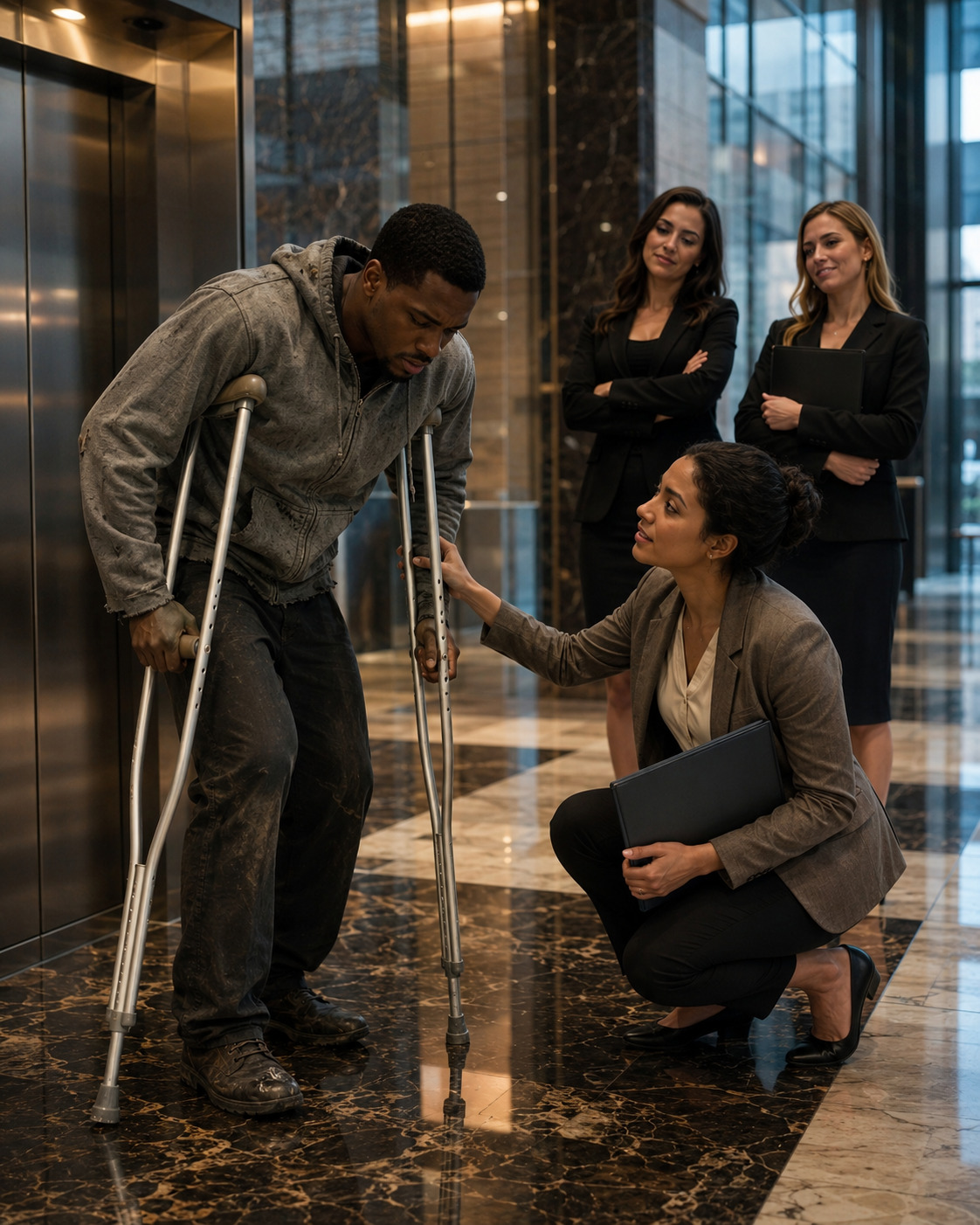
They would not approve another round of treatment.
Not without a new policy.
Not without better coverage.
Not without money Morgan did not have.
This position at Hargrove came with medical benefits on the first day.
For Morgan, it was not a career move.
It was a countdown.
A few feet away, Tara Whitmore, Hargrove’s senior recruitment manager, scanned the candidates as though inspecting items on a clearance rack.
Her cream-colored suit fit perfectly. A gold badge was pinned above her heart. Beside her stood an assistant with a tablet.
Tara’s eyes stopped on Morgan.
“Community college,” she said, loud enough for several applicants to hear. “Three years at a nonprofit and two years at a warehouse.”
Her assistant glanced at Morgan’s résumé.
“Strong performance reviews.”
Tara gave a small laugh.
“Strong performance reviews are what small companies give people they can’t afford to promote.”
Two candidates looked away.
Morgan kept her face still.
Tara’s gaze moved down to the borrowed shoes.
“Presentation matters here,” she added. “We deal with executives, not neighborhood volunteers.”
Morgan tightened her grip on the folder but said nothing.
Across the lobby, a young Black man in a faded gray hoodie watched the exchange.
He leaned heavily on a pair of aluminum crutches. One leg appeared stiff beneath loose sweatpants. His sneakers were scuffed, and an old canvas backpack hung from one shoulder.
To anyone passing by, he looked lost.
Possibly homeless.
Certainly out of place.
His name was Jaylen Hargrove.
And the letters mounted thirty feet above the reception desk belonged to his family.
At thirty-two, Jaylen was the majority owner and chairman of Hargrove Industries, a manufacturing and logistics company operating in eleven states.
Very few employees had seen him in person.
He avoided publicity, refused magazine profiles, and had spent the previous eighteen months rebuilding the company after a financial crisis nearly destroyed it.
That morning, he was not there to interview anyone.
He was there to observe.
For months, anonymous complaints had described Hargrove’s hiring culture as elitist, humiliating, and hostile toward applicants from working-class backgrounds.
The reports always disappeared before reaching senior leadership.
So Jaylen had stopped reading reports.
He had started testing people.
He wore old clothes. Used crutches he did not need. Entered through public doors and asked simple questions.
The results had been worse than he expected.
A receptionist once told him to wait outside in the rain.
A manager refused to let him use a restroom.
Another employee called security because Jaylen had sat down without permission.
But Morgan was different.
She had been mocked in front of strangers, yet when Jaylen struggled toward the elevator, she was the only person watching him instead of the glowing numbers above the doors.
The elevator arrived.
The candidates moved forward in a tight cluster.
Jaylen planted one crutch near the threshold, allowed it to slip, and twisted sideways.
Several people stepped around him.
Tara sighed.
“Could someone move him away from the door?”
Morgan was already turning back.
She caught Jaylen by the arm before he hit the floor.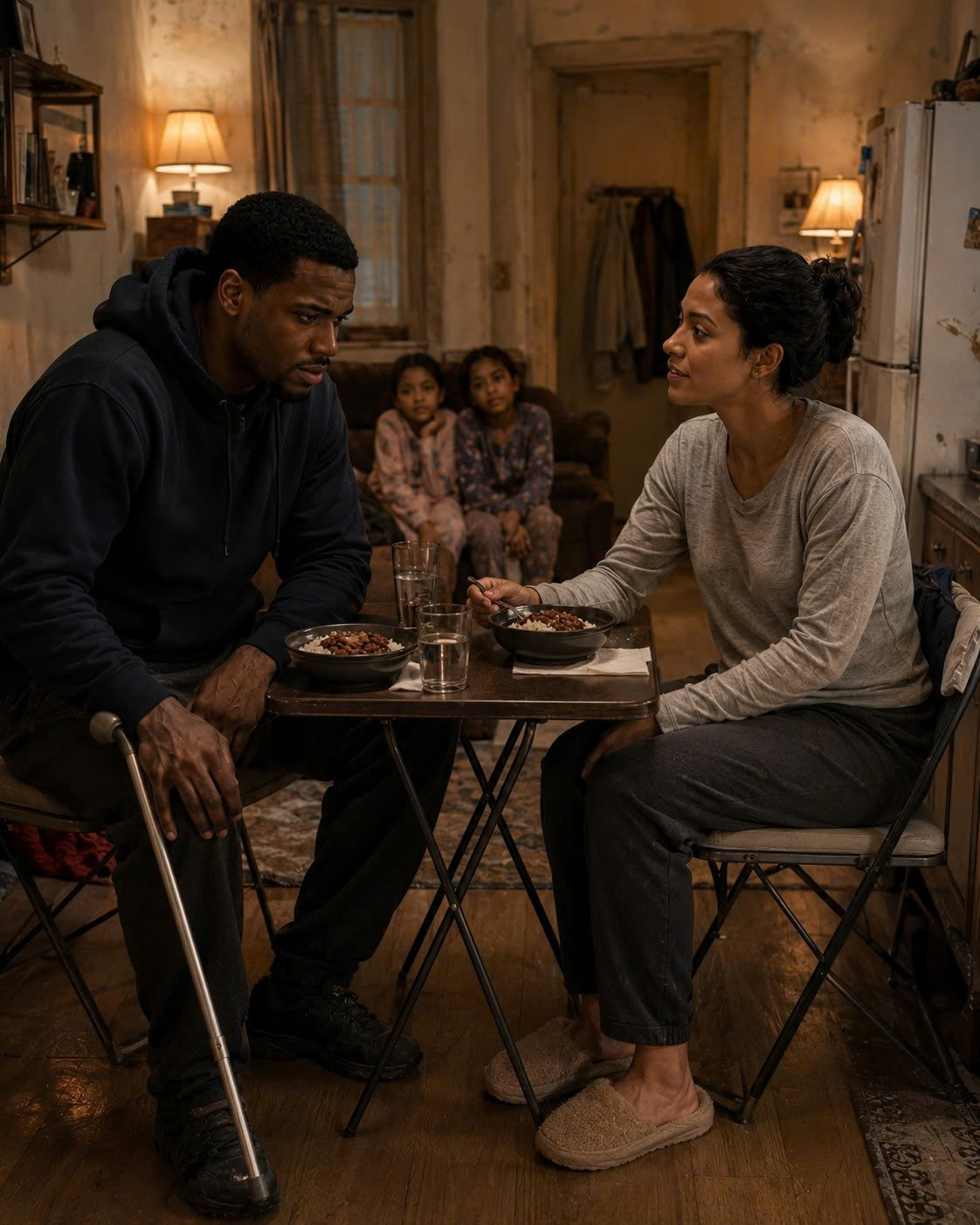
“Easy,” she said. “Don’t try to stand yet.”
The elevator doors began to close.
Morgan could have released him.
She could have stepped inside.
Instead, she let the elevator leave without her.
“You missed it,” Jaylen said quietly.
“So did you.”
“I’m not the one with an interview.”
Morgan picked up his crutch and checked the rubber tip.
“There’ll be another elevator.”
Behind them, Tara watched the doors close and shook her head.
“Some people don’t understand priorities,” she said.
Morgan heard her.
She did not respond.
The next elevator was delayed, so Morgan helped Jaylen toward a smaller bank at the end of the hall.
She did not ask what had happened to his leg. She did not speak to him in the slow, exaggerated voice some people used around anyone with a disability.
She simply matched his pace.
“You’re nervous,” Jaylen said.
Morgan smiled without looking at him.
“Is it that obvious?”
“Only to someone else who’s pretending not to be.”
That earned a real laugh, though it disappeared quickly.
“My mother is sick,” she said after a moment. “Her insurance stopped covering the treatment. This job starts benefits immediately.”
Jaylen’s hands tightened around the crutch grips.
“I’m sorry.”
“She doesn’t need people to be sorry. She needs the treatment.”
There was no bitterness in Morgan’s voice.
Only exhaustion.
The second elevator arrived.
When they reached the interview floor, Morgan checked the time and hurried toward the waiting area.
Her name was being called.
“Morgan Reed?”
She raised her hand.
“I’m here.”
At that exact moment, Jaylen’s right crutch slid across the polished floor.
This time, he did not plan it.
The rubber tip caught on a wet patch left by a cleaning cart. His shoulder struck the wall, and both crutches clattered down the hallway.
Morgan stopped.
The interview-room door stood open ten feet ahead of her.
Tara was inside.
“Morgan Reed,” Tara called again.
Morgan looked at the door.
Then at Jaylen.
He tried to push himself up and failed.
“Go,” he told her. “I’m fine.”
She knew he was not.
Morgan ran back, knelt beside him, and pulled one of his arms over her shoulder.
“Put your weight on me.”
By the time she got him standing, another applicant had entered the room.
Morgan grabbed the crutches and hurried to the door.
Tara blocked the entrance.
“I was helping someone who fell.”
“You were called twice.”
“He was injured.”
“We have a schedule.”
“It took less than a minute.”
Tara glanced down the corridor at Jaylen, then back at Morgan.
“Professional environments require judgment. You chose not to be present.”
“I was twenty feet away.”
“And now the panel has moved on.”
Morgan stared at her.
“This interview determines whether my mother gets treatment.”
For the first time, Tara’s expression softened.
But only for a second.
“Everyone has personal circumstances.”
Then she closed the door.
Morgan did not shout.
She did not bang on the glass.
She stood with her folder pressed against her chest as though it were the only thing holding her together.
After a while, she sat in one of the empty chairs.
A hospital invoice slid from the folder and landed faceup on the floor.
Jaylen saw the amount printed at the bottom.
He also saw Morgan’s hands begin to shake.
He wanted to tell her who he was.
He wanted to open the door, end the interviews, and fire Tara in front of everyone.
But his phone vibrated before he could move.
The message came from Hargrove’s general counsel.
EMERGENCY BOARD SESSION. DEVIN HAS CALLED A VOTE. GET HERE NOW.
Jaylen looked from the phone to Morgan.
“I’m sorry,” he said.
She bent to pick up the hospital bill.
“You didn’t close the door.”
That sentence followed him all the way upstairs.
One hour later, Jaylen entered the executive boardroom without the hoodie, the backpack, or the crutches.
He wore a black suit and a silver tie. His posture was straight. His expression had changed so completely that the security team barely connected him to the man they had seen downstairs.
Twelve board members sat around a walnut table.
At the head sat Devin Hargrove, Jaylen’s uncle.
Devin had spent thirty years building influence inside the company. He had advised Jaylen’s father, attended every family funeral, and told anyone who would listen that he had treated Jaylen like a son.
That morning, he intended to remove him.
“Our chairman has become unpredictable,” Devin told the board. “His recent behavior raises serious questions about his judgment. Hargrove Industries needs experienced leadership.”
Several members avoided Jaylen’s eyes.
Others already knew how they would vote.
Devin folded his hands.
“I am proposing that Jaylen take an indefinite leave and that I assume operational control.”
Jaylen placed a thick folder on the table.
“No.”
Devin smiled patiently.
“This is not personal.”
“It became personal when you stole forty-eight million dollars.”
The room went silent.
Jaylen opened the folder.
Bank transfers.
Shell corporations.
False vendor contracts.
Properties purchased under relatives’ names.
Devin’s smile disappeared one careful inch at a time.
“You misunderstand those documents.”
“I understand them well enough that federal investigators have been tracking the accounts for six months.”
The boardroom doors opened.
Three federal agents entered.
Devin stood so quickly that his chair rolled backward.
He looked at the agents, then at Jaylen, then at the people around the table who had spent years laughing at his jokes.
No one moved to help him.
“You ungrateful boy,” Devin whispered. “I raised you after your father became ill.”
Jaylen’s jaw tightened.
“You also redirected money from his care.”
Devin froze.
Jaylen placed one final document on the table.
It was an authorization form showing that Devin had pressured a hospital administrator to transfer Jaylen’s father to a cheaper facility while concealing the family’s ability to pay.
For the first time, Devin looked old.
The color drained from his face. His eyes moved across the room, searching for loyalty and finding only silence.
An agent stepped behind him.
As the handcuffs closed, Devin’s shoulders folded inward.
The man who had entered the room expecting to control an empire left it unable to control where he placed his hands.
Jaylen had won.
Yet that evening, standing alone beside the windows of his office, he felt no victory.
His father used to tell him, “When everything goes wrong, don’t watch who speaks the loudest. Watch who stays.”
Morgan had stayed.
A stranger had fallen, and she stayed.
It cost her the only opportunity that might have saved her mother.
Jaylen returned to the recruitment floor.
He demanded Morgan’s application.
It was gone.
Tara had marked her as “unreliable” and removed her from consideration.
Jaylen went to the address on the original form.
The apartment was empty.
A landlord told him Morgan had moved after falling behind on rent.
For nearly four months, Jaylen searched.
During those months, he suspended Tara, commissioned an external review, replaced three recruitment managers, and created an anonymous reporting system that bypassed Human Resources.
But Morgan remained missing.
Then, during a visit to a packaging facility owned by an old college friend, Jaylen saw a woman pushing a loaded steel cart across the warehouse floor.
Her hair was tied beneath a safety cap. Her gloves were torn at the fingers. She looked thinner than he remembered.
It was Morgan.
Jaylen’s friend followed his gaze.
“You know her?”
“Tell me about her.”
“She works every overtime shift we offer. Never late. Never complains.”
 He paused.
“Her mother died a few months ago. Now she’s raising two younger sisters. They were living in a motel until recently.”
Jaylen looked away.
The machinery thundered around him, but all he could hear was Morgan saying, She doesn’t need people to be sorry. She needs the treatment.
He went to her apartment that weekend.
He did not arrive in a company car.
He wore a plain hoodie and carried a cane, though this time he did not pretend to need it.
When Morgan opened the door, she recognized him immediately.
“The man from the elevator.”
“The man who ruined your interview.”
“You fell.”
“And you paid for it.”
She studied him for several seconds.
Behind her, two girls sat at a folding table doing homework. The apartment was small enough that the kitchen, living room, and dining area shared one light.
Everything was old.
Everything was clean.
Morgan stepped aside.
“You can come in.”
Dinner was rice and beans.
Jaylen ate from a chipped bowl while Morgan’s youngest sister explained a drawing taped to the refrigerator. The older one talked about becoming a doctor.
After the girls went to bed, Morgan sat across from Jaylen at the folding table.
“My mother died eleven weeks after the interview,” she said.
Jaylen did not look away.
“I’m sorry.”
“She kept asking whether they had called me back.”
His throat tightened.
“I should have done something.”
“You were a stranger on crutches.”
“I was more responsible than you know.”
Morgan’s eyes narrowed, but Jaylen could not yet force the whole truth out.
Not there.
Not in front of the table where she had paid bills, fed her sisters, and watched her mother disappear.
So he said only what he could.
“I saw what happened. I left. I’ve regretted it every day.”
Morgan looked toward the girls’ bedroom.
“Regret doesn’t change much.”
“No.”
He placed both hands flat on the table.
“But responsibility can.”
Over the following months, Jaylen returned often.
At first, Morgan remained cautious.
Then she began trusting his consistency.
He helped the younger girl prepare an art portfolio. He found free medical tutoring resources for the older one but never told them he could have paid for anything they wanted.
Morgan did not want to be rescued.
She wanted to be respected.
Jaylen eventually understood the difference.
When he finally asked Morgan to visit Hargrove Industries, he arrived without a hoodie, without a cane, and without a lie.
A black sedan stopped outside her building.
Morgan almost closed the door when she saw it.
“Where are we going?”
“To the place where I owe you the truth.”
When they entered the Hargrove lobby, employees straightened.
Security guards greeted him by name.
The receptionist stood.
“Good morning, Mr. Hargrove.”
Morgan stopped walking.
Her face changed slowly as every strange detail rearranged itself in her mind.
The crutches.
The old clothes.
The lobby.
The interview.
“You own this company.”
“Yes.”
“You were testing us.”
“Yes.”
Her voice dropped.
“You watched them humiliate me.”
Jaylen did not defend himself.
“I did.”
“And when I lost the interview—”
“I let you.”
The lobby seemed to grow quiet around them.
Jaylen told her everything.
The complaints.
The disguises.
The test.
His intention to expose cruelty.
His failure to understand that real people could suffer real consequences while he gathered proof.
“I turned character into an experiment,” he said. “You treated me like a human being, and I allowed that kindness to cost you everything.”
Morgan’s eyes filled, but she did not cry.
“You cannot tell me whether my mother would have lived.”
“No.”
“You cannot take responsibility for her death because that makes you the center of something that belonged to us.”
Jaylen lowered his head.
“You’re right.”
“But you are responsible for what happened in this building.”
“Yes.”
A service door opened nearby.
Tara emerged carrying a stack of supply boxes.
Her cream-colored executive suit was gone. She now wore a basic administrative badge and reported to the compliance division while completing mandatory retraining.
When she saw Morgan, she stopped.
One box tilted in her arms.
Recognition reached her face first.
Then confusion.
Then fear.
Her eyes moved to Jaylen.
Around them, employees began to notice.
Tara’s lips parted, but no sound came out.
Morgan did not smile.
She simply held Tara’s gaze until Tara looked down.
That was the moment Tara finally understood.
The woman she had dismissed as unworthy was standing beside the chairman.
The man she had ordered removed from the elevator was the man whose name covered the building.
And every person in the lobby could see the exact second her certainty collapsed.
Jaylen did not ask Morgan to forgive him that day.
He asked her to evaluate the recruitment system he was rebuilding.
She rejected his first proposal.
Then his second.
The third offered real authority, an independent budget, and the power to recruit her own team.
Morgan accepted.
Over the next year, she built Hargrove’s Community Talent Division from the ground up.
It partnered with vocational schools, shelters, community colleges, disability organizations, and workforce reentry programs.
Applicants were no longer judged by the price of their clothes, gaps in their employment, or whether their résumé came printed on expensive paper.
They were assessed for ability.
Morgan proved to be better at the work than anyone Jaylen had hired before her.
Tara remained with the company under strict conditions.
She was not immediately fired because Morgan opposed turning reform into revenge.
Instead, Tara worked in an entry-level support role and reported to the woman she had once refused to interview.
For the first time in her career, Tara had to live under policies written to protect people she used to ignore.
Jaylen and Morgan’s relationship changed more slowly.
It was built through long workdays, difficult conversations, hospital memories, family dinners, disagreements, and the uncomfortable discipline of telling the truth.
Two years after the morning in the lobby, Jaylen asked Morgan to meet him there before work.
Employees gathered quietly along the balconies.
Morgan arrived expecting a company announcement.
Instead, Jaylen stood near the same elevator where she had first helped him.
He held a small ring.
No orchestra.
No cameras from the press.
No diamond large enough to turn the moment into a performance.
Jaylen knelt.
“You met me when I looked like I had nothing,” he said. “You gave me dignity before you knew my name. I cannot undo what my choices cost you. But every honest thing I have built since that day began with what you showed me.”
Morgan’s hands covered her mouth.
Jaylen looked up at her.
“I don’t want to offer you a perfect life. I want to offer you a truthful one. Will you marry me?”
Morgan looked toward the elevator.
Then at Tara, standing near the reception desk with tears in her eyes.
Then at the employees whose hiring process now carried Morgan’s signature.
Finally, she looked back at Jaylen.
“Yes.”
The lobby erupted.
Morgan’s sisters both finished school.
The older one entered a nursing program and later began preparing for medical school.
The younger one earned a scholarship to study illustration.
Morgan never became someone else after marrying Jaylen.
She did not trade her history for luxury or allow people to describe her as lucky.
She had earned every room she entered long before anyone opened its doors.
The folding table from her old apartment now stands in Jaylen’s office beside the floor-to-ceiling windows.
It is scratched, uneven, and worth almost nothing.
Board members sometimes assume it is an expensive piece of minimalist furniture.
Jaylen never corrects them immediately.
He lets them look at it.
Then he tells them the truth.
That table fed a family when money was gone.
It held hospital bills, schoolbooks, and bowls of rice and beans.
It belonged to a woman who had every reason to become bitter but chose not to become cruel.
Hargrove Industries had marble floors, private elevators, and forty-eight-story views.
But the most valuable thing inside the company was a folding table from a two-room apartment.
Because wealth can reveal power.
Loss can reveal loyalty.
But only the way we treat people who can do nothing for us reveals who we really are.