Chapter One
The Men Outside the Pharmacy
The first man touched my nephew at 4:16 on a Tuesday afternoon.
By 4:17, all three men were on the ground.
The minute between those two events would become the part everyone in Port Mercy remembered. Cellphone footage would spread through town. Local reporters would slow it down frame by frame. Strangers would invent stories about me, each one louder than the truth.
But the moment I remembered began before the first punch.
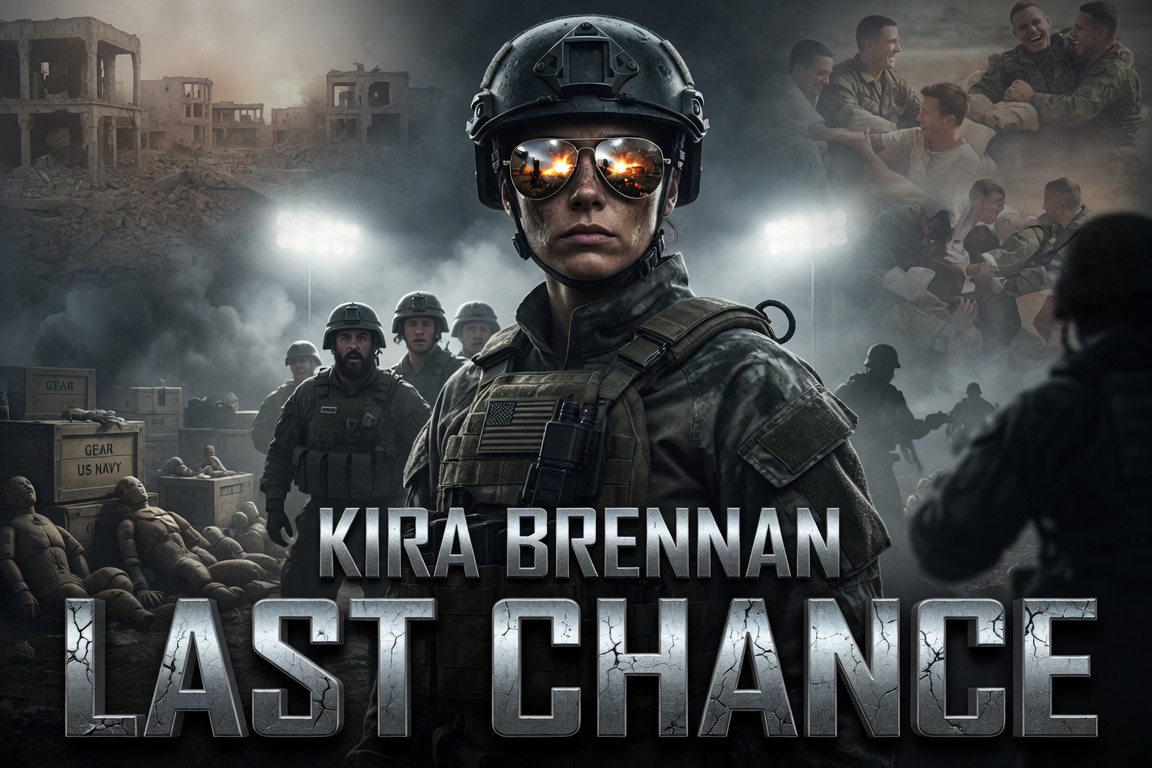
It began with Eli’s face.
He walked out of Bell’s Pharmacy carrying my father’s heart medication in one hand and a paper bag of lemon drops in the other. Eighteen years old, narrow shoulders, hair falling into his eyes. He smiled when he saw my truck across the street.
Then he noticed the three men waiting beside it.
The smile vanished.
That was all I needed.
I crossed Main Street through cold coastal rain, ignoring the horn of a delivery van. Water soaked the shoulders of my canvas jacket. The air smelled of salt, diesel, and shrimp from the market two blocks away.
The largest man stepped in front of Eli.
“Phone.”
Eli tightened his grip on the pharmacy bag.
“I don’t know what you’re talking about.”
The man slapped the medicine from his hand.
The white bottle struck the sidewalk and rolled beneath my truck.
I stopped six feet away.
“Pick it up.”
All three turned.
The large man had a shaved head and a gray work jacket bearing the Calder Maritime logo. The second man was younger, restless, with a tattoo disappearing beneath his collar. The third remained near the curb, watching traffic instead of me.
He was the one I disliked.
The dangerous man in a group is rarely the loudest. It is usually the one making sure the loud man has somewhere to run.
Shaved Head looked me over.
At forty-seven, I had become easy for careless people to misunderstand. Gray threaded the hair at my temples. An old shoulder injury kept my left arm slightly lower than my right. My hands looked like the hands of a woman who repaired boat engines because that was what I had allowed Port Mercy to believe.
“Mara,” Eli whispered.
The man smiled.
“This your mom?”
“Aunt.”
“Good. Tell your aunt to keep walking.”
I moved closer.
“Pick up the medication.”
His smile widened.
“You deaf?”
“No.”
I looked at Eli.
“Get behind me.”
He did not move.
His fear had locked his knees.
Shaved Head grabbed the front of his sweatshirt.
I heard fabric stretch.
Something inside me changed.
Not rage.
Rage is too warm.
This was older and colder—the narrowing of distance, sound, and consequence that had kept people alive in rooms where panic would have killed them.
I stepped forward.
“Take your hand off him.”
The younger man laughed.
Shaved Head leaned closer to Eli.
“What did you record at the marina?”
“I didn’t record anything.”
“Your drone did.”
Eli’s eyes flicked toward me.
There it was.
A truth neither my sister nor the police knew.
Three nights earlier, Eli had flown his camera drone over the municipal marina to film storm damage for a school project. He told me it malfunctioned and fell into the water.
Apparently, it had seen something first.
The third man finally looked at me.
His eyes were pale and steady.
“You should go home, Ms. Vance.”
He knew my name.
I looked at the Calder Maritime jackets again.
The company owned half the working waterfront and employed nearly four hundred people. Its founder, Rafe Calder, funded the veterans’ clinic, the high school stadium, and the recovery center where my father received physical therapy.
He had also served beside my husband.
Before Noah died.
“Release the boy,” I said.
Shaved Head shoved Eli against the truck.
The lemon-drop bag burst. Yellow candy scattered through the rainwater.
“You don’t give orders here.”
I removed my glasses and slipped them into my jacket pocket.
The third man saw the motion.
His posture changed.
He understood before the others did.
“Dane,” he warned.
Shaved Head glanced back.
I spoke once more.
“Last warning.”
The younger man moved first.
He came from my right, one hand reaching for my shoulder. He expected me to retreat.
I stepped toward him.
His balance broke before his confidence did.
My forearm redirected his arm. My hip turned beneath his center of gravity. He struck the hood of my truck hard enough to lose the breath in his lungs.
Shaved Head released Eli and swung.
Too wide.
Too angry.
I moved inside the arc and drove the heel of my palm beneath his chin—not enough to break bone, enough to shut down his legs. He collapsed against the passenger door.
The third man reached beneath his jacket.
I crossed the distance before his hand returned.
My left shoulder screamed as I pinned his wrist against the truck. The object beneath his jacket was not a pistol.
It was an injector.
A clear syringe filled with amber liquid.
Not robbery.
Not intimidation.
They intended to take Eli.
The man’s calm disappeared.
I twisted until the injector fell.
He struck the side of my face with his free hand.
The rain flashed white.
For half a second, I smelled dust instead of saltwater.
Heard helicopter blades instead of traffic.
Saw a dark room on another continent where men had waited behind a steel door.
Then Eli shouted my name.
The present returned.
I drove the man to one knee and locked his arm behind him.
“Who sent you?”
He laughed through clenched teeth.
“You already know.”
“Say it.”
His face pressed against the wet pavement.
“Calder says the dead should stay buried.”
My grip loosened.
Only slightly.
He felt it.
The man smiled.
“Noah didn’t listen either.”
A siren sounded at the end of the street.
The pharmacy clerk stood in the doorway holding a phone. Customers crowded behind the glass. Several had recorded everything.
Shaved Head groaned beside the truck.
The younger man remained folded over the hood, gasping.
Eli stared at me.
Not with relief.
With fear.
He had never seen me move like that.
Almost nobody in Port Mercy had.
The patrol car stopped hard against the curb. Detective Owen Vance stepped out before the doors fully opened.
My son.
Twenty-eight years old. Broad-shouldered like his father, dark hair clipped close, police badge visible beneath his raincoat.
His gaze moved across the three injured men.
Then to Eli.
Then to me.
His hand rested near his holster.
“Mom.”
He had not called me that in nine months.
Not since Noah’s memorial anniversary, when he accused me of knowing more about his father’s death than I admitted.
“What happened?”
The third man began to laugh again.
Owen knelt and found the injector.
His expression sharpened.
He looked at me differently.
Not as his mother.
As a suspect who had just dismantled three men before uniformed officers arrived.
“Hands where I can see them.”
Eli stepped forward.
“She saved me.”
Owen kept his eyes on me.
“I said, hands where I can see them.”
I lifted them slowly.
The entire street watched.
Rain ran from my hair, down my face, and over the scar beneath my left ear—the scar my son had been told came from a boating accident.
Owen stared at it.
Then at my stance.
Recognition had not arrived.
Only doubt.
One of the injured men rolled onto his back.
A black coin slipped from his pocket and spun across the pavement.
It stopped against Owen’s shoe.
A silver trident had been stamped into one side.
A broken compass into the other.
My old unit’s symbol.
Owen picked it up.
“What is this?”
I looked toward the man who had spoken Noah’s name.
He smiled.
The past had not returned accidentally.
Someone had sent it to my family’s door.
And for the first time in seventeen years, I understood that my husband’s death had never been the end of the operation.
It had been the beginning.
Chapter Two
The Mother He Thought He Knew
Owen questioned me in Interview Room Three.
He did not sit.
That was deliberate.
Standing placed his badge above my eye line. It reminded both of us that in this building, he was the authority and I was the woman refusing to give him answers.
The room smelled of stale coffee, wet coats, and the lemon disinfectant Port Mercy Police used on every surface. Rain ticked against the narrow window.
The black coin rested inside an evidence bag between us.
Owen placed both hands on the table.
“Three men employed by Calder Maritime approached Eli.”
“Yes.”
“One carried a sedative.”
“It appears so.”
“You put all three in the hospital.”
“One dislocated shoulder, one concussion, one fractured wrist.”
His eyes narrowed.
“You know their injuries?”
“I know what I did.”
That answer irritated him more than denial would have.
He pushed the evidence bag closer.
“What is this?”
“A challenge coin.”
“I can see that.”
“Then why ask?”
His jaw shifted.
At eight years old, Owen used to make the same expression before throwing a toy across the room. At twenty-eight, he had learned to keep both hands flat and call it control.
“What unit?”
“I don’t know.”
“You looked at it like you’d seen a ghost.”
“People often mistake memory for fear.”
“Stop doing that.”
“Doing what?”
“Answering every question with something that sounds engraved on a memorial wall.”
The words struck because they resembled Noah.
My husband used to accuse me of turning every emotion into language polished enough to survive inspection.
Owen pulled out a chair and sat.
The detective receded.
My son appeared.
“Eli said the men asked about a drone.”
“Yes.”
“Do you know what he recorded?”
“No.”
“Do you believe him when he says the drone crashed?”
“No.”
That surprised him.
“Why?”
“Because Eli looks left when he lies to adults and down when he lies to himself. He looked left.”
Owen stared at me.
“You’ve known for three days and said nothing.”
“I knew he was hiding something. Not what.”
“You could have called me.”
“You could answer my calls.”
Silence.
There it was.
The family beneath the case.
Owen leaned back.
“You don’t get to use that now.”
“I wasn’t using anything.”
“You disappeared for most of my childhood. Dad died, and you came home acting like grief was another classified briefing. Now three men attack your nephew, and suddenly you fight like—”
He stopped.
“Like what?”
His eyes moved over my hands.
“Like those videos.”
“What videos?”
“Special operations. Close-quarters training.”
I said nothing.
Owen laughed once, but no amusement entered it.
“You told us you taught water survival.”
“I did.”
“You told Dad’s family you worked base security.”
“Sometimes.”
“You told me the scars were from a helicopter accident.”
“They were.”
“What kind of helicopter accident teaches a forty-seven-year-old boat mechanic how to put three armed men down in under twenty seconds?”
I looked toward the one-way mirror.
Our reflections hovered faintly over the dark glass.
He had Noah’s eyes.
That had always made lying harder.
“The kind I cannot discuss.”
His chair scraped backward.
“There it is.”
“Owen.”
“No. You don’t get to hide behind that sentence every time someone asks who you are.”
His voice remained low.
That made it worse.
“Dad spent half his life defending you. Every birthday you missed. Every Christmas call cut short. Every time you came home with a new scar and told us not to ask.”
“He knew what I did.”
“Did he?”
The question entered the room like a blade.
“Because before he died, he told me he had discovered something about your unit. He said if anything happened, I should ask you about Calder.”
My pulse slowed.
“When?”
“I was twelve.”
Noah died when Owen was eleven.
A year had altered the memory.
Grief often does.
Owen saw my expression.
“You didn’t know.”
“No.”
“He left me a voicemail. Mom deleted it from my phone after the funeral.”
My mother-in-law.
Noah’s mother had blamed my service for everything she lost.
“What did it say?”
“Only that Calder was not who he claimed to be.”
“Do you still have it?”
“No.”
He looked toward the evidence bag.
“But now men from Calder Maritime are carrying coins you recognize and saying Dad should have stayed buried.”
The interview-room door opened.
Police Chief Marian Holt entered with a tall man in a dark Navy overcoat.
He was sixty, perhaps older, lean, with white hair and a face weathered by sun rather than time. A rear admiral’s insignia shone on his collar.
Admiral Jonah Reed.
My former commanding officer.
The man who signed the order ending my operational identity.
The man who promised he would never contact me unless the country or my family faced immediate danger.
He looked at me.
Not surprised.
Not relieved.
Ashamed.
“Master Chief.”
Owen turned.
The title hung between us.
Admiral Reed removed his cover.
“Senior Chief Mara Vance, retired. Naval Special Warfare Group Nine.”
Owen stood slowly.
“Master Chief?”
“I was promoted before separation,” I said.
His face emptied.
Reed looked toward the one-way mirror.
“We need the recording shut down.”
Chief Holt crossed to the control panel and disabled it.
Owen stared at me.
“What was Group Nine?”
Reed answered.
“A classified maritime interdiction and recovery unit.”
“SEALs?”
“Yes.”
Owen’s eyes returned to me.
Women had not appeared in the stories he heard growing up. Neither had mothers, instructors, or people who came home in civilian clothes and repaired engines.
Reed continued.
“Your mother served as the unit’s senior combat training master and assault leader.”
Owen looked as if the room had moved beneath him.
“How long?”
“Twenty-one years.”
My son lowered himself into the chair.
Not because he chose to sit.
Because his legs no longer trusted him.
“All those years…”
“I was protecting you.”
His head snapped up.
“No. You were protecting the work.”
The accuracy hurt.
Reed stepped forward.
“This is not the time—”
“It’s exactly the time.” Owen pointed toward the black coin. “My cousin was nearly abducted. My father is dead. Three men show up carrying a symbol tied to whatever my mother did, and everyone wants another closed door.”
Reed looked at me.
“We have a larger problem.”
“Rafe Calder?” I asked.
“Yes.”
Chief Holt placed a tablet on the table.
Security footage showed the municipal marina at 2:11 on Sunday morning. A container was lifted from a Navy transport truck into a Calder Maritime warehouse.
The manifest listed desalination equipment.
Thermal imaging showed dense shielded components.
“What is it?” Owen asked.
Reed answered carefully.
“Guidance processors removed from decommissioned naval drones.”
“Why steal outdated hardware?”
“They are not outdated.”
I studied the footage.
Calder’s crew moved like trained personnel. No hesitation. No flashlights. One man monitored a handheld radiation detector even though the cargo was not radioactive.
They feared a tracking device.
Eli’s drone had captured the transfer.
Reed changed the image.
Rafe Calder appeared beside the warehouse.
Fifty-three. Thick silver hair. Expensive field coat. Hands clasped behind his back.
A town savior watching stolen military technology enter his empire.
“He knows Eli recorded it,” I said.
“We believe so,” Reed replied.
“Why not destroy the drone?”
“Because the footage uploaded automatically.”
Owen looked at me.
“Where?”
I thought of Eli’s school projects, his habit of saving everything twice, and the external server he once built from discarded computers.
“He has a private cloud tied to his late father’s account.”
Chief Holt reached for her phone.
“I’ll send officers.”
“No.”
Everyone turned toward me.
“If Calder sent three men with an injector, he does not know the password. He needs Eli alive and conscious.”
“That’s supposed to comfort me?” Owen asked.
“It tells us how he will move.”
Reed’s expression tightened.
“You sound operational.”
“I sound like an aunt.”
Owen stepped between us.
“Eli stays under police protection.”
I looked at my son.
“You have a leak.”
His face hardened.
“You don’t know that.”
“The three men approached him two minutes after he filled a prescription using his real name. Someone had access to pharmacy alerts or plate-recognition cameras.”
Chief Holt said nothing.
That silence confirmed enough.
Reed placed another file on the table.
“Calder built more than a smuggling route. We’ve traced payments through the Sentinel Harbor Foundation.”
The town’s veterans’ charity.
Noah had helped create it.
“The foundation pays for rehabilitation, housing, and job placement,” Owen said.
“It also launders revenue from stolen military hardware,” Reed replied.
My hands closed.
Noah’s name remained engraved above the foundation entrance.
Calder had turned my husband’s memory into a shield.
Owen saw my reaction.
“Did Dad know?”
I looked at the black coin.
“He died trying to find out.”
Reed’s phone vibrated.
He read the message.
All color left his face.
“What?”
He turned the screen toward us.
A photograph showed my sister Helen tied to a chair inside an industrial building. Eli knelt beside her, blood along one cheek.
The officers assigned to protect them lay unconscious in the background.
Beneath the image were eight words:
BRING MARA TO CALDER SHIPYARD. NO POLICE. MIDNIGHT.
Owen reached for his weapon.
I caught his wrist.
“Not yet.”
“That’s my aunt and cousin.”
“They want you angry.”
“They have my family.”
“They have mine too.”
Our eyes locked.
For the first time since entering the room, Owen understood that my calm was not absence of fear.
It was what fear looked like after two decades of being denied permission to act like itself.
Reed studied the photograph.
“Calder Shipyard has thirty acres, underground fuel storage, and private armed security.”
Owen looked at me.
“What do we do?”
He did not ask the admiral.
He asked his mother.
I reached for the black coin.
“We stop letting Rafe Calder decide which member of this family becomes expendable.”
Chapter Three
The Husband Who Left a Map
My husband hid the first clue inside a fishing lure.
Noah believed the best hiding places were ordinary objects people handled without seeing. He kept hundreds of lures in labeled trays along the back wall of our garage. Red spoons. Silver minnows. Hand-painted wooden plugs.
One tray had remained unopened since his funeral.
I stood beneath the single garage bulb while Owen watched from the doorway.
Admiral Reed coordinated an outside response team from the police station. Chief Holt restricted the operation to five officers whose finances and communications had been independently cleared.
Owen insisted on coming home with me.
Not because he trusted me.
Because he no longer trusted anyone else.
I pulled Noah’s old tackle box from beneath the workbench.
Dust coated the lid.
“You knew something was inside?” Owen asked.
“No.”
“Then why are we here?”
“Your father loved patterns.”
“He loved fishing.”
“He hated fishing.”
Owen frowned.
Noah took him to the inlet every summer.
They sat for hours beneath the bridge, returning sunburned with almost nothing.
“He told me it was the only place you asked questions without expecting immediate answers,” I said.
Owen looked away.
I opened the trays.
Every lure faced left except one.
A faded blue swimmer with a cracked plastic eye faced right.
I removed it.
The body unscrewed.
Inside was a rolled strip of waterproof paper.
Owen inhaled.
The paper contained a sequence of tide heights, dates, and coordinates.
“Fishing records?” he asked.
“No. Shipping times.”
The coordinates marked channels used by Calder Maritime vessels. The dates reached back eighteen years.
Noah had been building a map before he died.
At the bottom he wrote:
R.C. MOVES GHOST CARGO DURING KING TIDE. WATCH DRY DOCK 4. TRUST MARA WHEN SHE FINALLY TALKS.
Owen read the final line twice.
“He knew you were hiding things.”
“Yes.”
“And still trusted you.”
“Your father could hold two truths without forcing one to disappear.”
“Could you?”
The question was quieter than accusation.
“No.”
That answer stopped him.
I sat on the workbench.
The bulb hummed above us.
“Your father and I met during an operation in the Arabian Sea. He was a Navy criminal investigator tracking weapons diverted from relief shipments.”
“And you?”
“I was part of the team sent to recover a kidnapped engineer.”
“You married a man investigating your world.”
“I married the only person who saw it clearly enough to dislike it.”
A faint smile almost appeared on Owen’s face.
Almost.
“What did Calder do?”
“Rafe was our logistics commander. He could move aircraft, boats, fuel, and personnel without leaving a visible trail. He was brilliant.”
“You trusted him.”
“With my life.”
“What changed?”
“After a hurricane destroyed several coastal bases, military surplus began disappearing. Rafe diverted generators and medical equipment into communities waiting for federal relief.”
“That sounds good.”
“It was.”
I looked at Noah’s map.
“Then he began deciding which rules deserved obedience. Medical supplies became electronics. Electronics became weapons components. He told himself every illegal sale funded a veteran’s mortgage or a town clinic.”
“Did it?”
“Some of it.”
That was what made Calder dangerous.
He did not steal because greed alone satisfied him. He had seen wounded sailors abandoned by paperwork, military families sleeping in cars, and towns collapsing after bases closed.
He believed institutions responded only to embarrassment and force.
Calder became his own government.
“Dad found out,” Owen said.
“Yes.”
“And Calder killed him.”
“I don’t know.”
My son stared.
“You always know more than you say.”
“Not this.”
Noah died when his patrol boat exploded near Dry Dock Four. The official report blamed a fuel-line failure. I was overseas during a hostage recovery and arrived home forty hours after Owen learned his father would never return.
Reed offered to open a classified investigation.
I refused.
Not because I trusted the official report.
Because the same night Noah died, someone placed a photograph of Owen asleep inside our kitchen mailbox.
A message had been written across it:
MOTHERS SHOULD KNOW WHICH WAR THEY CAN WIN.
I retired three months later.
I never told Owen.
The door from the house opened.
My father, Samuel Vance, entered using his cane.
Eighty years old, former Navy chaplain, lungs weakened by decades of shipboard smoke and stubbornness.
He looked at the open tackle box.
“So Noah finally speaks.”
Owen turned.
“You knew?”
Samuel lowered himself into a chair.
“I knew he left something. He made me promise not to help your mother find it until the past came looking for the children.”
Anger moved across Owen’s face.
“Does every person in this family keep secret instructions for after someone dies?”
“Mostly the men,” Samuel said. “We mistake poor communication for dignity.”
Despite everything, I almost laughed.
Samuel touched the strip of paper.
“Dry Dock Four.”
“What happened there?” I asked.
He looked at me.
“Noah came to me the night before he died. He said Calder was using the foundation to recruit desperate veterans into private operations.”
“For smuggling?”
“Some. Others were surveillance, intimidation, political work.”
“A private army,” Owen said.
Samuel nodded.
“Men with injuries, debts, and no sense of purpose. Calder gave them wages and a uniform without insignia.”
The three men outside the pharmacy.
Not ordinary criminals.
Abandoned veterans taught that Calder’s loyalty outweighed the law.
Samuel continued.
“Noah planned to copy the shipyard server during the next king tide.”
I checked the date on the paper.
Tonight.
Calder had chosen midnight because water would rise high enough to float a vessel from the interior dry dock through a channel normally too shallow.
The stolen guidance processors were leaving Port Mercy.
Helen and Eli were not only hostages.
They were insurance until the ship reached open water.
Owen placed the map on the workbench.
“We call the Coast Guard.”
“Calder has contacts at the harbor office,” I said.
“Then the Navy.”
“Reed’s team will close the ocean route after we confirm the hostages’ location.”
Owen’s eyes narrowed.
“After?”
“If Calder sees patrol craft early, he moves them or kills them.”
“You’re planning to enter.”
“Yes.”
“No.”
Samuel watched us.
Owen stepped closer.
“I’m a detective. This is my jurisdiction.”
“This stopped being local when stolen military technology entered the shipyard.”
“And it stopped being your operation twenty years ago.”
His voice cracked at the edge.
There it was.
Not authority.
Fear that I would disappear into another mission and return carrying one less piece of myself.
“I’m coming,” he said.
I looked at my son.
“Rafe knows you are police. He’ll watch for you.”
“He knows you’re coming too.”
“He knows Mara Vance, retired boat mechanic.”
Owen gestured toward the garage.
“He sent men carrying your unit coin. He knows exactly who you are.”
“No.”
I stood.
“He knows who I was.”
I opened the cedar cabinet beside Noah’s tools.
Inside hung an old black equipment bag.
Not a weapon chest.
Climbing harness. Compact medical kit. Weatherproof communications gear. Clothing without markings.
The final remains of a life I had kept close enough to fear and far enough to deny.
Owen stared.
“You said you got rid of everything.”
“I said many things.”
“That isn’t funny.”
“No.”
I handed him a small radio.
He did not take it.
“Tell me one truth first.”
“Which one?”
“Did you choose the mission over Dad?”
I looked at Noah’s handwriting.
Trust Mara when she finally talks.
“The night before he died, Noah asked me to stay home.”
Owen went still.
“I had an overseas deployment. A captured American engineer would be moved within forty-eight hours. I was the assault lead.”
“And you went.”
“Yes.”
“Did you know Dad was in danger?”
“I knew he was investigating Calder.”
Owen’s jaw tightened.
“You chose strangers.”
“I chose people whose survival depended on the team reaching them.”
“And Dad died.”
“Yes.”
He waited for me to defend the decision.
I had spent seventeen years constructing defenses.
Duty.
Orders.
Probability.
The lives saved overseas.
All true.
None capable of comforting the boy who waited for his mother after his father’s boat exploded.
“I made the best decision I could,” I said. “And it hurt you for the rest of your childhood.”
Owen’s eyes filled.
“So you don’t regret it?”
“I regret that I believed choosing the mission excused me from understanding the cost.”
He looked down.
Not forgiveness.
But the argument had changed.
He took the radio.
Samuel touched Owen’s sleeve.
“Bring your family home.”
Owen nodded.
I lifted the equipment bag.
On the workbench, Noah’s map trembled beneath air from the ceiling vent.
One line at the bottom had been hidden by the rolled edge.
Owen flattened it.
A final message appeared.
IF RAFE TAKES MY FAMILY, THE CONTROL ROOM IS NOT THE TARGET. THE CHAPEL IS.
We both looked at Samuel.
His face lost color.
“What chapel?” I asked.
He closed his eyes.
“The one Calder built beneath the shipyard for men he promised to save.”
Chapter Four
The Chapel Under the Waterline
Calder Shipyard sprawled across the northern edge of Port Mercy like a second, darker town.
Cranes rose above warehouses. Floodlights turned the mist white. Rusting naval hulls sat beside new luxury vessels waiting for refit. Beyond the fences, the Atlantic struck the breakwater with slow, heavy force.
At 11:12 p.m., Owen and I entered through an abandoned storm channel beneath the eastern wall.
King tide filled the lower half with black water.
We moved waist-deep beneath concrete, guided by the map Samuel drew from memory. The channel opened behind an old pumping station two hundred yards from Dry Dock Four.
Owen breathed too loudly.
Not from fear.
From trying not to.
I touched his shoulder and signaled a slower pace.
He nodded.
The boy who once left every cabinet open had become a man capable of moving through darkness beside me.
That loss and pride could coexist felt almost cruel.
We emerged behind stacked steel plating.
The shipyard smelled of brine, hot metal, hydraulic oil, and rain.
Workers moved around Dry Dock Four in Calder uniforms. Some carried rifles openly. Others loaded sealed containers onto a low black vessel with no registration markings.
Rafe intended to leave before one.
I checked the upper windows.
Control room occupied.
Warehouse occupied.
No visible hostages.
Owen pointed toward an old brick building between the dock and the seawall. A small cross had been cut into the steel door.
The chapel.
We crossed during the sweep of a crane, using its moving shadow.
Inside, candlelight replaced industrial glare.
Rows of mismatched chairs faced a wooden cross made from shipyard scrap. Photographs covered the walls.
Veterans.
Some in uniform.
Some in hospital beds.
Some beside new homes, small businesses, children.
Beneath each photograph was a handwritten note.
CALDER GAVE ME WORK WHEN NO ONE ELSE WOULD.
THE FOUNDATION SAVED MY MARRIAGE.
HE PAID FOR MY LEG.
Not propaganda manufactured by a villain.
Gratitude from real people.
Rafe had saved them.
Then used the debt.
Owen studied the walls.
“How many?”
“Enough to convince him the law no longer applied.”
A sound came from behind the altar.
I moved first.
A hidden door opened into a lower room built beneath the waterline.
Helen sat tied to a chair. Her lip was split. Eli lay beside her, hands restrained, conscious but dazed.
A young guard stood near the stairs.
He raised his rifle.
Owen aimed.
“Police. Drop it.”
The guard’s finger tightened.
I recognized him.
Tyler Boone.
Twenty-five. Former Navy corpsman. Lost part of his hearing during a training explosion. Calder Foundation paid for his surgery when his benefits stalled.
“Tyler,” I said.
His eyes shifted toward me.
“You know my name?”
“I wrote the recommendation for your advanced trauma course.”
Confusion entered his face.
He knew Mara Vance from the repair shop.
Not Master Chief Vance from the file Calder had probably shown him.
“Rafe said you abandoned the teams.”
“Rafe says whatever turns your gratitude into obedience.”
“He saved me.”
“That does not mean you owe him a crime.”
His rifle remained raised.
Behind him, Eli’s eyes opened fully.
Helen gave the smallest shake of her head.
Another person stood in the stairwell behind Tyler.
Rafe Calder.
He wore no body armor.
Only a dark wool coat over a white shirt, as if meeting us for dinner rather than holding my family beneath a shipyard.
“Mara.”
His voice had changed little.
Still warm. Still measured. Still capable of making an order sound like a favor.
“Rafe.”
He looked toward Owen.
“Noah’s boy.”
Owen’s weapon shifted toward him.
“My name is Detective Vance.”
“Of course.”
Rafe’s gaze returned to me.
“You still enter through the worst possible route.”
“You still leave storm drains off your security plan.”
“I left it open.”
Owen tightened his grip.
“He wanted us here.”
“Yes,” I said.
Rafe smiled.
“Still fast.”
Tyler lowered the rifle several inches.
Rafe noticed.
“Corpsman.”
The young man straightened.
“Keep the weapon on Detective Vance.”
Tyler obeyed reluctantly.
That reluctance mattered.
“What do you want?” I asked.
“The drone footage.”
“You already have the drone.”
“Eli uploaded the recording to an encrypted server. He refuses to give me the key.”
Eli lifted his head.
“Because you’re a criminal.”
Helen whispered, “Eli.”
Rafe looked at him without anger.
“You see? Courage. Mara’s family produces it at inconvenient times.”
“Release them.”
“When the ship clears the inlet.”
“You know the Navy is watching.”
“I know Admiral Reed’s response team is positioned twelve miles offshore.”
My chest tightened.
A leak.
Again.
Rafe saw it.
“Jonah always underestimated how many sailors need money.”
Owen said, “Those processors will never reach open water.”
“They will.”
“For what buyer?”
Rafe did not answer.
He walked toward the photographs.
“Do you know what happened after Group Nine closed?”
I remained silent.
“Men trained for impossible work became paperwork problems. Some drank. Some disappeared. One put a shotgun beneath his chin while the Department of Veterans Affairs debated whether his nightmares were service-connected.”
He touched a photograph of a smiling man with prosthetic legs.
“I found jobs. Homes. Doctors. Purpose.”
“With stolen weapons technology.”
“With the resources the government refused to provide.”
“You started with generators,” I said.
His eyes sharpened.
He knew Noah had left records.
“You found the map.”
“Noah found you.”
“Noah understood me until he decided law mattered more than people.”
“You killed him.”
Rafe looked at Owen.
The room became still.
“No,” he said.
I watched his face.
No evasion.
No pleasure.
Truth, or a lie he had practiced until his body accepted it.
“Who did?”
“Jonah Reed ordered Noah’s boat intercepted.”
The words struck harder than a blow.
Owen looked at me.
“Admiral Reed?”
Rafe continued.
“Noah discovered Group Nine had unknowingly protected several of my transfers. Reed feared public exposure would destroy careers and compromise ongoing operations.”
“You expect me to believe he murdered an investigator?”
“I expect you to remember what commanders call acceptable loss.”
The radio in my pocket felt suddenly heavy.
Reed knew our entry route.
Our plan.
Our positions.
He had directed us toward the shipyard.
Perhaps rescue had never been the only objective.
Rafe stepped closer.
“Noah boarded one of my boats. Reed’s team attempted to disable it before it reached shore. Fuel ignited.”
“Why didn’t you expose him?”
Rafe laughed softly.
“Because Noah also had evidence against me.”
Two guilty men preserving each other through silence.
One became a criminal philanthropist.
The other an admiral.
Owen’s face had gone pale.
“Do you have proof?”
Rafe pointed toward the chapel cross.
“The original radio recording is inside it.”
Tyler looked at him.
“You said the cross contained names of the dead.”
“It does.”
The corpsman’s loyalty shifted another inch.
Rafe had not only used veterans.
He had lied to the men who believed he honored them.
A warning tone sounded above us.
The black vessel’s engines had started.
Rafe held out one hand.
“Eli’s password.”
“No,” I said.
His expression hardened.
“Mara.”
“Last warning?”
For a moment, we were younger.
Two operators standing in a foreign harbor, arguing about whether orders deserved obedience.
Then Rafe’s hand dropped.
Tyler did not fire.
Instead, a shot came from the upper stairwell.
The bullet struck Tyler below the collarbone.
He fell.
Owen pulled Helen’s chair down behind the altar as more rounds tore into the room.
Rafe’s own security team had opened fire.
Not to protect him.
To erase everyone.
Rafe stared toward the stairs.
“They’re not mine.”
I dropped beside Tyler and pressed both hands over the wound.
Owen returned fire toward the doorway.
“Then whose?”
Rafe’s face changed.
The certainty he built his empire upon finally cracked.
“Reed.”
My radio activated.
Admiral Jonah Reed’s voice filled the chapel.
“Mara, move away from Calder. Recovery team entering.”
The timing was too precise.
He knew exactly where we stood.
Rafe looked at me.
“He doesn’t intend to recover anyone.”
Smoke canisters rolled down the stairs.
The chapel filled with white fog.
Reed spoke again.
“Master Chief, that is a direct order.”
I looked at Tyler bleeding beneath my hands.
At Owen shielding Helen and Eli.
At Rafe Calder, criminal and rescuer, betrayed by the same institution he believed he had outgrown.
Then at the steel cross containing the truth about Noah.
For twenty-one years, I had been trained to obey fast enough that doubt could not become disloyalty.
This time, doubt had arrived in time.
I switched off the radio.
“No more orders.”
Chapter Five
The Admiral’s Version of Duty
Rafe led us through a maintenance hatch beneath the altar.
The passage descended below the dry dock, where pipes vibrated with seawater pressure and the vessel’s engines thundered through concrete.
Owen supported Tyler.
Helen and Eli followed.
I carried the steel box removed from inside the chapel cross.
Bullets struck the hatch after it closed behind us.
Reed’s recovery team was not trying to rescue hostages.
They were cleaning the operation.
The passage ended inside a pump-control room beneath Dry Dock Four.
Above us, millions of gallons of water held the vessel level with the outer channel. Once the dock gate opened, the ship could leave.
Rafe locked the door.
“How long?” I asked.
“Six minutes until launch.”
“Can you stop it?”
“Not from here.”
I opened the steel box.
Inside lay an old digital recorder, Noah’s investigator badge, and copies of classified shipping waivers signed by Reed.
Owen touched his father’s badge.
His hand began to shake.
I activated the recorder.
Static.
Wind.
Then Noah’s voice.
“Calder vessel Bravo Two, this is Special Agent Vance. Shut down your engines.”
Rafe answered from the recording.
“Noah, you don’t understand what you’re boarding.”
“I understand you’re transporting restricted components through a civilian port.”
Another voice cut in.
Jonah Reed.
“Agent Vance, withdraw. Naval Special Warfare command assumes jurisdiction.”
“I have a federal warrant.”
“You have an unstable fuel line and hostile contacts approaching.”
Noah said, “You sabotaged the boat.”
Silence.
Then Reed:
“I’m trying to prevent a scandal that will end every recovery program Calder funds and expose operations still protecting American lives.”
Noah’s breathing sharpened.
“You’re protecting yourself.”
“I’m protecting the institution.”
The recorder captured an impact.
Men shouting.
Then Reed spoke one last time.
“Disable the vessel.”
The explosion overwhelmed everything.
Owen turned away.
My husband had died because an admiral chose containment over law and a smuggler chose his network over surrender.
Rafe watched the floor.
“I pulled him from the water.”
I looked up.
“He was alive?”
“For three minutes.”
My body forgot how to breathe.
“What did he say?”
Rafe’s voice softened.
“He said to tell Owen none of it was his fault.”
Owen covered his mouth.
“And me?”
Rafe met my eyes.
“He said you would blame yourself because guilt was the only burden you never delegated.”
Noah knew me.
Even while dying.
“What did you tell him?”
“That I would protect both of you.”
I looked around the criminal empire built afterward.
“This is your protection?”
Rafe’s jaw tightened.
“I believed power was the only thing Reed respected.”
“So you became powerful enough to resemble him.”
The truth landed.
He turned away.
Helen knelt beside Tyler, holding pressure over his wound as I secured a dressing.
The corpsman’s skin had gone gray.
“We need an ambulance,” she said.
“Reed controls the yard exits,” Rafe replied.
Owen raised his pistol.
“Then we take the control room.”
A younger version of me would have agreed immediately.
Direct action.
Clear target.
Violence as a bridge between problems.
Noah’s recording lay in my hand.
The control room was not the target.
The people were.
“We don’t need the control room,” I said.
Rafe looked at me.
“We need the workers.”
He laughed once.
“They work for me.”
“No. They work for the wages and purpose you gave them.”
“Same result.”
“Only while they believe you protect them.”
I connected the recorder to the pump room’s emergency broadcast system.
Rafe understood.
“You want to play it across the shipyard.”
“I want them to hear what both leaders chose.”
Owen guarded the door while I routed the audio.
Rafe stood before the panel, unable to decide whether exposing Reed was worth exposing himself.
“You admit smuggling in the first four minutes,” I said.
“I know.”
“Every employee will hear it.”
“I know.”
“The foundation may collapse.”
His face tightened.
“That will destroy people who did nothing wrong.”
“The same argument Reed used before killing Noah.”
Rafe closed his eyes.
For the first time, he had no moral distance left from the admiral he hated.
He reached past me and activated the yard-wide speakers.
“Play it.”
Noah’s voice moved across Calder Shipyard.
Through warehouses.
Over cranes.
Along the vessel deck.
Workers stopped.
Armed guards lowered radios to listen.
The recording exposed Rafe’s cargo and Reed’s order.
The final explosion rolled through the night.
Then silence.
Rafe took the microphone.
“This is Rafe Calder.”
His voice trembled once.
“I told many of you this company existed because institutions abandoned us. That was true.”
Workers watched from catwalks and dock edges.
“I also used that truth to demand your obedience. I paid bills, found doctors, and gave jobs. Then I treated gratitude as ownership.”
Owen looked at him.
Rafe continued.
“The vessel in Dry Dock Four carries stolen military technology. Do not open the dock gate. Do not obey any order from my security division or Admiral Jonah Reed’s team.”
A light above the door turned red.
Someone had begun cutting through the lock.
Rafe looked at me.
“They’ll breach in ninety seconds.”
“Where is the nearest medical exit?”
“Service lift to the west pier.”
Helen and Eli lifted Tyler.
Owen took his father’s badge and the recorder.
We entered the lift.
Rafe remained behind.
“What are you doing?” I asked.
“If the pump controls stop, the dock gate remains sealed.”
“You’ll be killed.”
“Possibly.”
“You don’t earn forgiveness by dying dramatically.”
A faint smile touched his face.
“I forgot how much I disliked being trained by you.”
I stepped out of the lift.
“Manual lock?”
He pointed toward a wheel beside the main pipe.
We turned it together, sealing the hydraulic feed.
The door behind us shook beneath a breach charge.
Rafe looked at the photographs on his phone—workers, veterans, families.
“I did save some of them.”
“Yes.”
“And harmed others.”
“Yes.”
“What does that make me?”
“A man who does not get to choose which half counts.”
The charge detonated.
The door buckled.
We entered the service lift as Reed’s team forced its way into the room.
The lift rose.
Gunfire struck the metal doors beneath us.
At the west pier, chaos had replaced command.
Workers blocked Calder security vehicles with forklifts. Veterans tore insignia from private uniforms. Someone had opened the pedestrian gate.
Police vehicles entered.
Not Chief Holt’s compromised local units.
State investigators and federal agents alerted by the broadcast, which Owen had transmitted through his body camera.
Admiral Reed stood near the pier surrounded by armed personnel.
His face remained composed.
Even as his authority dissolved around him.
He saw me.
“Mara, Calder has manipulated you.”
Rafe stepped out beside me.
Reed’s eyes hardened.
Owen raised the recorder.
“We have your order.”
“An edited operational file.”
“My father’s last words are on it.”
Reed looked at him.
For one second, guilt entered.
Then command buried it.
“Detective, your father entered a restricted operation and endangered national security.”
“He had a warrant.”
“Law cannot anticipate every threat.”
Rafe laughed bitterly.
“That used to be my favorite sentence.”
Reed’s team raised weapons.
State officers raised theirs in return.
Two systems faced each other under shipyard lights.
Everyone waited for one frightened finger to turn truth into a massacre.
I stepped between them.
Reed’s eyes widened.
“Move.”
“No.”
“That is an order, Master Chief.”
“I’m retired.”
“You swore an oath.”
“To the Constitution. Not to your fear of embarrassment.”
His jaw tightened.
“You think releasing classified operations makes the country safer?”
“No.”
“Then why?”
“Because secrecy used to protect people doing difficult work. You used it to protect yourself from consequences.”
The dock gate alarm sounded.
The stolen vessel remained trapped.
Reed looked toward the channel.
His last option disappearing.
Then he reached for his sidearm.
Owen moved.
Rafe moved.
So did I.
But the person who stopped Reed was Tyler Boone.
Bleeding, barely conscious, supported between Helen and Eli, the young corpsman raised his voice.
“Admiral.”
Reed looked at him.
“You shot your own recovery team.”
The workers heard.
The veterans heard.
Every operator behind Reed heard.
One by one, his men lowered their rifles.
Not because I defeated them.
Because obedience finally cost more than doubt.
Reed’s hand fell away from his weapon.
State officers arrested him beneath the lights of Dry Dock Four.
Rafe held out his wrists without being asked.
Owen cuffed him.
The crime empire, the military cover-up, and seventeen years of family silence ended not with a firefight—
but with men and women deciding they would no longer carry someone else’s lie.
Chapter Six
What Honor Cost
The investigations lasted fourteen months.
Admiral Jonah Reed was charged with obstruction, conspiracy, unauthorized use of military personnel, and responsibility for Noah’s death. His attorneys argued that he acted to protect classified programs and national security.
A jury decided that protecting the country did not require killing the investigator who discovered your crime.
Rafe Calder pleaded guilty to trafficking restricted military technology, kidnapping, money laundering, and operating an illegal private-security network.
His cooperation dismantled the buyer network and prevented the stolen processors from leaving the United States.
It did not erase the crimes.
It did reduce the sentence.
Port Mercy split over him.
Some called Rafe a mobster in a veteran’s jacket.
Others stood outside the courthouse holding photographs of homes, prosthetics, and businesses his foundation funded.
Both groups carried evidence.
Sentencing day filled the federal courtroom.
Helen sat beside Eli.
Tyler Boone attended in a wheelchair, his left arm still weak from nerve damage.
Owen sat beside me, Noah’s badge inside his jacket.
Rafe entered without the expensive coat.
Gray prison uniform.
Wrists cuffed.
He looked smaller, though not defeated.
Before the judge imposed sentence, Rafe asked to speak.
He turned toward the gallery.
“I believed institutions abandoned good people.”
Nobody moved.
“I was right.”
The prosecutor shifted, but the judge allowed him to continue.
“I believed that gave me permission to become an institution of my own.”
His eyes found Tyler.
“I paid medical bills and then treated gratitude as a contract. I gave veterans work and used their need for purpose to make them soldiers in a war they never chose.”
He looked toward Owen.
“I did not order Noah Vance’s death. I did commit the crimes that placed him on that boat. For years, I used the difference to sleep.”
Finally, he looked at me.
“Mara told me a person does not get to choose which half of himself counts.”
His mouth tightened.
“I dislike that sentence.”
A few people almost smiled.
“It is still true.”
The judge sentenced him to twenty-eight years.
As marshals led him away, Rafe stopped beside Tyler.
“I’m sorry.”
The young corpsman looked up.
“You saved my hearing.”
“I know.”
“You also lied to me.”
“I know.”
Tyler’s eyes hardened.
“You don’t get to use the first thing to silence the second.”
Rafe nodded.
“No.”
Then he left.
That exchange stayed with me longer than the sentence.
Real accountability does not demand that every good act become false. It only refuses to let goodness purchase immunity.
The Sentinel Harbor Foundation was dissolved.
Its legitimate services transferred into an independent public trust governed by veterans, nurses, accountants, and family representatives.
Helen became one of those representatives.
For years, my sister had praised Calder at council meetings because his jobs kept Port Mercy alive. After her abduction, she expected herself to hate him completely.
She could not.
That frightened her.
I told her hatred was not required for justice.
Only honesty.
Eli provided the drone footage and testified. The recording showed the entire transfer, including Calder warning his men not to damage the stolen processors because “the buyer wants them clean.”
He received a federal whistleblower award.
He spent part of it rebuilding the pharmacy awning damaged during his attempted abduction.
The rest funded a technology lab at the high school.
Teenagers, like criminals and governments, are rarely predictable in the direction of their idealism.
Tyler completed rehabilitation and accepted a job training emergency medics.
Chief Holt resigned after investigators discovered her deputy had sold traffic-camera access to Calder security. She had not known, but she said leadership meant accepting what flourished beneath your authority.
Port Mercy had not heard public officials speak that way before.
Owen remained a detective.
Our relationship did not heal because the truth arrived.
Truth is not medicine by itself.
Sometimes it is surgery.
Necessary.
Painful.
Followed by months of learning how to use what remains.
He came to my workshop on Sunday afternoons.
At first, we discussed cases.
Then Noah.
Then the childhood I missed.
He did not spare me.
Neither did I ask him to.
One afternoon, he found my Navy uniform hanging inside the cedar cabinet.
The Master Chief insignia rested above the pocket.
He touched it carefully.
“Why did you never show me?”
“I thought secrecy kept you safe.”
“Did it?”
“No.”
He looked at the ribbons.
“Were you proud?”
“Sometimes.”
“Of the killing?”
“No.”
“Of being good at it?”
I considered the question.
“I was proud that frightened people trusted me to make decisions.”
“That sounds like a way to avoid answering.”
“It is.”
He nodded.
No anger.
Just recognition.
“I used to tell people you taught swimming.”
“I did teach swimming.”
“To SEALs?”
“Mostly how not to drown while carrying too much.”
He looked toward me.
“That sounds like the family business.”
For the first time in years, we laughed together.
The sound was small.
It still felt like something returning.
Chapter Seven
The Last Warning
Two years after the shipyard arrests, Port Mercy opened the Noah Vance Center for Veterans and Families.
I fought the name.
Owen won.
The center occupied the renovated chapel building from Calder Shipyard. The steel cross remained, but the lower room where Helen and Eli had been held became a crisis clinic.
Tyler directed medical training.
Helen ran family support.
Eli maintained cybersecurity and routinely reminded everyone that older people were “a threat surface with reading glasses.”
I taught twice each week.
Not combat.
Decision-making under pressure.
Self-defense when appropriate.
De-escalation first.
The difference between fear and information.
Most students expected tricks.
They received boundaries.
On opening day, reporters crowded the courtyard. Veterans, shipyard workers, police officers, and Navy families filled the chairs.
My father sat in front with his cane between his knees.
Owen stood beside him.
A journalist approached me before the ceremony.
“Master Chief Vance, the video of the pharmacy attack has been viewed more than forty million times.”
“I’m sorry to hear that.”
She smiled uncertainly.
“People call you the Navy SEAL combat master who gave three kidnappers a final warning.”
“People need hobbies.”
“Do you regret warning them?”
“No.”
“Why not act immediately?”
I looked toward the center entrance, where Tyler helped a nervous young veteran step through the door.
“Because force should begin after someone has been given a way to stop.”
“And when they don’t?”
“Then the warning was never for them.”
She frowned.
“Who was it for?”
“For me.”
I had spent much of my career moving faster than conscience. Orders came. Doors opened. Threats appeared. Decisions happened inside fractions of seconds.
The warning outside the pharmacy created a boundary.
Not only for the attackers.
For the person I refused to become again without necessity.
The ceremony began.
Owen took the podium.
“My father died because powerful men believed institutions mattered more than individuals.”
The courtyard quieted.
“My mother spent years believing protecting our family meant keeping us outside the truth.”
He looked at me.
“She was wrong.”
A few surprised laughs moved through the crowd.
“So was I.”
He continued.
“I thought her silence meant she did not trust us. Sometimes it meant she did not trust herself to survive our questions.”
My throat tightened.
“The purpose of this center is not to create heroes. Heroes are often what institutions call people after failing them.”
Tyler lowered his eyes.
Helen reached for Eli’s hand.
“This center exists so people can ask for help before fear becomes violence, before gratitude becomes debt, and before secrecy becomes someone else’s weapon.”
Applause rose.
Not thunderous.
Steady.
Human.
After the ceremony, a boy of perhaps fourteen approached me.
His father stood several feet behind him wearing a Navy cap and a prosthetic right hand.
The boy looked at the scar beneath my ear.
“Did you really beat three men?”
His father winced.
“Caleb.”
“It’s all right.”
I looked at the boy.
“Yes.”
“Were you scared?”
The question mattered more than the first.
“Yes.”
He frowned.
“But you won.”
“Fear and winning are not opposites.”
“Then what did the training do?”
“It taught me to notice what fear was trying to say before it decided everything for me.”
He considered that.
“My dad gets scared in grocery stores.”
Behind him, his father looked away.
I crouched so we stood at the same height.
“Crowds?”
“Exits. Loud carts. People behind him.”
“That sounds difficult.”
“He hates when I notice.”
The father’s face tightened.
I stood.
“Noah used to hate that too.”
The man looked at me.
“You knew him?”
“My husband.”
Recognition moved across his face.
He had attended the sentencing.
“I’m sorry.”
“So am I.”
Not thank you.
Not it was a long time ago.
Some losses remain present and do not require politeness to hide them.
I opened the center door.
“Would you both like to see the quiet room?”
The father hesitated.
Then nodded.
No camera followed us.
No uniforms.
No attackers.
Only a man trying to enter a building without pretending the door was easy.
That evening, after everyone left, Owen found me in the old chapel.
Rain touched the windows.
The same coastal weather as the day outside the pharmacy.
He placed the broken-compass challenge coin on the altar.
Investigators had returned it after the trial.
“What should we do with it?” he asked.
I turned it over.
The trident represented the unit.
The broken compass represented the belief that when maps failed, people became the direction.
We once considered that noble.
Now it sounded dangerous.
“Put it in the archive,” I said.
“With your uniform?”
“No.”
“Why?”
“Because the coin belongs to the story about who I was.”
“And the uniform?”
I looked toward the center hallway.
Tyler’s training manuals.
Helen’s family-room furniture.
A photograph of Noah laughing beside the inlet.
“The uniform belongs to the people who paid for it.”
Owen studied me.
“Who are you without it?”
The question no longer frightened me.
“Mara.”
“That’s it?”
“That’s enough.”
He slipped the coin into his pocket for transport.
At the door, he stopped.
“Mom.”
“Yes?”
“When those men came at you, did you know you could take them?”
“No.”
He looked surprised.
“I knew what I had trained. I knew what they were doing. I knew Eli needed me.”
“What’s the difference?”
“Certainty is a story people tell afterward.”
Outside, the harbor lights trembled across black water.
Two years earlier, I had given three men one last warning.
They jumped me anyway and discovered the woman Port Mercy knew as a quiet mechanic had spent twenty-one years inside Naval Special Warfare.
But that was not the discovery that changed my life.
The real revelation came afterward.
My son learned I had been a warrior.
I learned that being one had never excused the mother I failed to be.
Rafe Calder learned rescuing people did not give him ownership of their loyalty.
Admiral Reed learned duty could become cowardice when the institution always survived and the individual always paid.
And I learned strength was not the ability to finish a fight.
It was the ability to stop living as if every person I loved were another mission that could be protected through distance.
I turned off the chapel lights.
Owen waited outside rather than walking ahead.
Together, we crossed the wet courtyard.
No one attacked.
No orders came through a radio.
For once, there was no emergency waiting beyond the gate.
Only my son, matching his pace to mine.
And this time, I did not fall behind.