
The scream cut through the Meridian Grand Ballroom just as the string quartet reached the final note.
Champagne glasses froze halfway to painted lips. Conversations stopped beneath crystal chandeliers. Nearly four hundred guests—investors, designers, politicians, and old-money families—turned toward the sweeping marble staircase at the center of Chicago’s most private charity gala.
At the bottom of the stairs, Priya Nolan stood with one hand pressed against her throat.
Three seconds earlier, she had been smiling.
Now she looked as though she had seen a ghost.
At the top of the staircase stood Danny O’Shea, the woman Priya had spent the past eleven months treating like furniture.
Danny wore an ivory couture gown that seemed to hold the light rather than reflect it. Thousands of hand-sewn glass beads moved across the silk like frost under moonlight. The neckline was severe, the silhouette architectural, and a thin trail of embroidered silver leaves curved from her shoulder to the floor.
No one in the room spoke.
Then someone near the press table whispered, “That can’t be real.”
A fashion editor from Milan lifted her phone and zoomed in.
“It is,” she said. “That’s an original Adès.”
The name moved through the ballroom like electricity.
Adès O’Shea.
The famously private designer whose collections sold out before they reached showrooms. The woman who had dressed presidents, queens, actors, and women whose names appeared on buildings. The designer who had refused every American department store for twenty years.
And the gown Danny wore had never been offered for sale.
Priya knew that because she had tried to borrow it six months earlier.
Her request had been declined.
Now the woman Priya had invited as a joke was wearing it.
Three days earlier, Danny had been kneeling on the floor of Priya’s penthouse, cleaning red wine from a cream-colored rug.
Priya sat nearby with her friends Jade Mercer and Skyler Vaughn, reviewing seating charts for the gala.
“Put the mayor’s wife beside the foundation chair,” Jade said.
“No,” Priya replied. “She’ll spend the entire dinner talking about public schools.”
Skyler laughed. “Imagine attending a gala to discuss the public.”
Danny kept working.
She had learned that people revealed the most when they believed the person beside them did not matter.
For almost a year, Priya had spoken around her, through her, and occasionally at her. She left dresses on the floor beside empty hangers. She handed Danny coffee cups without looking up. She complained when towels were folded incorrectly and never noticed when they were perfect.
Danny had been hired through a domestic staffing agency under the name Danielle Shea. Priya shortened it to Danny on the first day because, as she said, “Danielle sounds too formal for someone who scrubs bathrooms.”
That afternoon, Priya tapped a gold envelope against her knee.
“Danny.”
Danny looked up.
Priya held out the invitation between two fingers. “I have an extra seat at the gala.”
Jade glanced at Skyler.
Both women smiled before Danny had said a word.
“That’s kind of you,” Danny replied.
“It’s not charity,” Priya said quickly. “Well, technically the gala is charity. But I mean inviting you isn’t.”
Skyler covered a laugh with her champagne glass.
Priya continued. “The foundation likes stories about inclusion. It could be good optics to have someone from the staff attend.”
Danny stood slowly, cloth in hand. “You want me there for optics?”
“Don’t make it uncomfortable.” Priya pushed the invitation toward her. “Wear whatever you have. I’m sure you own something appropriate enough.”
Jade looked Danny up and down.
“Black is safe,” she said. “It hides cheap fabric.”
The three women laughed.
Danny accepted the envelope.
“Thank you,” she said.
Priya’s smile sharpened. She had expected embarrassment, perhaps an excuse. Danny’s calmness irritated her more than anger would have.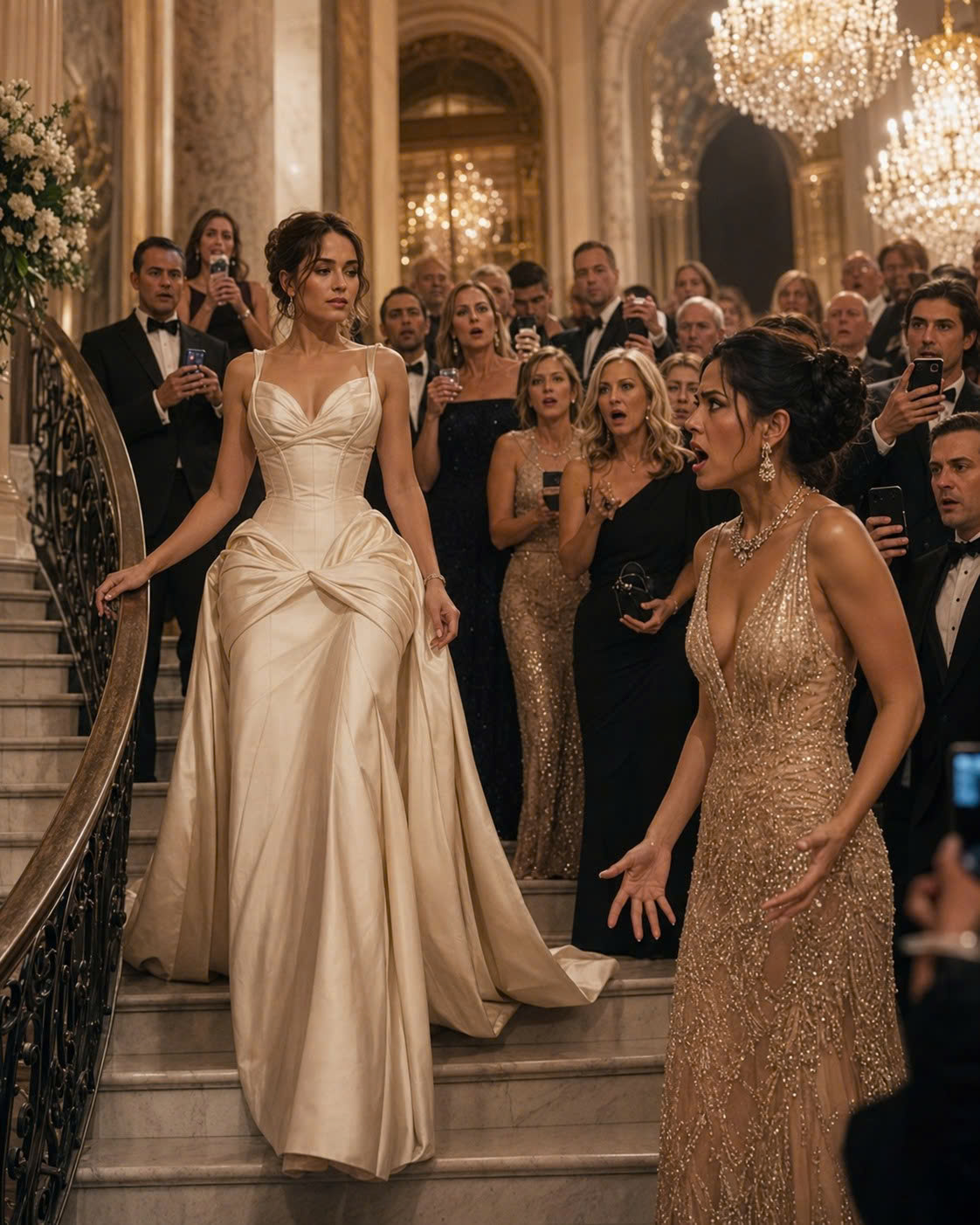
“Oh, and you won’t be sitting with us,” Priya added. “The agency table is near the service doors. But you’ll still get to see the room.”
Danny returned to the rug.
For the next twenty minutes, Priya and her friends discussed gowns, photographers, and which guests were important enough to acknowledge.
Danny finished cleaning, replaced the bottle of stain remover beneath the sink, and walked into the laundry room.
She closed the door.
Then she took out her phone and called a number she had not used in several weeks.
A woman answered after one ring.
“Darling?”
Danny stared at the gold invitation in her hand.
“Mom,” she said, keeping her voice low. “I need the ivory gown.”
There was a pause.
“The Milan piece?”
“Yes.”
Another pause, softer this time.
“What happened?”
Danny looked through the narrow gap in the door. Priya was laughing again, one hand resting on a stack of embossed invitations.
“Nothing I can’t handle.”
Her mother exhaled.
“I’ll send Lucien and the team.”
“No press.”
“Of course.”
“And Mom?”
“Yes?”
“Don’t tell anyone who I am.”
Adès O’Shea’s voice changed. The concern remained, but pride entered beneath it.
“You were never invisible, Danielle. You only chose to be quiet.”
One year earlier, Danny had walked away from a position waiting for her in the O’Shea fashion house.
Everyone assumed she would become creative director. Her last name could open ateliers, private clubs, banks, galleries, and boardrooms. People laughed too loudly at her jokes. They praised ideas she had not finished explaining. They remembered her birthday and forgot the names of the assistants standing beside her.
Danny wanted to know who she was without the machinery of inheritance surrounding her.
So she made an agreement with her mother.
For one year, she would live without family money, professional introductions, or public use of the O’Shea name. She moved into a one-bedroom apartment in Rogers Park, took buses, accepted temporary jobs, and learned what happened when people believed she had nothing to offer them.
Some people were generous.
Some were indifferent.
Priya Nolan had been instructive.
On the afternoon of the gala, three black garment cases arrived at Danny’s apartment.
Lucien Moreau, her mother’s longtime atelier director, stepped inside and looked around the small room. The folding table, secondhand sofa, and stack of library books seemed to strike him harder than he expected.
“You’ve really lived here for a year?”
“Almost.”
He shook his head. “Your mother would purchase this entire building just to improve the lighting.”
Danny smiled. “That’s why she wasn’t given the address.”
For five hours, the apartment became a private atelier.
A seamstress adjusted the gown’s waist by half an inch. A makeup artist softened the shadows beneath Danny’s eyes. Lucien pinned her hair into a clean, sculptural knot and fastened two pearl earrings that had belonged to her grandmother.
The final garment bag was opened last.
The ivory gown emerged slowly.
Danny had seen it during its construction in Milan, but she had never worn it. Her mother had designed it after Danny announced her year away.
The silver leaves had been embroidered along the fabric’s edge, never at the center.
“Why leaves?” Danny had asked back then.
“Because the world notices flowers,” Adès said. “But nothing blooms without what people step over.”
When Danny finally faced the mirror, she did not see an heiress.
She did not see a housekeeper.
She saw the same woman who had cleaned kitchens, missed buses in winter, eaten noodles at midnight, and learned which people said thank you when no one important was watching.
For the first time, none of those identities seemed to contradict one another.
Lucien placed a handwritten card in her hand.
Danielle,
Wear the dress.
Keep the woman you became without it.
—Mom
At 8:17 that evening, Danny entered the Meridian Grand Ballroom through the main doors.
The guests nearest the entrance stopped speaking first.
Then the silence spread.
Phones rose. Heads turned. A photographer lowered his camera, stared, then lifted it again.
Danny did not hurry.
She walked past the donor wall, beneath the chandeliers, and toward the staircase with the calm of someone who had nothing to prove.
That was when Priya saw her.
That was when the scream escaped.
Now, in front of hundreds of guests, Danny descended one step at a time.
Priya’s face had lost all color.
Jade leaned toward her. “You said she was your housekeeper.”
“She is.”
“No,” Skyler whispered. “Housekeepers don’t arrive in unreleased Adès.”
Danny reached the ballroom floor.
The crowd opened without being asked.
She stopped in front of Priya and offered a small, composed smile.
“Thank you for inviting me.”
Priya’s mouth moved, but no sound came out.
Danny glanced down at the gown.
“I took your advice.”
“My advice?”
“You told me to wear whatever I had.”
A few guests nearby lowered their glasses to hide their reactions.
Jade stepped closer, studying the embroidery.
“Where did you get this?”
Danny met her eyes. “From the designer.”
“You know Adès?”
Danny’s expression did not change.
“She’s my mother.”
The air seemed to leave the ballroom.
Even the quartet had stopped moving.
Jade blinked. Skyler’s lips parted. A fashion journalist near the stairs began typing so quickly that her hands shook.
Priya stared at Danny as though the woman in front of her had replaced someone else.
Danny continued.
“My full name is Danielle O’Shea.”
Recognition arrived slowly on Priya’s face.
First disbelief.
Then calculation.
Then memory.
Every coffee cup handed over without eye contact. Every dress dropped on the floor. Every cruel remark made in front of friends. Every time Priya had discussed powerful people while Danny stood three feet away.
Her shoulders drew inward.
Across the ballroom, several guests were already moving toward Danny. A museum trustee introduced herself. A magazine editor asked whether the gown signaled a new collection. Two foundation donors who had ignored Danny at the entrance now waited to speak with her.
Within minutes, Danny stood at the center of the room.
Priya remained outside the circle.
People who had spent years turning toward her began turning away.
For the first time in her adult life, Priya Nolan understood what it felt like to become invisible in a room she believed she owned.
Nate Nolan reached her ten minutes later.
He had been speaking with the foundation’s largest sponsor when the identity reveal spread through the ballroom.
“What did you do?” he asked.
Priya kept her eyes on Danny. “It was a joke.”
Nate’s jaw tightened. “You publicly humiliated the daughter of Adès O’Shea?”
“I didn’t know who she was.”
“That is not the defense you think it is.”
Priya turned toward him.
Nate lowered his voice. “The O’Shea family funds three of the organizations represented here tonight. Adès sits on the European arts council. Her brother manages one of our largest institutional accounts.”
“I said I didn’t know.”
“And now everyone knows exactly how you treat people when you believe they can’t affect you.”
Priya flinched.
Nate looked toward the guests surrounding Danny.
“You need to apologize. Not because of her name. Because of what you did before you knew it.”
“And if she refuses?”
“Then you live with it.”
Priya found Danny alone near a balcony several minutes later.
The city lights stretched beyond the glass, reflected in the ivory silk.
“Can we speak privately?” Priya asked.
Danny turned.
The old Priya would have filled the silence immediately. This one clasped her hands in front of her and waited.
“I invited you to embarrass you,” she said. “I wanted you to come in something ordinary so Jade and Skyler would laugh. I thought it would make the evening more entertaining.”
Danny said nothing.
Priya swallowed. “I’m sorry.”
“Why?”
“Because it was cruel.”
“No. Why did you choose me?”
Priya looked toward the ballroom.
Several guests were watching from a distance.
“I don’t know.”
“You do.”
Priya’s eyes returned to Danny.
The answer appeared in her face before she spoke.
“Because I thought you were safe.”
“Safe?”
“I thought you couldn’t do anything about it.”
Danny held her gaze.
There it was.
Not a misunderstanding. Not social pressure. Not a badly judged joke.
The truth.
Priya had been cruel because she expected no consequences.
“You didn’t dislike me because of something I did,” Danny said. “You disliked what you believed my position allowed you to do.”
Priya lowered her eyes.
Danny’s voice remained quiet.
“Tonight changed because you discovered my mother’s name. But I was the same person yesterday. I was the same person when I cleaned your floors. I was the same person when you handed me an invitation like it was a leash.”
Priya’s eyes shone, but Danny did not soften the words.
“Anyone can be polite to someone useful. Character is revealed by how you treat the person you believe can never repay you, expose you, or refuse you.”
“I understand.”
“No,” Danny said. “You’re beginning to.”
Priya stood motionless.
The laughter from the ballroom sounded distant now.
“I am sorry,” she said again.
“I forgive you.”
Priya looked up, surprised.
Danny continued. “But forgiveness does not erase information. You know something about yourself now. What you do with it is your responsibility.”
Two days later, Priya arrived at Danny’s apartment without a driver, diamonds, or tailored jacket.
She wore jeans, a gray sweater, and the uneasy expression of someone entering a room without a rehearsed role.
Danny was packing books into cardboard boxes.
“You’re leaving?” Priya asked.

“My year is over.”
Priya looked around the apartment. The old sofa. The clean kitchen. The windows facing the train tracks.
“You really lived here?”
“Yes.”
“Why?”
Danny folded the top of a box.
“I needed to know what remained when the invitations stopped arriving.”
Priya waited.
Danny sat on the arm of the sofa.
“People born into privilege often confuse access with identity. Doors open, and we assume they opened because of who we are. People listen, and we assume our words earned the silence.”
“And what did you learn?”
“That I am still myself when no one knows my last name.”
Priya looked down.
“I’ve started noticing things,” she said. “How I speak to servers. Whether I learn people’s names. How quickly I become impatient with someone who can’t help me.”
“That must be uncomfortable.”
“It is.”
“Good.”
Priya almost smiled.
Danny taped the box closed.
“Discomfort is not punishment. Sometimes it is the first proof that the part of you that needs to change has finally been found.”
They did not become friends that afternoon.
Some stories do not need instant closeness to prove that something meaningful happened.
Priya left with no promise of absolution.
Danny left with no need to defeat her twice.
Eight months later, the O’Shea fashion house unveiled its new collection in Paris.
It was called The Invisible Line.
The show took place inside a restored railway terminal beneath a ceiling of steel and glass. Editors, celebrities, buyers, and ambassadors filled the room.
But the front row did not belong to them.
The best seats were given to housekeepers, nannies, hospital orderlies, cleaners, assistants, delivery workers, and caregivers.
Several had helped create the collection.
A hotel housekeeper from Lyon designed a hidden interior pocket because uniforms had never given her a safe place to keep photographs of her children. A home health aide from Manchester helped develop closures that could be fastened with one hand. A nanny from Chicago contributed fabric patterns based on drawings made by the children she had raised for nineteen years.
Backstage, Danny watched a woman named Elena touch the silver stitching on a coat inspired by her thirty-two years of night shifts.
Elena began to cry.
Not because the coat was beautiful.
Because someone had remembered her name.
Adès stood in the doorway behind Danny.
“You found what you were looking for?” she asked.
Danny looked toward the front row.
“I found what I was not looking at.”
After the show, Danny moved through the crowd, speaking with each contributor. She asked about families, working hours, injuries, ambitions, and the small sacrifices no biography ever recorded.
Near the final display, she saw Priya.
Priya stood alone in front of a black-and-white portrait of an older woman holding a ring of keys.
“That’s Mrs. Alvarez,” Danny said. “She cleaned the same office building for forty-one years.”
Priya studied the photograph.
“I used to think the world was made up of important people and everyone around them.”
“And now?”
“Now I think I was living in a very small world.”
She told Danny that she had begun volunteering at a workforce training center on the South Side. Not as a donor. Not as a board member.
She helped people prepare résumés, arrange childcare, and practice for interviews.
“I’m bad at it,” Priya admitted.
“You’ll improve.”
“Most days, I leave feeling embarrassed by how much I don’t know.”
Danny picked up two glasses of champagne from a passing tray and handed one to her.
“That feeling again.”
“Discomfort?”
“Growth.”
They touched glasses.
Not as employer and employee.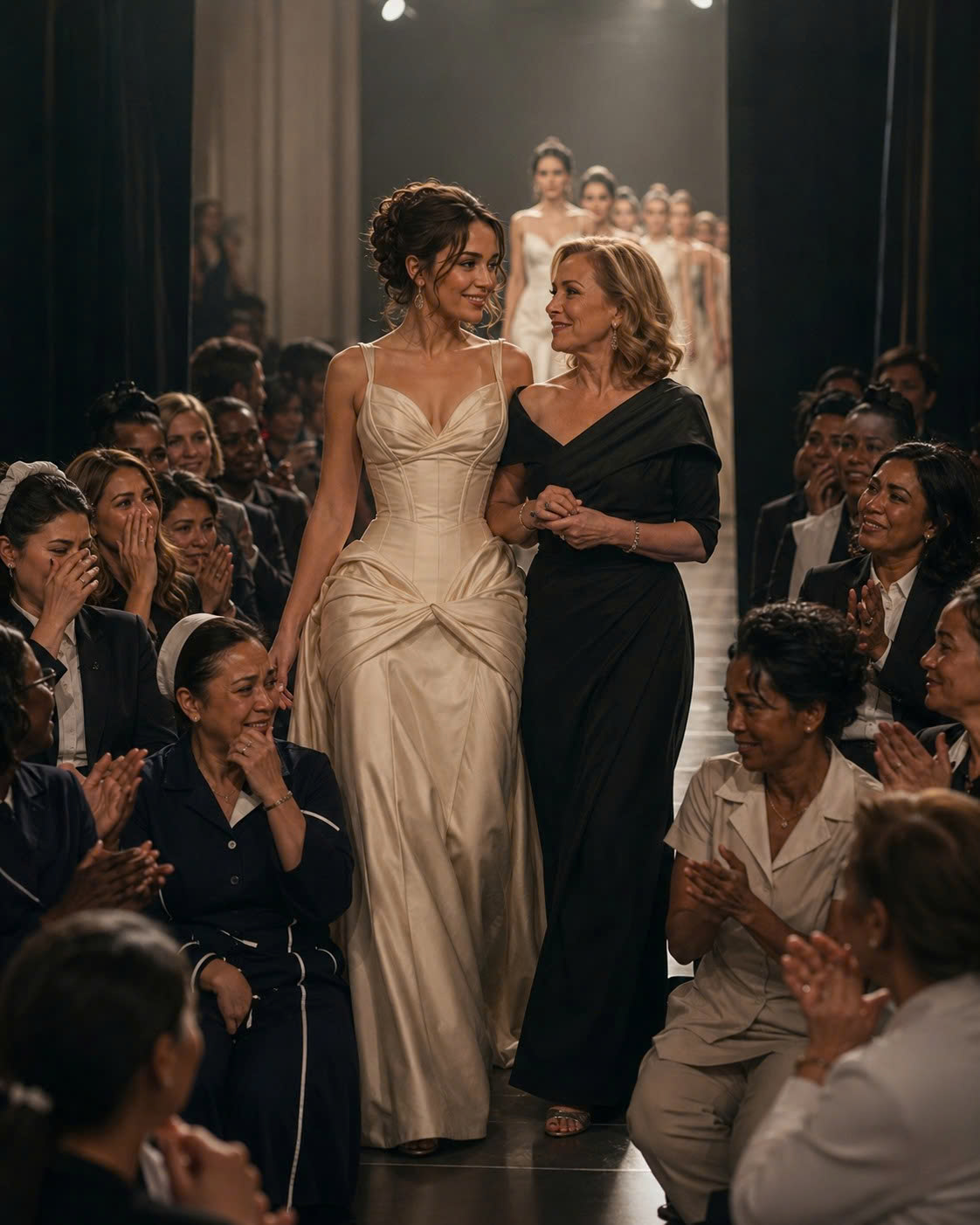
Not as victor and defeated opponent.
Just as two women standing before the image of someone whose life had mattered long before anyone placed her photograph on a gallery wall.
Around them, guests studied the collection.
But Danny watched the front row.
She watched Elena laughing beneath the lights. She watched assistants being interviewed instead of sent for coffee. She watched people who had spent decades entering through service doors being welcomed through the main entrance.
There would always be more names to learn.
More stories to recover.
More people the world had trained itself not to see.
Because a title may change how quickly a room turns toward you, but it can never determine whether you deserve to be seen.
A person does not become somebody when the world discovers their status.
They were somebody all along—and the truest measure of us is how we treat them before we know their name.