The set of the beloved 1978 sitcom “Taxi” was far more chaotic than any scripted episode, with behind-the-scenes clashes, bizarre demands, and a secret war that ultimately led to a live television explosion in 1982. Newly surfaced accounts from cast and crew reveal a production rife with tension, unconventional negotiations, and a legendary character who may not have existed at all.
The most infamous figure in this turmoil was comedian Andy Kaufman, whose portrayal of mechanic Latka Gravas became iconic. However, Kaufman’s method acting extended far beyond the screen. According to production insiders, he insisted that his alter ego, the boorish lounge singer Tony Clifton, be treated as a separate person.
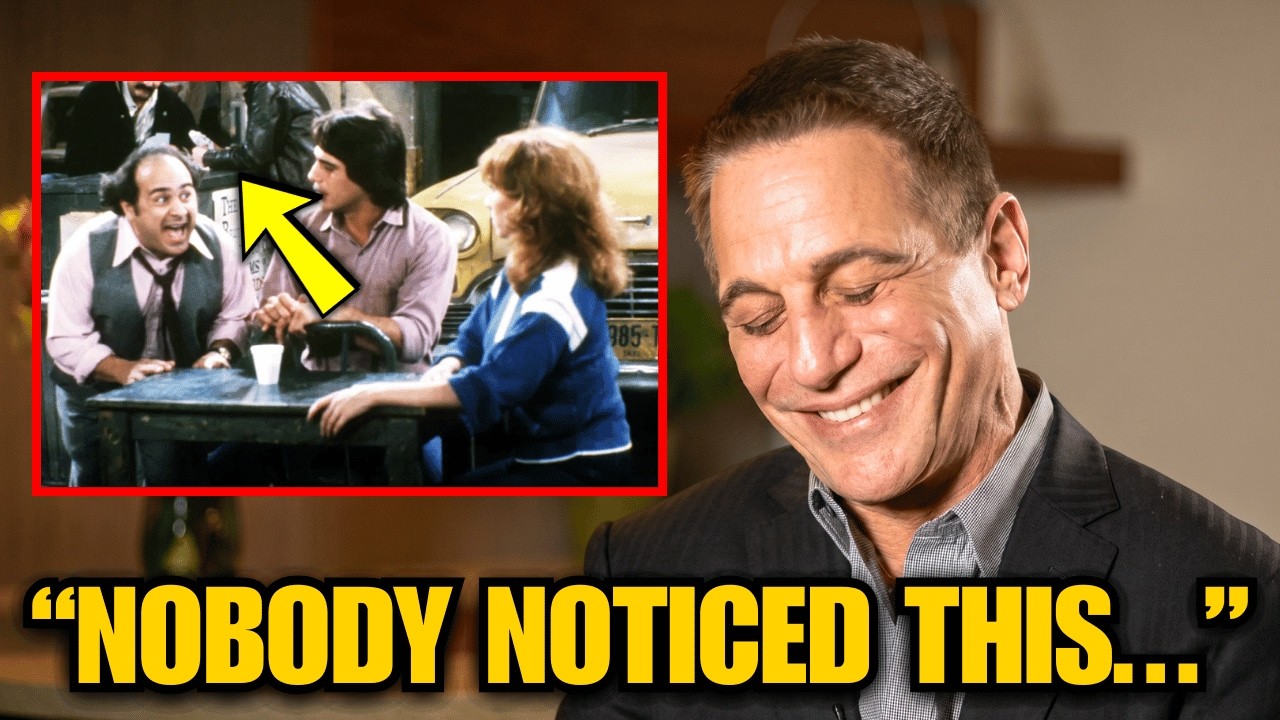 This led to the creation of a reserved parking spot on the studio lot for a man who technically did not exist. Studio employees were reportedly directed to set aside a parking space for Clifton, a bizarre demand that left many bewildered.
Kaufman’s nonconformity extended to his work schedule. While the rest of the cast labored through full weeks of rehearsals and table reads, Kaufman negotiated a two-day work week. He would only appear for key production days, forcing writers and producers to constantly rewrite episodes around his limited availability.
This arrangement created significant resentment among other cast members, who felt that different rules applied to the unpredictable star.
One of the show’s most extraordinary moments came in 1982, when Danny DeVito, who played the irascible dispatcher Louie De Palma, hosted “Saturday Night Live.” During a sketch, DeVito appeared holding a detonator and pressed a button, triggering a massive explosion that appeared to destroy the headquarters of ABC, the network that had canceled “Taxi.” The stunt was seen as a playful but pointed jab at a network that many felt had prematurely ended a critically acclaimed series.
The cancellation of “Taxi” itself was a dramatic episode. After four seasons on ABC, the network pulled the plug due to low ratings. Almost immediately, NBC stepped in to rescue the show.
 However, the revival was short-lived. A year later, NBC likewise canceled the series, leaving “Taxi” with the unusual distinction of being canceled twice. Yet, the show’s legacy only grew as it found a new life in syndication.
Behind the scenes, the casting process was equally fraught with unexpected twists. Tony Danza, a former boxer with no formal acting training, was cast as Tony Banta. The producers changed the character’s name from Phil to Tony because they feared Danza might not respond in time during takes if called by a different name.
It was a practical safety measure that became a defining career detail.
Judd Hirsch, who played the steady Alex Rieger, famously tried not to get the job. A serious stage actor, he gave his agent a set of outlandish demands–higher salary, tough conditions–thinking the network would reject them. To his shock, the producers agreed, and the role he tried to avoid became the centerpiece of his career.
 The show’s iconic opening sequence, showing a yellow cab crossing the Queensboro Bridge, was created with a simple editing trick. Instead of a long shoot, the crew used a short 15-second loop of the cab crossing the bridge, played repeatedly under the theme music. Long before digital editing, this hand-crafted solution created a cinematic feel on a budget.
Christopher Lloyd’s Reverend Jim Ignatowski initially seemed like a lovable oddball, but the writers slowly revealed he was a Harvard graduate from a wealthy family. His entire trajectory changed after an unknowingly laced brownie, turning a promising young man into a spaced-out cab driver. The character’s traits were originally intended for Tony Banta, but after Danza’s casting, they were reassigned to Lloyd.
The role of Bobby Wheeler was originally written for a black actor. Cleavon Little was seriously considered. Jeff Conaway, however, fought for the part, eventually winning the role after a powerful audition with Judd Hirsch.
Perhaps the most enduring mystery surrounding “Taxi” involves Kaufman’s death. He passed away from lung cancer in 1984 at age 35. Because of his lifelong habit of blurring reality and performance, many fans refused to believe it.
 Rumors of a staged death persist to this day, fueled by his history of elaborate pranks and the existence of Tony Clifton.
The show’s theme song, “Angela” by Bob James, was originally background music for a silent scene in an episode titled “Blind Date.” It was never intended to be the show’s main theme. Only during editing did producers realize the soft, emotional track perfectly matched the show’s tone, leading to a last-minute switch that defined the series’ musical identity.
The set was also the site of a bizarre linguistic challenge. Kaufman created a fake language for Latka that he insisted had real rules. Writers found themselves in absurd discussions about the grammar of a nonexistent language, yet Kaufman’s commitment made the nonsense sound believable.
The show survived one cancellation only to be canceled again, but its cast members went on to become superstars. Danny DeVito, Christopher Lloyd, and others launched careers that defined decades of film and television.
For fans, the ultimate prank may be that Andy Kaufman never left. The line between performance and reality remains as blurred as the yellow cab crossing the bridge, leaving a legacy that defies easy explanation.


