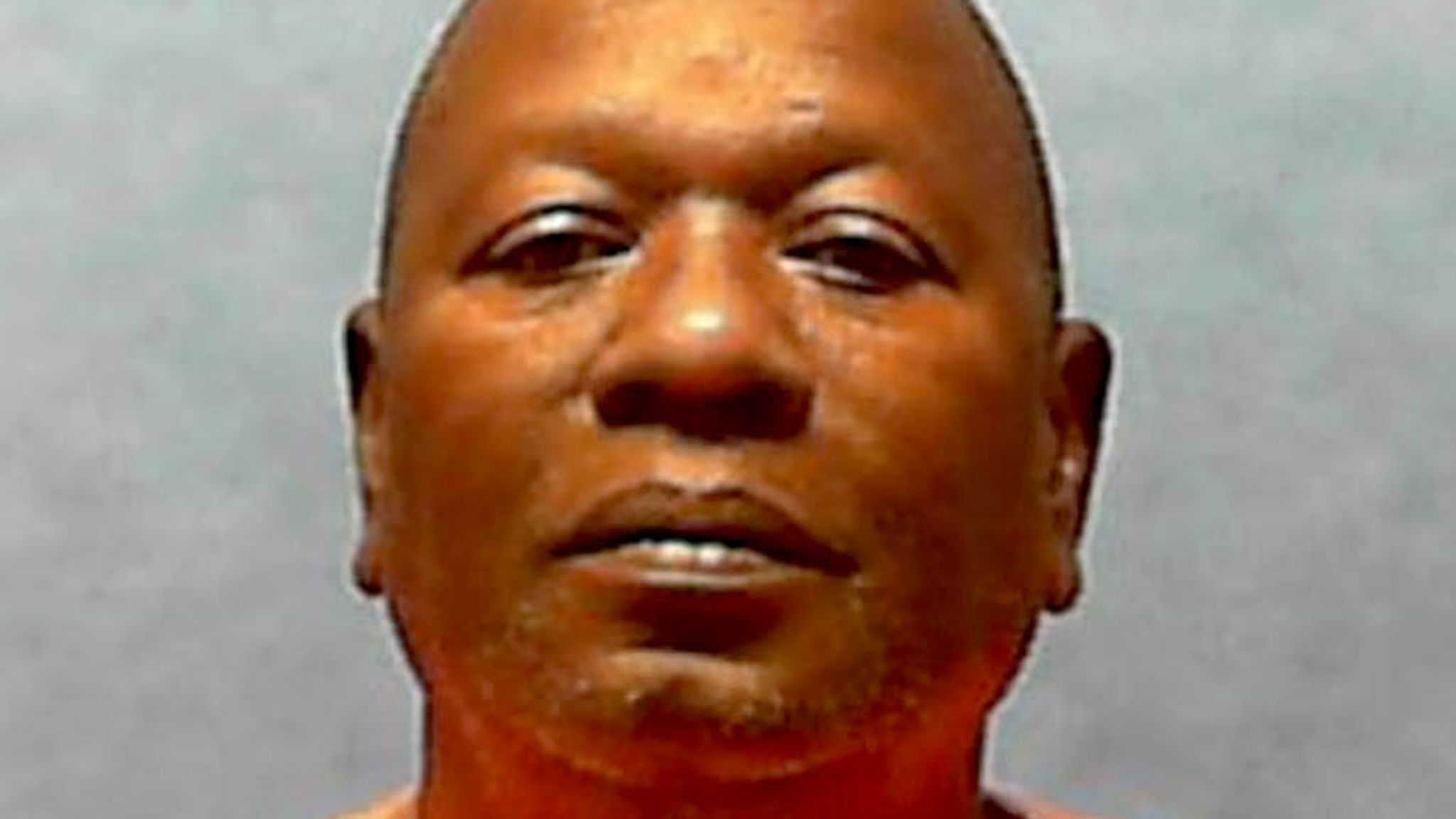
The name on the grave was Wolfgang Gerhard.

But on June 6, 1985, when investigators opened the coffin in a small cemetery outside São Paulo, nobody had come to see Wolfgang Gerhard.
They had come to find Josef Mengele.
Cameras crowded around the grave at the cemetery in Embu, Brazil. Police officers, forensic specialists, reporters and photographers watched as the remains were brought into the light.
Inside was no recognizable face.
There was a skeleton, a damaged coffin and a skull whose empty eye sockets seemed to offer one final challenge:
Prove who I was.
For almost four decades, Mengele had escaped courts, investigators and survivors who wanted him to answer for what he had done at Auschwitz. Now the most hunted Nazi doctor in the world might have been lying beneath a false name, beyond arrest and beyond punishment.
But death had taken away his disguises.
And his bones were about to testify.
This was not an autopsy in the ordinary sense. Six years had passed since the man in the coffin had died. Soft tissue had largely disappeared, leaving investigators with a forensic puzzle assembled from bone, teeth, photographs, medical information and testimony.
The question was simple.
The answer was not.
If the skeleton belonged to Mengele, the worldwide hunt was over—and the world would have to accept that one of the Holocaust’s most notorious perpetrators had died without ever facing a judge.
If it did not belong to him, then Mengele might still be alive.
Watching.
Waiting.
Preparing to disappear again.
Josef Mengele had arrived at Auschwitz-Birkenau in May 1943 as an SS physician. He was not the camp’s only doctor, but his name became inseparable from its machinery of selection, experimentation and death.
When deportation trains arrived, physicians stood on the platform deciding who would be sent to forced labor and who would be sent toward the gas chambers. Mengele participated in those selections and searched the crowds for people useful to his racial and hereditary research.
Twins.
Children.
People with dwarfism.
Prisoners with physical differences.
People whose eyes were different colors.
To Nazi ideology, they were not patients. They were material.
Children selected for his experiments were measured, photographed, injected and subjected to repeated examinations. Blood was drawn again and again. Substances were placed into their eyes, causing swelling, severe pain, blindness and, in some cases, death.
Mengele sent blood, organs, body parts, skeletons and other human specimens from Auschwitz to researchers in Germany. Prisoners could be murdered because a scientist wanted to study their eyes or compare their anatomy.
He wore a medical uniform.
He carried medical credentials.
But medicine requires consent, care and a duty to protect life.
Mengele used its language to conceal cruelty.
Then the Nazi state began collapsing.
In January 1945, as the Soviet Red Army approached Auschwitz, Mengele fled. He moved through the final chaos of the war, exchanged his SS appearance for that of an ordinary German military officer and was eventually held by American forces.
The Americans released him.
They did not realize that the quiet prisoner in their custody was already wanted for war crimes.
That mistake gave Mengele the one thing thousands of his victims had never received:
Another chance at life.
He hid as a farm worker in Bavaria before escaping Europe in 1949 with financial assistance from his family. He reached Argentina under a false identity and gradually became comfortable enough to use his real surname again.
For years, he lived not as a man trapped in an underground bunker, but as someone rebuilding a private life.
He conducted business.
He maintained family connections.
He moved among communities where former Nazis and their supporters could provide introductions, money, documents and silence.
By the time West German prosecutors intensified their efforts to arrest him, he had already learned how to survive through a combination of aliases, loyal contacts and delayed government action.
In 1959, he moved to Paraguay. After Israeli agents captured Adolf Eichmann in Argentina the following year, Mengele understood that South America was no longer automatically safe.
He fled again, this time into Brazil.
The world hunted a monster.
The people around him saw an aging German man.
That was one of the reasons he survived.
Mengele did not spend every day running through airports with agents behind him. He lived on farms and in rented homes. He depended on people willing to protect him, conceal his identity or accept carefully edited explanations about his past.
Over time, his world became smaller.
His health deteriorated. He suffered from high blood pressure and had experienced a stroke. He became dependent on the same network that had once allowed him to move across borders.
The man who had exercised absolute power over terrified prisoners now lived with the fear that a letter, a visitor or an old acquaintance could expose him.
But fear was not justice.
He remained free.
In 1977, his son Rolf visited him in Brazil. Decades had passed since Auschwitz, yet Mengele reportedly remained unrepentant, presenting himself as a soldier who had merely followed orders and denying personal responsibility for harming anyone.
There was no confession.
No surrender.
No attempt to face survivors.
Then, on February 7, 1979, while visiting friends near the Brazilian coastal town of Bertioga, Mengele entered the water.
He suffered another stroke while swimming.
The man who had survived the collapse of Nazi Germany, international arrest warrants and years of pursuit drowned close to shore.
He was 67 years old.
There was no courtroom.
No witness stand.
No survivor seated across from him.
His body was taken away and buried under the name Wolfgang Gerhard, an identity document he had been using during his years in Brazil.
The people who knew the truth kept it quiet.
For six more years, governments continued searching for a man already beneath the ground.
Reports placed him in different countries. Investigators followed rumors. Nazi hunters offered rewards. Survivors were asked to wait once more while agencies tried to determine whether the doctor from Auschwitz was alive.
Then, in 1985, the secret began to break.
The governments of West Germany, Israel and the United States agreed to cooperate in the effort to locate Mengele. German police raided the home of Hans Sedlmeier, a longtime Mengele family contact in Günzburg.
Inside, investigators discovered correspondence and an address book.
Among the material was evidence indicating that Mengele had died in Brazil.
The paper trail led German authorities to Brazilian police. The people who had helped shelter him were questioned, and investigators were eventually directed to the grave in Embu.
That was how the world arrived at a coffin marked with someone else’s name.
Opening it was the easy part.
Identifying the bones would be harder.
Brazilian specialists began processing the remains at São Paulo’s medicolegal institute. Experts in forensic pathology, anthropology and dentistry joined the investigation. Authorized specialists representing West Germany and the United States worked alongside the Brazilian team, with international attention fixed on every conclusion.
The skeleton could provide sex, approximate age and stature.
The teeth could be compared with known dental information.
The skull could be examined against photographs.
Every finding had to point in the same direction. A single dramatic resemblance would not be enough. This identification had to survive scientific scrutiny and the suspicions of people who believed Mengele might have staged one final escape.
The bones were arranged and studied.
Measurements were taken.
The skull became the center of the investigation.
For years, Mengele had survived by changing names.
But aliases do not reshape the architecture of a skull.
Investigators used a technique involving the electronic visual superimposition of authentic photographs over images of the recovered skull. The purpose was not to create a dramatic reconstruction. It was to compare anatomical landmarks—the proportions and relationships that remain beneath a person’s face.
The jaw.
The eye sockets.
The cheekbones.
The nasal structure.
The shape of the cranium.
This was the moment of recognition.
Not a confession spoken by a living defendant.
Not the collapse of an arrogant man under questioning.
The face from the old photographs was placed over the skull from the Brazilian grave—and the anatomical features aligned.
The forensic publication that followed reported that the available authentic photographs corresponded consistently with the exhumed skull. The osteological and osteometric findings also matched the known personal information about Josef Mengele without contradiction.
Mengele’s own face had betrayed him.
Even after the face itself was gone.
The multinational forensic team concluded within reasonable scientific certainty that the remains belonged to Josef Mengele. Dental evidence and the detailed comparison of the skeleton with his known physical characteristics reinforced the conclusion.
On June 10, 1985, only days after the exhumation, Rolf Mengele acknowledged that the body was his father’s. The family had concealed the death, in part to protect those who had sheltered him.
For the first time, the secret that had sustained the fugitive’s final years was publicly collapsing.
But doubt remained.
Some people suspected a substitution. Others questioned whether testimony from relatives and protectors could be trusted. Mengele had lived through forged papers and false identities for too long. A strong forensic conclusion was not enough for everyone.
Then science advanced.
In 1992, researchers returned to the remains for DNA analysis. They extracted trace amounts of highly degraded DNA from the shaft of a femur and compared the genetic profile with samples from Mengele’s son and wife.
The work was technically difficult. The DNA was old, damaged and affected by substances that interfered with amplification.
But the researchers reproduced genetic results across ten different locations in the genome. The bone profile was fully compatible with Mengele being the father of his son. The study calculated that fewer than one in 1,800 unrelated Caucasian men would coincidentally show the same full paternal inclusion.
The man beneath the false name was Josef Mengele.
The coffin had not ended the mystery.
The femur had.
The confirmation brought truth, but not the justice survivors had waited for.
Mengele had escaped arrest for 34 years. He had never been forced to hear formal charges in a courtroom. He had never been cross-examined about the children, twins and other prisoners used in his experiments.
He never had to look into the faces of the people who had survived him.
He died while still protected by a false identity.
That fact cannot be transformed into a satisfying victory.
Yet his escape was not complete.
He had tried to leave behind Wolfgang Gerhard, an ordinary man in an ordinary grave. For six years, that name stood between him and history.
The forensic investigation removed it.
The skull restored the face.
The bones restored the identity.
The DNA closed the final door.
His family did not reclaim and repatriate the skeleton. The remains stayed in São Paulo, individually stored and identified at the Legal Medical Institute. Decades later, they were made available for forensic medical education connected with the University of São Paulo.
Students could examine the bones and learn how investigators reconstruct a person’s identity from the evidence death leaves behind. Reports in 2025 said the remains were still kept on a reserved shelf, each piece separately packaged and numbered.
The irony is almost impossible to miss.
At Auschwitz, Mengele abused science to strip human beings of dignity, names and control over their own bodies.
After his death, legitimate forensic science stripped away his false name.
He had treated people as specimens.
His own skeleton became evidence.
He had used medical authority to hide crimes.
Medical investigators used their expertise to expose his final lie.
And the coffin carrying the name Wolfgang Gerhard ultimately preserved something Josef Mengele had spent decades trying to escape:
The truth.
Justice did not arrive in the form survivors deserved. It arrived late, incomplete and unable to punish the man responsible.
But it arrived carrying rulers, dental charts, photographs and fragments of DNA.