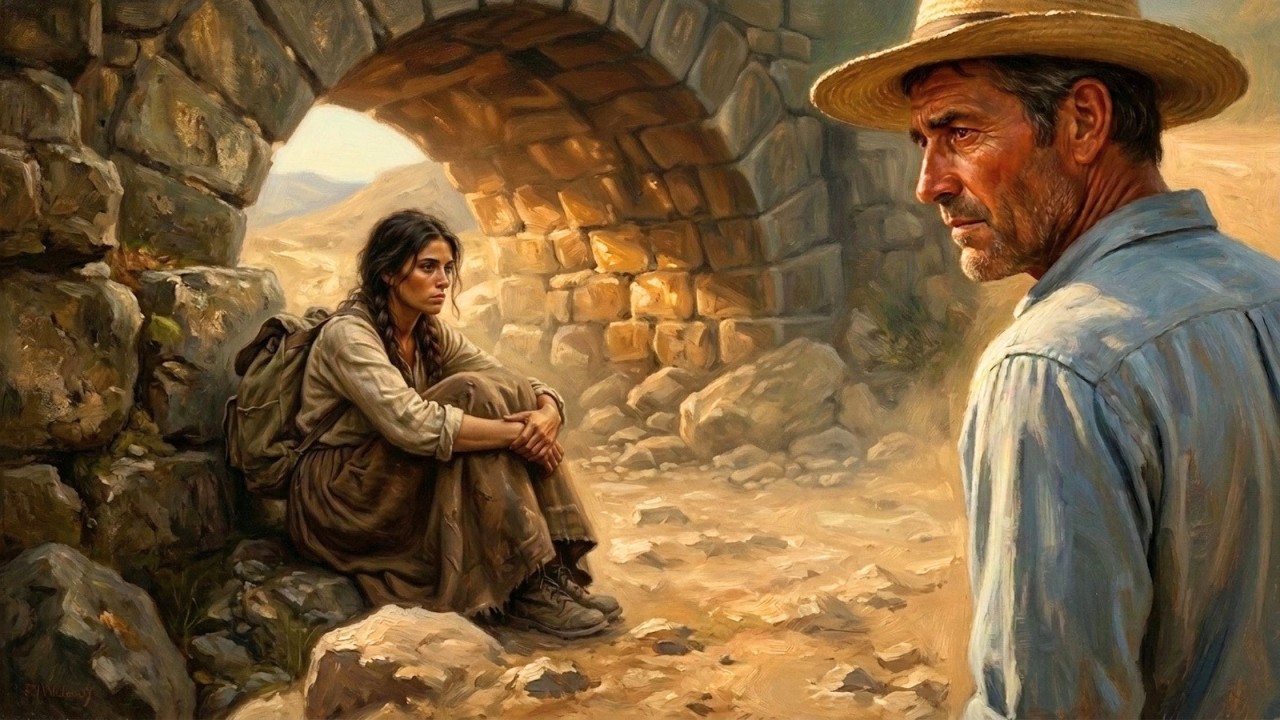
Three hundred people filled the most expensive ballroom in Chicago that night.
A twelve-piece orchestra played beneath crystal chandeliers. Champagne glasses caught the light. Donors, executives, professors, and the children of powerful families moved across the marble floor as though the room had been built specifically for them.
At the edge of the dance floor, Soledad Diane Mercer sat alone in her wheelchair.
She had been sitting there for forty-seven minutes.
Several former classmates had walked past her. One had borrowed her architecture notes for an entire semester. Another had once called her “one of my closest friends” in an Instagram caption.
Each smiled from a safe distance.
None stopped.
Then Trey arrived.
For a moment, Soledad thought he might come over.
He had once sat beside her hospital bed until three in the morning, holding her hand while doctors ran tests neither of them understood. He had promised that nothing would change between them.
But a year later, when staying became more difficult than promising, he disappeared without saying goodbye.
Now he stood twenty feet away in a tailored tuxedo, laughing with a woman in a silver dress.
His eyes moved across the room and landed briefly on Soledad.
Recognition flickered across his face.
Then he turned his back.
Soledad lowered her gaze to the small leather purse resting on her lap.
Inside it, protected between two pieces of folded paper, was a dried yellow flower she had kept for four years.
No one in the ballroom knew why.
The orchestra began a slow song.
Couples walked onto the floor. Chairs scraped back. People extended hands toward one another.
No one extended a hand toward Soledad.
Across the ballroom, her father, Warren Mercer, sat with the university president and several major donors.
Warren had funded part of the building they were standing in. He had paid for the new engineering wing. He had donated millions to medical research after Soledad became paralyzed.
He could make hospital administrators return his calls within minutes.
He could arrange private aircraft, specialist appointments, and building permits.
But even Warren Mercer could not make someone choose his daughter.
Soledad adjusted the fabric of her dress over her knees and prepared to leave early.
Then the ballroom doors opened.
A young man stepped inside wearing an inexpensive black suit that had been carefully pressed but did not fit perfectly around the shoulders.
His name was Kendrick Jerome Wallace.
He was late because he had taken two buses from Englewood.
And unlike nearly everyone else in the room, he had not grown up believing places like Harwick University belonged to him.
Four years earlier, Kendrick had arrived on campus carrying a duffel bag, a backpack, and a manila envelope containing every important document his mother had insisted he keep close.
His financial aid letter.
His housing assignment.
His scholarship agreement.
His father’s old photograph.
He had stepped off the bus and stared at buildings older than his neighborhood’s public schools, surrounded by students whose luggage cost more than his mother earned in a month.
At registration, he noticed a girl sitting behind the table beside his.
Students spoke to her politely, but their bodies told a different story.
They avoided standing too close.
They addressed the volunteer beside her even when she was the one holding the forms.
They smiled with the exaggerated softness people sometimes used when they wanted to appear kind.
A small yellow flower slipped from the registration display and landed beside her wheelchair.
Kendrick picked it up.
“You dropped this,” he said.
She looked at him.
“I don’t think it was mine.”
“It is now.”
He placed it gently on the table and continued filling out his paperwork.
No speech.
No pity.
No attempt to make himself look generous.
Just thirty seconds of ordinary kindness.
The girl’s name was Soledad Mercer.
That evening, she pressed the flower between the pages of an architecture textbook.
She kept it because Kendrick had helped her without first turning her into a lesson about himself.
At the time, Soledad could still walk.
By the end of her first year, that changed.
It began one morning when her left leg felt strangely heavy. She blamed exhaustion.
Two days later, she stumbled in the bathroom.
By the end of the week, she could no longer move either leg.
Doctors diagnosed her with transverse myelitis, an inflammation of the spinal cord that can appear suddenly and alter a life before anyone has time to understand what is happening.
Soledad spent weeks staring at hospital ceilings while specialists discussed nerves, lesions, mobility, and probabilities.
Her father arrived hours after the first emergency call.
He took her hand and said, “We’re going to fix this.”
Warren meant it.
He hired the best doctors. He found the most advanced rehabilitation center. He had ramps installed, doorways widened, and elevators modified.
Whenever he encountered a problem, he attacked it with money, influence, or both.
But he never asked the question Soledad needed most.
“What do you need from me?”
Trey did better at first.
He brought coffee to the hospital even when she could barely drink it. He talked about professors, movies, and campus gossip instead of making every conversation about her diagnosis.
For several months, he made her feel as though she was still herself.
Then his visits became shorter.
His messages took longer.
One Friday, he canceled dinner.
The next week, he canceled again.
Eventually, he stopped calling altogether.
There was no breakup conversation. No apology. No explanation.
He simply chose a version of his life that was easier without her in it.
Soledad took a year away from Harwick.
She learned how to transfer from a bed to a chair. She learned which restaurants claimed to be accessible but kept their ramps locked behind storage bins.
She learned that some people spoke loudly to wheelchair users, as though paralysis affected hearing.
She learned to recognize performative kindness—the kind offered only when someone else was watching.
Most importantly, she learned that the people who promised to stay were not always the people who stayed.
When she returned to Harwick, she changed her academic focus.
She no longer wanted to design beautiful buildings for magazine covers.
She wanted to design buildings that did not treat access as an afterthought.
She began her thesis with a simple question:
What would a community center look like if it were designed from the wheelchair upward instead of the staircase downward?
Meanwhile, Kendrick was surviving Harwick in a different kind of isolation.
He had earned a full scholarship through grades, discipline, and a refusal to quit.
But being admitted was not the same as belonging.
His classmates invited one another to ski weekends, lake houses, and networking dinners. Kendrick usually learned about the events from photos afterward.
He ate alone more often than he admitted.
Some students assumed he was part of the maintenance staff when they saw him carrying tools for an engineering project.
Others praised him for being “so articulate.”
Kendrick learned to listen more than he spoke.
He watched who was welcomed and who was merely tolerated.
He noticed how institutions displayed poor students in brochures while keeping them outside the rooms where real opportunities were exchanged.
But he had not come to Harwick for acceptance.
He had come for knowledge.
His father, Thomas Wallace, had been a carpenter.
Thomas could walk into an empty room, study the walls, and understand what it could become.
He worked six days a week, often taking extra jobs at night. When Kendrick was twelve, Thomas began bringing him along.
“Measure twice,” he would say. “Because people have to live inside what you build.”
Thomas died of a heart attack at forty-one.
By then, years of physical labor had worn his body down.
Kendrick’s mother, Darlene, worked cafeteria shifts and cleaned offices after dark to keep them afloat.
She never gave her son long speeches about resilience.
She simply woke up every morning and went to work.
When Kendrick left for Harwick, she hugged him beside the bus and said, “You don’t have to prove you deserve to be there. But you do have to remember why you went.”
He remembered.
During his final two years, Kendrick studied Chicago’s infrastructure budgets.
He compared road repairs, public facilities, transit access, and park funding across neighborhoods.
The pattern was impossible to ignore.
Communities on the South and West Sides repeatedly received delayed projects, temporary fixes, and cheaper materials.
Englewood did not lack hardworking people.
It lacked decision-makers who treated those people as though their daily lives mattered.
For his final project, Kendrick developed a proposal for a community complex in Englewood combining job training, childcare, public meeting rooms, and technical education.
His father had built with his hands.
Kendrick intended to build with policy, engineering, and stubborn patience.
The graduation gala was supposed to mark the end of his time at Harwick.
He almost skipped it.
The suit had cost more than he could afford. He knew few people would notice whether he attended.
But Darlene had stood in their apartment that afternoon, adjusted his tie, and said, “The last day is the one people remember. Show up.”
So he did.
When Kendrick entered the ballroom, he recognized the room immediately for what it was.
Not by its decorations.
By its invisible boundaries.
He saw donors near the stage, professors around the center tables, wealthy families occupying the best seats, and scholarship students gathered near the walls.
Then he saw Soledad.
She was dressed in deep blue, sitting alone as couples moved past her toward the dance floor.
He recognized her from registration.
He did not know she had kept the flower.
He did not know what had happened to her after that first year.
He only knew the expression on her face.
It was the expression of someone pretending not to notice that everyone else had noticed her—and chosen to do nothing.
Kendrick stood near the entrance, arguing silently with himself.
If he crossed the floor, people would stare.
They might assume he was trying to impress Warren Mercer.
They might call it a publicity stunt.
They might laugh if he did not know how to dance with someone using a wheelchair.
For several seconds, staying where he was seemed easier.
Then he thought of his father.
People have to live inside what you build.
He thought of his mother.
Show up.
Kendrick walked across the ballroom.
Conversations weakened as people noticed where he was going.
Soledad saw him approaching but did not recognize him immediately.
He stopped in front of her.
“Hi,” he said. “I’m Kendrick.”
She looked at his outstretched hand.
“I remember.”
He blinked.
“You do?”
“The registration table. Freshman year.”
Then she opened her purse and carefully removed the dried yellow flower.
For the first time that evening, Kendrick looked genuinely stunned.
“You kept that?”
“For four years.”
The orchestra continued playing, but the space around them felt quiet.
Kendrick glanced toward the dance floor, then back at her.
“I was going to ask you something,” he said. “But I should warn you that I have no idea how to do it correctly.”
A small smile appeared on Soledad’s face.
“That already puts you ahead of most people.”
He took a breath.
“Would you like to dance with me?”
Several people nearby stopped pretending not to listen.
Soledad’s fingers tightened around the flower.
“You don’t have to do this.”
“I know.”
“People are watching.”
“I know that too.”
“And you really don’t know how?”
“Not even a little.”
Her smile widened.
“Then ask me what I need.”
Kendrick nodded.
“What do you need?”
The question hit her harder than the invitation.
Not “What can I do for you?”
Not “Will this work?”
Not “Are you sure?”
What do you need?
Soledad moved closer to the floor.
“Stand on my right. Put one hand here, lightly, on the side of the chair. Don’t push unless I tell you. Follow my shoulders, not the wheels.”
Kendrick listened.
His first step was awkward.
Soledad turned too quickly, and he nearly lost his balance.
She laughed.
Not the polite laugh she used at donor dinners.
A real laugh.
The orchestra conductor noticed them and subtly slowed the tempo.
Kendrick adjusted his hand.
Soledad showed him how to move with the chair rather than controlling it.
Within moments, they found a rhythm.
She rolled forward as he stepped back. He turned as she pivoted. The blue fabric of her dress moved around the wheels like water.
One by one, conversations across the ballroom stopped.
Warren looked up from the donor table.
He saw his daughter in the center of the floor.
Then he saw her laughing.
His expression changed.
For years, Warren had made sure every doorway was wide enough for her wheelchair. He had installed elevators, hired drivers, and rearranged entire buildings.
But watching Kendrick move beside her, Warren finally understood what none of his money had solved.
Soledad had not wanted every obstacle removed before she reached it.
She had wanted someone to reach for her.
Across the room, Trey stood frozen beside the woman in silver.
His face drained of color.
He watched Soledad guide Kendrick through the dance with patience and confidence. He saw the way she looked at a man who had approached without embarrassment.
For the first time, Trey’s guilt was not about leaving a sick woman.
It was about abandoning the same person she had always been because staying would have required courage.
Soledad turned and saw him.
Their eyes met.
Trey’s mouth opened slightly, but no words came.
His shoulders lowered.
The woman beside him followed his gaze and understood enough to step away.
Then one of Soledad’s former roommates began to clap.
A professor joined her.
Within seconds, the entire ballroom was on its feet.
The applause grew until it filled the room.
Kendrick looked uncomfortable.
“This feels like a lot,” he said quietly.
“They’re not clapping because we’re good,” Soledad replied.
“We are definitely not good.”
She laughed again.
“No. They’re clapping because the room finally realized what it had been doing.”
When the song ended, Kendrick stepped back.
Soledad held out the dried flower.
“This belongs to you.”
“You kept it longer than I did.”
“That’s because you didn’t know what it meant.”
“What did it mean?”
She looked around the ballroom.
“After I started using the wheelchair, people became very careful around me. Every kind action felt rehearsed. Every offer came with an audience.”
She placed the flower in his palm.
“You were kind before you had any reason to be.”
Kendrick looked down at it.
“I only picked it up.”
“Exactly.”
They moved away from the dance floor and began talking.
Soledad told him about her thesis—a fully accessible community center designed for a neighborhood that had been ignored by traditional development.
Kendrick asked which neighborhood.
“Englewood.”
He stared at her.
“What?”
Without answering, he opened his worn portfolio and pulled out his final engineering proposal.
On the cover were the words:
ENGLEWOOD COMMUNITY INFRASTRUCTURE AND OPPORTUNITY COMPLEX.
Soledad placed her architectural thesis beside it.
The projects were not identical.
But the childcare space in his proposal matched the accessible family wing in hers. His technical training rooms connected naturally to her adaptable workshop design. Both had placed the community—not donors or developers—at the center.
For four years, they had studied in different departments, sat in different buildings, and lived in different worlds.
Yet they had been designing two halves of the same idea.
That was the real twist of the evening.
The dance had not brought together a helpless woman and a heroic stranger.
It had brought together two builders.
One understood what happened when a city ignored a neighborhood.
The other understood what happened when a building ignored a body.
Before Kendrick could leave, Warren Mercer approached him.
The people nearby became quiet again.
Warren was accustomed to young men becoming nervous in his presence.
Kendrick only waited.
“Why did you do that?” Warren asked.
Kendrick glanced toward Soledad.
“She was sitting alone.”
“That’s all?”
“I didn’t want to be another person who walked past.”
Warren absorbed the answer in silence.
His eyes moved toward his daughter, then to the dance floor.
“I built part of this ballroom,” he said. “I made sure every entrance met accessibility standards after her diagnosis.”
Kendrick said nothing.
Warren’s voice became quieter.
“But I never asked her what she needed inside the room.”
It was the first time Soledad had heard her father admit that money and love had not automatically made him right.
Warren noticed the two portfolios on the table.
“What are those?”
Soledad handed them to him.
He read the titles.
Then he looked at Kendrick.
“Send me the complete proposal.”
Kendrick’s posture stiffened slightly.
“I’m not looking for charity, sir.”
“Neither am I.”
Warren placed both documents side by side.
“I’m asking to understand what I have failed to see.”
That night, Kendrick returned to Englewood after midnight.
Darlene was waiting at the kitchen table in her robe.
He told her about Soledad, the flower, the dance, the applause, and the two proposals.
Darlene listened without interrupting.
When he finished, she reached across the table and took his hand.
“Your father would have seen all of that,” she said.
Kendrick swallowed.
“I wish he had.”
“He did, son. Every time he told you to think about the people living inside what you build, he was preparing you for that room.”
The next morning, Soledad opened her thesis portfolio.
For years, the dried flower had remained tucked inside the front cover.
Now the space was empty.
Strangely, she did not miss it.
She no longer needed proof that quiet kindness existed.
She had seen what it could become.
Three weeks later, Warren Mercer drove through Englewood without an assistant, security detail, or prepared schedule.
For years, he had reviewed development reports containing charts and budget lines about neighborhoods like it.
Now he saw cracked sidewalks that forced wheelchair users into the street.
He saw rusted playground equipment.
He saw bus stops without shelters and public buildings with broken lifts.
He saw children walking past empty lots that had remained empty through several rounds of city promises.
Numbers had allowed him to remain distant.
Faces did not.
Six weeks after the gala, Warren sat in his office with Kendrick’s proposal and Soledad’s thesis open in front of him.
He had spent a lifetime believing that powerful people changed cities by making large decisions.
Now he understood that some of the most damaging decisions were the things they repeatedly failed to notice.
He had walked past Englewood.
He had walked past his daughter.
And until a scholarship student crossed a ballroom, he had not recognized that both forms of neglect came from the same place.
The groundbreaking took place on a freezing morning the following winter.
Residents stood in heavy coats around a cleared section of land in Englewood.
Darlene Wallace was in the front row.
Soledad sat beside Kendrick near two ceremonial shovels.
Warren stood several steps behind them.
For once, he had not placed himself at the center.
When the time came, Soledad wrapped her hand around one shovel while Kendrick held the other.
Together, they pushed the blades into the frozen ground.
The crowd applauded.
Not for a billionaire.
Not for a university.
Not even for a dance that had gone viral after someone posted a video from the gala.
They applauded because a community that had been repeatedly ignored was finally being invited to help build its own future.
Kendrick looked toward his mother.
Soledad looked toward her father.
Warren’s eyes were wet, but he did not hide them.
Behind them, a large sign displayed the design for the new complex.
Every entrance was accessible.
Every workshop was adaptable.
Every room had been planned with the people of Englewood, not merely for them.
It had begun with a flower that fell from a registration table.
Then with a young man who picked it up without expecting praise.
Four years later, it continued with one question in a crowded ballroom:
“What do you need?”
Because the people who change our lives are not always the richest, loudest, or most powerful people in the room.
Sometimes, they are simply the ones who see us sitting alone—and refuse to walk past.