Before Afghanistan became a name associated with bombings, invasions, and endless war, Kabul was a city with universities, offices, cinemas, and students walking through streets filled with ambition.
In the early 1970s, Afghan women studied medicine, law, and engineering. They worked as teachers, nurses, civil servants, and professionals. Under King Mohammad Zahir Shah, Afghanistan was not a perfect country, but it was moving through a period of modernization. In Kabul especially, the future seemed open.
Then history began to close in.
In 1973, the monarchy was overthrown. In 1978, the communist Saur Revolution brought a Soviet-backed government to power. The new rulers tried to force rapid reforms on a deeply traditional society, especially in the countryside. Land reform, political repression, arrests, and social control ignited anger across Afghanistan.
Resistance turned into armed rebellion.
Then, in December 1979, the Soviet Union invaded.
The war that followed reshaped the country forever.
Afghanistan became a battlefield of the Cold War. Soviet troops, aircraft, and artillery supported the government in Kabul. On the other side, the United States, Pakistan, Saudi Arabia, and others poured money, weapons, and training into the mujahideen.
Villages were bombed.
Farmland was destroyed.
Families fled with whatever they could carry.
By the mid-1980s, more than five million Afghans had escaped into Pakistan and Iran. Refugee camps around places like Peshawar and Quetta became temporary homes for a generation that grew up knowing war better than peace.
Among the resistance fighters, Ahmad Shah Massoud, the “Lion of Panjshir,” became a symbol of defiance against the Soviets. But even while the mujahideen fought a common enemy, they were divided by ideology, ethnicity, ambition, and foreign sponsors.
When the Soviets withdrew in 1989, Afghanistan did not find peace.
It only entered the next war.
The communist government in Kabul survived for a few more years, then collapsed in 1992. What followed was not liberation, but chaos. Former mujahideen factions turned their weapons on each other. Kabul was shelled. Streets became front lines. Commanders carved up roads, towns, and neighborhoods.
Between 1992 and 1994, Afghanistan sank into lawlessness. Kidnapping, robbery, rape, revenge killings, and corruption spread. Ordinary people were trapped between men who claimed to be liberators but behaved like warlords.
Out of that exhaustion, the Taliban emerged.
In 1994, around Kandahar, a group of religious students, many educated in madrasa networks and shaped by refugee-camp life in Pakistan, gathered under Mullah Omar. They called themselves Taliban, meaning “students.”
At first, many Afghans did not see them as a nightmare.
They saw them as order.
The Taliban promised to disarm warlords, end corruption, protect roads, and restore safety. In a country brutalized by years of factional fighting, that promise had power.
But the order they brought came at a terrible price.
By 1995, they had taken much of southern Afghanistan. In September 1996, they entered Kabul and declared the Islamic Emirate of Afghanistan.
Mullah Omar rarely appeared in public. He did not behave like a modern politician. He ruled through trusted commanders and religious authority, while the Taliban imposed an extremely harsh version of Islamic law across the territory they controlled.
Women suffered immediately.
Girls’ schools were closed in most areas. Women were banned from many kinds of work. They were forced to wear the burqa in public and required to move with male guardians. Religious police patrolled daily life, enforcing rules through fear and punishment.
Public executions and beatings became tools of power.
The stadium in Kabul, once a place for sports, became a place where punishment could be staged before crowds.
Yet behind this public violence was another world almost completely hidden: the families of Taliban leaders.
Their wives, children, and relatives were kept out of view. There were no official photographs, no interviews, no public family lives. Part of this came from culture, but part was security. Taliban leaders understood that family could become leverage, hostage, or target.
So their households moved quietly, often in rural areas, protected by secrecy.
But secrecy also created something dangerous.
When something happened to those families, there were few records, few witnesses, and endless space for rumor.
After September 11, 2001, Afghanistan was pulled into a new global war. The United States demanded that the Taliban hand over Osama bin Laden. The Taliban refused.
On October 7, 2001, U.S. and allied forces attacked.
The first stage was swift. American airpower, working with the Northern Alliance, pushed the Taliban out of major cities. Kabul fell in November. By December, the Taliban government had collapsed.
But the Taliban had not disappeared.
Its leaders fled into mountains, villages, and cross-border sanctuaries in Pakistan. The new Afghan government was built in Kabul, supported by international forces. For a short time, many believed the Taliban era was over.
It was not.
By 2003 and 2004, the movement returned as an insurgency. Roadside bombs, ambushes, assassinations, and hit-and-run attacks became common. The war no longer had clear front lines. Fighters blended into villages, crossed borders, disappeared into families and tribal networks, then returned with weapons.
The line between combatant and civilian became dangerously blurred.
U.S. and NATO forces depended heavily on local intelligence. Night raids became a key tactic. Sometimes they captured insurgents. Sometimes they broke into the wrong homes, terrifying families and fueling anger.
Taliban fighters answered with terror of their own. Translators, police officers, teachers, village elders, and anyone suspected of helping the government could be threatened or killed.
Fear became a weapon used by all sides.
By 2006, the war had intensified in places like Helmand, Kandahar, and Khost. Families of fighters, officials, and suspected collaborators became vulnerable. Women were trapped between layers of danger: Taliban restrictions, government suspicion, NATO raids, rival factions, and local revenge.
They could be punished for what men in their families had done.
They could be accused of breaking moral codes.
They could be killed to send a message.
By 2010 to 2012, mobile phones and cheap cameras changed the way violence was seen. Brutality that once remained hidden in remote districts could now be recorded and spread.
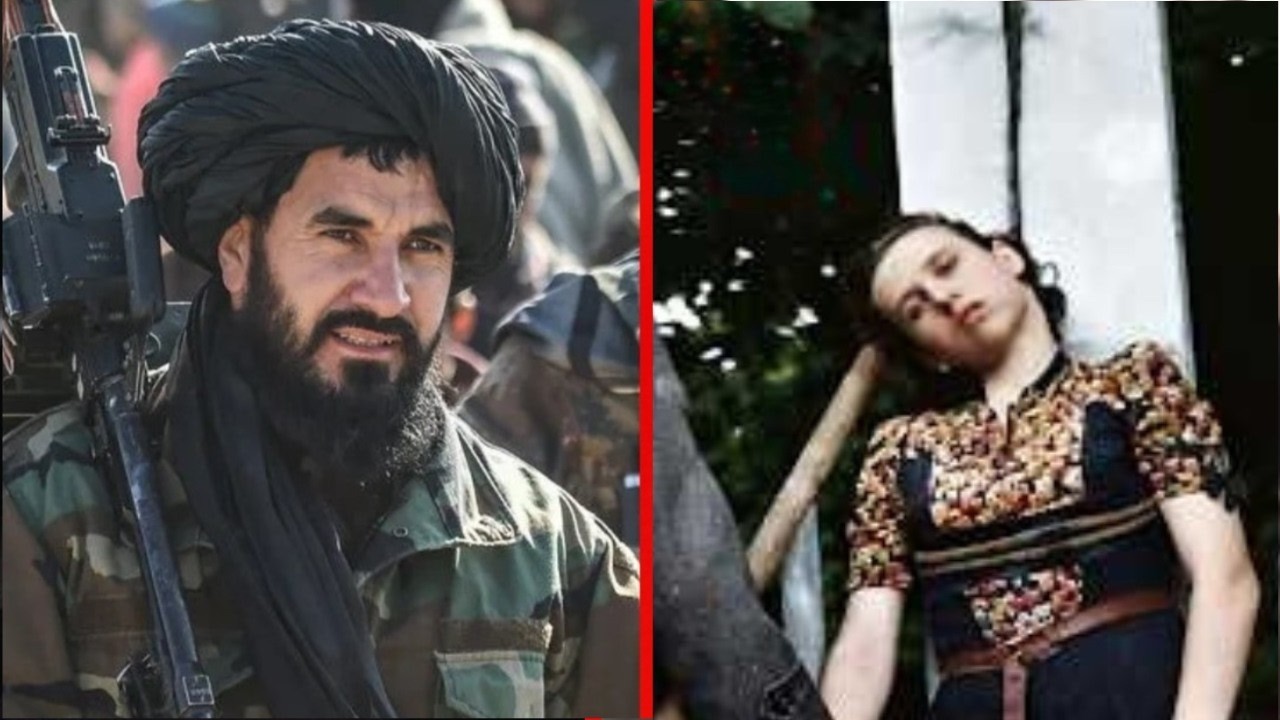
One case shocked Afghanistan and the world: in 2012, a young woman named Nadiba in Parwan was publicly executed after being accused of adultery. The video circulated widely, turning a local act of terror into an international symbol of Taliban brutality.
But videos did more than expose violence.
They amplified fear.
Some were used as warnings. Some were filmed by perpetrators to display power. Others were shared by opponents, locals, or media outlets. Once released, their meaning could no longer be controlled.
Rumors spread about women being punished not only for personal accusations, but because of family ties to Taliban fighters, rival commanders, or government-linked men. Some stories were true. Some were exaggerated. Many were impossible to fully verify.
But the fear they created was real.
Then came another rupture.
In 2015, the Taliban admitted that Mullah Omar had actually died in 2013.
For years, many fighters had believed he was alive and still guiding the movement. The revelation shocked the organization. Trust cracked. Anger spread. The question of leadership became dangerous.
Akhtar Mansur was declared the new leader, but not everyone accepted him. Some commanders saw the appointment as forced. Others saw a chance to break away.
Inside the Taliban, hidden battles began.
Loyalty became fragile. Assassinations increased. Rival factions fought in areas such as Helmand, Zabul, Kunduz, and other strongholds.
For families connected to commanders, secrecy no longer guaranteed safety.
A household once protected by a powerful man could become a target if his faction lost influence. Wives, children, and relatives could be threatened, displaced, or used as messages in internal conflicts.
The war was no longer only between Taliban and outsiders.
It was also inside the Taliban itself.
Then, in August 2021, the world watched Afghanistan change again.
After nearly twenty years of war, the United States and NATO withdrew. The Afghan government, despite years of foreign training and support, collapsed with stunning speed. Taliban forces advanced province by province. President Ashraf Ghani left the country. Kabul fell with little major fighting.
For many Afghans, it felt like history had folded back on itself.
The Taliban returned to power.
This time, the world watched through smartphones, social media, and global news. Taliban officials promised stability and insisted they would be different from the past.
But fear returned immediately.
Reports emerged of revenge attacks, disappearances, intimidation, and violence against former government workers, security personnel, activists, journalists, and people connected to foreign organizations.
Women were once again among the most vulnerable.
Those who had worked, studied, spoken publicly, or served the previous government went into hiding. Others connected to rival factions or Taliban networks were still unsafe, especially in areas where old conflicts and internal rivalries remained alive.
Afghanistan’s tragedy is not only a story of armies, presidents, invasions, and withdrawals.
It is the story of families forced to survive under every flag.
It is the story of women trapped between ideology, revenge, secrecy, and war.
It is the story of a country that once imagined modernization, then spent decades being torn apart by competing visions of power.
And the most haunting truth is this:
In Afghanistan, wars do not end when governments fall.
They move into homes.
Into villages.
Into memories.
Into the lives of people who never chose the battlefield, but were forced to live inside it.