The last breath of Joseph Paul Franklin came at 6:17 a. m. on November 20, 2013, inside a sterile execution chamber at Potosi Correctional Center in Missouri.
He said nothing, offered no apology, and showed no emotion as lethal drugs ended the life of one of America’s most prolific and hate-fueled serial killers.
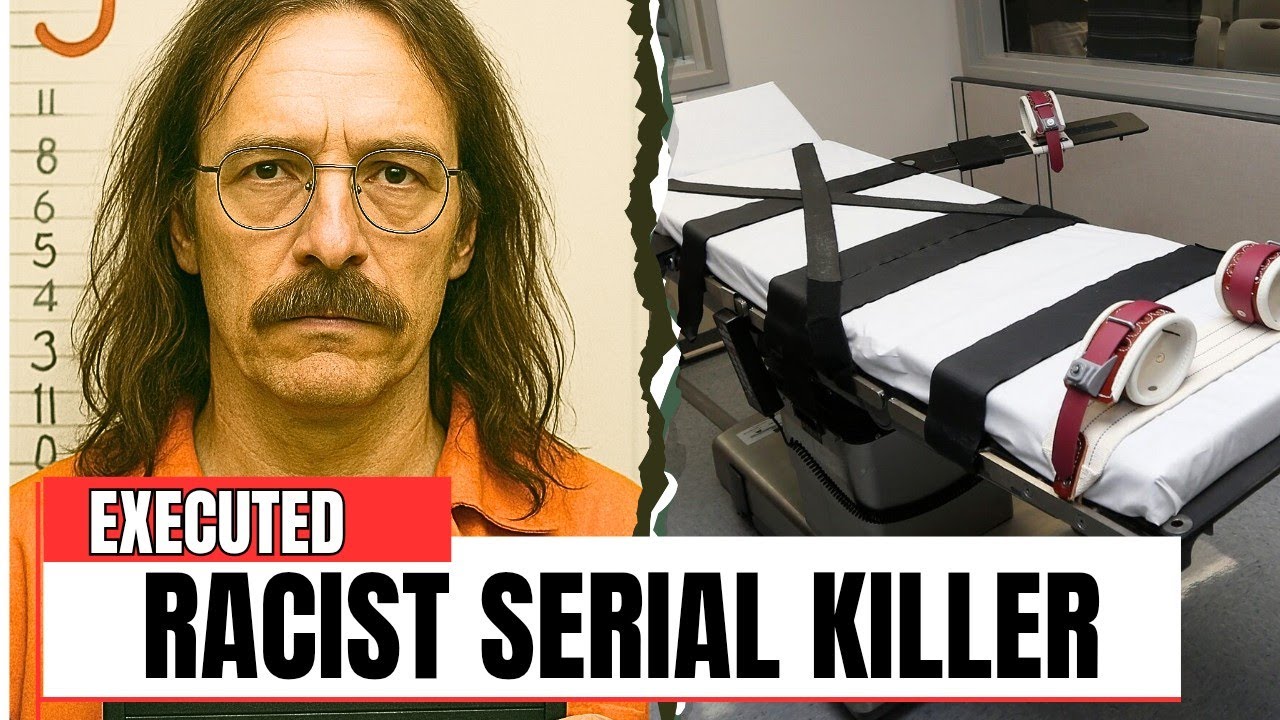 Franklin, 63, was pronounced dead after a single dose of pentobarbital, a powerful sedative that had become the center of a last-minute legal battle. Just hours before the execution, a federal judge had issued a temporary stay, questioning the constitutionality of the drug’s source. But the 8th U.
S. Circuit Court of Appeals overturned that ruling, clearing the path for the state to proceed.
The man who confessed to 22 racially motivated murders, including the 1977 killing of Gerald Gordon outside a St. Louis synagogue, declined a special last meal. Instead, he was given the standard prison tray of meatloaf, mashed potatoes, and vegetables.
Witnesses later reported he barely touched it. No family called. No visitors arrived.
No letters came through the wire. Franklin spent his final hours in silence, monitored around the clock by two corrections officers under death watch protocol.
When asked for his last words, Franklin shook his head. He offered no declaration, no plea for forgiveness, no explanation. The warden gave the signal, and the drug began to flow.
Franklin blinked several times, then took a deep breath. His chest rose and fell, then slowed. His eyes closed, and he exhaled one final time.
Governor Jay Nixon issued a statement calling the execution a long-delayed measure of justice. “The cowardly and calculated shootings committed by Joseph Paul Franklin were fueled by racial and religious hate. Today, justice has been served,” Nixon said.
But for the families of his victims, relief was mixed with enduring pain. No sentence could bring back the lives he took.
 Franklin’s path to death row began in Mobile, Alabama, in 1950, where he grew up in a fractured home with an alcoholic father and an overwhelmed mother. By his teenage years, he was already a loner, moving from city to city, absorbing radical white supremacist literature. He changed his name from James Clayton Vaughn Jr.
to Joseph Paul Franklin, combining the names of Nazi propagandist Paul Joseph Goebbels and founding father Benjamin Franklin. It was a calculated rebrand for a man who saw himself as a soldier in a race war.
His killing spree started in July 1977 with a firebomb attack on a Chattanooga synagogue that caused minimal damage. A month later, he escalated. On August 20, 1977, in Madison, Wisconsin, he shot and killed an interracial couple, Alfonse Manning Jr.
and Toni Schwen, as they returned to their car in a mall parking lot. Franklin later admitted he had followed them inside the store, watching them before deciding they were his “perfect first targets.”
Over the next three years, Franklin crisscrossed the country, leaving a trail of blood. He shot and killed Harold McIver, a Black Taco Bell manager, through a restaurant window in Doraville, Georgia. He wounded civil rights leader Vernon Jordan in Fort Wayne, Indiana.
In Cincinnati, Ohio, he gunned down two young Black boys, Daryl Lane and Dante Evans Brown, as they walked along an overpass, mistaking them for part of an interracial group. In Johnstown, Pennsylvania, he waited in the woods above a bridge and murdered Arthur Smothers, a Black man, and Kathleen Mikula, a white woman, as they walked together. In Falls Church, Virginia, he shot Raymond Taylor, a Black man, in the head while he ate at a Burger King.
Franklin’s weapon of choice was a high-powered scoped rifle. His method was always the same: a single shot from a distance, then a quick escape. He lived out of his car, used fake IDs, and paid in cash.
He never stayed in one place long enough to be noticed. Law enforcement had no idea a serial killer was at work until a botched pawn shop robbery in Lakeland, Florida, in 1980 led to his arrest.
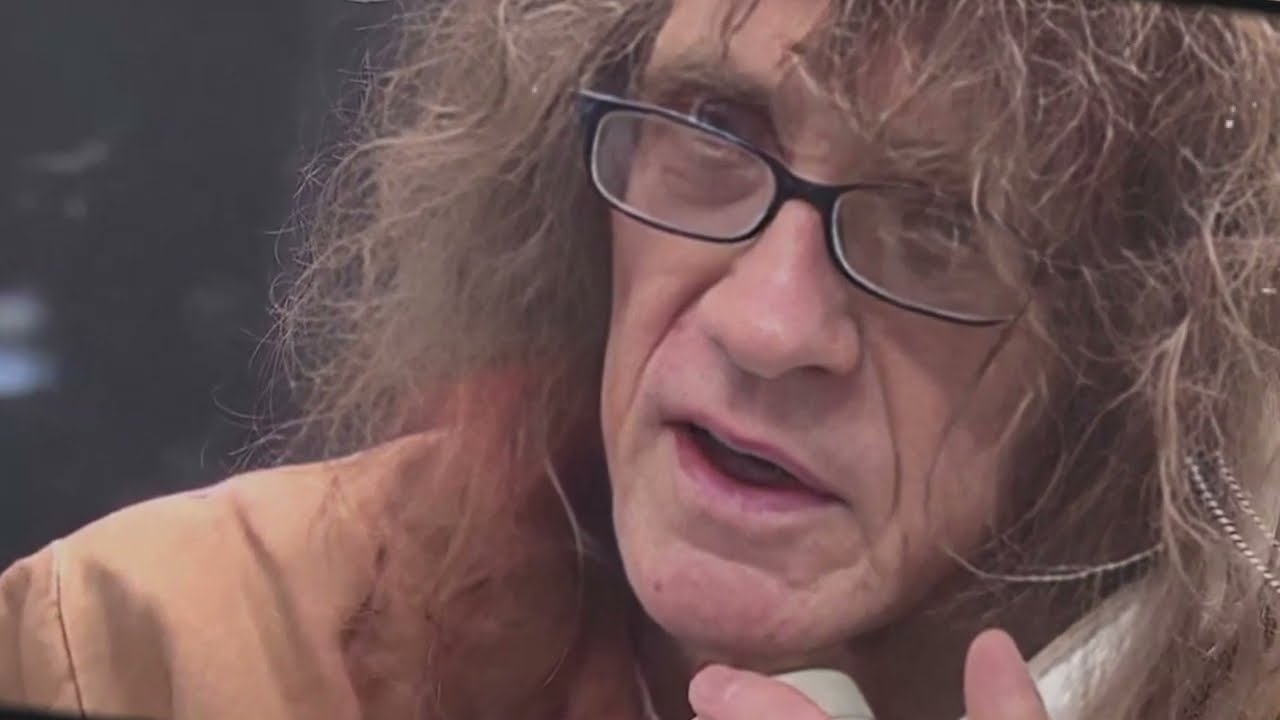 At the time, police thought they had merely caught a small-time criminal. But when Franklin’s fingerprints were run through national databases, matches came back from multiple murder scenes. Ballistics linked his rifle to unsolved shootings across several states.
Under interrogation, Franklin didn’t deny the charges. He confessed proudly, describing each killing in detail, explaining his twisted ideology of racial purity. He remained calm, even detached, as he recounted ending 22 lives.
His trials spanned years, with prosecutors building cases in Missouri, Ohio, Georgia, and elsewhere. In 1997, a Missouri jury convicted him for the murder of Gerald Gordon and sentenced him to death. But Franklin fought the sentence with a flood of appeals and lawsuits, challenging prison conditions and arguing that lethal injection violated the Eighth Amendment.
He told journalists he had found religion and no longer believed in white supremacy. The families of his victims called the conversion hollow.
On death row, Franklin spent 33 years locked inside Potosi Correctional Center. He watched the world change around him, but his crimes never faded from memory. The state set his execution date for November 20, 2013.
When death watch began, he was placed under constant observation, with lights kept on and cameras recording his every move. He didn’t panic. He didn’t cry.
He didn’t ask for a priest or a lawyer. He just sat, silent and still.
The legal twist came just hours before the scheduled time, when a federal judge temporarily halted the execution over concerns about the pentobarbital’s source. For a brief moment, it seemed Franklin might win another delay. But the appeals court intervened, and by nightfall, the countdown was back on.
 In the execution chamber, Franklin was strapped to a gurney as witnesses watched through a glass pane. The medical team inserted the IV. The warden asked for final words.
Franklin remained silent. At 6:07 a. m.
, the drug began to flow. He blinked several times, took a deep breath, and then his body stilled. At 6:17 a.
m. , he was pronounced dead.
For the families of his victims, the execution closed a chapter in a long and painful history. Some expressed relief. Others said nothing.
No amount of justice could undo the damage Franklin had done. He had once believed he was carrying out a mission of racial purity, but in the end, he died alone, in a cold room, with no one to mourn him and no legacy but the lives he destroyed.
Joseph Paul Franklin’s rampage stands as a stark reminder of how hate can metastasize into violence when left unchecked. His ability to move undetected for years, his methodical planning, and his willingness to kill anyone who did not fit his twisted worldview made him one of the most dangerous domestic terrorists in modern American history. The justice system took decades to catch up, but it did.
And on that November morning, the state of Missouri ensured that Joseph Paul Franklin would never kill again.