HUNTSVILLE, Texas — John William King was executed by lethal injection Thursday evening at the Huntsville Unit, nearly 21 years after he and two other white supremacists chained James Byrd Jr. to the back of a pickup truck and dragged him to his death along a dark, rural road in East Texas. King, 44, showed no emotion as the drugs began to flow, and he made no final statement.=
Witnesses said he simply closed his eyes and waited for the end. At 7:08 p. m.
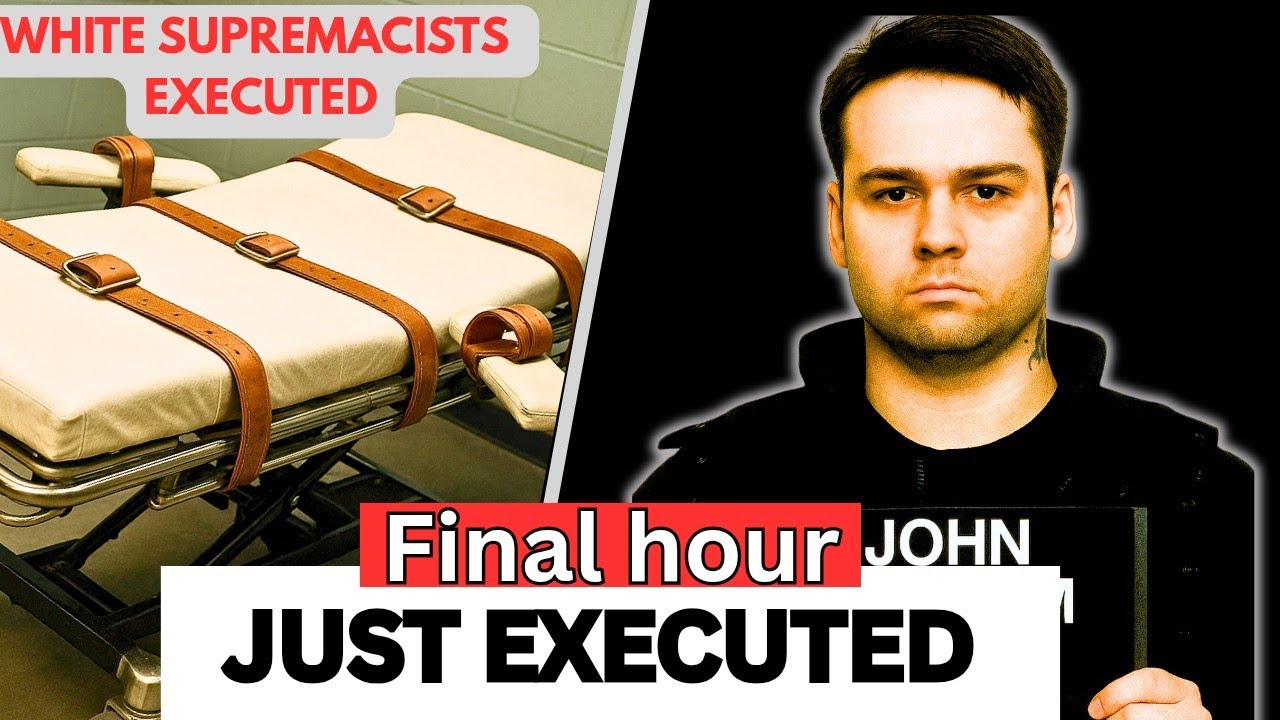 , he was pronounced dead.
The execution of King, a self-proclaimed neo-Nazi covered in racist tattoos, marks the second time the state of Texas has put to death a man convicted in the 1998 murder that horrified the nation and spurred federal hate crime legislation. Lawrence Russell Brewer, King’s co-defendant, was executed in 2011 after famously ordering a massive last meal and then refusing to eat any of it, prompting Texas lawmakers to abolish the tradition of granting death row inmates their final meal request.=
King’s execution came after years of legal appeals that reached the U. S. Supreme Court.
His attorneys argued that his original trial lawyer failed to present evidence that King was not present during the actual dragging. But prosecutors pointed to overwhelming forensic evidence, including Byrd’s blood on King’s clothing and shoes, as well as racist letters and drawings King wrote from prison. The courts rejected every appeal, clearing the way for Thursday’s lethal injection.
James Byrd Jr. , a 49-year-old black man, was walking home after a family gathering on the evening of June 7, 1998, in the small town of Jasper, Texas. He was less than a mile from his house when a pickup truck pulled alongside him.=
Inside were three white men: Shawn Allen Berry, Lawrence Russell Brewer, and John William King. They offered him a ride. He accepted, believing they were simply being neighborly.
Instead, the men drove Byrd to a remote logging road deep in the woods. There, they beat him, spray-painted his face, and urinated on him. Then, in one of the most brutal hate crimes in modern American history, they chained his ankles to the back of their pickup truck and drove off.=
For more than three miles, Byrd was dragged along an asphalt road. His body was torn apart, his skin, flesh, and limbs shredded against the pavement. Forensic evidence later showed he remained alive for most of the dragging, until his body struck a concrete culvert and was decapitated.
 The killers then drove to a black church and dumped the remains in front of it, leaving a twisted, hateful message. After that, they went home and had a barbecue. Byrd’s dismembered body was discovered the next morning by a motorist.
The trail of blood, bone, and flesh stretched nearly the length of 48 football fields. The gruesome scene immediately drew national attention and brought an FBI investigation into Jasper, a town still grappling with the legacy of segregation.
Within 48 hours, all three men were arrested. Berry, the driver, cooperated with authorities and was convicted of murder. He was sentenced to life in prison with the possibility of parole in 2038.
Brewer and King were convicted of capital murder and sentenced to death. Brewer was executed first, on September 21, 2011. His last meal request became infamous: two chicken fried steaks, a triple bacon cheeseburger, a pound of barbecue, fried okra, a meatlovers pizza, half a loaf of white bread, three root beers, peanut butter fudge with crushed peanuts, and a pint of vanilla ice cream.
He refused to eat any of it, showing no remorse. His last words to a reporter days earlier were chilling: “As far as regrets, I have none. I’d do it all over again.”
After Brewer’s execution, Texas officials quickly abolished the last meal tradition for all death row inmates. When King’s turn came, he was given a standard prison meal: meatloaf, mashed potatoes, green beans, and a roll. He ate it without complaint.
In his final hours, King had no visitors, no family present, and no final statement. He remained cold, silent, and emotionless, according to prison officials.
 Outside the Huntsville Unit, a crowd of protesters and supporters of the Byrd family gathered, holding signs that read “Justice for James Byrd Jr.” and “No More Hate Crimes.” James Byrd Jr.’
s sister, Clara Taylor, watched through the glass as King took his final breath. She whispered a prayer. Afterward, she told reporters that the family had waited more than two decades for this moment, but that no execution could bring her brother back.
The case left a lasting mark on American law and society. In 2009, President Barack Obama signed the Matthew Shepard and James Byrd Jr. Hate Crimes Prevention Act, expanding federal hate crime laws to include crimes motivated by a victim’s actual or perceived gender, sexual orientation, gender identity, or disability.
The law also provided additional funding for investigations of hate crimes.
But for the Byrd family, the scars remain. “We don’t want revenge. We want justice,” Clara Taylor said after King’s trial.
“And we want the world to remember James, not just how he died, but how he lived.” James Byrd Jr. was a father, a grandfather, and a man who loved music.
He had struggled with alcoholism and petty crime earlier in life but was trying to rebuild. He walked with a smile, known by everyone in Jasper. That smile was extinguished on a dark road in 1998.
 With King’s execution, only Shawn Allen Berry remains alive, serving his life sentence at the Ramsey Unit in Rosharon, Texas. He will be eligible for parole in 2038. The state of Texas has now executed two of the three men responsible for Byrd’s death.
The third will likely die in prison.
The execution of John William King closes a long chapter in the state’s history, but it also raises questions that have no easy answers. Why did these men commit such a heinous act? How could hate be so deep?
And what does it mean for justice when the state takes a life in the name of the victim? These questions linger in the pine forests of East Texas, where James Byrd Jr. was last seen alive, walking home on a summer night.
As the sun set over Huntsville on Thursday, the execution chamber fell silent. The needles were removed. The body was taken away.
Outside, the crowd slowly dispersed. Justice had been done, but for those who loved James Byrd Jr. , the pain never truly ends.
His legacy, however, lives on in laws and in the enduring fight against hate. And in the memory of a man who simply wanted a ride home.