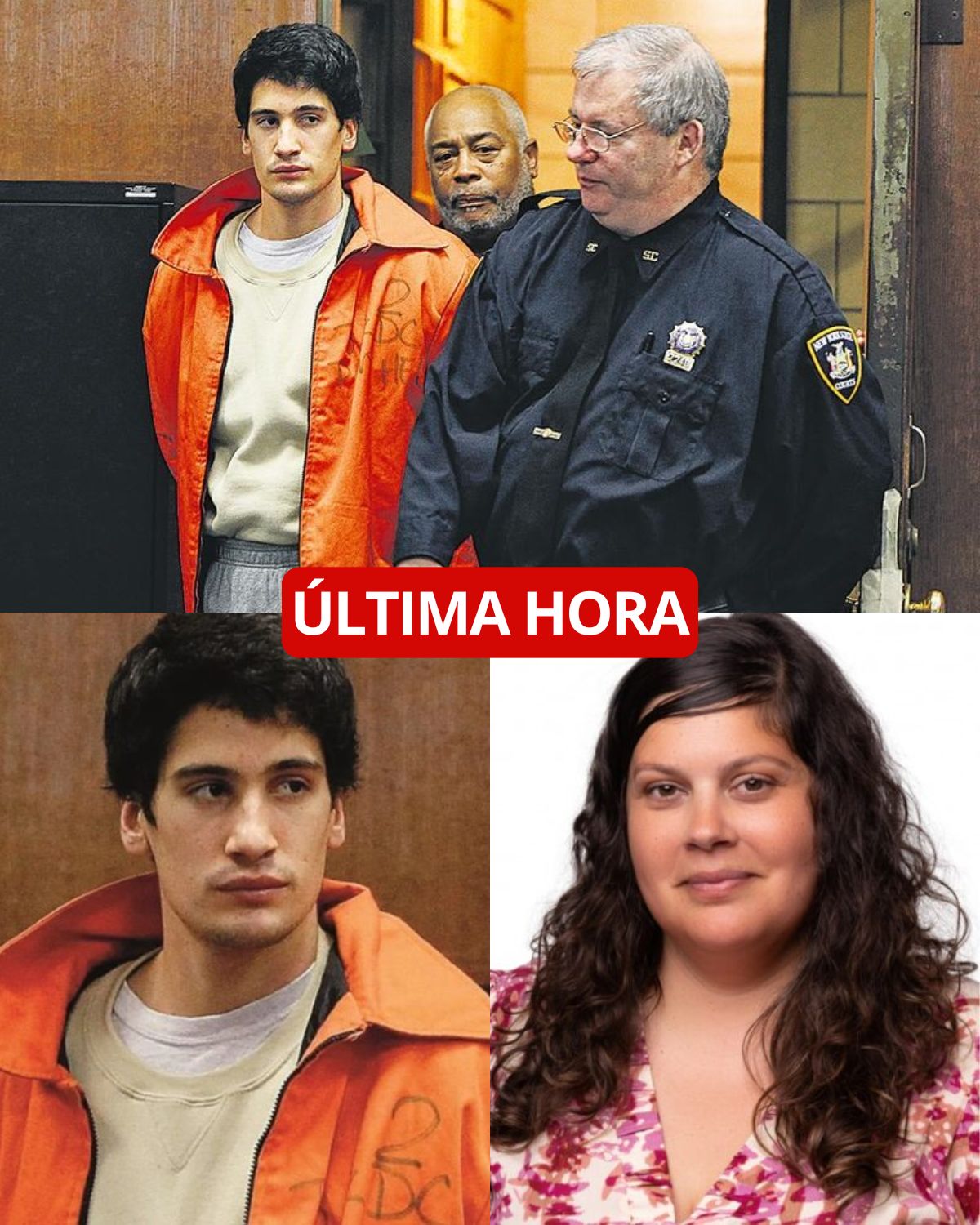
Florida State Prison in Starke witnessed the final moments of one of the nation’s most elusive serial killers Thursday evening, as convicted murderer Glenn Edward Rogers was executed by lethal injection at 6:16 p. m. He was 62 years old, nearly three decades after he was first sentenced to death for the murder of a Florida woman.
In his final words, Rogers directed a cryptic message to President Donald Trump, leaving more questions than answers for the families of his victims.
 Rogers, who maintained his innocence to the very end, made a chilling promise to the families gathered behind the glass. “I know there’s a lot of questions that you need answers to. I promise you in the near future the questions will be answered, and I hope in some way will bring you closure,” he said.
Then, with the execution team ready, he added, “President Trump, keep making America great. I’m ready to go.” He thanked his wife and said nothing more.
The execution was the fifth carried out in Florida in 2025. Governor Ron DeSantis signed Rogers’ death warrant on April 15, setting the stage for the lethal injection procedure. Rogers’ legal team had mounted a final emergency appeal to the U.
S. Supreme Court the night before, arguing that childhood abuse and the specific drugs in the lethal injection protocol should have stopped the execution. The court denied the appeal.
Rogers was convicted of two murders that spanned the country: the 1995 killing of Tina Marie Cribbs in Gibsonton, Florida, and the 1995 murder of Sandra Gallagher in Van Nuys, California. He was also a suspect in the deaths of at least three other women and a 71-year-old man from Ohio, though he was never charged in those cases. Over the years, he claimed responsibility for as many as 70 homicides, a number investigators treated with skepticism.
His final meal reflected none of the notoriety he sought: pizza, chocolate cake, and a soda. It was a modest last request from a man who had spent nearly 30 years on death row, filing appeal after appeal and, in 2012, inserting himself into one of the most infamous murder cases in American history. In a documentary, his brother Clay claimed Rogers confessed to killing Nicole Brown Simpson and Ron Goldman, a claim the LAPD and prosecutors flatly denied.
Rogers’ path to the execution chamber began in the autumn of 1995, when he went on a six-week killing spree across four states. He was a master of charm, tall and green-eyed, able to disarm women in bars and then kill them. Each victim—Sandra Gallagher in California, Linda Price in Mississippi, Tina Cribbs in Florida, and Andy Giles Sutton in Louisiana—was a mother.
 All had reddish or strawberry blonde hair. Rogers targeted them with a calculated ease.
The spree ended on November 13, 1995, on a Kentucky highway. A state trooper rammed his patrol car into Rogers’ stolen vehicle, sending it into a ditch. Rogers was pulled out, handcuffed, and later boasted to detectives about his body count.
He said he was joking. The arrest was captured by a local news crew and aired nationwide.
At his trial in Florida, the evidence was overwhelming. Fingerprints from the wallet of Tina Cribbs, stolen after her murder, placed Rogers at the scene. Her body was found in a bathtub, stabbed in the chest and back.
He had paid for an extra night at the motel and asked staff not to clean the room. It was a pattern repeated in California, where Gallagher’s body was found in her burning truck.
Rogers’ childhood was marked by severe abuse. His mother held him underwater, tried to smother him, and once drove toward a cliff with her children in the car. He was expelled from school, diagnosed with ADHD, and married at 16.
 The abuse, he argued in later appeals, should have been a mitigating factor at sentencing. The Florida Supreme Court rejected that argument.
In the hours before his execution, Rogers received visits from family, including his brother Claude, who told reporters, “I said my goodbyes to him. He’s my brother, and I love him.” Claude drove away from the prison, returning to Kentucky.
Rogers had no final statement to the media, only the words he spoke in the execution chamber.
The families of his victims had waited nearly three decades for this moment. Jerry Valacella, sister of Sandra Gallagher, said she could finally rest. Debbie Sparks, sister of Linda Price, felt closure but anger because Rogers never showed remorse.
Randy Roberson, son of Andy Giles Sutton, said the execution was too peaceful compared to the violence inflicted on his mother.
Rogers’ final words to Trump remain unexplained. Some speculate he was referring to his unsubstantiated claims about the Simpson murders, or perhaps other unsolved cases. He had promised answers, but with his death, any secrets he carried died with him.
 The mystery may never be resolved.
The state of Florida’s lethal injection protocol involves three drugs: a sedative, a paralytic, and potassium acetate to stop the heart. Rogers was pronounced dead at 6:16 p. m.
He was the 16th person executed in the United States this year. The executioner’s curtain was drawn, and the witnesses filed out.
Glenn Edward Rogers spent his final moments as he had spent much of his life: performing. He walked into the chamber calm, made a statement that could be interpreted in a dozen ways, and then left nothing but silence. For the families of the women he killed, that silence is finally the only answer they need.
For the rest of the world, the questions he promised to answer remain open.