Part 1 — Three Days After the Funeral
Three days after I buried my wife, my brother-in-law walked into my office with two lawyers and told me I was no longer fit to run my own company.
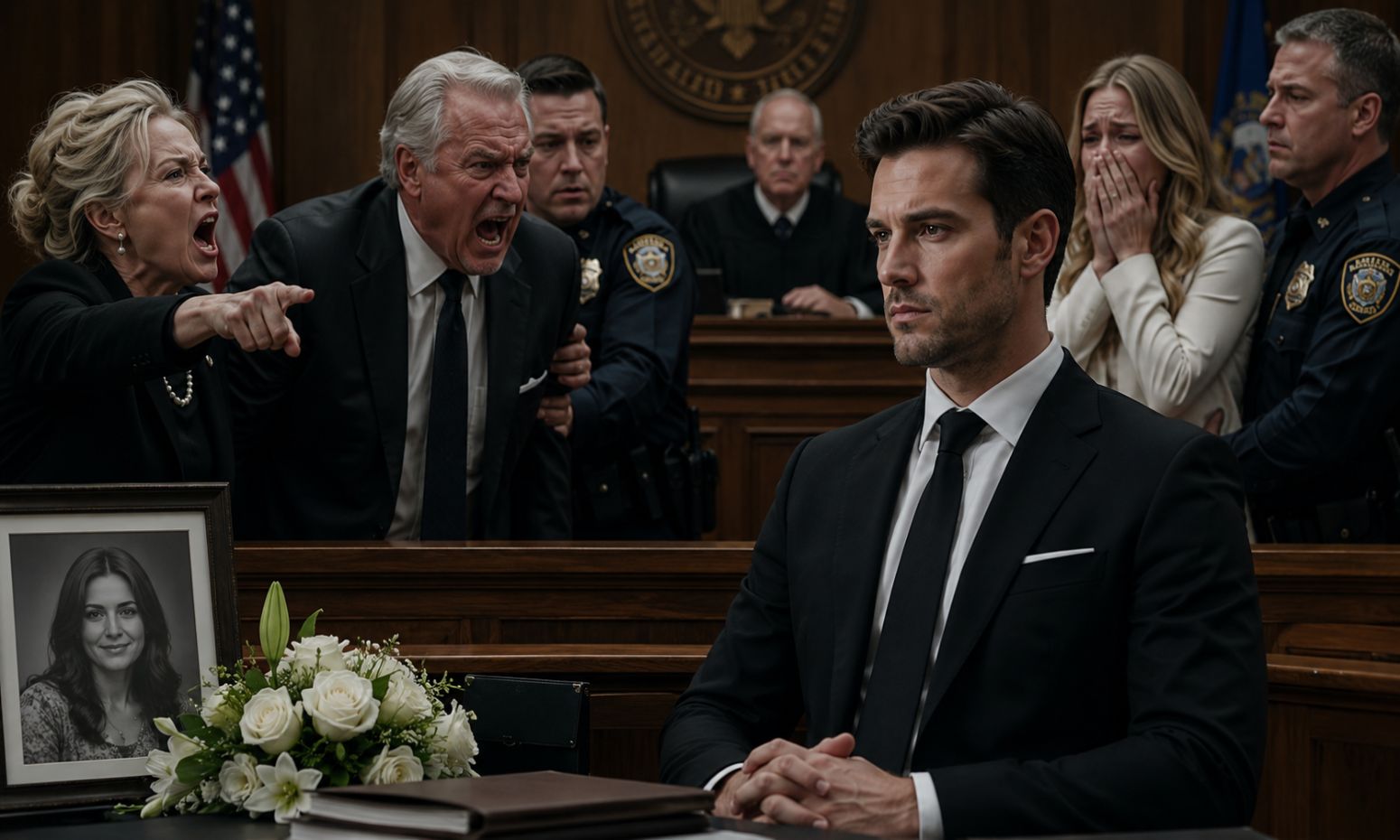
He didn’t offer condolences.
He didn’t ask if I had slept.
He didn’t even look at the framed photo on my desk — the one of Emma and me standing in front of our first warehouse, back when the company had five employees and a leaking roof.
He just placed a folder on my desk and said, “David, this is what’s best for everyone.”
That was the first time I realized they hadn’t come to help me grieve.
They had come to take everything.
My name is David Langford. I was forty-one when my wife died, and by then, the business we had built together was valued at just over fifteen million dollars.
People liked to call it an empire.
Emma never did.
She called it “the thing we survived.”
And she was right.
Langford Supply started in a rented storage unit behind a tire shop in Cleveland. I handled sales, deliveries, invoices, and repairs. Emma handled operations, payroll, vendor contracts, and the thousand invisible details that kept the whole thing from collapsing.
In the beginning, we were not impressive.
We were tired.
We ate gas station sandwiches for dinner. We printed labels at midnight. We fought over cash flow, then apologized before sunrise because there was too much work to do and not enough money to stay angry.
But Emma had a gift I had never seen in anyone else.
She could walk into chaos and find the one loose thread that would unravel the whole problem.
Suppliers trusted her.
Employees respected her.
Banks listened when she spoke.
I was the face of the company because I was louder. But anyone who had worked with us long enough knew the truth.
Emma was the spine.
When she was diagnosed, everything changed slowly at first, then all at once.
There were treatments, consultations, hopeful scans, bad scans, and nights when I sat beside her hospital bed pretending not to cry because she hated seeing me scared.
During those months, I stepped back from daily operations more than I wanted to. I still made major decisions, signed contracts, and met with key clients, but I spent as much time as possible with her.
That was when her family started appearing more often.
Her brother, Mark, said he wanted to “take pressure off us.”
Her cousin, Natalie, offered to review financial reports.
Her uncle, Richard, a retired attorney who introduced himself that way even at family dinners, said we needed to “prepare for uncertainty.”
At first, I was grateful.
Grief makes you vulnerable before the loss even happens.
You start accepting help because you don’t have enough hands to hold everything that is falling.
Mark began sitting in on meetings.
Natalie asked for access to internal numbers.
Richard kept suggesting documents I should sign “for continuity.”
Emma noticed before I did.
One evening, about six weeks before she passed, she was lying in bed at home with a knitted blanket over her knees. The room smelled faintly of tea and antiseptic. Her voice was weaker by then, but her eyes were still sharp.
“Don’t let Mark near the voting shares,” she said.
I looked up from the medication schedule.
“What?”
She turned her head toward me. “Promise me.”
I tried to make her smile. “Emma, nobody’s taking anything.”
She didn’t smile.
That scared me more than the sentence.
“David,” she said, “they don’t think you can run it without me.”
I wanted to argue. I wanted to tell her that her family loved her too much to think like that. I wanted to believe people became better around death.
But Emma had spent years reading people across conference tables.
She rarely misread anyone.
So I promised.
After the funeral, the house filled with flowers, casseroles, whispered conversations, and people who hugged me like they were afraid I might break in their arms.
I barely remember most of it.
I remember Emma’s navy dress.
I remember the way her hand felt cold when I touched it one last time.
I remember our daughter Lily, only nine years old, asking me if Mom would still know when it was her birthday.
By the third day, I had stopped answering calls.
I went to the office because I needed somewhere that still smelled like coffee, cardboard, machine oil, and the life Emma and I had built before illness turned time into a countdown.
I thought I would sit quietly in her office.
Maybe open her notebook.
Maybe feel close to her for an hour.
Instead, at 10:18 a.m., my assistant knocked on the door with a look I had never seen on her face.
“David,” she said carefully, “Mark is here. He brought people.”
Before I could respond, Mark walked in.
He wore a charcoal suit, a silver watch, and the expression of a man arriving at a meeting he had already won.
Behind him were Richard and two attorneys I did not recognize.
Natalie stood near the door holding a tablet.
No one sat down.
Mark placed the folder in front of me.
“We need to discuss transition.”
I stared at him.
“My wife was buried three days ago.”
His face softened in a way that felt practiced.
“That’s exactly why this needs to happen now. You’re grieving. You’re emotional. You’re not in a position to make rational decisions.”
I looked at Richard.
He did not look away.
One of the lawyers opened the folder and turned several pages toward me.
There were resolutions prepared.
Board recommendations.
A temporary removal proposal.
A transfer of executive authority.
And beneath it all, a document that made the room tilt slightly around me.
They wanted controlling authority over Langford Supply.
Effective immediately.
Mark spoke gently, which somehow made it worse.
“Emma’s family has serious concerns about your ability to protect what she built.”
What she built.
Not what we built.
I felt something cold move through my chest.
For ten years, these people had called the company risky, exhausting, and beneath them. They had made jokes about trucks and warehouses. They had asked Emma why she didn’t push me to sell and “live properly.”
Now that she was gone, they were calling it her legacy.
And they were trying to use her name to steal it.
I closed the folder.
“No.”
Mark blinked once.
Richard stepped forward. “David, don’t be difficult. This can be handled quietly.”
“Quietly?”
Natalie finally spoke from the doorway. “You should think about Lily. A public fight would be ugly.”
That was when I looked at her.
Really looked at her.
Because she had said my daughter’s name like a warning.
Mark leaned over my desk.
“You don’t have the votes you think you have.”
The room went silent.
It was a strange sentence.
Too specific.
Too confident.
And in that moment, I remembered Emma’s warning.
Don’t let Mark near the voting shares.
I stood up slowly, not because I felt strong, but because I knew if I stayed seated, they would mistake my grief for surrender.
“You all need to leave.”
Mark smiled then.
Not fully.
Just enough.
“David, by tomorrow morning, this will be out of your hands.”
They walked out like people who had already taken inventory of another man’s life.
I stood alone in my office after they left, staring at the folder on my desk.
Then my eyes moved to Emma’s framed photo.
For the first time since the funeral, I didn’t cry.
I opened my laptop.
Logged into the secure company archive.
And searched for every file Emma had touched in the final two months of her life.
At 11:42 a.m., I found a folder I had never seen before.
It was password protected.
The file name was only one word.
RAINCOAT.
And only Emma would have known why that word mattered.
[Confirm to continue Part 2]