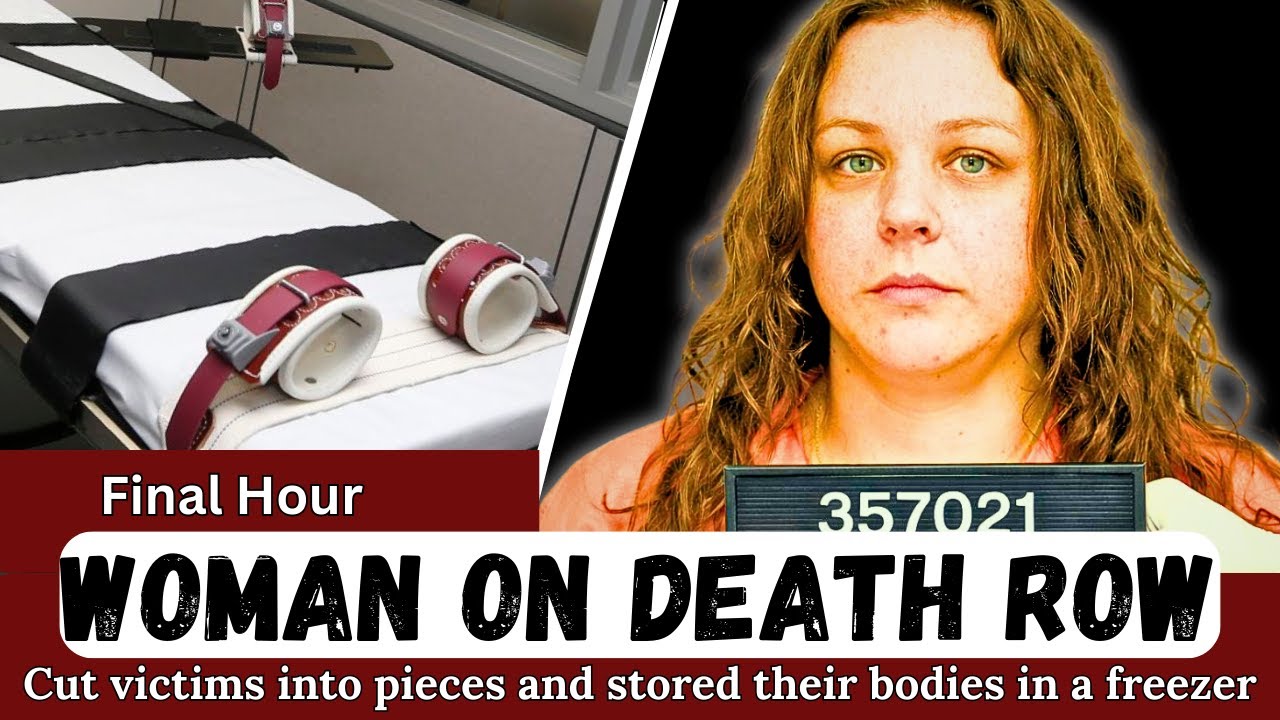
Mississippi is set to execute the only woman on its death row, a move that would mark the first execution of a female inmate in the state since 1944. Lisa Joe Chamberlain, 52, has spent nearly two decades in a small cell at the Central Mississippi Correctional Facility in Pearl while courts debated her fate. The state’s highest court recently denied her latest appeal, clearing the way for a date to be set—though no specific timeline has been announced.
Chamberlain was convicted in 2006 for the brutal murders of Vernon Hullet and Linda Heinselman, whose dismembered bodies were found stuffed inside a freezer on an abandoned farm in Kansas. The case has drawn national attention not only for its grisly details but for the stark disparity in punishment between Chamberlain and her co-defendant, Roger Lee Gilllet, who carried out most of the violence and will spend the rest of his life in prison without the possibility of parole.
 The murders took place in March 2004 in Hattisburg, Mississippi. Chamberlain and Gilllet, both fugitives wanted on drug charges in Kansas, had fled to the home of Gilllet’s cousin, Vernon Hullet, and his girlfriend Linda Heinselman. The couple had taken them in, offering shelter and food.
Tensions grew over a car accident and a broken promise to share insurance money. On the night of March 20, 2004, Gilllet exploded.
According to Chamberlain’s own confessions to Kansas Bureau of Investigation officers, Gilllet pulled out a gun, fired a warning shot, then beat Hullet demanding the combination to a safe. He forced Heinselman to remove her clothes and violated her with a beer bottle. Chamberlain admitted she left to buy more beer and returned to find Heinselman bent over the safe.
She then told Gilllet, “Let us just kill them and get out of here.” That sentence became the prosecution’s central argument that she was not a passive victim but a willing instigator.
Gilllet beat Hullet to death with a hammer. Heinselman was stabbed, beaten, and ultimately suffocated with a plastic bag after Chamberlain suggested smothering her. The two then dismembered Hullet’s body, placing his severed head and arms into garbage bags while Chamberlain held them open.
They loaded the bodies into a chest freezer, taped it shut, and drove 12 hours back to Kansas, dumping evidence along the way.
The bodies were discovered five days later on March 29, 2004, when a tip about drug activity led officers to the Gilllet family farm. Inside a wooden granary, they found a white Dodge Dakota pickup truck and a freezer bound with duct tape. Cutting through the tape, they uncovered Hullet’s torso and headless arms, with Heinselman’s intact body frozen beneath.
The forensic evidence was overwhelming: bloodstained shoes, a hammer, fingerprints, and a confession.
Chamberlain was tried first in August 2006. The jury heard her own words urging murder. Her defense argued she suffered from post-traumatic stress disorder and borderline personality disorder, the result of a lifetime of abuse—including sexual assault by a half-brother, beatings from her mother and stepfather, and years of control by Gilllet.
 A psychiatrist testified that Chamberlain had organic brain damage possibly linked to fetal alcohol exposure. The jury still recommended death, and Judge Bob Helfridge sentenced her to lethal injection.
Gilllet went to trial a year later. He too was convicted and sentenced to death. But in 2014, the Mississippi Supreme Court vacated his death sentence, ruling that prosecutors had improperly introduced evidence about a jail escape attempt.
In 2018, Gilllet was resentenced to life without parole—a deal offered to spare victims’ families a second trial. The man who committed the most violent acts now sits in a cell at Parchman, alive, while the woman who assisted him faces execution.
Chamberlain’s appeals have stretched across two decades. The U. S.
Supreme Court declined to hear her case in 2011 and again in 2019. In 2023, Gilllet signed an affidavit from prison stating, “I had complete control over Lisa.” He described beating her unconscious, attempting to drown her, and intentionally overdosing her with methamphetamine.
“Her involvement was minor,” he wrote, “and she would not have participated had I not clearly been in control.”
In August 2024, another affidavit from a clinical social worker detailed the abuse Chamberlain suffered. Her lawyers argued this new evidence warranted a new hearing, but the Mississippi Supreme Court ruled 8-1 in May 2025 to deny the appeal. Justice Robert Chamberlain wrote that Chamberlain’s own confessions made no mention of domination, and she had repeatedly advocated killing the victims.
Only Justice Leslie King dissented, accusing the court of “paying lip service to heightened standards in capital cases.”
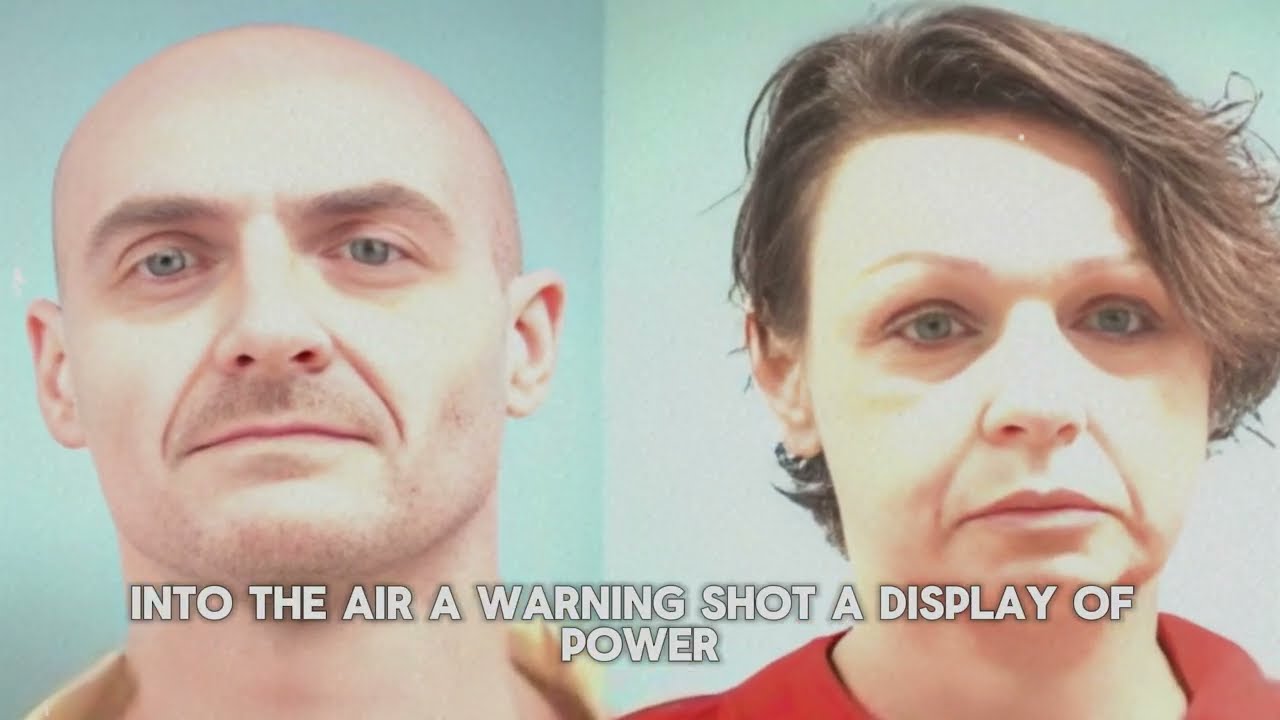 The decision means Chamberlain remains the only woman on Mississippi’s death row. The state has executed 37 people since the death penalty was reinstated in 1976, but none were women. The last woman executed in Mississippi was in 1944—over 80 years ago.
If her execution proceeds, she will break that long gap.
Behind the legal arguments are two lives brutally cut short. Vernon Hullet, 34, grew up in and around Hattisburg. He welcomed his cousin and that cousin’s girlfriend into his home, only to be beaten, decapitated, and dropped into a freezer.
Linda Heinselman, 38, celebrated her birthday just two days before she was stabbed, violated, and suffocated. Her final hours were filled with terror as she watched her boyfriend die and lay on the floor for hours, still breathing, while her killers debated what to do.
Chamberlain’s own history is a litany of trauma. Born in Oregon in 1972 to an alcoholic mother who drank during pregnancy, she was abused by her biological father, her stepfather, her older half-brother, and a school teacher. She married three times and had three children.
Her life was marked by chaos and violence. The question that haunts her case is whether she is a cold-blooded killer or a broken woman manipulated by a more violent man.
The courts have consistently sided with the state. The Mississippi Supreme Court rejected her post-conviction appeals. The U.
S. Supreme Court declined to intervene. Her attorneys are exploring further legal avenues, but options are running out.
 A date for her execution has not yet been set, but the machinery of the state is moving forward.
Death penalty opponents have rallied around Chamberlain, pointing to the gender disparity and the role of domestic violence. They note that Gilllet, who admitted to the most horrific acts, will never face lethal injection. Proponents argue that Chamberlain’s own words—“Let us just kill them”—make her equally culpable, and that the victims’ families deserve finality.
For now, Lisa Joe Chamberlain remains in a cell, waiting. She has spent more than 19 years on death row, longer than many inmates in Mississippi. The average time before execution in the state is over 20 years, but recent years have seen accelerated timelines.
If she receives a date, she will be transferred to Parchman for her final days, where she will be allowed visits, calls, and a last meal. Then the state will carry out a lethal injection.
The story is not over. Every capital case in Mississippi carries the possibility of last-minute stays, commutations, or changes in law. But the trajectory is clear.
The state is moving to execute the first woman in more than eight decades. And the central question—whether the punishment fits the role each person played in two brutal murders—remains unanswered.
Two innocent people lost their lives. Their families have lived with that loss for over 20 years. Nothing can undo that.
But the case of Lisa Joe Chamberlain forces a reckoning with what justice means in a system where the most violent actor escapes the ultimate penalty, while the woman who helped him sits in the condemned cell. The answer, when the state finally acts, will define Mississippi’s approach to capital punishment for a generation.