I Showed Up to My Sister’s Wedding After 11 Years… Then She Pretended Not to Know Me
The bride looked directly at Ava Mercer and said, “I’m sorry. Have we met?”
The string quartet did not stop playing.
That was the cruelest part.
Violins continued floating through the marble ballroom as if nothing had happened, as if sixty-two wealthy guests had not just turned their heads toward the woman standing alone beneath a chandelier the size of a small car.
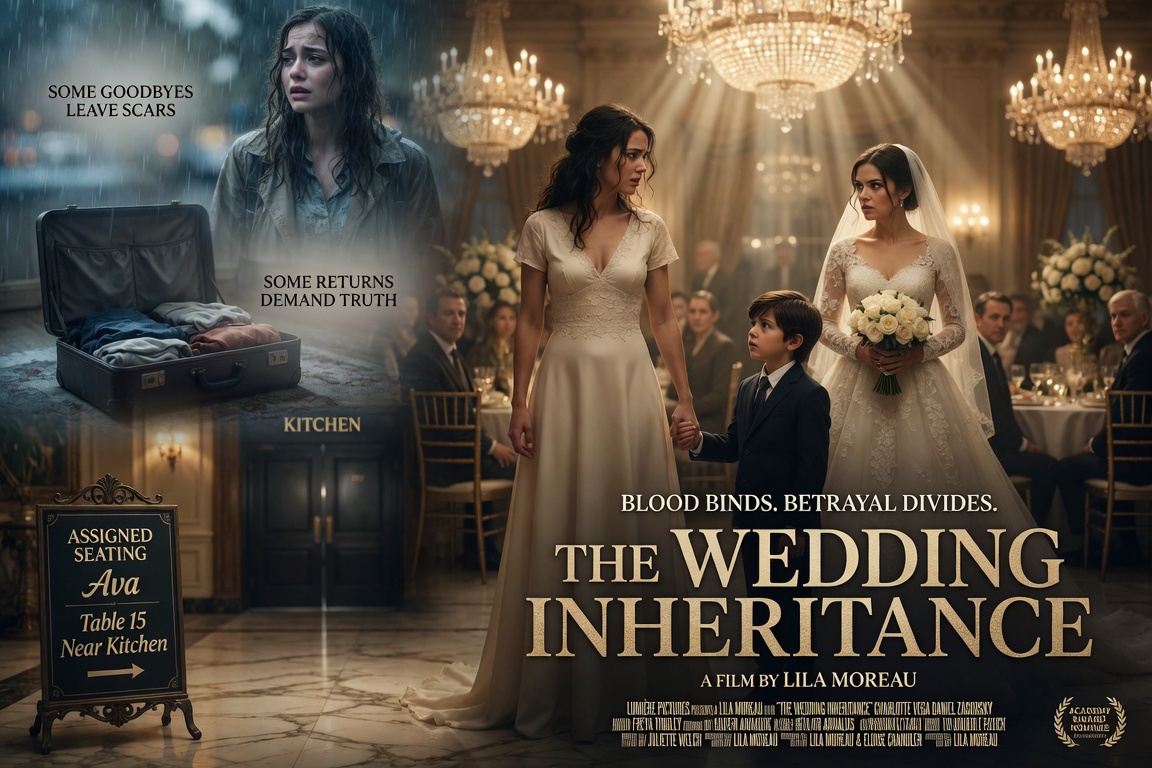
Ava still held the cream-colored invitation in her left hand.
Her name was printed across the envelope in careful black calligraphy.
Ms. Ava Mercer.
The bride had mailed it to her apartment in Seattle three months earlier.
Now, under a ceiling painted with gold-leaf clouds, that same bride tilted her head and examined Ava with polite confusion.
“I don’t believe we’ve been introduced,” she said.
A few guests laughed softly.
Not because anything was funny.
Because the bride was laughing with her eyes, and people at expensive weddings often mistook cruelty for permission.
Ava felt the old instinct rise inside her—the one that had kept her alive at nineteen.
Do not react.
Do not give them anything they can use.
Across the room, her mother stood beside an ice sculpture shaped like two swans. Caroline Mercer’s silver gown shimmered each time she breathed. Her face had gone still, but her eyes were sharp.
Warning eyes.
Her father, Richard, stared into his whiskey.
Neither of them stepped forward.
Neither of them said, “That is our daughter.”
Ava looked back at the bride.
Eleven years had changed Vanessa Mercer in ways money could buy. Her dark hair had been sculpted into a glossy knot. Diamonds circled her throat. Her wedding dress fell around her in layers of ivory silk that looked almost liquid beneath the ballroom lights.
But her smile had not changed.
It was the same smile she had worn at sixteen after locking Ava out of the house in the rain.
The same smile she had worn at eighteen while telling their parents that Ava had stolen their mother’s bracelet.
The bracelet that had later appeared in Vanessa’s own gym bag.
Ava folded the invitation once.
Then again.
“Vanessa,” she said quietly, “you invited me.”
The laughter died.
The groom, standing several feet away with one hand around a champagne flute, turned toward them.
His name was Daniel Hale. Ava knew that from the invitation, from the wedding website, from the newspaper announcement her mother had mailed to her without a note.
Thirty-six years old. Cardiothoracic surgeon. Son of a retired federal judge. Educated at Stanford and Johns Hopkins.
In the photograph online, he had looked composed.
In person, he looked watchful.
Daniel’s gaze moved from Ava to Vanessa, then to the folded invitation in Ava’s hand.
Vanessa’s smile tightened.
“Oh,” she said. “You must be one of the event staff. They’ve had so many last-minute replacements.”
A waiter passing with champagne nearly stopped.
Ava was wearing a midnight-blue dress with long sleeves, a silk wrap, and the small pearl earrings she had bought for herself after signing her first major contract.
No apron.
No uniform.
No name tag.
Still, Vanessa turned toward the nearest guests with a helpless little laugh.
“You know how chaotic weddings are.”
Ava heard a woman whisper, “How embarrassing.”
She could not tell whether the woman meant Ava or Vanessa.
Daniel set his champagne glass down.
“Vanessa,” he said, “who is she?”
For the first time, something flickered across the bride’s face.
Not fear.
Calculation.
Vanessa slipped her arm through Daniel’s. “Nobody important.”
Ava had expected pain.
She had prepared for it in the hotel room that morning while fastening her earrings with hands that would not stop trembling.
She had prepared for coldness, accusations, even security guards.
She had not prepared for the precision of those two words.
Nobody important.
Eleven years ago, Richard Mercer had placed a black trash bag filled with Ava’s clothes on the front porch.
Caroline had stood behind him, crying silently but doing nothing.
Vanessa had watched from the upstairs window.
Ava had been nineteen years old, wearing socks with no shoes because her father had thrown the shoes after her and one had landed in a puddle.
Nobody important.
The old shame pressed against her ribs.
Then Daniel looked at her again.
His eyes narrowed, not with suspicion but recognition.
“Ava Mercer,” he said.
The room seemed to contract around her.
Vanessa’s hand tightened on his arm.
Daniel took one slow step closer.
“You’re Ava Mercer?”
Ava held his gaze. “Yes.”
He went pale.
And Vanessa’s smile disappeared.
Chapter One
Three hours earlier, rain had swept across Lake Geneva in silver sheets.
Ava had stood at the window of her hotel room, watching the water disappear beneath low gray clouds. The wedding venue, Bellweather House, rose on the opposite shore—a limestone mansion with arched windows, copper roofs, and gardens arranged with military precision.
She could see white tents along the lawn.
Vans unloading flowers.
Staff members hurrying beneath black umbrellas.
For eleven years, Ava had imagined returning to her family in a hundred different ways.
Successful.
Indifferent.
Married.
Powerful.
Unrecognizable.
In none of those imagined versions had she been afraid to leave a hotel room.
Her phone vibrated on the desk.
A message from her executive assistant, Lena.
The Singapore team signed. Final terms attached. Also, the board moved Monday’s meeting to nine. Don’t think about work today.
Ava smiled despite herself.
Lena had worked with her for six years and understood that telling Ava not to think about work was like telling rain not to fall.
Ava typed back:
Thank you. Tell them the revised licensing clause stays. No exceptions.
Three dots appeared.
You are attending your estranged sister’s wedding after eleven years and still negotiating licensing clauses. This is why you have acid reflux.
Ava set the phone down.
On the table lay the invitation.
Vanessa and Daniel request the pleasure of your company.
The envelope had arrived at Ava’s office, not her home.
No return address.
No handwritten message.
For two weeks, she had kept it unopened in the bottom drawer of her desk.
Then a second envelope came.
Inside was a single photograph.
Ava and Vanessa at ages nine and six, sitting beneath the kitchen table with a flashlight between them. Ava was missing one front tooth. Vanessa’s head rested on her shoulder.
On the back, Vanessa had written:
Maybe we shouldn’t let the worst night of our lives be the last word.
That sentence had brought Ava to Wisconsin.
Not forgiveness.
Not hope.
Something more dangerous.
The need to know whether the sister she remembered still existed somewhere beneath the polished cruelty.
Ava dressed slowly.
She was thirty now, though people often assumed she was older because stillness had settled into her face early. Her black hair fell just past her shoulders. A thin scar curved along the inside of her wrist, left by a broken kitchen window on the night she was thrown out.
She rarely wore anything that revealed it.
By noon, the rain had stopped.
The sky remained the color of pewter as Ava drove along the lake road. Wet branches glittered in the cold light. The tires hummed against the pavement.
At the entrance to Bellweather House, two attendants checked names against a tablet.
The younger one found hers and smiled.
“Ms. Mercer. Bride’s family. You’re seated at Table Four.”
Ava nearly laughed.
Bride’s family.
The words felt borrowed.
Inside, the air smelled of white roses, beeswax, and old money.
Guests moved beneath portraits of dead industrialists. Women in silk dresses held champagne glasses by the stem. Men with silver cuff links spoke in low voices about hospitals, foundations, acquisitions, and elected officials.
Ava recognized several names.
One man sat on the board of a medical technology company her firm had quietly rescued two years earlier.
Another had tried to buy her company and had been politely refused.
No one recognized her.
That did not surprise her.
Ava had built her life in private.
After being thrown out, she had spent her first month sleeping in the storage room of a twenty-four-hour laundromat owned by a woman named Gloria Chen.
Gloria had found her one morning behind stacked detergent boxes, feverish and clutching a backpack.
Instead of calling the police, Gloria brought soup.
Then a blanket.
Then a rule.
“If you stay,” she had said, “you work.”
Ava had worked.
She cleaned lint traps, scrubbed tile floors, repaired old dryers by watching videos at the public library, and took community college classes at night.
At twenty-three, she designed a low-cost monitoring device after Gloria suffered an undiagnosed cardiac episode in the laundromat.
At twenty-five, she founded Northstar Biomedical in a rented garage.
At twenty-eight, Northstar’s remote heart-monitoring platform began operating in rural clinics across six states.
At thirty, Ava was the majority owner of a company valued at more than eight hundred million dollars.
She had never put her face on magazine covers.
She sent her chief operating officer to conferences.
She avoided cameras.
Public praise made her skin crawl.
The first nineteen years of her life had taught her that being seen could be dangerous.
At the ballroom entrance, a hostess stopped her.
“Name?”
“Ava Mercer.”
The hostess glanced at her list. “Table Four.”
Ava followed the numbers until she found Table Four.
It was near the kitchen doors.
Every other member of the Mercer family had been placed at Tables One and Two.
At Ava’s seat, there was no place card.
Only a folded napkin and a small stain on the tablecloth.
She stood there long enough for a server to notice.
“I’m sorry,” he said. “Perhaps there’s been a mistake.”
Ava looked across the ballroom.
Vanessa was greeting guests beneath the chandelier.
Their eyes met.
Vanessa’s smile widened.
Then she turned away.
At that moment, Ava understood.
The invitation had not been an attempt to repair anything.
It had been bait.
Chapter Two
Daniel Hale had met Vanessa at a hospital fundraiser eighteen months earlier.
She had been standing beside a display of donated pediatric equipment, explaining to an elderly couple exactly how their contribution would be used. She knew the names of nurses. She remembered the donors’ granddaughter had survived leukemia. She touched people lightly on the arm when they spoke, as if their words mattered.
Daniel had admired that.
His profession had taught him to observe what happened when people believed no one important was watching.
Vanessa appeared kind to waiters.
Patient with children.
Protective of her mother.
She had described her older sister only once.
“Ava was troubled,” she had said.
They had been driving home from dinner. Rain tapped against the windshield.
“She hurt our family. Stole from my mother. Lied constantly. Then she disappeared.”
Daniel had asked where she was now.
Vanessa stared out the window. “We don’t know. My parents tried for years.”
There had been grief in her voice.
Or something shaped like grief.
Now Daniel stood in the ballroom and watched the woman he had married forty minutes earlier pretend not to know her own sister.
He noticed details.
The bride’s hand gripping his arm.
Caroline Mercer’s refusal to look at Ava.
Richard’s glass trembling against his lower lip.
And Ava herself—still, pale, but not confused.
She had expected this.
That realization disturbed him more than the cruelty.
Daniel stepped toward her.
“You’re Ava Mercer?” he asked.
“Yes.”
He studied her face.
He had seen that name on documents spread across his father’s dining table three years earlier.
Not wedding documents.
Court records.
Patent filings.
A sealed complaint involving intellectual property theft and coercive family control.
His father, Judge Samuel Hale, had reviewed the case after retiring from the bench. He had called it “one of the ugliest private disputes never to reach trial.”
Daniel remembered only pieces.
A young woman.
A medical device.
A family foundation.
A settlement that vanished before discovery.
He also remembered his father saying, “The wrong daughter carried the shame.”
At the time, Daniel had assumed it was legal shorthand.
Now he looked at Vanessa.
“What is happening?” he asked.
Vanessa released a soft, practiced laugh. “Daniel, not now.”
“It seems like now.”
The quartet reached the end of a song.
Applause scattered weakly through the room.
Ava placed the folded invitation on the table between them.
“I received this at my office,” she said. “Along with a photograph.”
Caroline crossed the ballroom quickly.
Her heels clicked against the marble.
“Ava,” she whispered. “You should leave.”
The words landed with familiar weight.
Not “I’m sorry.”
Not “Come with me.”
You should leave.
Ava looked at her mother.
Caroline had aged beautifully. Her hair was silver at the temples, her posture elegant, her makeup soft enough to suggest she wore none. But beneath the powder, exhaustion had settled into the lines around her mouth.
Ava saw something else there, too.
Panic.
“Did you know she invited me?” Ava asked.
Caroline’s eyes flicked toward Vanessa.
“That isn’t important.”
“It is to me.”
Richard arrived behind his wife.
He did not greet Ava.
His jaw was clenched beneath his neatly trimmed gray beard.
“This is Vanessa’s wedding,” he said. “Whatever point you came to make—”
“I came because she asked me to.”
“Ava,” Vanessa said, lowering her voice, “must you always make everything about yourself?”
There it was.
The old trick.
A wound delivered in public, followed by outrage when the victim bled.
Several guests had turned away, pretending to examine the floral arrangements while listening carefully.
Ava felt heat climb into her face.
Vanessa saw it.
And pressed harder.
“I was trying to be charitable,” she said. “I thought perhaps you had changed. But arriving like this, creating a scene—”
“I said five words to you.”
“You accused me of something in front of my husband.”
“You pretended not to know me.”
Vanessa sighed.
A sympathetic sigh.
The kind used by people who wanted witnesses to mistake control for patience.
Daniel’s expression hardened.
“What photograph?” he asked.
Vanessa went still.
Ava reached into her clutch and removed it.
The childhood image was creased along one corner. She handed it to Daniel.
He turned it over and read the message on the back.
His eyes lifted to his wife.
“Is this your handwriting?”
Vanessa hesitated for half a second.
“No.”
Ava heard her father inhale.
Daniel noticed.
“So someone forged your handwriting, found a private childhood photograph, mailed it to Ava’s office, and placed her on the official guest list as family?”
Vanessa’s cheeks colored.
“I asked my assistant to send several invitations. It was a mistake.”
The groom looked at the seating chart near the entrance.
“A mistake placed her at Table Four?”
No one spoke.
A gust of wind pressed rainwater from the trees against the tall windows.
For one suspended moment, the ballroom seemed to hold its breath.
Then a young event coordinator hurried toward Vanessa.
“The photographer is ready for the family portraits.”
Vanessa seized the interruption.
“Perfect.”
She turned to Daniel and forced a smile. “We can discuss this later.”
Daniel did not move.
“Why did you invite her?”
Vanessa’s eyes shone.
Not with tears.
With warning.
“Because my mother begged me to.”
Ava looked at Caroline.
Her mother’s face emptied.
Daniel followed Ava’s gaze.
Caroline opened her mouth.
Vanessa spoke before she could.
“She’s been consumed with guilt for years. I thought seeing Ava might finally bring her peace.”
Caroline’s lips trembled.
Ava waited.
For once, she wanted her mother to choose the truth before fear.
Caroline looked at Vanessa.
Then at Richard.
Then down at the floor.
“I did ask,” she whispered.
Something inside Ava went quiet.
Vanessa smiled.
Daniel did not.
Chapter Three
The wedding photographer arranged the Mercer family beneath the west staircase.
Ava watched from beside a column.
Vanessa stood in the center with Daniel.
Caroline and Richard took their places at the bride’s side. Aunts, cousins, and family friends clustered around them, adjusting dresses and straightening ties.
No one invited Ava into the photograph.
That was deliberate.
What surprised her was how little it hurt.
The rejection itself was old.
What hurt was seeing her mother cooperate with it.
Ava turned toward the exit.
A man in a charcoal suit stepped into her path.
He was in his late sixties, broad-shouldered, with white hair and a cane he seemed irritated to need.
“Ms. Mercer?”
She recognized him from photographs.
Judge Samuel Hale.
Daniel’s father.
“Yes.”
He studied her face with the unnerving focus of someone accustomed to testimony.
“We met once,” he said.
Ava searched her memory.
“I don’t think so.”
“You were twenty-two. Milwaukee County courthouse. You sat outside a mediation room for six hours.”
The corridor came back in fragments.
Fluorescent lights.
A paper cup of cold coffee.
Her mother’s attorney passing without looking at her.
A retired judge entering the room after everyone else.
“You chaired the mediation,” Ava said.
Samuel nodded.
“I was not permitted to speak to you privately. Your father’s attorneys made certain of that.”
Ava glanced toward Richard.
He was laughing for the camera.
“Why are you telling me this?”
“Because my son called me two weeks ago and mentioned the name Mercer.”
Her skin chilled.
“Did you tell him?”
“Not enough.”
“Why?”
“Because the matter was confidential.”
A bitter smile touched her mouth. “Confidentiality has protected my family very well.”
Samuel did not flinch.
“No,” he said. “It protected the agreement. There is a difference.”
Ava looked back toward Daniel.
He was no longer smiling for the photographer.
He was watching Vanessa.
“What agreement?” Ava asked.
Samuel’s hand tightened on the head of his cane.
“The one you signed after your father threatened to have Gloria Chen charged with harboring a runaway and stealing proprietary research.”
Ava’s breath caught.
“I was not a runaway. I was nineteen.”
“I know.”
“He said he would destroy her business.”
“I know.”
Ava had signed twenty-three pages without reading all of them.
Her father’s attorney had placed the contract in front of her and pointed to the signature lines.
Sign, and Gloria keeps her laundromat.
Refuse, and Richard Mercer files suit claiming the prototype Ava built in Gloria’s storage room belonged to the Mercer Family Foundation.
Ava had signed.
In exchange, she kept ownership of her design but agreed never to publicly discuss the circumstances of her expulsion, the missing trust funds, or her family’s attempt to seize the technology.
She had believed the agreement ended there.
Samuel’s gaze remained on the family portrait.
“There were supplemental documents,” he said.
Ava stared at him.
“What documents?”
Before he could answer, Vanessa’s voice rang across the ballroom.
“Judge Hale, we need you in the photo.”
Samuel looked at Ava.
Something in his expression had changed.
Regret, perhaps.
Or shame.
“Do not leave,” he said.
Then he walked toward the staircase.
Ava stood alone beside the column.
On the far side of the ballroom, her mother watched her.
Ava raised her eyebrows in a silent question.
Supplemental documents?
Caroline turned away.
The photographer lifted his camera.
“Everyone look here.”
The flash ignited.
For an instant, every smiling face became white and hollow.
Dinner began at seven.
Ava’s seat remained unmarked.
Eventually, a server brought a place card written by hand.
A. Mercer.
She sat between an orthodontist from Madison and the widow of a pharmaceutical executive.
The widow introduced herself as Margaret Bell and examined Ava openly.
“So,” Margaret said, “how do you know the bride?”
Ava unfolded her napkin.
“I’m her sister.”
Margaret’s eyebrows rose.
“Vanessa told us she was an only child.”
The orthodontist stopped cutting his salmon.
Ava looked toward the head table.
Vanessa was laughing at something Daniel’s best man had said.
“Apparently,” Ava replied, “she forgot.”
Margaret leaned closer.
“You’re the one from Seattle.”
Ava’s fork paused.
“What has she said about me?”
The widow’s expression became cautious.
“Only that you had difficulties.”
“Difficulties.”
“Addiction, I believe.”
Ava looked at her untouched wine.
She had never used drugs.
She rarely drank because losing control frightened her.
“What else?”
Margaret lowered her voice.
“That your parents tried to help you. That you became unstable. There was an incident involving a knife.”
The ballroom seemed to tilt.
Ava gripped the edge of the table.
There had been a knife.
On the night she was expelled, Vanessa had stood in the kitchen screaming while blood ran from Ava’s wrist.
But the knife had been in Vanessa’s hand.
Ava had grabbed her arm to keep her from using it.
Vanessa had stumbled backward into the window.
Glass shattered.
Ava’s wrist split open.
By the time Richard entered, Vanessa was crying on the floor and Ava was standing above her, bleeding.
The lie had begun before the ambulance arrived.
“She attacked me,” Vanessa had sobbed.
Ava looked toward her sister now.
Vanessa met her eyes over the candlelight.
Then lifted her champagne glass.
A toast.
Not to reconciliation.
To the survival of a lie.
The speeches began after dessert.
Daniel’s father spoke first, offering a warm but restrained tribute to marriage.
Caroline followed.
She described Vanessa as “the child who brought light into every room.”
Richard praised her loyalty.
Ava listened as each sentence erased another piece of the past.
Then Vanessa rose.
The guests applauded.
She placed one hand over her heart.
“Before we continue, there is someone here tonight whose presence reminds me how important forgiveness is.”
Ava’s stomach tightened.
Every head turned toward Table Four.
Vanessa smiled at her.
“I believe families should offer grace, even when that grace is not deserved.”
Silence spread through the room.
Daniel slowly set down his glass.
Vanessa continued.
“My sister, Ava, has lived a difficult life. Our family has respected her privacy for many years, but I invited her tonight because I hoped she might see that healing is possible.”
Ava could hear the blood moving in her ears.
Margaret Bell stared at her plate.
The orthodontist shifted away.
Vanessa’s voice softened.
“We all make mistakes. Some are more serious than others. But I want Ava to know that despite everything she did to us, I forgive her.”
Applause began near the back.
Scattered.
Uncertain.
Then Richard stood.
Others followed his lead.
Within seconds, the room filled with polite clapping.
Ava remained seated while sixty people congratulated her sister for forgiving crimes Ava had never committed.
Vanessa looked radiant.
Daniel looked sick.
Ava rose.
The applause weakened.
She placed her napkin beside her plate.
“Thank you for the invitation,” she said.
Vanessa’s smile sharpened.
“Of course.”
Ava picked up her clutch.
Then Daniel stood.
“No,” he said.
The microphone near Vanessa caught the word and carried it through the ballroom.
The applause stopped.
Daniel looked at his bride.
“You don’t get to do that.”
Vanessa blinked. “Do what?”
“Make an accusation without naming it. Turn a room full of people into a jury and deny the accused a defense.”
Her eyes flashed. “This is a family matter.”
“You made it public.”
Richard stepped forward. “Daniel, this is neither the time nor place.”
Daniel faced him.
“I agree. Which makes me wonder why your daughter chose it.”
Guests lowered themselves back into their chairs.
The atmosphere had changed.
This was no longer a wedding speech.
It was testimony.
Daniel turned to Ava.
“What happened eleven years ago?”
Vanessa gripped the microphone.
“She is not going to ruin my wedding.”
Ava looked at the bride.
“No,” she said. “You already did that yourself.”
Chapter Four
Ava did not tell the story.
Not then.
She could have taken the microphone and opened every locked room in the Mercer family history.
She could have described the knife.
The window.
The bracelet Vanessa stole to frame her.
The scholarship checks Richard intercepted.
The trust established by their grandmother that somehow reached zero dollars two months before Ava turned eighteen.
But Ava had spent eleven years learning that truth delivered at the wrong moment could be made to look like revenge.
So she said only, “Ask your wife why she mailed me the photograph.”
Vanessa’s fingers whitened around the microphone.
“I told you, I didn’t.”
“Then ask your wedding planner who added my name.”
Daniel looked toward the event coordinator.
The young woman froze near the dessert table.
Vanessa turned.
“Lydia,” she said, “you don’t need to answer that.”
Daniel’s voice remained calm.
“Yes, she does.”
Lydia swallowed.
“The bride added Ms. Mercer personally.”
A whisper moved through the guests.
Vanessa’s face changed.
The warmth vanished first.
Then the softness.
What remained was something Ava remembered well: a hard, frightened intelligence searching for the nearest exit.
“I wanted closure,” Vanessa said.
“By pretending not to know her?” Daniel asked.
“I panicked.”
“By seating her near the kitchen?”
“That was an oversight.”
“By telling everyone she attacked your family?”
Vanessa stared at him.
“I thought you trusted me.”
Daniel’s mouth tightened.
“I did.”
The past tense struck harder than a shout.
Caroline stepped toward them.
“Please,” she whispered. “Not here.”
Ava looked at her mother.
“Where, then?”
Caroline’s eyes filled.
Ava waited for sympathy to rise.
It did not.
She had mistaken her mother’s tears for goodness too many times.
Richard moved between the sisters.
“This ends now.”
Ava almost smiled.
Her father had aged, but his authority still entered a room before he did. He had built a career in hospital administration by making people feel that disagreement was a form of self-destruction.
At home, he never needed to raise his voice.
He simply removed things.
Allowance.
Privacy.
Affection.
Safety.
“Sit down, Ava,” he said.
She was nineteen again for half a heartbeat.
Then she noticed his hand.
It was shaking.
“No,” she replied.
A murmur rippled through the room.
Richard stared at her as though she had slapped him.
Daniel’s father rose from his chair.
“Richard,” Samuel said, “you should be careful.”
Richard’s face darkened. “This has nothing to do with you.”
“It has more to do with me than my son currently understands.”
Daniel looked at him.
“What does that mean?”
Samuel did not answer immediately.
Instead, he turned toward Ava.
“I owe you an apology.”
The room became utterly silent.
Ava felt the first tremor of real fear.
Not because Samuel knew the past.
Because her father was looking at him as if he might kill him.
“Dad,” Daniel said, “what happened?”
Samuel walked toward the microphone.
Vanessa stepped back.
The old judge placed one hand on the podium, steadying himself.
“Eleven years ago, I oversaw a private mediation involving the Mercer family. Ava had created an early prototype of a cardiac monitoring device. Her father claimed the design belonged to a foundation he controlled.”
Richard’s voice cut across the room.
“You are violating a sealed agreement.”
Samuel looked at him.
“No. I am explaining my own conduct. I have not disclosed the protected terms.”
“You will stop.”
Samuel’s expression hardened.
“For years, I told myself I had preserved a lawful settlement. In truth, I allowed procedure to hide coercion.”
Ava’s throat tightened.
Daniel stared at her.
“Your company,” he said. “Northstar.”
Several guests turned sharply.
The medical executives recognized the name.
Margaret Bell looked at Ava as though seeing her for the first time.
Richard moved toward Samuel.
“This is absurd.”
But the balance in the room had shifted.
People no longer moved aside for him.
Samuel continued.
“Ava signed away claims against her family under threat that legal action would be taken against the woman who sheltered her after she was expelled from her home.”
Caroline covered her mouth.
Vanessa’s eyes darted toward the exits.
Daniel looked at his wife.
“You knew?”
“No.”
The answer came too quickly.
Daniel heard it.
Ava heard it.
So did everyone else.
Richard pointed toward Ava.
“She manipulated an old man into reopening a private dispute.”
Ava laughed once.
It escaped before she could stop it.
The sound was not amused.
It was exhausted.
“I haven’t spoken to Judge Hale in eleven years.”
Samuel nodded. “That is true.”
Richard’s face flushed.
“Then why now?”
Samuel reached into the inside pocket of his jacket.
He removed a thin envelope.
“Because two weeks ago, I received copies of documents that should not exist.”
Vanessa stopped breathing.
Ava saw it.
A tiny stillness in her chest.
A flicker behind her eyes.
The moment was so small no one else might have noticed.
But Ava had spent her childhood studying her sister’s face for danger.
She knew.
Whatever was inside that envelope, Vanessa had been waiting for it.
Samuel held it out to Daniel.
“Your wife sent these to me anonymously.”
Daniel did not take the envelope.
Vanessa’s voice dropped to a whisper.
“That is not true.”
Samuel turned to her.
“You used the business-center printer at the Grand Geneva Resort. The printer embedded a tracking code on every page.”
The bride’s face emptied.
Across the ballroom, someone’s spoon struck a plate.
A bright, delicate sound.
Daniel accepted the envelope.
His hands were steady as he opened it.
Ava watched him read.
The first page.
The second.
By the third, the color had drained from his face.
“What are they?” Ava asked.
Daniel looked at Vanessa.
His voice came out low.
“They’re amendments to your settlement.”
Ava took a step closer.
“What amendments?”
Daniel read silently for another moment.
Then he looked at her.
“The agreement did not only silence you.”
He swallowed.
“It transferred fifty-one percent ownership of your original patents to the Mercer Family Foundation.”
Ava stared at him.
“That’s impossible.”
Richard said nothing.
Samuel’s gaze dropped.
Daniel continued.
“The transfer was activated only if Northstar Biomedical exceeded a valuation of five hundred million dollars.”
The ballroom disappeared around Ava.
She saw the garage where she had slept beside circuit boards.
Gloria bringing coffee at two in the morning.
The first investor laughing in her face.
The rural nurse in Montana crying because Northstar’s device had detected her husband’s arrhythmia before it killed him.
All of it.
Years of work.
And somewhere beneath it, a legal trap had been waiting.
Ava looked at her father.
“You built a theft into the settlement.”
Richard’s lips pressed into a thin line.
“I protected family assets.”
“You threw me out.”
“You were unstable.”
“You took ownership of something I had not even built yet.”
“I funded your education.”
“You intercepted my scholarship money.”
“That money belonged to the household.”
Caroline made a broken sound.
Richard turned on her.
“Not one word.”
The command cracked across the room.
Caroline flinched.
And something in Ava finally aligned.
Not the whole truth.
But the shape of it.
Her mother’s silence.
Vanessa’s invitation.
The anonymous documents.
The timing.
Ava turned toward her sister.
“You sent those pages to Samuel.”
Vanessa’s mouth trembled.
“No.”
“You wanted them discovered.”
“No.”
“You invited me because you knew the transfer was about to be triggered.”
Daniel looked at her.
“Triggered by what?”
Ava answered without taking her eyes off Vanessa.
“Northstar’s newest funding round closes Monday. The company’s value will cross one billion.”
A current of shock moved through the room.
The wealthy guests who had laughed now sat motionless.
Vanessa’s eyes filled with tears.
This time they were real.
“You weren’t supposed to come,” she whispered.
Ava’s skin went cold.
“What?”
“The invitation was supposed to scare Dad.”
Richard lunged forward.
Vanessa backed away.
“You said she would never come,” he hissed.
The groom moved between them.
Daniel’s face had become almost unrecognizable.
“Tell the truth,” he said to his wife.
Vanessa looked around the ballroom.
At her parents.
At her new husband.
At the guests.
At Ava.
Her breathing became shallow.
Then eleven years of lies began to split open.
Chapter Five
“I found the amendments six months ago,” Vanessa said.
Her voice was barely audible.
Daniel took the microphone from the podium and handed it to her.
She stared at it.
“Say it so everyone can hear,” he said.
A flicker of humiliation crossed her face.
For the first time that evening, Ava saw Vanessa without performance.
Not innocent.
Not monstrous.
Terrified.
Vanessa lifted the microphone.
“I found them in Dad’s office.”
Richard stepped forward.
Daniel blocked him.
“Continue.”
Vanessa looked at Ava.
“I was searching for the deed to the lake house. Dad had promised it to me after the wedding. The papers were in a locked drawer.”
Ava remembered that office.
Mahogany shelves.
Green banker’s lamp.
A brass key Richard kept on his watch chain.
Vanessa had always known where people hid things.
“I didn’t understand them at first,” she said. “Then I saw your company’s name.”
“Why send them to Samuel?” Ava asked.
Vanessa’s eyes slid toward Daniel.
“Because he was asking questions.”
Daniel frowned.
“About what?”
“About my childhood. About Ava. He said some things I told him didn’t match what his father remembered.”
Daniel’s jaw tightened.
“So you knew I suspected you were lying.”
“I knew you wouldn’t marry me if you learned everything.”
The words fell between them.
Daniel looked down at his wedding ring.
Vanessa’s voice cracked.
“I thought if Judge Hale received the documents, he might confront Dad privately. Dad would destroy them. The transfer would disappear.”
“Why invite Ava?” Caroline asked.
Vanessa turned toward her mother.
“Because Dad ignored the anonymous package.”
Samuel’s eyebrows drew together.
“You knew he intercepted it?”
“I saw it in the fireplace.”
Richard’s face had gone gray.
Vanessa continued, faster now.
“I needed him afraid. I thought if Ava’s name appeared on the guest list, if he saw she was coming, he would assume she knew. He would do something before the wedding.”
Ava felt anger rising slowly, like water behind a dam.
“So I was leverage.”
Vanessa wiped at her cheek.
“I didn’t think you would come.”
“You sent the photograph.”
“I thought it would make the invitation look sincere in case Dad found out.”
“And when I walked in?”
Vanessa’s eyes closed.
“I panicked.”
“No.” Ava’s voice remained calm. “You adapted.”
Vanessa looked at her.
“You did what you always do. You made me the dangerous one before I could speak.”
“I was trying to protect my marriage.”
“By destroying me again.”
“You don’t understand what it was like here after you left.”
Ava’s composure cracked.
“After I left?”
The microphone carried her voice through the room.
“You stood upstairs while Dad threw my clothes into the rain.”
Vanessa flinched.
“You told them I attacked you.”
“You grabbed me.”
“You had a knife.”
“I was sixteen.”
“You were old enough to lie.”
Richard slammed his palm against a table.
“Enough!”
The glassware jumped.
Every guest turned toward him.
Richard pointed at Ava.
“She has spent her entire life corrupting every room she enters. Vanessa was a child. Caroline was ill. I was the only one holding that family together.”
Ava stared at him.
For years, she had imagined confronting her father and seeing certainty in his face.
Instead, she saw desperation.
The terror of a man whose authority depended on everyone else remembering events exactly as he had arranged them.
Samuel faced him.
“You forged Ava’s signature on those amendments.”
Richard’s eyes snapped toward him.
“You cannot prove that.”
“I don’t need to.”
Samuel tapped the documents.
“The witness signature belongs to Martin Keller.”
A ripple passed through the older guests.
Martin Keller had been Richard’s attorney.
He had died four years earlier.
Samuel continued.
“Keller kept dictation tapes. His estate donated them to the state bar archive after an ethics investigation.”
Richard did not move.
Samuel’s voice hardened.
“On one recording, he tells you the amendments are unenforceable without Ava’s informed consent.”
Ava’s chest tightened.
Samuel looked at her.
“You never saw them.”
“No.”
“He knew that,” Samuel said. “And so did Richard.”
Daniel turned to his father.
“How long have you had the recording?”
“Since yesterday morning.”
“You came to the wedding knowing this?”
“I came hoping Richard would confess privately.”
Ava laughed again, sharper this time.
“Another private solution.”
Samuel accepted the blow.
“Yes.”
Ava looked around the ballroom.
At the doctors who had heard she was an addict.
At the family friends who had watched her disappear and accepted the most convenient explanation.
At her mother, whose silence had become a second language.
“No,” Ava said. “We’re done with private solutions.”
She turned to Richard.
“Did you forge my name?”
Her father’s eyes narrowed.
“You would have lost everything without me.”
“Did you forge my name?”
“I gave you discipline.”
“Did you forge it?”
“I built the environment that made your success possible.”
Ava took one step closer.
“You put me on the street.”
“I forced you to grow up.”
The words landed like a confession.
A collective breath moved through the room.
Richard heard it.
For the first time, he seemed to notice the witnesses.
His eyes traveled across the faces around him.
People he had donated beside.
Advised.
Impressed.
Controlled.
No one looked impressed now.
Ava watched the realization reach him.
His shoulders lowered by a fraction.
His mouth opened, but no command came out.
The power had left the room without him.
Then Caroline spoke.
“He forged it.”
Richard turned.
His wife stood beside the head table, both hands gripping the back of a chair.
Her face was wet.
But her voice was clear.
“I watched him sign Ava’s name.”
Richard stared at her.
Caroline’s chin trembled.
“He told me it was the only way to protect Vanessa.”
Ava felt something deeper than anger.
A grief without heat.
“Protect her from what?”
Caroline looked at Vanessa.
“From the trust investigation.”
Vanessa went still.
Ava’s mind moved backward.
The missing scholarship checks.
The emptied trust.
The bracelet.
The night in the kitchen.
Pieces that had never fit suddenly turned toward one another.
“What investigation?” Daniel asked.
Caroline’s voice thinned.
“The money in Ava’s education trust didn’t disappear because of investment losses.”
Ava looked at her father.
Richard’s face had become stone.
Caroline continued.
“Vanessa took it.”
The bride shook her head.
“No.”
“You were fifteen when it started,” Caroline said. “You used my passwords to transfer small amounts. Then larger ones.”
“No.”
“You sent money to someone online.”
Vanessa’s lips parted.
The room blurred around her.
Caroline looked at Ava.
“She believed she was helping a boy she met in a support forum. He told her he was sick. Then he began threatening to expose photographs she had sent him.”
Vanessa lowered the microphone.
Daniel whispered, “What photographs?”
She did not answer.
Caroline went on.
“By the time we found out, nearly eighty thousand dollars was gone.”
Ava could barely speak.
“My trust had over two hundred thousand.”
Caroline looked at Richard.
“He moved the rest to cover the missing money and the taxes. Then he blamed administrative losses.”
Richard’s nostrils flared.
“I protected my daughter from a predator.”
“You had two daughters,” Ava said.
His gaze met hers.
No answer came.
Caroline’s voice broke.
“When the bank began asking questions, Richard needed the family to appear unstable. He needed a reason Ava might challenge the trust records later.”
Ava looked toward Vanessa.
“The bracelet.”
Vanessa covered her mouth.
“You planted it in your gym bag,” Ava said.
Tears spilled down her sister’s face.
“I was scared.”
“And the knife?”
Vanessa’s knees seemed to weaken.
“I wanted Dad to stop yelling.”
“So you picked it up.”
“I wasn’t going to hurt you.”
“You told them I attacked you.”
“I thought they would calm down.”
“They threw me out.”
“I didn’t know they would.”
Ava stared at her.
“You watched.”
Vanessa’s face collapsed.
Ava could see the sixteen-year-old inside the bride now.
Frightened.
Ashamed.
Still waiting for someone else to absorb the consequences.
“I watched,” Vanessa whispered.
The admission passed through the room like cold air.
Daniel removed his wedding ring.
He did not throw it.
He placed it carefully beside the wedding cake.
The tiny metallic sound was louder than the applause had been.
Vanessa looked at him.
“No.”
He stepped back.
“I married someone who told me her sister was violent, addicted, and dangerous.”
“I was trying to survive.”
“So was she.”
“I love you.”
Daniel’s eyes shone, but his voice remained steady.
“Love without truth is theater.”
Vanessa reached for him.
He moved away.
Her hand remained suspended in the air.
Around them, cameras were lowered.
Guests looked at their plates.
No one wanted to witness the exact moment a marriage ended.
No one could look away.
Chapter Six
The police arrived at Bellweather House forty minutes later.
Not because Ava called them.
Samuel did.
The forged agreements, the intercepted trust funds, and the evidence of attempted intellectual property theft were no longer private family grievances. They were potential crimes.
Richard tried to leave through the service corridor.
Two hospital board members saw him.
So did the event staff.
By the time he reached the terrace, Daniel was waiting beside the door.
Rain had begun again.
Richard stopped beneath the awning.
“You think you understand my family?” he asked.
Daniel looked at him.
“I understand that you built a system where everyone had to lie to keep your approval.”
“I kept them safe.”
“No. You kept them dependent.”
Richard’s jaw tightened.
“You’re naïve. Families survive because someone makes difficult decisions.”
Daniel glanced through the glass doors.
Inside, Ava stood beside Caroline while Vanessa sat alone at the head table, still wearing her veil.
“Families survive difficult decisions,” Daniel said. “They do not survive one person deciding everyone else is expendable.”
Richard stepped into the rain.
Two officers met him at the end of the terrace.
They did not handcuff him.
Not then.
They asked him to remain and answer questions.
For a man like Richard Mercer, the absence of handcuffs offered no comfort.
He had already been seen.
Ava found Vanessa in the bridal suite after midnight.
The ballroom had emptied.
Flowers drooped in tall glass vases. Half-finished champagne turned warm on abandoned tables. Staff members moved quietly through the wreckage, clearing plates from a marriage that had lasted less than six hours.
Vanessa sat before a mirror rimmed with lights.
Her veil lay on the floor.
Without it, she looked younger.
Not innocent.
Just tired.
Ava stood in the doorway.
Vanessa saw her reflection.
“I suppose you came to enjoy this.”
Ava leaned against the frame.
“I came for my coat.”
“It’s in the wardrobe.”
Ava crossed the room and opened the doors.
Her coat hung beside Vanessa’s going-away dress.
For a moment, neither woman spoke.
Rain ticked against the windows.
Vanessa pulled one diamond pin from her hair.
Then another.
“You won,” she said.
Ava turned.
“This was never a game to me.”
“It was always a game to Dad.”
“That does not make me your opponent.”
Vanessa looked at herself in the mirror.
Mascara had collected beneath her eyes.
“I hated you,” she whispered.
Ava said nothing.
“You always knew what to do. You fixed things. Teachers loved you. Grandma trusted you. When I made mistakes, everyone asked why I couldn’t be more like Ava.”
“So you destroyed me.”
“I was sixteen.”
“You were twenty-seven when you told Daniel I was an addict.”
Vanessa’s eyes closed.
“You’re right.”
The words surprised them both.
Ava held her coat against her chest.
Vanessa removed an earring and placed it on the table.
“I kept thinking if I told the truth, Dad would stop loving me.”
Ava looked at her reflection.
“And did he love you?”
Vanessa’s face tightened.
Ava continued.
“Or did he reward you for staying useful?”
A tear slid down Vanessa’s cheek.
She did not wipe it away.
“I don’t know.”
“That is something you will have to live long enough to find out.”
Vanessa turned in the chair.
“Can you forgive me?”
Ava felt the old pull toward rescue.
The reflex to make pain manageable for everyone else.
At nineteen, she would have said yes because saying no felt cruel.
At thirty, she understood that forgiveness offered too early could become another hiding place.
“Not tonight,” she said.
Vanessa’s shoulders folded inward.
Ava put on her coat.
At the door, she stopped.
“You were a child when it began,” she said. “But you became an adult who kept it alive.”
Vanessa stared at the floor.
“What am I supposed to do now?”
“Tell the truth when it costs you something.”
Ava left her beneath the bright mirror lights.
For once, Vanessa had no audience.
Chapter Seven
The investigation lasted fourteen months.
Richard Mercer resigned from the hospital foundation three days after the wedding.
He called the decision temporary.
The board made it permanent.
The recording from Martin Keller’s archive proved that Richard had knowingly authorized forged documents. Banking records confirmed the trust transfers. Emails recovered from an old server showed that he had planned to claim controlling interest in Northstar the moment the company crossed its valuation threshold.
He was charged with fraud, forgery, attempted theft, and obstruction.
He accepted a plea agreement the following spring.
Eighteen months in federal prison.
Three years of supervised release.
Full restitution.
The newspapers used phrases like “prominent civic leader” and “shocking downfall.”
Ava disliked the word downfall.
It suggested he had slipped.
Richard had not slipped.
He had walked toward the edge for years, carrying other people beneath his feet.
Caroline filed for divorce.
She moved into a small apartment in Madison and began working with investigators. For the first time in four decades, she opened a bank account in her own name.
She called Ava every Sunday.
Ava answered twice in the first six months.
Then more often.
Their conversations were awkward and brief.
Caroline never asked to be forgiven.
That helped.
Vanessa entered therapy and issued a written statement correcting the lies she had spread about Ava.
The statement was not graceful.
Truth rarely is when it arrives late.
She admitted the theft, the false accusation, the staged wedding humiliation, and the years of deception.
Several friends stopped speaking to her.
The luxury event-planning firm where she worked asked for her resignation.
Daniel filed for an annulment.
He returned every wedding gift.
Ava learned these things through attorneys and occasional messages from Samuel.
She did not celebrate them.
Consequences were not joy.
They were weight returning to the hands that had dropped it on someone else.
Northstar’s funding round closed at a valuation of $1.2 billion.
On the morning the papers were signed, Ava sat alone in her office.
Seattle rain streaked the windows.
Her executive team waited in the conference room with champagne.
Lena stepped through the doorway.
“They’re threatening to drink without you.”
Ava smiled faintly.
“They should.”
Lena studied her.
“You spent eleven years building this.”
“I know.”
“You’re allowed to feel something.”
Ava looked at the framed photograph on her desk.
Gloria Chen stood beside the first Northstar prototype, wearing a red apron and holding a screwdriver like a weapon.
Gloria had died two years earlier.
A stroke.
Sudden and quiet.
Ava often wondered what she would have said about the wedding.
Probably something unprintable.
Then Gloria would have asked whether Ava had eaten.
Ava stood.
In the conference room, forty employees applauded as she entered.
Not politely.
Not because someone powerful had started first.
They rose because they had built something together.
Ava looked around at engineers, nurses, programmers, customer-service representatives, and the receptionist who had once slept in her car between shifts.
She raised a glass.
“When I started this company, I believed survival was the same thing as freedom.”
The room quieted.
“It isn’t.”
She looked at the faces around her.
“Survival is what happens when someone else still controls the terms. Freedom begins when you decide what your life will mean after they lose that power.”
Lena’s eyes filled.
Ava took a breath.
“So today, we are establishing the Gloria Chen Fund. Ten percent of my proceeds from this financing round will provide housing, legal aid, and education grants to young adults expelled from unsafe homes.”
Silence held for one heartbeat.
Then the room erupted.
Ava did not step away from the applause.
This time, she let herself be seen.
Six months later, a letter arrived at Northstar.
The handwriting was familiar.
Ava left it unopened on her desk until evening.
When the building emptied, she broke the seal.
Vanessa had written four pages.
She did not ask for forgiveness.
She described a job at a community legal clinic, answering phones and helping clients organize financial-abuse records. She wrote about learning how often families hid crimes behind words like loyalty, privacy, and protection.
On the final page, she wrote:
I used to think you were strong because nothing could hurt you. Now I understand you were strong because everything did, and you refused to become what hurt you.
Beneath that, one final sentence:
I am trying to tell the truth before anyone forces me.
Ava folded the letter.
She placed it in the drawer.
Not the trash.
Not the frame.
The drawer.
Some doors did not need to remain locked forever.
But opening them was not the same as inviting someone inside.
A year after the wedding, Ava returned to Lake Geneva.
Not for her family.
Northstar had donated cardiac monitoring systems to three rural clinics, and the state medical association held a ceremony at Bellweather House.
The ballroom looked smaller than she remembered.
The chandelier still glowed.
The marble still shone.
But no ghosts waited beneath it.
After the ceremony, a young catering employee approached her near the staircase.
“Ms. Mercer?”
Ava turned.
The woman looked about nineteen. Her uniform sleeves were too long, and a fading bruise marked the edge of her jaw.
“I heard you speak,” she said. “About the fund.”
Ava waited.
The young woman’s hands twisted together.
“My parents told me not to come home.”
The words were nearly inaudible.
Ava knew that voice.
She had once spoken in it.
“What’s your name?” she asked.
“Emily.”
“Do you have somewhere safe to sleep tonight?”
Emily looked down.
Ava took out her phone.
Not to post.
Not to call security.
Not to ask for proof.
She called the director of the Gloria Chen Fund.
Then she stayed beside Emily until help arrived.
Outside, rain began tapping against the windows.
Eleven years earlier, Ava had stood alone in weather like that with her life stuffed into a black trash bag.
Now a car pulled beneath the awning.
A caseworker stepped out holding an umbrella.
Emily looked at Ava.
“Why are you helping me?”
Ava glanced toward the ballroom where her sister had once tried to erase her.
Then she opened the door.
“Because someone once believed me before I had anything to offer.”
Emily stepped into the rain beneath the caseworker’s umbrella.
Ava watched until the car disappeared beyond the iron gates.
She did not feel victorious.
Victory was too small a word.
What she felt was the quiet certainty that the story had finally changed hands.
Her father had believed power meant deciding who mattered.
Her sister had believed survival required choosing who would be sacrificed.
Ava had learned something neither of them understood.
The people who try to erase you are often counting on your silence—but the moment you use your voice to protect someone else, they lose the right to define what your life was worth.