They Said She Didn’t Belong in the Cockpit—Then the Tower Fell Silent When Her Call Sign Came Through
The first man to tell Captain Mara Vance she would not be flying that morning never looked her in the eye.
He kept his attention on the clipboard in his hands, as if the paper had made the decision and he was only delivering it.
“Command has reassigned ECHO-7,” Major Nolan Rusk said.
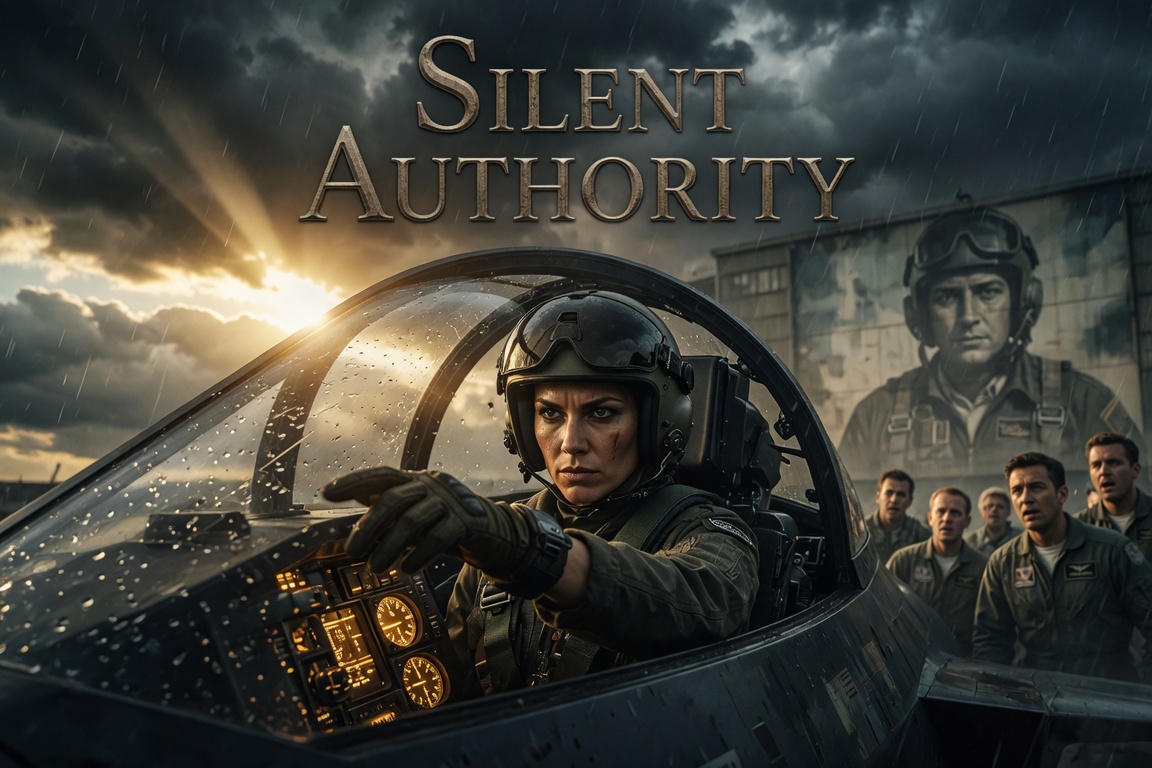
Rain rattled against the hangar roof hard enough to blur the sound of the generators outside. Beyond the open doors, the airfield lay under a bruised Kentucky sky, runway lights glowing through sheets of water.
Mara stood beside the aircraft in a dark green flight suit, one hand resting against the cold fuselage.
The machine behind her was not sleek.
It was not glamorous.
It was an aging MC-130J Commando II, broad-winged and heavy, its gray skin streaked with rain and engine oil. The kind of aircraft that carried fuel, troops, supplies, and sometimes people the world was not supposed to know had ever been in danger.
Its call sign for the mission was ECHO-7.
Mara looked at Rusk’s clipboard.
Then at him.
“Reassigned to whom?”
Rusk shifted his jaw. At forty-eight, he had the polished stillness of a man who had spent twenty-five years learning how not to show discomfort in uniform. Silver threaded the hair at his temples. His ribbons sat perfectly square above his pocket.
“Lieutenant Colonel Pierce.”
Behind him, Adrian Pierce stepped forward.
He was forty-two, tall, clean-cut, and already wearing his flight gloves. His confidence entered a room before he did. He had flown combat missions over Syria, trained half the pilots on the base, and never once doubted that people were safer when he was in control.
He stopped three feet from Mara.
“This isn’t personal,” Pierce said.
Mara’s eyes moved to the patch on his shoulder.
Then back to his face.
“That’s what people say when they want credit for being professional while doing something personal.”
A mechanic beneath the left wing paused with a wrench in his hand.
Rusk glanced toward him.
The wrench started moving again.
Pierce breathed through his nose. “Weather’s closing in over the eastern corridor. Intelligence says the extraction window is unstable. Command wants the most experienced active pilot in the seat.”
“I have more hours in this aircraft than you do.”
“You have more simulator hours.”
“I have more total hours.”
“You haven’t flown a live tactical insertion in eleven months.”
Mara’s fingers tightened slightly against the fuselage.
There it was.
Not the real reason.
But the acceptable one.
The reason that could survive an email chain.
She was forty-four years old, five feet six, with dark hair pulled into a severe knot and a pale scar crossing the underside of her chin. She had the compact build of someone who wasted no movement. Nothing about her demanded attention. She did not tell stories loudly in the officers’ club. She did not frame old photographs of herself beside generals. She did not interrupt men when they assumed she was a logistics officer.
She had learned long ago that silence made arrogant people careless.
But silence had a cost.
Eleven months earlier, Mara had been removed from active tactical rotation after a classified incident in the Black Pine Range. The official report cited “operational deviation under uncertain authority.”
The unofficial version was simpler.
She had disobeyed.
A team had survived.
A career had stalled.
Rusk lowered his clipboard.
“Mara, you’ll remain mission support in the tower. That is the decision.”
Lightning flickered behind the clouds.
For a moment, the entire hangar turned white.
Mara looked past Pierce toward the cockpit windows.
Rainwater crawled across the glass like veins.
“What’s the cargo?”
Rusk’s expression closed.
“Need-to-know.”
“I’m the mission planning officer.”
“You were.”
A beat passed.
The mechanic under the wing stopped again.
This time, nobody told him to continue.
Mara removed her hand from the aircraft.
Pierce gave a small nod, as if she had finally accepted the natural order of things.
Then she asked, “Has anyone verified the southern beacon?”
Rusk’s eyes narrowed. “What beacon?”
“The emergency navigation beacon south of Red Hollow. It was transmitting an intermittent ghost pulse at 0310.”
Pierce frowned. “That wasn’t in the weather brief.”
“No,” Mara said. “It wasn’t.”
“Then how do you know?”
“I listened.”
The answer hung there.
Pierce studied her face. “To what?”
“The air.”
A short laugh escaped him before he could stop it.
Mara did not react.
Rusk looked at his watch.
“ECHO-7 launches in twelve minutes. Pierce, cockpit. Captain Vance, report to control.”
Pierce stepped around her, climbing the metal stairs into the aircraft.
At the top, he turned.
“You’re good, Mara,” he said. “But being good isn’t the same as being ready.”
She looked up at him.
“No,” she said. “Sometimes being ready is knowing what everyone else missed.”
Pierce disappeared inside.
The engines began to turn.
And somewhere beyond the rain, faint enough to be mistaken for static, a broken signal pulsed once across a dead frequency.
Three short bursts.
Two long.
Three short.
Mara’s face changed.
Not with fear.
With recognition.
Because the signal was not coming from a navigation beacon.
It was coming from a team that had been declared dead six years earlier.
And only four people alive knew what it meant.
The control tower smelled of burnt coffee, wet wool, and overheated electronics.
Screens cast a green-blue glow across the operators’ faces. Rain smeared the windows. Headsets crackled with weather warnings, ground traffic, and clipped voices from aircraft stacking up beyond the storm.
Mara entered without ceremony.
Conversations thinned.
No one openly stared, but people glanced at her reflection in the glass.
The reassignment had traveled faster than she had.
At the central console, Senior Air Traffic Controller Lena Ortiz lifted one side of her headset.
“You okay?”
Lena was fifty-one, with silver rings on three fingers and a voice that could settle panicked pilots in thunderstorms. She had known Mara for nine years and trusted very few people more.
Mara leaned over the radar display.
“Pull the raw signal logs from 0300 to 0330.”
Lena watched her.
“That bad?”
“Pull them.”
Lena’s hand moved immediately.
At the far side of the room, Colonel Everett Shaw emerged from the command office.
He was the base commander, broad-shouldered despite his sixty years, with deep lines around his mouth and the careful expression of a man who understood that every disaster began as a detail someone dismissed.
“Captain Vance.”
“Colonel.”
“I thought Major Rusk made your assignment clear.”
“He did.”
“And?”
“I’m supporting the mission.”
Shaw looked at the screen. “By digging through static?”
“By identifying a transmission no one logged.”
Rusk entered behind her, rain darkening his shoulders.
“I told her to stay off mission command.”
Mara turned.
“You told me to support from the tower.”
“Not interfere.”
Colonel Shaw raised one hand.
The room quieted.
On the runway below, ECHO-7 began to taxi, its propellers throwing white spray across the tarmac.
Shaw looked at Mara.
“What did you hear?”
“A survival code.”
“From whom?”
“I don’t know yet.”
Rusk set his clipboard on the console. “We have a live extraction team waiting in Red Hollow. We do not have time for this.”
Mara’s gaze moved to him.
“Who is the extraction team?”
“Special operations advisory unit.”
“Name.”
“That’s classified.”
“This entire room is cleared.”
Rusk’s mouth tightened.
Colonel Shaw answered for him.
“Raven Six.”
Mara went still.
Lena looked up from the signal log.
Raven Six was not a person.
It was a designation attached to teams operating in denied areas under missions that rarely appeared in public records. The current unit consisted of eight American personnel and three allied intelligence officers.
They had entered the eastern mountain corridor forty-eight hours ago to recover a stolen guidance module from a weapons broker.
The mission had gone silent at midnight.
At 0240, a burst transmission reported casualties and requested immediate extraction.
At 0515, ECHO-7 was assigned.
Mara looked toward the runway.
“Who authenticated the extraction request?”
Rusk replied, “Joint command.”
“Who at joint command?”
“I don’t have the name.”
“Then you don’t have authentication.”
Pierce’s voice came through the radio.
“Tower, ECHO-7 ready for departure.”
Every headset in the room seemed to sharpen.
Lena glanced at Colonel Shaw.
Shaw gave a reluctant nod.
“ECHO-7, tower. Wind one-eight-zero at twenty-two, gusting thirty-five. Cleared for takeoff runway two-one.”
“Cleared runway two-one. ECHO-7.”
The aircraft rolled.
Mara watched it gain speed through the rain.
Its nose lifted.
For a second, the wheels hovered inches above the runway as if the aircraft were deciding whether to trust the sky.
Then ECHO-7 climbed into the storm.
Mara turned back to the signal display.
“Play the ghost pulse.”
Lena isolated the audio.
Static filled the room.
Then came the signal.
Three short bursts.
Two long.
Three short.
Shaw leaned closer.
“What is it?”
Mara’s eyes remained on the waveform.
“An obsolete personnel recovery code.”
Rusk folded his arms. “Obsolete means meaningless.”
“No. Obsolete means someone is using a code they believe no one is monitoring.”
“Who used it?”
Mara took a breath.
“My old unit.”
The tower seemed to lose heat.
Lena stopped typing.
Colonel Shaw’s face hardened.
Rusk looked at Mara as if he had just discovered a locked door in a familiar room.
“What old unit?”
Mara did not answer him.
She looked at Shaw.
“Sir, ECHO-7 needs to return.”
Rusk stepped between them.
“Absolutely not.”
“The extraction request may be compromised.”
“You heard static and decided it came from ghosts.”
“I heard a distress pattern built into a covert signal protocol.”
“From six years ago.”
“Yes.”
“From a mission that no longer exists.”
Mara’s voice dropped.
“The mission existed.”
That sentence changed the air.
Shaw stared at her.
There were records on base that he had clearance to open.
There were others he knew existed only because certain folders appeared blank when searched.
Mara Vance’s personnel file had three sealed intervals.
One lasted four months.
Another lasted seven.
The longest covered nearly three years.
Shaw had once asked Washington why.
The reply had contained five words.
Access not required for command.
Now he looked at her differently.
Not with respect yet.
With caution.
“Captain,” he said, “tell me exactly what you think is happening.”
Mara enlarged the waveform.
“The first three bursts are identification. The two long bursts mean the sender is under control or observation. The final three indicate false extraction.”
Lena’s fingers hovered over the console.
Rusk’s face remained skeptical.
Shaw did not.
“You’re saying Raven Six’s request was forced.”
“I’m saying someone may be waiting for ECHO-7 at the extraction site.”
Rusk shook his head.
“Joint command verified the coordinates.”
“Then someone gave joint command bad intelligence.”
“Based on a signal only you recognize?”
“Based on a signal designed to be recognized by the person assigned to receive it.”
Rusk blinked.
“What does that mean?”
Mara looked at the radar track of ECHO-7 pushing east.
“It means the message may have been sent for me.”
At 7,000 feet, the storm swallowed the horizon.
Rain hammered the windshield. The aircraft shook under crosswinds rolling down from the Appalachian ridges.
Lieutenant Colonel Adrian Pierce kept both hands steady on the controls.
Beside him, Major Eli Grant monitored navigation and weather data.
“You seeing this pressure drop?” Grant asked.
“I see it.”
“Storm cell wasn’t supposed to build this fast.”
“Storms rarely read the brief.”
Behind them, the flight engineer called out engine parameters.
The cockpit glowed with instrument lights.
Pierce listened to the hum of the aircraft, the vibration through the yoke, the subtle shifts of weight and drag. Flying was one of the few places in his life where doubt became useful. In the air, doubt was not weakness. It was information.
On the ground, he treated it differently.
Pierce had not always been arrogant.
Arrogance had grown around an old fear.
Fifteen years earlier, as a young captain, he had watched an underprepared pilot freeze during an engine fire over Iraq. Pierce had taken control too late. The aircraft landed. Three crew members survived. Two did not.
Since then, he trusted preparation, hierarchy, and proven readiness with religious intensity.
People called him controlling.
He called it refusing to write condolence letters.
“ECHO-7, tower,” Lena’s voice came through.
Pierce keyed the radio.
“Go ahead.”
“Confirm present heading zero-eight-two.”
“Affirm.”
A pause.
Then Mara’s voice replaced Lena’s.
“ECHO-7, recommend immediate return to base pending authentication review.”
Pierce stared through the rain.
Of course.
He knew that voice.
Calm. Flat. Difficult to challenge without sounding emotional.
He pressed the transmit switch.
“Captain Vance, are you now directing air operations?”
“Negative. I am providing threat intelligence.”
“On what authority?”
There was a beat of silence.
“On the authority of information you do not have.”
Grant glanced sideways.
Pierce’s knuckles whitened around the yoke.
“Tower, ECHO-7 will continue mission as assigned.”
Mara answered.
“You may be flying into a controlled ambush.”
“Then send the supporting intelligence through the proper channel.”
“The proper channel may be compromised.”
“Convenient.”
Grant lowered his voice.
“Sir.”
Pierce ignored him.
Mara continued, “Lieutenant Colonel, the extraction signal was forced. Do not approach Red Hollow on the published vector.”
Pierce looked at the navigation screen.
The published vector ran through a narrow mountain corridor before descending into a makeshift landing zone on an abandoned mining road.
There were no safe alternates nearby.
He had studied the route twice.
“Mara, you are not mission commander.”
“No.”
“Then stay off my aircraft.”
He released the switch.
The cockpit filled with the sound of rain.
Grant kept his eyes on the instruments.
“That was unnecessary.”
Pierce turned his head.
“Something to add?”
“Only that Captain Vance doesn’t spook easily.”
“She also hasn’t flown a live operation in eleven months.”
“That doesn’t make her wrong.”
“No,” Pierce said. “It makes her unverified.”
A warning tone sounded.
The flight engineer leaned forward.
“Radar contact, low altitude, eleven o’clock.”
Grant scanned the display.
“Nothing on transponder.”
Pierce looked into the black.
Lightning flashed.
For half a second, a shape appeared off the left wing.
Small.
Fast.
Then gone.
Grant’s voice tightened.
“Drone.”
A second warning tone screamed.
“Break right,” Pierce snapped.
He banked hard.
The aircraft rolled as a dark object cut through the space where the cockpit had been seconds earlier.
Something struck the fuselage.
Metal cracked.
The cabin erupted in shouting.
A red light ignited on the overhead panel.
“Hydraulic pressure dropping.”
Pierce fought the controls.
The yoke pulled against him like a living thing.
Grant grabbed the checklist.
“System two leak.”
“Isolate it.”
“Trying.”
The radio came alive with Mara’s voice.
“ECHO-7, break south. Repeat, break south. Multiple unmanned contacts converging from the northeast.”
Pierce’s stomach dropped.
She could see them.
Somehow, she could see what their radar had missed.
“Tower, ECHO-7 under attack,” Grant transmitted. “Unknown drones, multiple. We have hydraulic damage.”
Mara replied immediately.
“Turn heading one-seven-five. Descend to four thousand. There is a terrain shadow south of your position.”
Pierce checked the map.
“That takes us into a ridge line.”
“Not if you descend now.”
His hand hovered over the control.
Every instinct resisted taking an unverified command from someone he had just removed from the cockpit.
Another drone appeared on radar.
Then a third.
The flight engineer shouted, “Impact warning!”
Pierce made the decision.
“Descending.”
ECHO-7 dropped into the storm.
Clouds closed around them.
The mountains rose unseen below.
Mara’s voice came through the headset.
“Maintain heading. Do not correct east.”
Pierce stared at the altimeter.
4,800 feet.
4,500.
4,200.
The terrain warning began to pulse.
“Pull up. Pull up.”
Grant looked at Pierce.
“Ridge ahead.”
Mara said, “Hold course.”
“Terrain says otherwise,” Pierce snapped.
“Your terrain database is missing the Quarry Cut.”
“What Quarry Cut?”
“Hold course.”
The warning grew louder.
“Pull up. Pull up.”
Pierce’s shoulders locked.
Then the cloud tore open.
Ahead of them, a narrow break split the mountain ridge.
Not a natural pass.
An abandoned excavation cut through solid rock decades ago, invisible on current tactical mapping.
There was barely room for the wings.
Pierce stopped breathing.
“Bank three degrees left,” Mara said. “Then level.”
He obeyed.
ECHO-7 entered the cut.
Stone walls rose on both sides, dark and close enough that the wing lights reflected off wet rock.
The drones vanished from radar behind the ridge.
For twelve seconds, no one in the cockpit spoke.
Then Grant whispered, “How did she know?”
Pierce did not answer.
Because he had begun to suspect the question was much larger than the route.
Back in the tower, every person had heard the exchange.
No one looked at Mara the way they had twenty minutes earlier.
But Rusk still stood behind her with his arms folded.
“One lucky terrain call does not make her mission lead.”
Lena turned in her chair.
“Lucky?”
Rusk ignored her.
Colonel Shaw stood beside Mara’s console.
“Where did that cut come from?”
“Cold War mining survey.”
“Why isn’t it in the database?”
“It was sealed after a collapse in 1989.”
Shaw looked at the screen.
“Then how did you know an aircraft could fit?”
Mara watched ECHO-7 emerge from the southern side of the ridge.
“Because I flew through it.”
Rusk’s expression shifted.
“When?”
Mara did not answer.
The radio operator at the adjacent console raised a hand.
“Sir, incoming burst from joint command.”
A secure message populated the main display.
MISSION PRIORITY OVERRIDE.
PROCEED TO RED HOLLOW.
NO DEVIATION AUTHORIZED.
Colonel Shaw read it twice.
Rusk exhaled sharply.
“There. Authentication confirmed.”
Mara stared at the routing signature.
The command appeared valid.
The encryption was correct.
The authorization chain led to Brigadier General Thomas Vale at Joint Special Operations Command.
She knew Vale.
More importantly, Vale knew her.
He would never send a mission override without a secondary phrase.
She scanned the message again.
No phrase.
“Forgery,” she said.
Rusk’s patience broke.
“You cannot declare every order you dislike compromised.”
“I can when the author omitted his own authentication marker.”
“Maybe he was in a hurry.”
“General Vale once delayed an extraction by six minutes because a comma was missing from a code phrase.”
Shaw looked at her.
“You’re certain?”
“I’m certain he didn’t write this.”
Rusk stepped closer.
“You keep speaking as though you have personal access to people far above your rank.”
Mara turned.
“Maybe rank is not the part of my file you should be concerned with.”
The words landed softly.
That made them heavier.
Rusk’s face colored.
Before he could respond, Lena pointed to the audio display.
“Another transmission.”
Static rolled through the speakers.
Then a human voice, weak and distorted.
“—any station… Raven actual… package compromised… repeat… package—”
The signal broke.
Mara leaned toward the microphone.
“Raven actual, this is Halcyon. Authenticate blue winter.”
Nothing.
Rusk looked at her.
“Halcyon?”
The radio hissed.
Then the voice returned.
“Halcyon… answer is… no winter underground.”
Mara closed her eyes for less than a second.
The phrase was correct.
Only one man would have known it.
“Daniel,” she whispered.
Shaw heard her.
“Who is Daniel?”
Mara opened her eyes.
“Chief Warrant Officer Daniel Keene.”
Lena searched the active roster.
“No Daniel Keene attached to Raven Six.”
“He isn’t attached to Raven Six.”
“Then where is he?”
Mara looked at the storm beyond the tower glass.
“He was declared killed in action six years ago.”
No one moved.
Even Rusk’s skepticism faltered.
Mara keyed the radio.
“Raven actual, state condition.”
The reply came in fragments.
“Three mobile… two critical… hostile control of north access… extraction site burned… they want aircraft intact…”
“Who wants it?”
Static.
Then: “Sable Crown.”
Mara’s hand froze over the console.
A memory flashed—not an image, but a sound.
Rotors in darkness.
A man screaming through smoke.
A door that would not open.
A voice telling her to leave three people behind.
She forced the memory down.
Colonel Shaw saw the blood drain from her face.
“What is Sable Crown?”
Mara did not look at him.
“A network that was dismantled six years ago.”
Rusk spoke quietly now.
“Apparently not.”
“No,” Mara said. “Apparently not.”
On the radar, ECHO-7 continued south, damaged but airborne.
Shaw looked from Mara to the aircraft track.
“What do they want with the plane?”
“Not the plane.”
“Then what?”
“The person they believe is flying it.”
Rusk frowned.
“Pierce?”
Mara looked at him.
“No.”
And for the first time that morning, Major Nolan Rusk had nothing to say.
ECHO-7 flew low beneath the storm.
Inside the cargo compartment, crew members secured loose equipment while hydraulic fluid dripped into an emergency catch tray. The aircraft shuddered with every correction.
Pierce listened as Mara’s voice filled the cockpit.
“Red Hollow is compromised. Raven Six is three miles southwest of the published site, sheltering in an abandoned ventilation complex.”
Grant looked at the terrain map.
“That area is too narrow for landing.”
“Correct,” Mara said.
Pierce keyed the radio.
“Then what is the extraction plan?”
Silence.
He could hear voices in the tower behind her, muffled and urgent.
Finally Mara answered.
“There is no viable landing zone.”
“Then we need rotary support.”
“Ground weather has grounded all available helicopters.”
“Then we hold until weather clears.”
“Raven has two critical casualties. One may have less than forty minutes.”
Pierce glanced at the fuel indicator.
“We can’t extract without touching down.”
“Yes, you can.”
He waited.
Mara continued.
“You have the Fulton recovery rig onboard.”
Grant turned toward the rear of the cockpit.
“That system hasn’t been operationally used in decades.”
“The system was modified.”
Pierce stared at the radio.
“By whom?”
“I designed the modification.”
Grant’s eyebrows lifted.
Pierce said, “That rig was listed as experimental cargo.”
“It is.”
“And you planned to test it today?”
“No.”
Her voice changed.
Barely.
But Pierce heard it.
“I planned to use it if the extraction was what I suspected.”
He leaned closer to the microphone.
“You knew?”
“I knew there was a possibility.”
“You let us take off anyway?”
“I tried to stop you.”
That silenced him.
The aircraft bucked.
A warning light flashed again.
Pierce forced his attention back to flying.
Mara said, “The recovery corridor runs through Black Needle Canyon. You’ll have one pass. Raven will deploy a lift line from the ventilation ridge.”
Grant pulled up the canyon profile.
His face tightened.
“That canyon is less than two hundred feet wider than our wingspan.”
“Correct.”
“Wind shear?”
“Severe.”
“Visibility?”
“Intermittent.”
Pierce gave a humorless laugh.
“And you call this viable?”
“No,” Mara said. “I call it the only option.”
Pierce looked ahead at a horizon made of rain and darkness.
“Have you flown it?”
A long pause.
“Yes.”
“When?”
“Six years ago.”
The cockpit grew still.
Pierce understood before she said anything else.
“This is where your unit was lost.”
“Yes.”
“And Sable Crown was there.”
“Yes.”
“Then why in God’s name are you in a tower?”
Mara’s reply came quietly.
“Because the last time I was in that canyon, I followed an order.”
Six years earlier, Mara Vance had not been Captain Mara Vance.
She had been Lieutenant Colonel Mara Vance, commander of an aviation detachment whose name did not appear on organizational charts.
The unit flew aircraft with civilian markings into places where official military presence would have started wars.
They called her Halcyon.
Not because she was peaceful.
Because her voice never changed.
Not under fire.
Not with an engine gone.
Not when men twice her size shouted over the radio that they were dying.
Sable Crown had been a private military network built from former intelligence officers, weapons traffickers, and corrupt officials. They sold access—flight routes, satellite windows, safe houses, identities.
Mara’s unit had spent three years dismantling their network.
The final operation took place in Black Needle Canyon.
It was supposed to be a prisoner recovery.
It became an ambush.
Mara’s aircraft carried six crew members and a covert ground team led by Daniel Keene. When enemy fire damaged the rear section, command ordered her to evacuate with the intelligence package onboard.
Three ground operators were still moving toward the extraction point.
Daniel was one of them.
Mara argued.
Command repeated the order.
The intelligence package, they said, could prevent attacks in three countries.
The three men could not.
Mara stayed for ninety seconds.
Then she left.
The package was recovered.
Two attacks were prevented.
One hundred and eighty-six civilians lived because of the data on that aircraft.
The three operators were declared dead.
For years, Mara woke hearing Daniel’s last transmission.
Not a plea.
Not an accusation.
Just four words.
“Copy, Halcyon. Go home.”
She had obeyed the order.
She had completed the mission.
She had never forgiven herself.
Months later, evidence surfaced that the evacuation order had originated from a compromised liaison. The three men might have survived if given another two minutes.
The report was sealed.
The officers who made the call were reassigned.
Mara requested removal from covert command.
Her rank was administratively reduced under an identity protection directive.
To most of the military, she became Captain Vance, a skilled pilot with a disciplinary mark and gaps in her record.
She allowed the misunderstanding.
Partly for security.
Partly because shame felt more honest than a medal.
Now Daniel Keene’s voice was coming through a storm after six years in the dead.
And someone had sent a false extraction request knowing Halcyon might answer.
Colonel Shaw closed the command office door behind them.
Only Mara, Rusk, Lena, and Shaw remained inside.
On the wall, a map of the eastern corridor glowed under red emergency lighting.
Shaw faced Mara.
“Start at the beginning.”
“There isn’t time.”
“Then start with what changes the mission.”
Mara looked through the glass toward the operators outside.
“Daniel Keene was captured after Black Needle. Sable Crown kept him alive.”
“Why?”
“He knew our network.”
“For six years?”
“He knew more than our network.”
Rusk’s voice was subdued. “What did he know about you?”
Mara met his eyes.
“My identity. My authority protocols. My call sign.”
Lena crossed her arms.
“And now Sable Crown sends a false extraction request designed to bring ECHO-7 into an ambush.”
“Yes.”
“Why this aircraft?”
“Because they expected me to fly it.”
Rusk shook his head slowly.
“But we removed you.”
“No,” Mara said. “You did.”
The realization reached him in stages.
His mouth opened.
Closed.
Sable Crown had planned for Halcyon.
Instead, Major Rusk’s decision had put Pierce in the aircraft.
The reassignment he had viewed as caution had unknowingly disrupted the enemy’s expectation.
But it had also placed Pierce and his crew inside a mission they did not understand.
Rusk sat down.
For the first time that morning, the clipboard was not in his hands.
“I thought I was protecting the operation.”
Mara looked at him.
“I know.”
There was no triumph in her voice.
That hurt him more.
Shaw pointed to the canyon map.
“Can Pierce make the recovery?”
“Not alone.”
“He has a full crew.”
“He doesn’t have clearance for the Halcyon system.”
“What system?”
Mara entered a code into the secure terminal.
The screen rejected it.
She tried again.
ACCESS REQUIRES BIOMETRIC AUTHORIZATION.
She placed her thumb against the scanner.
A tone sounded.
The display changed.
Files populated the screen faster than anyone could read them.
Aircraft control protocols.
Encrypted satellite overlays.
Black-route navigation data.
At the top appeared a gold insignia none of them recognized.
Beneath it:
HALCYON COMMAND AUTHORITY
SPECIAL ACCESS AVIATION DIRECTIVE
PRIORITY LEVEL: NATIONAL EXECUTIVE
Rusk rose from his chair.
Lena stared at Mara.
Colonel Shaw’s face became unreadable.
The captain they had ordered into a support chair carried command authority that bypassed the base, the theater, and in certain circumstances, conventional chains of command.
Mara selected a file.
REMOTE DUAL-CONTROL LINK: ECHO PLATFORM.
Shaw looked at her.
“You can fly the aircraft from here?”
“Not fully. I can assume navigation, stabilization, and recovery systems. Pierce retains primary flight control.”
“Why wasn’t I informed this aircraft had that capability?”
“Because you were not supposed to need it.”
Rusk’s face had gone pale.
That was the moment.
The moment of recognition did not arrive with shouting or accusation.
It arrived in the way his shoulders lowered.
In the way his eyes moved from Mara’s captain bars to the gold authorization on the screen.
In the way his right hand drifted toward the clipboard, then stopped halfway, as if he had finally understood that every paper he had carried that morning contained less authority than the woman he had refused to trust.
Outside the office, the operators watched through the glass.
No one spoke.
Rusk swallowed.
“What was your rank?”
Mara turned toward the console.
“It doesn’t matter.”
“It matters to me.”
She paused.
“Lieutenant colonel.”
His lips parted.
“And your position?”
“Commander, Special Access Aviation Detachment Seven.”
Lena looked toward the radar.
“ECHO-7.”
Mara nodded.
“The aircraft was named for the unit.”
The room fell silent.
Not the silence of confusion.
The silence that comes when everyone realizes the story they believed has collapsed.
Rusk stared at the woman he had grounded.
The woman whose experience he had reduced to simulator hours.
The woman he had told was not ready.
Mara activated the control link.
A secure channel opened.
Then she reached for the headset.
“ECHO-7,” she said, her voice clear and level. “This is Halcyon actual. Prepare for command integration.”
In the cockpit, Pierce froze.
Grant looked at him.
Across the tower, every operator stopped moving.
That call sign had not been spoken on an open operational channel in six years.
Yet systems across the room responded instantly.
Screens unlocked.
Encryption banners changed.
Satellite feeds redirected.
One by one, classified overlays appeared around ECHO-7’s radar track.
The aircraft itself transmitted a confirmation tone.
AUTOMATED SYSTEM: HALCYON AUTHORITY VERIFIED.
Pierce stared at the message.
Then slowly leaned back in his seat.
The woman he had removed from the mission was not merely qualified to fly ECHO-7.
She was the reason ECHO-7 existed.
“Halcyon actual,” Pierce said, and the confidence in his voice had changed shape. “ECHO-7 ready for integration.”
Mara did not acknowledge the shift.
“Confirm hydraulic status.”
“System two isolated. Manual response degraded twenty percent.”
“Fuel?”
“Fifty-eight minutes to reserve.”
“Crew?”
“One minor injury. All stations functional.”
“Good. You’ll enter Black Needle from the west at three thousand eight hundred feet.”
Grant studied the route populating on the navigation screen.
A path appeared where none had existed before.
Digital markers threaded through the canyon.
Pierce watched them.
“You built this route.”
“Yes.”
“You built all of this.”
“Yes.”
He looked through the rain.
Then said the words he should have said on the ground.
“I was wrong.”
Mara’s hand rested on the control interface.
“This isn’t the time.”
“No. But I may not get another one.”
A warning flashed on Lena’s console.
“Multiple aircraft lifting from Red Hollow,” she called.
Three hostile drones rose from the valley. Two light attack helicopters followed.
Mara keyed the radio.
“You’ll get another one. Turn west now.”
ECHO-7 banked.
The canyon appeared ahead like a crack in the earth.
Black Needle earned its name from the stone formations rising from the valley floor—thin, jagged pillars of dark rock that vanished into low cloud.
Wind tore between them.
The aircraft entered turbulence immediately.
Pierce gripped the controls.
Mara’s interface displayed every correction.
She could feel the aircraft through numbers—the roll, pitch, drag, vibration, and delay.
Not the same as being in the cockpit.
Close enough to remember.
“Reduce power engine three by four percent,” she said.
The flight engineer hesitated.
Pierce repeated, “Do it.”
The vibration eased.
“Recovery team is eight hundred yards ahead,” Grant said.
On a narrow ridge below, three figures emerged from a concrete ventilation shaft.
One dragged a fourth.
Another carried a collapsed extraction pole.
Gunfire sparked against the rock behind them.
Daniel Keene looked up as ECHO-7 broke through the clouds.
He was sixty now, though captivity had carved another decade into him. His beard was gray. One leg dragged. Blood darkened his coat.
But when he heard the aircraft, he stood straighter.
A radio hung from his chest.
“Halcyon,” he said.
Mara heard him through static.
Her throat tightened.
“Daniel.”
He gave a broken laugh.
“Knew you’d take your time.”
“Set the recovery line.”
“We’ve got company.”
Behind the ridge, armed men poured from the tree line.
Mara switched channels.
“Pierce, you have one pass.”
“You said that before.”
“I meant it before.”
Grant activated the modified Fulton rig.
From the nose of ECHO-7, twin recovery arms extended outward. The system was designed to catch a suspended line, lift personnel from the ground, and reel them aboard without landing.
On paper, the physics worked.
In the canyon, with crosswinds and gunfire, paper meant nothing.
“Line deployed,” Daniel reported.
A helium balloon rose from the ridge, pulling the cable upward.
It whipped violently in the wind.
Pierce aligned the aircraft.
Mara watched the flight path.
Too high.
“Down ten feet.”
Pierce descended.
“Left two degrees.”
He corrected.
Gunfire rose from below.
Rounds struck the underside of the fuselage.
The flight engineer shouted, “Fuel line pressure fluctuation.”
“Hold course,” Mara said.
A helicopter appeared behind them.
Grant looked back.
“Hostile six o’clock.”
“Thirty seconds to intercept,” Lena called from the tower.
Colonel Shaw moved beside Mara.
“Can we support?”
“Not in time.”
The helicopter fired.
Tracer rounds cut through the rain.
Pierce rolled slightly, then forced the aircraft back into line.
The recovery cable danced ahead.
“Too much drift,” Grant said.
“We’ll miss.”
Mara’s screen flashed red.
The remote stabilization system could correct the approach.
But activating it would reduce Pierce’s manual control at the worst possible moment.
She opened the command link.
“Pierce, I need flight authority.”
His eyes went to the warning on his screen.
TRANSFER PARTIAL CONTROL?
Six hours earlier, he would have refused.
Now he pressed ACCEPT.
“Aircraft is yours.”
Mara wrapped both hands around the tower control yoke.
The room disappeared.
The tower.
Rusk.
Shaw.
The watching operators.
All of it narrowed into airspeed, vector, wind, weight, distance.
ECHO-7 responded to her touch hundreds of miles away.
She felt the lag.
Adjusted before it formed.
The aircraft dropped eleven feet, yawed left, then leveled.
“Cable in five,” Grant called.
The helicopter fired again.
A round struck near the tail.
Warnings erupted.
“Three.”
Daniel looked up from the ridge.
“Two.”
Mara held the line.
“One.”
The recovery arms caught the cable.
The aircraft jolted violently.
Daniel and the surviving team were ripped from the ridge into open air.
For one terrible second, they swung beneath ECHO-7, bodies twisting over the canyon.
The hostile helicopter closed.
“Reel them in!” Pierce shouted.
The winch engaged.
Then stopped.
“Motor failure,” the flight engineer said. “Line jammed.”
Daniel and three others hung eighty feet below the aircraft.
The canyon narrowed ahead.
Mara’s display painted the rock walls in red.
They could not clear the next turn with the team suspended.
Pierce saw the same thing.
“We need to cut the line.”
“No,” Mara said.
“If we don’t, we lose the aircraft.”
“No.”
“Mara.”
Her hands tightened.
Six years earlier, she had heard the same logic.
Save the mission.
Save the aircraft.
Leave the people.
Daniel’s voice came through the radio, thin beneath the wind.
“Halcyon, cut us loose.”
Mara closed her eyes for half a heartbeat.
Then opened them.
“No.”
The canyon wall rushed closer.
Pierce’s voice sharpened.
“We have eight seconds.”
Mara scanned the aircraft systems.
Hydraulic two damaged.
Recovery motor dead.
Cargo ramp functional.
Emergency tow control available.
She saw the solution.
It was ugly.
Dangerous.
Possible.
“Open the rear ramp.”
Grant turned.
“At this speed?”
“Open it.”
Pierce understood.
“You’re going to pull them through manually.”
“Yes.”
“The cable could take out half the compartment.”
“Then secure the compartment.”
The ramp lowered.
Wind exploded through the cargo bay.
Crew members clipped into safety lines and crawled toward the jammed winch.
Below, Daniel and the others swung toward the rock wall.
“Five seconds,” Pierce said.
Mara disengaged stabilization.
“Full right rudder on my mark.”
“That will stall the left wing.”
“For two seconds.”
“Two seconds is enough.”
“I know.”
The rock formation filled the windshield.
Mara waited.
Every instinct screamed early.
She waited longer.
“Now.”
Pierce slammed the rudder.
ECHO-7 yawed violently.
The left wing dropped.
The suspended team swung outward like a pendulum, clearing the rock by less than ten feet.
The aircraft shuddered on the edge of a stall.
Mara corrected.
“Power.”
Engines roared.
The wing lifted.
ECHO-7 scraped through the turn.
Inside the cargo bay, two crew members reached the line and attached an emergency pulley.
The winch groaned.
Daniel rose toward the ramp.
The hostile helicopter entered the canyon behind them.
Lena’s voice came through.
“Missile lock.”
Grant stared at the warning.
“We’re painted.”
Mara’s mind moved faster than fear.
“Deploy countermeasures.”
“Too close to terrain.”
“Exactly.”
Flares burst behind the aircraft, brilliant against the black rock.
The incoming missile followed the heat.
Then the canyon wind drove the flares into the cliff face.
The missile struck stone.
The explosion filled the canyon with fire and debris.
The shock wave hit the helicopter.
Its rotor clipped the wall.
The aircraft spun away into smoke.
In the cargo bay, Daniel reached the ramp.
Hands seized his coat and dragged him inside.
One by one, the others followed.
The final casualty crossed the threshold just as the recovery cable snapped.
The loose line vanished into the canyon.
Grant looked back.
“All aboard.”
For the first time since ECHO-7 launched, Mara let herself breathe.
Then a new warning sounded.
Engine three fire.
Pierce looked at the panel.
“We’re not home yet.”
The fire spread faster than the suppression system could contain it.
ECHO-7 climbed out of Black Needle trailing smoke.
Rain turned the plume into a dirty gray scar across the sky.
“Shut down three,” Mara ordered.
The propeller slowed.
The aircraft yawed.
Pierce corrected.
“Engine two temperature rising,” the flight engineer said.
Grant looked at the fuel state.
“We’re twenty-six minutes from base.”
“We don’t have twenty-six,” Pierce said.
Mara checked the map.
There was a civilian airport twelve minutes south.
Short runway.
No emergency foam crew on duty.
A military reserve strip lay seventeen minutes west.
Longer runway.
But the storm cell was moving directly over it.
Colonel Shaw stood behind her.
“Where do they land?”
Mara looked at the numbers.
Neither option was good.
Then Lena pointed at a faint line on the map.
“What about Harrow Field?”
Rusk shook his head.
“Closed airfield. Runway hasn’t been maintained in years.”
Mara enlarged the satellite image.
Harrow Field had been a transport base during the Cold War. After closure, sections of the runway were used for storage.
Recent imagery showed construction vehicles, concrete barriers, and a row of abandoned hangars.
But one strip remained mostly clear.
Mostly.
Pierce’s voice came through.
“Halcyon, we’re losing engine two.”
Mara made the choice.
“Proceed Harrow Field.”
Grant pulled the location.
“That runway is closed.”
“Not today.”
“Obstacles?”
“Several.”
“Condition?”
“Unknown.”
Pierce almost laughed.
“Feels familiar.”
Mara transmitted the landing overlay.
“Approach from the north. You’ll have a crosswind from the west. Touch down after the first barrier.”
“After?”
“The pavement before it is cracked.”
“Anything else?”
“There may be a maintenance crane near the south end.”
“May be?”
“Satellite image is eight months old.”
Pierce looked through the smoke-streaked windshield.
“Understood.”
Mara turned to Colonel Shaw.
“Get local emergency services to Harrow Field.”
Shaw was already moving.
Rusk remained beside her.
“What can I do?”
Mara looked at him.
It would have been easy to punish him.
To remind him of the hangar.
The clipboard.
The way he had refused to look at her.
Instead she said, “Clear the civilian frequencies. We need silence on approach.”
He nodded once.
Then went to work.
Within minutes, the tower transformed.
Not into a room of doubters and defenders.
Into a team.
Lena coordinated weather.
Shaw redirected rescue units.
Rusk cleared airspace.
Mara stayed connected to ECHO-7.
At Harrow Field, weeds pushed through the seams of the runway. Rain pooled in shallow craters. Rusted hangars stood under the dark sky like empty ribs.
Fire trucks raced through a broken perimeter gate.
ECHO-7 emerged from the clouds with two engines failing and smoke pouring from the right wing.
Pierce lowered the landing gear.
The left main locked.
The right did not.
“Gear unsafe,” Grant said.
Pierce cycled it.
Nothing.
Mara watched the hydraulic readings.
“Manual release.”
“Already tried.”
“Then land left gear first.”
Pierce stared ahead.
“That risks a ground loop.”
“Yes.”
“And the wing?”
“Will probably strike.”
“Probably?”
Mara’s voice remained level.
“Adrian, I can give you certainty or I can give you the truth. We no longer have both.”
He absorbed that.
Then nodded, though she could not see him.
“Truth will do.”
Harrow Field appeared ahead.
A concrete barrier sat near the threshold.
Beyond it, the usable runway stretched beneath the rain.
At the far end stood a crane.
Exactly where Mara feared.
Pierce lined up.
The aircraft descended.
“Crosswind stronger than forecast,” Grant said.
“I feel it.”
“Right gear still unsafe.”
“I know.”
Mara’s hands rested on the remote controls, but she did not activate them.
This landing belonged to Pierce.
Not because she could not help.
Because he needed full control.
And because trust was not control transferred.
It was control surrendered at the right moment.
“ECHO-7,” she said.
“Go.”
“You have the aircraft.”
A pause.
Then Pierce replied, “I have the aircraft.”
The left wheels touched first.
Smoke burst from the tires.
Pierce held the right wing high as long as he could.
The aircraft screamed down the runway on one main gear.
Speed bled away.
The right wing dropped.
Metal struck pavement.
Sparks erupted in a blinding sheet.
The aircraft swerved.
Pierce kicked the rudder.
The nose gear slammed down.
The cargo compartment filled with smoke.
Crew members braced around the rescued team.
The crane at the far end grew larger.
“Brakes ineffective,” Grant shouted.
Pierce pulled reverse thrust on the remaining engines.
The aircraft slowed.
Not enough.
The wing tore through a row of empty storage containers.
Metal folded and flew.
The fuselage rotated twenty degrees.
The nose passed the crane by less than a yard.
Then ECHO-7 stopped.
For three seconds, no one in the tower spoke.
Rain hissed against the damaged aircraft.
Emergency vehicles converged.
A crew member appeared at the open cargo ramp and raised one arm.
All survivors accounted for.
Lena covered her mouth.
Colonel Shaw lowered his head.
Rusk stared through the glass, though Harrow Field was far beyond sight.
Mara remained seated.
Her hands trembled once.
Only once.
Then Daniel Keene’s voice came through Pierce’s radio.
“Halcyon.”
She reached for the transmit switch.
“I’m here.”
“You came back.”
Mara looked at the rain sliding down the tower windows.
“Yes.”
Daniel’s breath crackled over the channel.
“Took you long enough.”
A laugh moved through the tower.
Small at first.
Then relieved.
Human.
Mara closed her eyes.
This time, when the memory returned, Daniel’s final words were no longer “Go home.”
They were replaced by four new ones.
“You came back.”
The investigation lasted five months.
It uncovered a compromised contractor inside joint command, two falsified intelligence chains, and a surviving branch of Sable Crown that had been selling military access routes to the highest bidder.
The false extraction had been bait.
Sable Crown believed Halcyon would pilot ECHO-7. They planned to seize the aircraft, capture Mara, and force access to dormant aviation networks she had once commanded.
Major Nolan Rusk’s reassignment decision had disrupted part of the plan.
Mara’s intervention had destroyed the rest.
Official reports used words like “interagency failure,” “unauthorized network persistence,” and “exceptional recovery under adverse conditions.”
Those words did not describe what happened in the tower.
They did not describe the silence after Halcyon’s call sign came through.
They did not describe Rusk’s face when the gold authorization appeared.
They did not describe Pierce transferring control to the woman he had told to stay off his aircraft.
Reports rarely captured the moment people changed.
Three weeks after the mission, Mara entered the same hangar where she had been grounded.
ECHO-7 sat inside under repair scaffolding. Its right wing had been removed. Black scorch marks ran along the fuselage.
Pierce stood beside the cockpit stairs.
His right arm was in a sling.
Rusk waited near the nose of the aircraft.
Lena leaned against a tool cabinet with two cups of coffee.
Colonel Shaw stood in the center of the floor.
Behind him were pilots, mechanics, controllers, medics, and ground crew.
Mara stopped.
“What is this?”
Shaw held out a folder.
“Orders.”
She did not take it.
“I’m familiar with those.”
A few people smiled.
Shaw did not.
“These are different.”
Mara opened the folder.
The first page restored her rank.
LIEUTENANT COLONEL MARA E. VANCE.
The second reinstated her as commander of a reactivated special access aviation unit.
The third gave her authority to select personnel.
She looked up.
Shaw said, “Washington wants ECHO Detachment operational within ninety days.”
Mara closed the folder.
“Washington wants many things.”
Pierce stepped forward.
“I requested assignment.”
She looked at his sling.
“You disobey well under pressure.”
“I learned from an expert.”
Rusk approached next.
His posture was straight, but he carried no clipboard.
“I submitted a formal statement accepting responsibility for the reassignment and failure to investigate your warning.”
Mara studied him.
“You thought you were protecting the crew.”
“I thought my judgment was more reliable than your experience.”
“That too.”
A flush rose along his neck.
He did not defend himself.
“I was wrong,” he said.
The hangar was quiet enough to hear rain dripping from the roof.
Mara could have humiliated him.
Some people expected it.
Rusk expected it most of all.
Instead she asked, “What did you learn?”
He looked at her insignia.
Then forced himself to meet her eyes.
“That authority doesn’t always announce itself.”
Mara waited.
He continued.
“And that doubt becomes dangerous when we only apply it to people we’ve already decided not to trust.”
No one moved.
Mara gave a small nod.
“That will be useful.”
Rusk blinked.
“In what way?”
“I need an operations officer.”
His face changed.
“You’re offering me a position?”
“I’m offering you work.”
A faint laugh passed through the mechanics.
Mara stepped closer.
“You made a serious mistake. Then you admitted it publicly and documented it when silence would have protected your career. I can train someone to read a signal. I cannot train someone to tell the truth after being wrong.”
Rusk’s eyes shone, though his expression remained controlled.
“Yes, ma’am.”
Pierce looked toward ECHO-7.
“So who gets the left seat?”
Mara handed the folder back to Shaw.
“That depends.”
“On what?”
“Whether you’re ready.”
Pierce smiled.
This time, there was no arrogance in it.
Only respect.
Lena held out one of the coffees.
Mara took it.
“Cold?” she asked.
“Terrible,” Lena said. “Like tradition.”
They stood beneath the damaged aircraft while rain drummed overhead.
No ceremony.
No speech.
No applause.
Just people who had nearly lost one another learning how to see one another clearly.
Across the hangar, Daniel Keene watched from a wheelchair.
His left leg ended below the knee.
A healing cut crossed his forehead.
Mara walked toward him.
For a moment, neither spoke.
Six years stood between them.
Six years of graves without bodies.
Questions without answers.
Orders obeyed for reasons that still hurt.
Daniel looked at the restored rank on her uniform.
“Lieutenant colonel again.”
“Apparently.”
“You going to keep it this time?”
She glanced at ECHO-7.
“I might.”
He nodded toward the aircraft.
“Still flies ugly.”
“So do you.”
He grinned.
Then his expression softened.
“You know it wasn’t your fault.”
Mara’s gaze dropped to his missing leg.
“No.”
“You saved the package.”
“I left you.”
“You followed an order designed to save lives.”
“An order designed by a compromised officer.”
“You didn’t know that.”
“I knew you were still alive.”
Daniel leaned back.
The wheels of his chair creaked.
“Mara, listen to me.”
She did.
“I spent six years angry,” he said. “At Sable Crown. At command. At myself for getting caught. Sometimes at you.”
Her face did not move.
He continued.
“But not because you left.”
The hangar seemed to recede around them.
“I was angry because I knew you’d spend every day believing you chose the mission over us.”
Mara looked away.
Daniel’s voice softened.
“You didn’t choose the mission over us. You chose one hundred and eighty-six people you never met over three people you loved.”
Her jaw tightened.
“That doesn’t make it easier.”
“No. It makes it leadership.”
Mara watched water drip from the edge of ECHO-7’s wing.
For years, she had believed forgiveness would feel like release.
It did not.
It felt like weight redistributed.
Still present.
But finally possible to carry.
Daniel glanced toward Pierce and Rusk.
“They underestimated you.”
“They saw what I let them see.”
“That sounds like blame.”
“It’s responsibility.”
He considered that.
“Fair.”
Across the hangar, a young female lieutenant stood beside a maintenance cart, pretending not to listen.
She could not have been more than twenty-six.
Her name patch read CHEN.
Mara had seen her once before, arguing quietly with an instructor who kept assigning her administrative flights.
The lieutenant noticed Mara looking and immediately straightened.
Mara motioned her over.
Lieutenant Chen approached.
“Yes, ma’am?”
“How many hours in the C-130 platform?”
“Four hundred and twelve.”
“Night tactical?”
“Sixty-eight.”
“Mountain corridor?”
“Twenty-one.”
Mara nodded toward ECHO-7.
“Be here at 0500 Monday.”
Chen stared at her.
“For maintenance support?”
“For evaluation.”
The lieutenant’s lips parted.
Behind her, the instructor who had been limiting her flights went still.
Mara watched recognition move across the young woman’s face—not confidence yet, but the first fragile outline of possibility.
“Yes, ma’am,” Chen said.
She turned to leave, then stopped.
“Lieutenant Colonel?”
“Yes?”
“What should I study?”
Mara looked up at the cockpit.
“Everything they think you don’t know.”
Chen smiled.
Then walked away.
Daniel chuckled.
“You always did enjoy making people nervous.”
“No,” Mara said. “I enjoy making them accurate.”
Outside, the storm began to break.
A blade of sunlight cut through the hangar doors and moved slowly across the floor, illuminating the scarred underside of ECHO-7.
The aircraft looked damaged.
It also looked alive.
Months later, when the official commendations were released, most news reports focused on the impossible canyon rescue.
They described Pierce’s landing.
Daniel’s survival.
The conspiracy inside joint command.
Mara’s name appeared in a few articles, though much of her history remained classified.
People online argued about whether the story had been exaggerated.
Some said no aircraft could fly through Black Needle.
Some said no remote command system could do what witnesses claimed.
Some said a woman with a captain’s rank could not possibly have carried national command authority.
The tower crew never argued back.
They had heard the call sign.
They had watched screens unlock.
They had seen an aircraft disappear into a canyon under attack and return carrying people who had been abandoned to history.
But what stayed with them was not the technology.
It was not the rank.
It was not even the rescue.
It was the memory of Mara Vance standing in the same room where people doubted her, taking control without raising her voice.
She never demanded an apology before saving them.
She never reminded Pierce that he had taken her seat.
She never asked Rusk to suffer the humiliation he had caused her.
She simply did what only she could do.
And when it was over, the people who had questioned whether she belonged in the cockpit finally understood the truth:
The cockpit had never been the source of her authority.
Her authority came from the years no one saw, the losses she carried without displaying them, the competence she never needed to advertise, and the decision—made under fire—not to leave anyone behind a second time.
There will always be people who mistake quietness for weakness, restraint for uncertainty, and an unfamiliar face for an unqualified one.
Let them speak.
Because sooner or later, the storm comes.
And when it does, titles fade, opinions collapse, and the room grows silent for the one voice that knows the way home.