In 1940, a young German man named Otto Carius tried to join the army.

He was rejected.
Not because he lacked courage.
Not because he lacked determination.
The reason was simple: he was considered too underweight for military service.
For most people, that would have ended the dream.
For Carius, it was only the beginning.
Born in 1922 in Zweibrücken, Germany, Otto Carius grew up in a disciplined family. His father was a teacher and reserve officer who viewed war with caution. He once described tanks as dangerous “metal traps.”
Ironically, his son would later become one of the most famous tank commanders of World War II.
After being rejected twice, Carius finally succeeded in joining the army in 1940. He was first assigned to infantry training but soon requested a transfer to armored forces.
His wish was granted.
He entered tank training and eventually joined the Panzer units preparing for Germany’s invasion of the Soviet Union.
In June 1941, at only 18 years old, Carius crossed into the Soviet Union during Operation Barbarossa.
He was entering a war unlike anything Europe had seen.
The Eastern Front was enormous.
The battles were brutal.
And survival inside a tank often depended on seconds.
Carius began his career inside the Panzer 38(t), a Czech-designed light tank used by Germany. It was reliable, but it was not built to face the increasingly powerful Soviet T-34 tanks.
Inside that small metal vehicle, Carius learned the basics of survival.
He started as a loader.
He learned every sound of the engine.
Every movement of the turret.
Every mistake that could mean death.
During the early campaigns of 1941 and 1942, his tank was hit several times. He was wounded and forced to leave the front temporarily, but he always returned.
By the end of 1942, after officer training, Carius returned as a tank commander.
His experience in an inferior vehicle shaped his future leadership style.
He learned that victory did not always come from having the strongest weapon.
It came from patience, positioning, and discipline.
Then came the machine that changed everything.
The Tiger I.
In early 1943, Carius encountered the German heavy tank that would define his reputation.
The Tiger was enormous compared with the Panzer 38(t).
It weighed around 57 tons.
Its 88 mm gun could destroy enemy tanks at distances where opponents struggled to respond.
For commanders like Carius, the Tiger changed the battlefield.
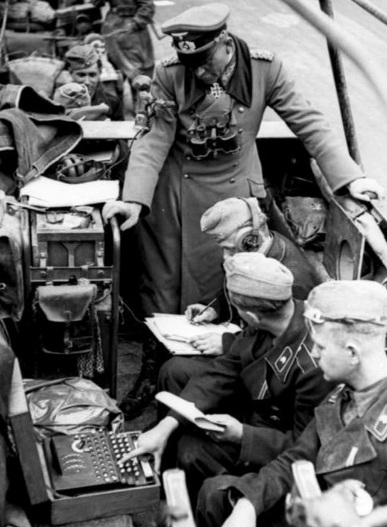
He was assigned to the Heavy Tank Battalion 502, one of Germany’s first Tiger units on the Eastern Front.
But the Tiger was not a magical weapon.
It was powerful, but complicated.
Mechanical failures were common.
Maintenance was difficult.
A skilled crew was just as important as the tank itself.
Carius understood this better than many.
He believed a tank commander had to think before firing.
The battlefield was not about rushing forward.
It was about waiting for the right moment.
During fighting near Leningrad, Carius developed the tactic that became associated with him.
Observe.
Wait.
Strike.
In one engagement, his Tiger company defended a village against advancing Soviet tanks. Instead of immediately attacking, Carius ordered his crews to remain hidden and silent.
They allowed enemy vehicles to move closer.
Then, at the perfect moment, the Tigers opened fire.
The result was devastating.
The Soviet attack collapsed.
No Tiger was lost.
The battle showed Carius’s greatest strength: using patience as a weapon.
By 1944, the fighting around Leningrad and Narva became even more intense.
The Soviet Union was stronger.
Its heavy tanks, including the IS-2, could challenge German armor directly.
The war had changed.
German superiority was disappearing.
But Carius continued to lead his unit through some of the most difficult fighting of the war.
In May 1944, he received the Knight’s Cross of the Iron Cross for his battlefield performance.
He was only 21 years old.
His greatest moment came soon afterward.
In July 1944, during the Soviet Operation Bagration, German forces were collapsing across the Eastern Front.
The town of Malinava near Daugavpils became strategically important because of its roads and supply routes.
Carius led eight Tiger tanks into the area.
Instead of sending all vehicles forward immediately, he kept most of them in reserve.
He advanced carefully with only two Tigers.
The decision proved critical.

During the engagement, German reports credited Carius and his wingman Albert Kerscher with destroying numerous Soviet vehicles and reopening an important route.
The battle became one of the most famous moments of his career.
But only two days later, his war changed forever.
On July 24, 1944, Carius left his tank to scout ahead on foot.
He was ambushed.
He suffered severe wounds to his legs, arms, back, and neck.
Many believed he would not survive.
But he did.
His Tiger crews fought back, and a medic eventually found him alive.
Carius spent months recovering.
By 1945, Germany was collapsing.
He could not return to the Eastern Front.
Instead, he was transferred to the Western Front and commanded a company equipped with Jagdtiger tank destroyers.
But the war was already ending.
In April 1945, his unit was surrounded in the Ruhr Pocket.
There was no longer a realistic path to victory.
At only 22 years old, Otto Carius surrendered to American forces.
The war that had transformed him from a teenager into a famous tank commander was over.
After the war, Carius faced the same challenge as millions of German veterans:
How to rebuild a life after destruction.
He studied pharmacy at Heidelberg University and eventually became a pharmacist.
In 1956, he took over a pharmacy in Hirschweiler-Pödesheim and named it the Tiger Apotheke.
The name was a quiet reminder of his past.
Not a battlefield.
Not a monument.
Just a small connection between two completely different lives.
In 1960, Carius published his memoir, Tigers in the Mud.
The book described his experiences from 1941 to 1945 and became widely known among military historians and armored warfare enthusiasts.
Over time, it was translated into many languages and became one of the most famous personal accounts of German tank warfare.
Carius worked as a pharmacist until old age, continuing at Tiger Apotheke into his late eighties.
He died in January 2015 at the age of 92.
His life remains complicated.
He was one of the most skilled tank commanders of World War II.
His battlefield decisions demonstrated tactical ability, courage, and leadership.
But he was also a soldier of Nazi Germany’s invasion of the Soviet Union, a war that caused enormous suffering and destruction.
The story of Otto Carius is not only about tanks.
It is about how war transforms young men, creates legends, and leaves behind questions that remain long after the battlefield falls silent.
The teenager once rejected for being too light became a famous Tiger commander.
But after the war, his greatest challenge was no longer surviving combat.
It was learning how to live with the memory of it.